Folk Decorative Art
Folk decorative art is the visual language of a community, traditionally created by untrained artisans rather than academic artists. It combines utility with ornament, transforming everyday objects like furniture, textiles, and tools into works of cultural expression.
Artists of the Movement
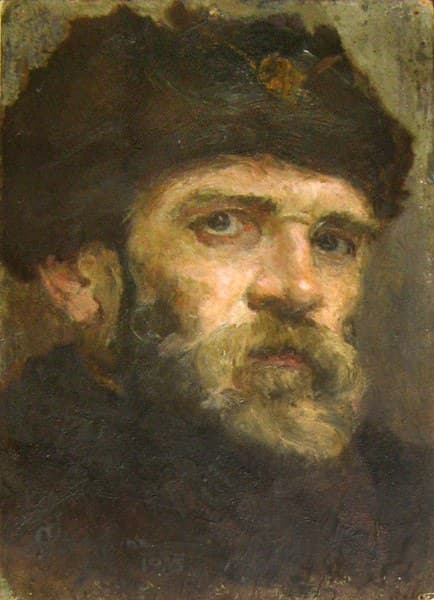
Ivan Yizhakevych
1864–1962
One of the most prolific Ukrainian painters and illustrators of his era, trained in the Kyiv Pechersk Lavra icon workshop and the St. Petersburg Academy. A late master of Ukrainian icon painting, known for genre scenes and Shevchenko illustrations.
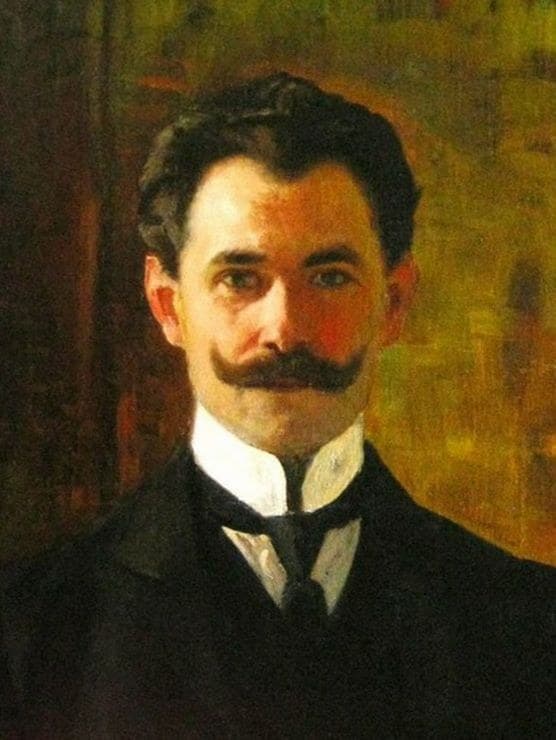
Osyp Kurylas
1870–1951
A Ukrainian (Galician) painter and graphic artist, Kraków Academy-trained, best known for depictions of Hutsuls and patriotic imagery of the Ukrainian Sich Riflemen, with whom he served in WWI. He later directed Novakivskyi's Lviv art school.
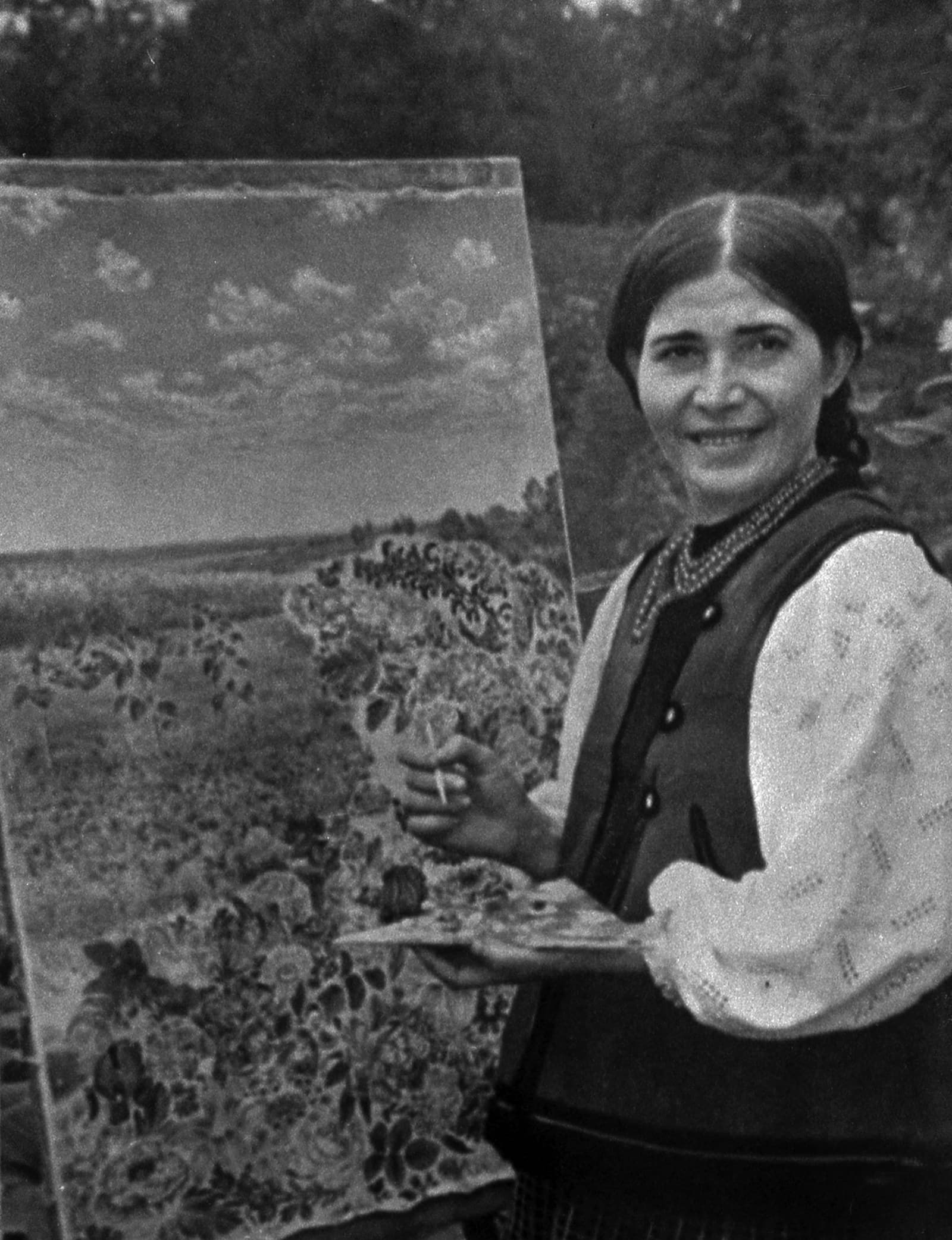
Kateryna Bilokur
1900–1961
Kateryna Bilokur was a self-taught peasant painter from the Poltava region who became one of the great figures of Ukrainian folk decorative art, working almost entirely in oil on canvas without ever attending an art school. Refused entry to art colleges twice for lacking a school certificate, she painted in secret against her family's opposition, making her own brushes from cat and cow hair and cherry twigs. Her densely worked flower compositions on deep blue grounds brought her national recognition from 1940 onwards and are now the core of the collection of the National Museum of Ukrainian Folk Decorative Art in Kyiv.
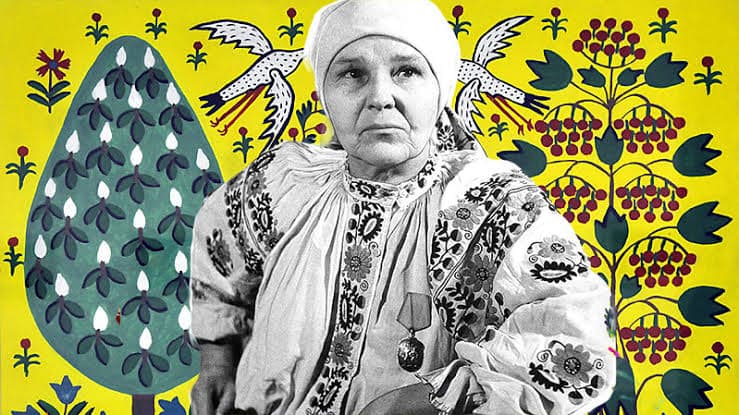
Mariia Prymachenko
1909–1997
Mariia Prymachenko was a Ukrainian folk painter and the best-known figure of twentieth-century Ukrainian naive art. Working in gouache and watercolour on paper, she invented a bestiary of fantastical animals and personified flowers that has become a national visual emblem. She spent almost her whole life in her native village of Bolotnia, north of Kyiv.
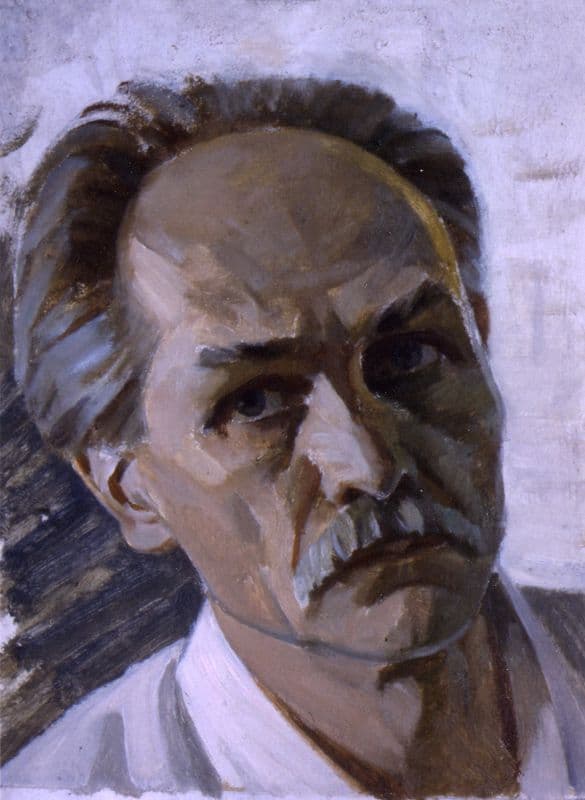
Veniamin Kushnir
1926–1992
Veniamin Kushnir was a Ukrainian painter and monumentalist, and one of the founders of the Kyiv Club of Creative Youth 'Suchasnyk' that gave the Sixtiers movement its centre. He fused Carpathian and Podillian folk form with modernist colour in paintings of motherhood, horses, musicians and Hutsul landscape, and was pushed to the margins of official art for his Ukrainian national convictions.
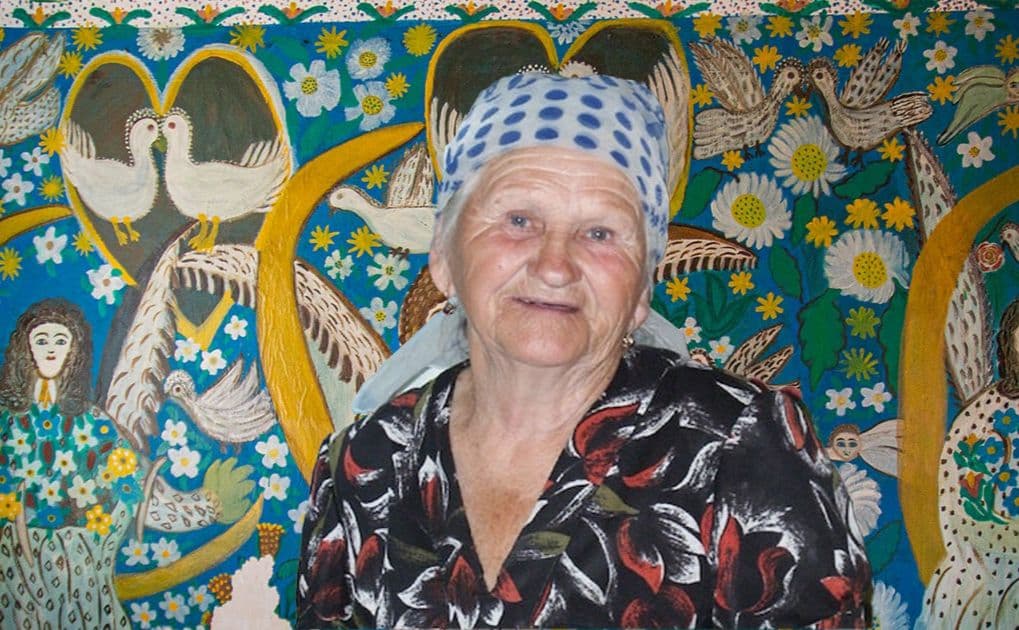
Polina Raiko
1928–2004
Polina Raiko was a Ukrainian self-taught naive artist from Oleshky in the Kherson region who began to paint at the age of sixty-nine. Over roughly six years she covered the walls and ceilings of her own six-room house, its summer kitchen, gates and fences with enamel-paint murals of angels, birds, animals and family memories. The house became a cult site of Ukrainian outsider art and was destroyed in June 2023 by the flooding that followed the Russian destruction of the Kakhovka dam.
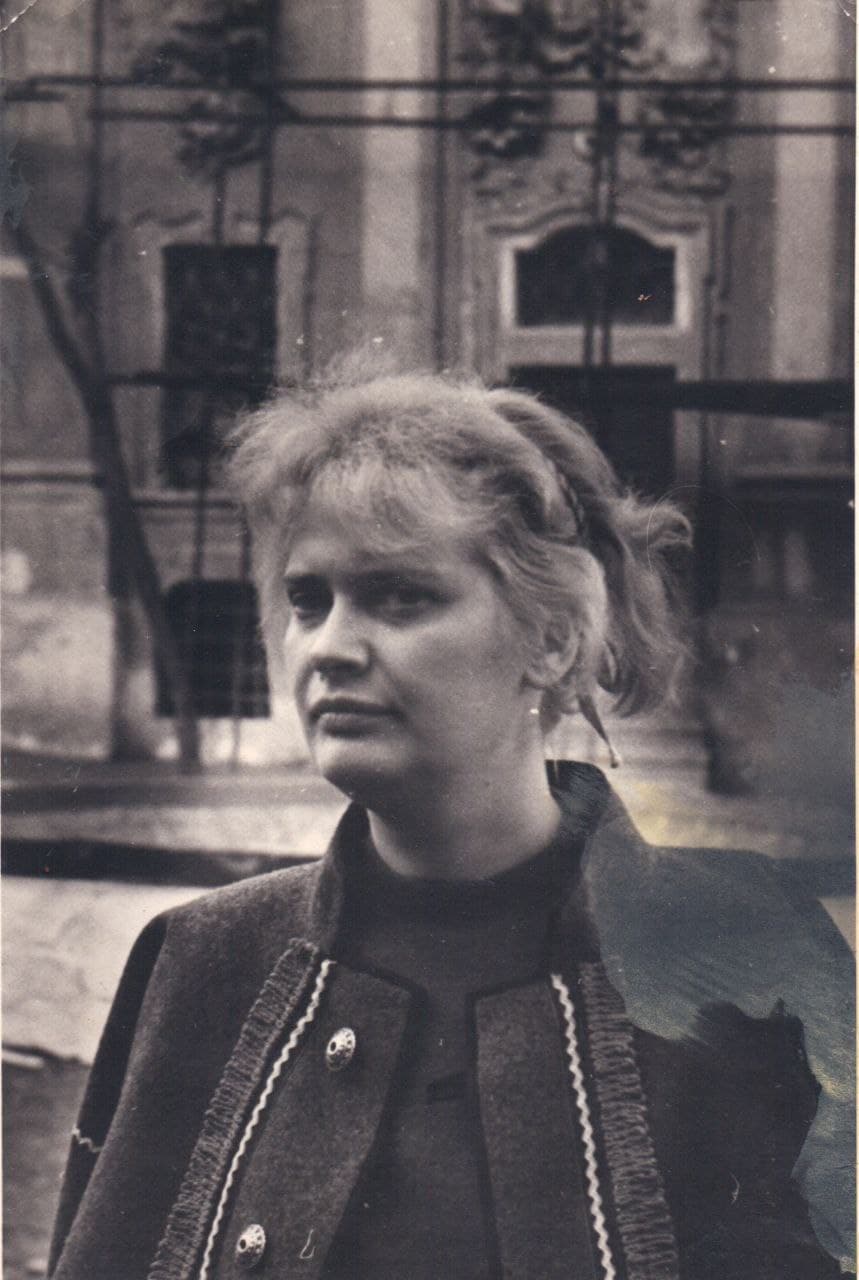
Alla Horska
1929–1970
Alla Horska (1929–1970) was a Ukrainian painter and monumentalist, and with her husband Viktor Zaretskyi a founder of the Club of Creative Youth "Suchasnyk" and a central figure of the Sixtiers and the dissident movement. Her output spans easel painting and portrait drawing, banned stage designs for Les Taniuk, and large mosaic and stained-glass cycles. She was murdered in Vasylkiv in November 1970 at the age of 41, and much of her monumental work has since been destroyed or is endangered.
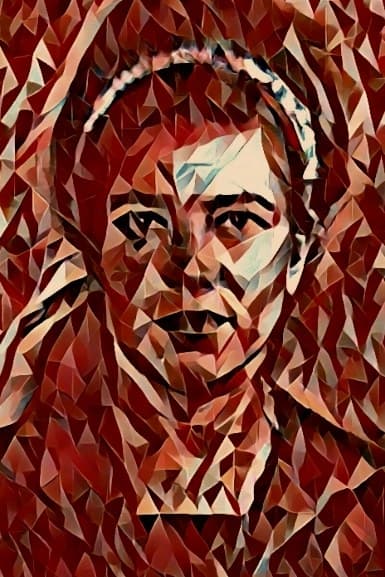
Liubov Panchenko
1938–2022
Liubov Panchenko (1938–2022) was a Ukrainian artist and fashion designer of the Sixtiers generation who worked across clothing design, textile appliqué, embroidery, watercolour, gouache and linocut, always through a Ukrainian ornamental idiom. Blacklisted by the Soviet authorities, she was never admitted to the Union of Artists and neither exhibited nor published for decades. She spent a month under Russian occupation in Bucha in 2022 and died on 30 April that year, aged 84, after starvation and exhaustion.
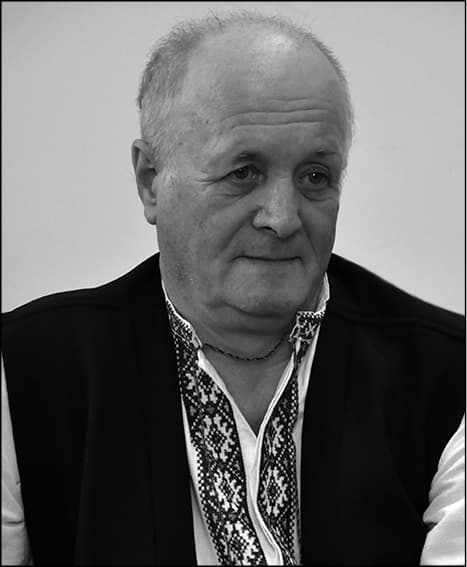
Viktor Nakonechnyi
1947–2015
Viktor Nakonechnyi was a self-taught Podillian painter, graphic artist and master of vytynanka paper-cutting and pysanka egg-painting from the embroidery village of Klembivka in Vinnytsia Oblast. He fused Ukrainian folk painting traditions with academic oil and tempera technique to build an enormous body of ethnographic village scenes, and won Ukraine's highest artistic honour, the Shevchenko National Prize, in 2009.
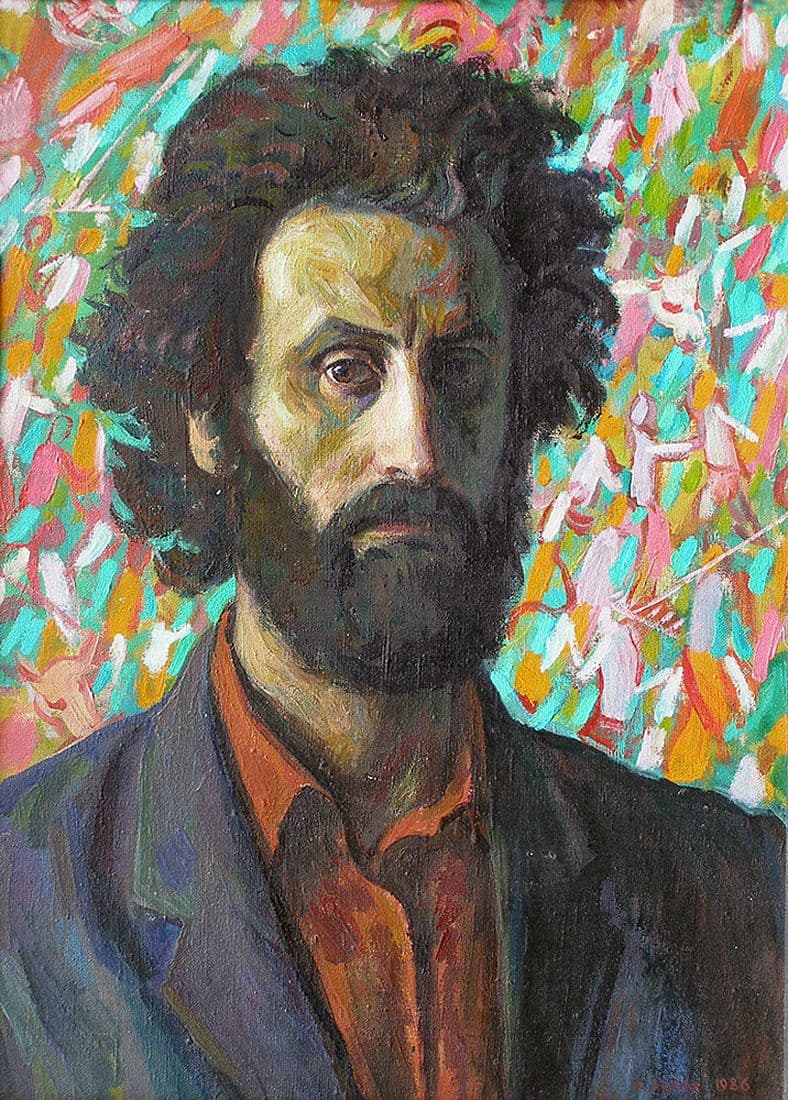
Yurii Lesiuk
b. 1947
Yurii Lesiuk is a Lviv painter, Honoured Artist of Ukraine, and head of the painting department at the Ivan Trush Lviv State College of Decorative and Applied Arts. His thematic canvases, landscapes, still lifes and portraits are emphatically national in character, mixing Hutsul and Pokuttia ritual and folk humour with a decorative, flattened treatment of form. He has taken part in more than ninety exhibitions and held eleven solo shows in Ukraine, Canada and the USA.
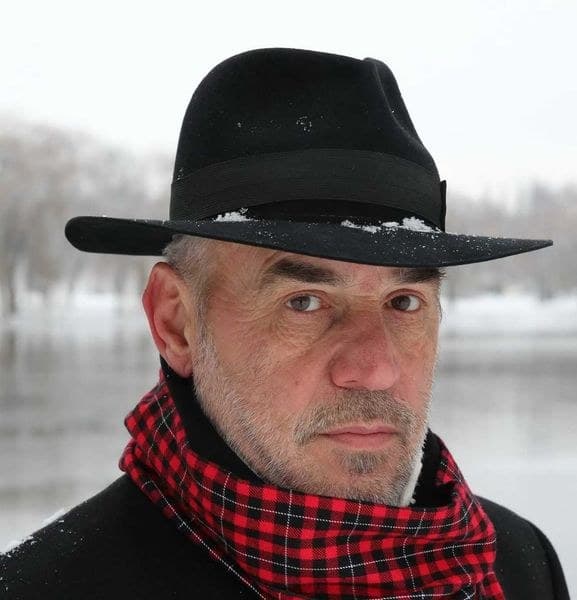
Viktor Hvozdynskyi
b. 1951
Viktor Vyacheslavovych Hvozdynskyi (born 25 February 1951 in Volodymyr-Volynskyi) is a Ukrainian painter, watercolourist and monumental artist who has worked in Rivne since 1975 and has been a member of the National Union of Artists of Ukraine since 1985. He is best known for watercolour and oil landscapes of Volyn, Polissia, the Carpathians and Central Europe, and for stained glass made with his wife Larysa Hvozdynska.
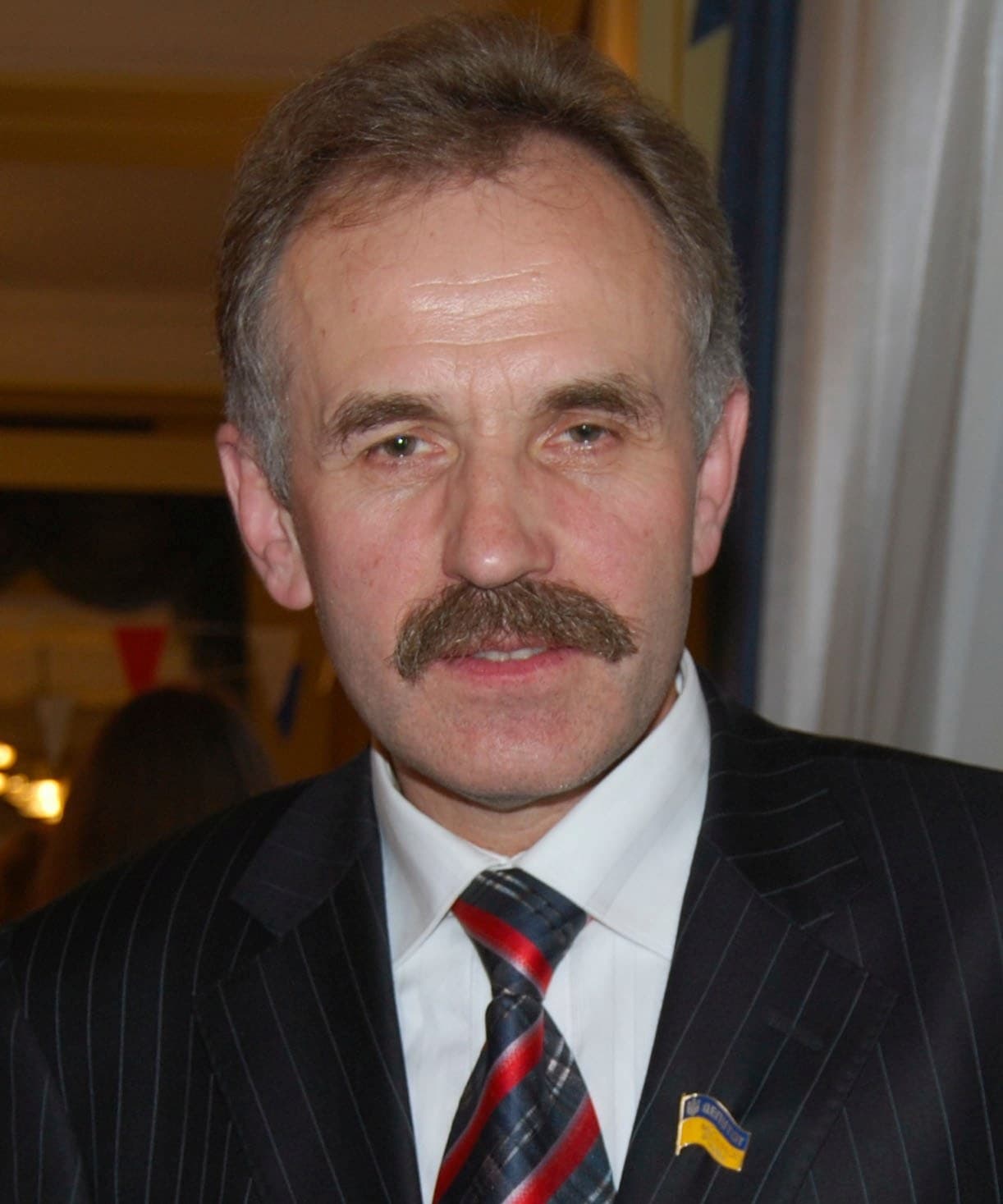
Ihor Havryshkevych
b. 1955
Ihor Havryshkevych is a Lviv painter, People's Artist of Ukraine, and for fifteen years the director of the Lychakiv Cemetery museum-reserve. His painting builds stylised figures and open, unmixed colour into large historical cycles — 'Along the Paths of Taras Shevchenko', 'Ancestors' and 'Along Cossack Trails' — that came out of his journeys across Ukraine and Kazakhstan.
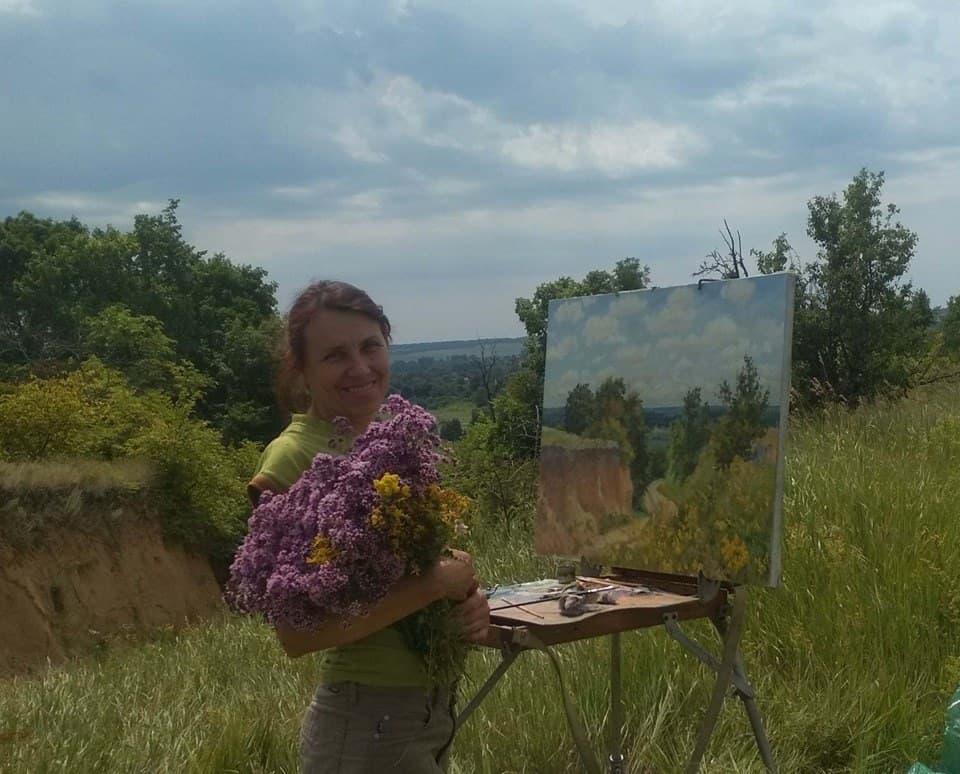
Nadiia Poluian-Vnukova
b. 1968
Nadiia Poluian-Vnukova is a Ukrainian painter born in Romny, Sumy Oblast, in 1968 and still living and working there, a member of the National Union of Artists of Ukraine since 2004. Trained first as a decorative painter and textile designer, she paints minutely detailed, sunlit interiors, still lifes of wild flowers in ceramic jugs, and scenes of Christmas and childhood in her native Romny district.
Anna Yarmoliuk
b. 1977
Anna Yarmoliuk is a Ukrainian self-taught painter born in 1977, reported to live in Kharkiv and to work as a librarian. She paints small naive-art scenes in oil pastel on paper and cardboard — snowy streets, wooded roads, women and children walking with dogs — with a warm, lyrical view of unhurried small-town life.
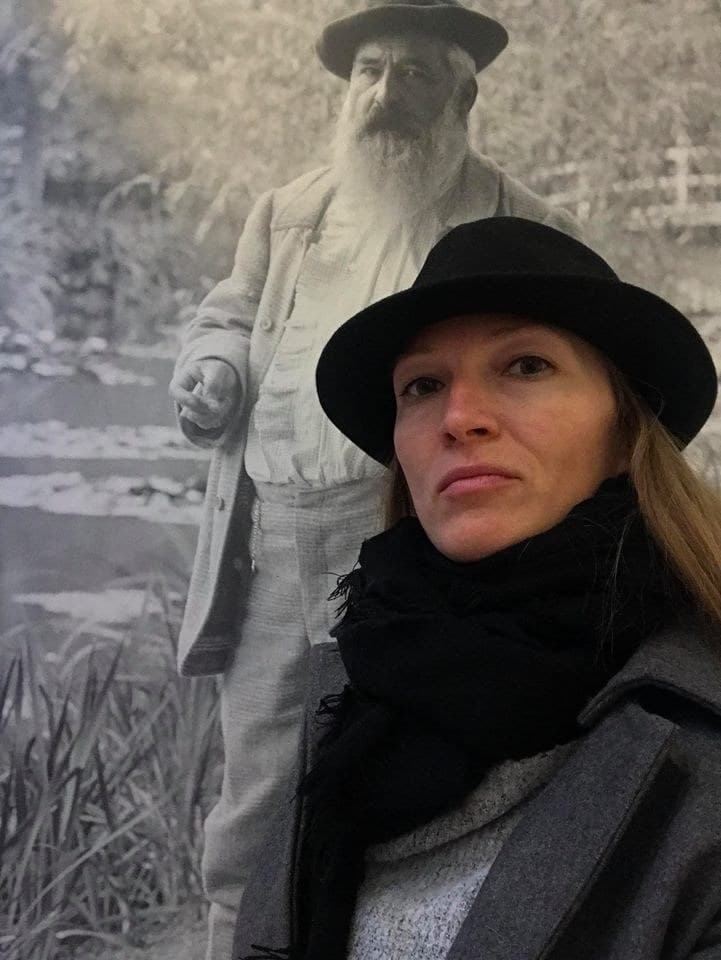
Kateryna Kosianenko
b. 1978
Kateryna Kosianenko is a Kyiv painter and icon-painter whose figurative work fuses Ukrainian Baroque iconography with Renaissance composition and an impressionist feel for landscape light. Honoured Artist of Ukraine (2019) and a member of the National Union of Artists of Ukraine since 2002, she works almost entirely in themed series. She has held more than 35 solo exhibitions and won first prize in painting at the 100th Salon d'Automne in Paris (2003).
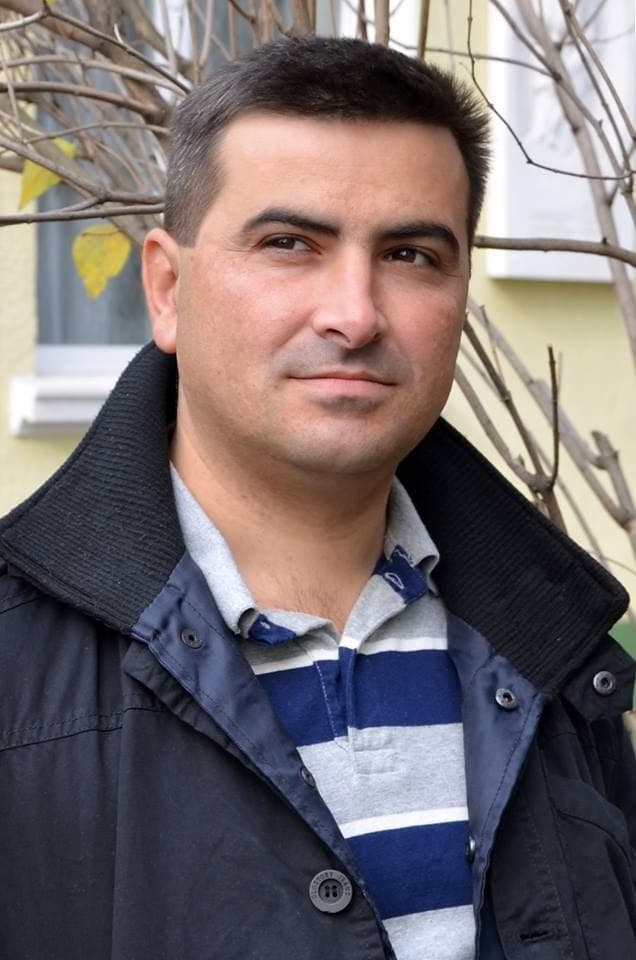
Mykola Yatsurak
Mykola Yatsurak is a Ukrainian painter from Velykyi Kliuchiv in Ivano-Frankivsk Oblast, now living in Kolomyia, where he teaches at the Yaroslav Pstrak Art School. A member of the National Union of Artists of Ukraine, he paints Hutsul village life, weddings and Carpathian landscapes.
Works from this Movement
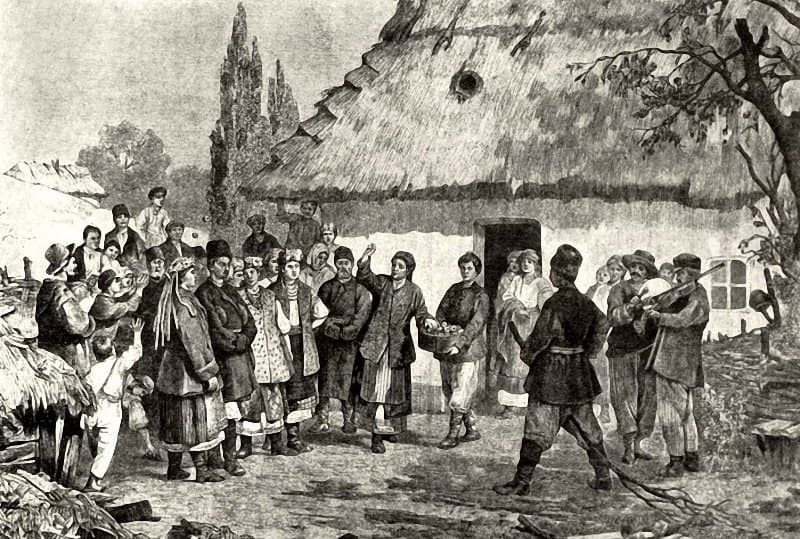
To the Altar
Ivan Yizhakevych
A genre scene depicting a Ukrainian wedding tradition (published before 1917; PD).
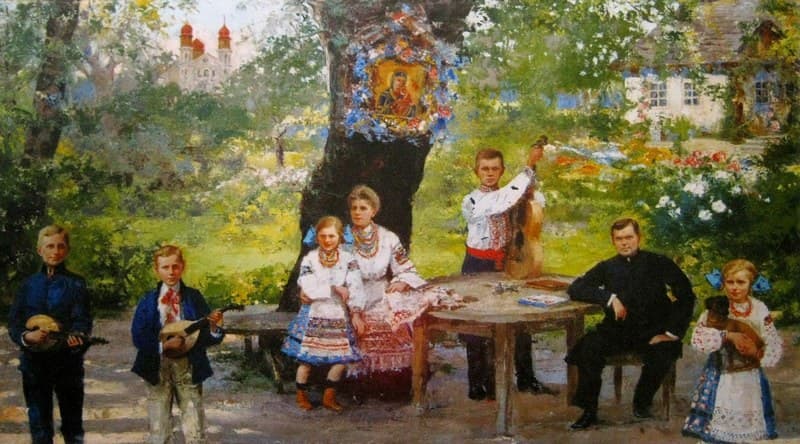
Ukrainian Family
Osyp Kurylas
A genre painting of a family in traditional Ukrainian dress.
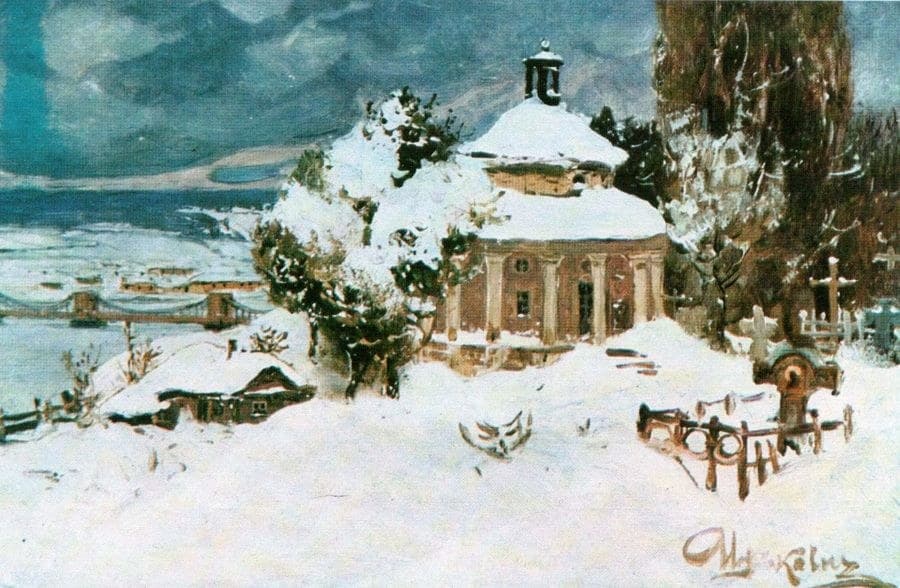
Askold's Grave
Ivan Yizhakevych
A view of Askold's Grave, a historic landmark in Kyiv (published before 1917; PD).
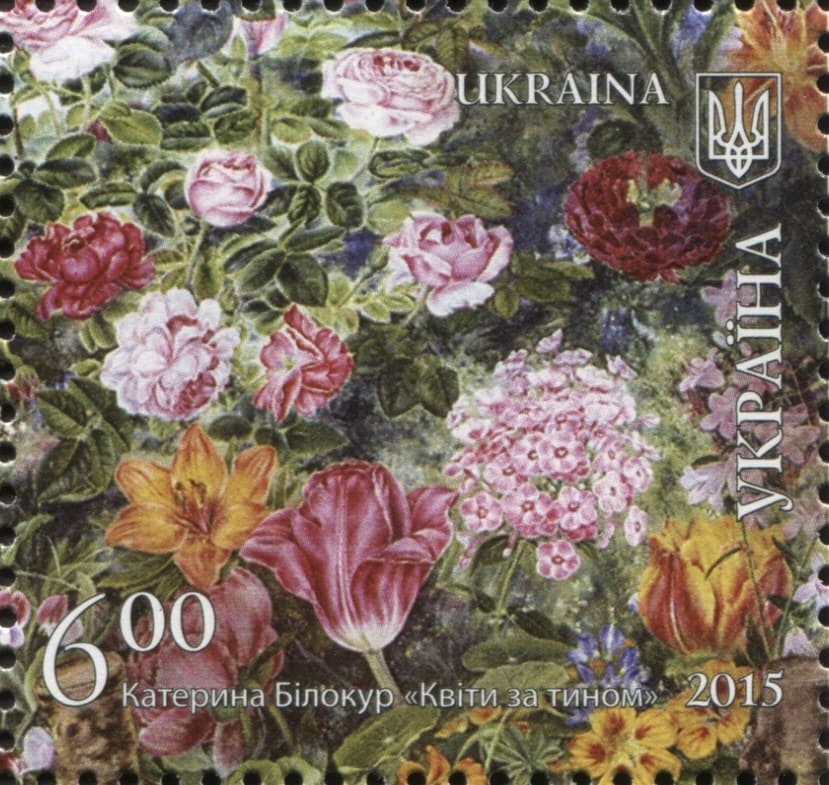
Flowers Behind the Fence
Kateryna Bilokur
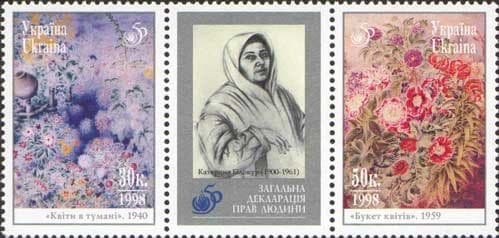
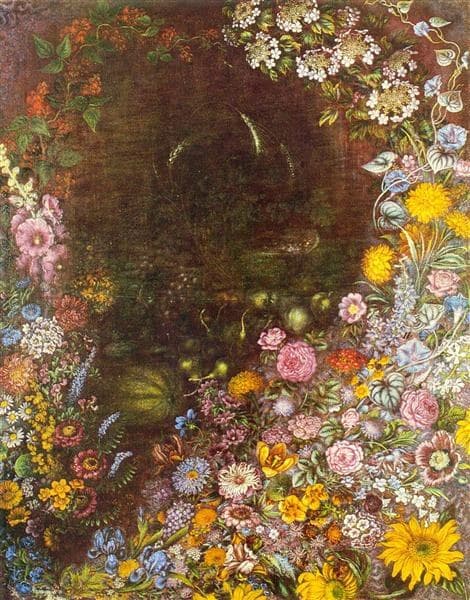
One of Bilokur's earliest surviving flower compositions, a wall of roses, phlox, lilies and tulips pressing forward out of a dark garden so densely that no single light source can be found in it. Ukrposhta reproduced it in full bleed on a 2015 stamp.
Flowers in the Mist
Kateryna Bilokur
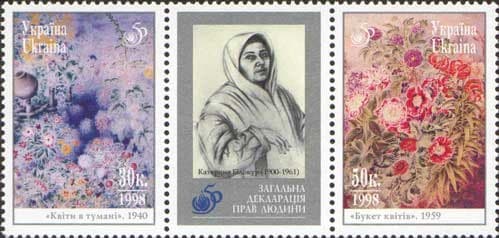
Painted in the year Bilokur was first exhibited, a pale, softly dissolved flower thicket in which the blooms surface out of a silvered haze instead of standing against her usual flat blue ground. It appeared on a Ukrposhta stamp strip issued in 1998.
Blue Bull
Mariia Prymachenko
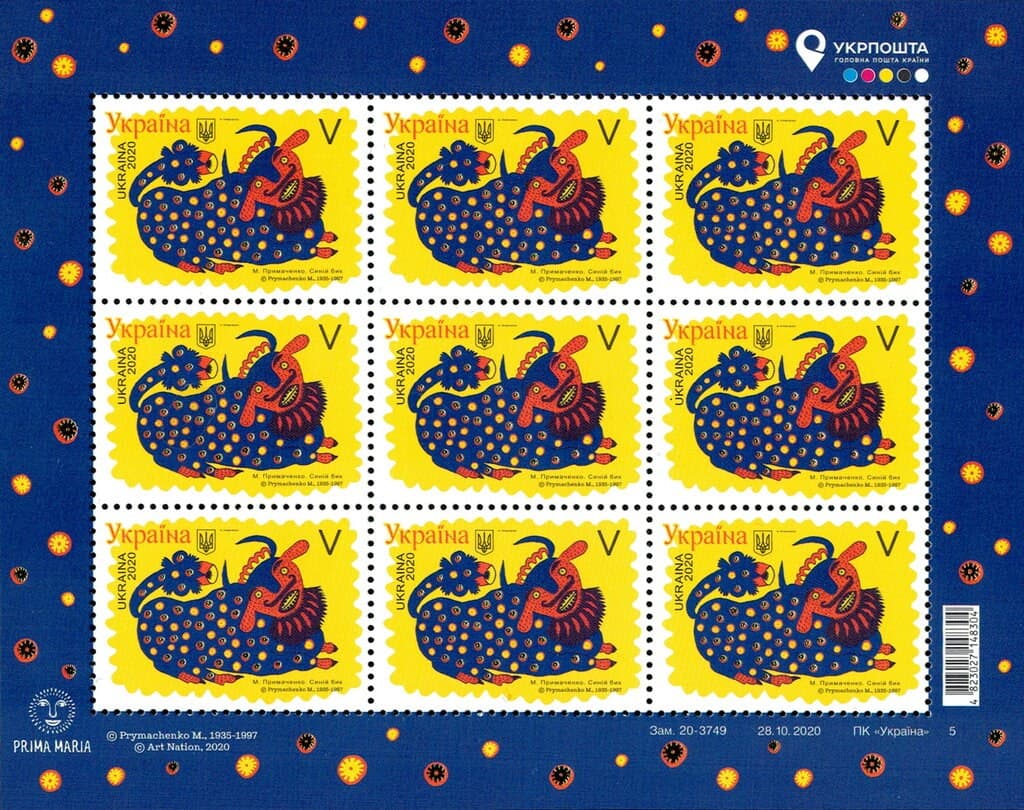
An early post-war beast painting in which a deep blue bull stands against an ornamented ground, one of the works that established Prymachenko's mature idiom. Ukrposhta reproduced it on a 2020 stamp sheet marking the Year of the Ox.
Tsar Kolos
Kateryna Bilokur
Bilokur's best-known painting: ripe golden ears of wheat reigning at the centre of a deep brown ground, ringed by flowers and fruit. It was one of three works sent to the Soviet section of the 1954 international exhibition in Paris, where Picasso is reported to have praised her.
Bouquet of Flowers
Kateryna Bilokur
A late massed bouquet of roses, peonies and phlox in the hot pink-and-crimson register of Bilokur's final years, painted two years before her death. It is the second of the two Bilokur paintings reproduced on Ukrposhta's 1998 stamp strip.
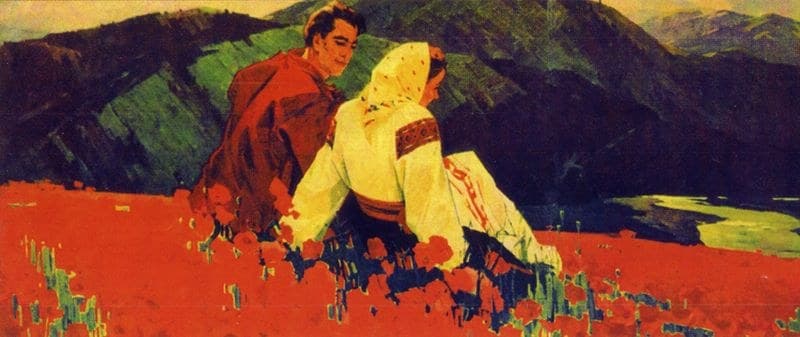
Red Poppies
Veniamin Kushnir
One of the two 1961 canvases, alongside 'Trembita', that established Kushnir's reputation among the Sixtiers, its blazing red poppies read at the time as an unmistakable statement of Ukrainian national feeling.
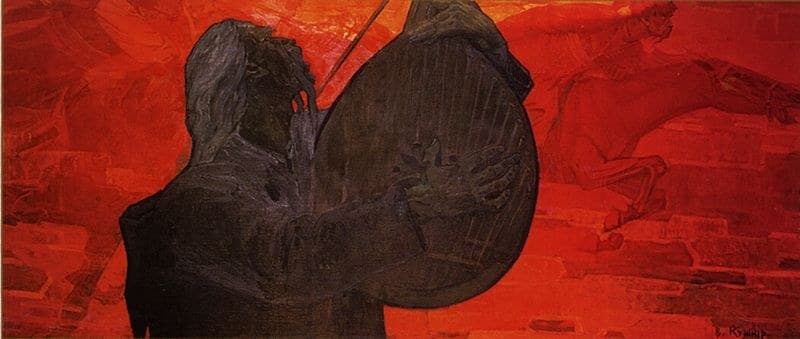
Kobza
Veniamin Kushnir
A kobzar with his instrument, one of Kushnir's recurring images of the blind wandering singer as bearer of Ukrainian memory, drawn in the flattened, contour-led manner he took from folk painting.
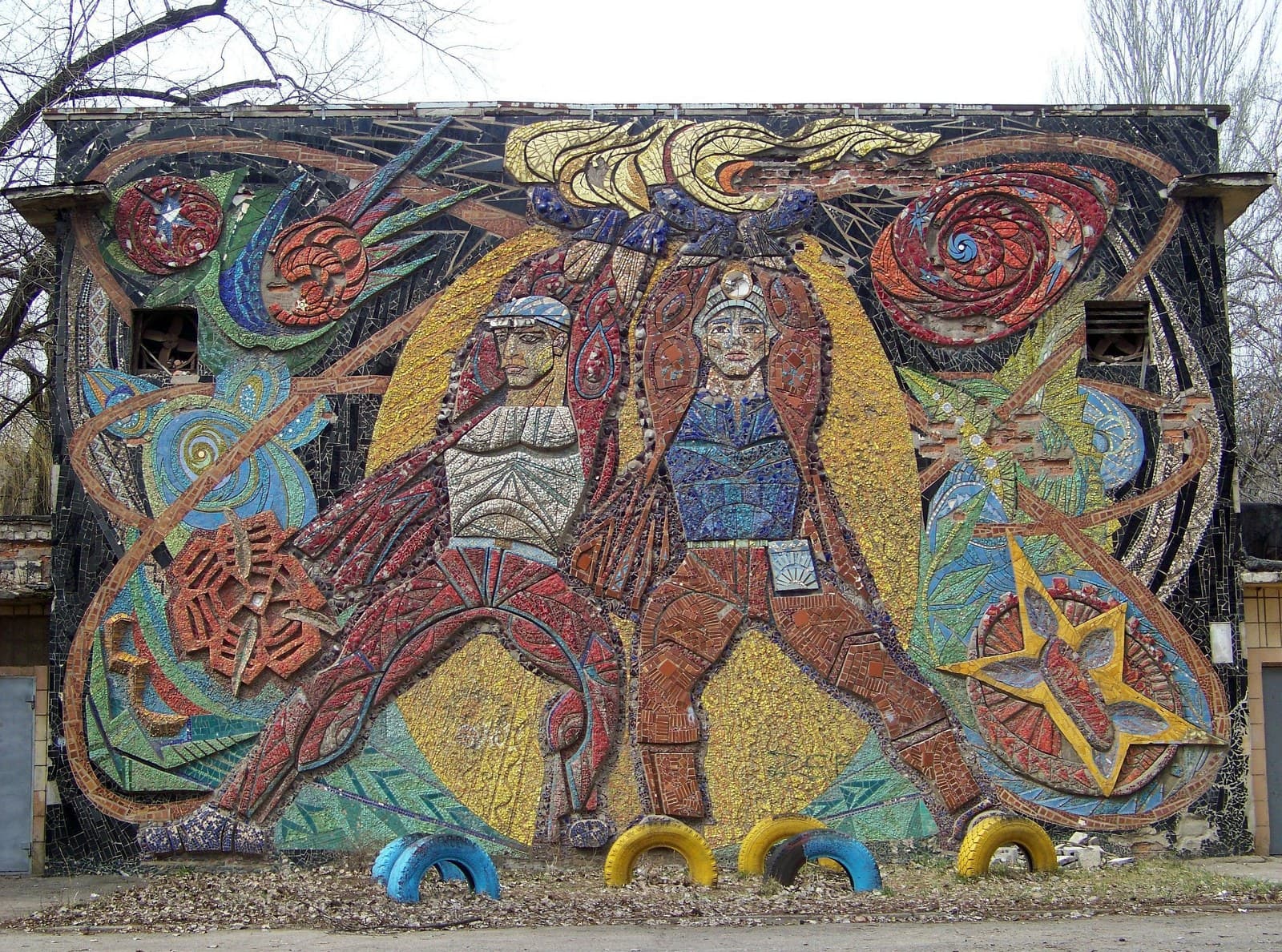
Prometheuses (mosaic cycle of School No. 5, Donetsk)
Alla Horska
The central panel of a nine-part cycle made in 1965–1966 by a collective led by Hryhorii Synytsia with Alla Horska, Halyna Zubchenko, Viktor Zaretskyi and Hennadii Marchenko: two figures raise a flame between cosmic spirals and folk-ornament suns. Eight smaller panels — «Космос», «Вода», «Вогонь», «Земля», «Життя», «Надра», «Сонце», «Повітря/Верба» — were completed in 1965, the central «Прометеї» in 1966.
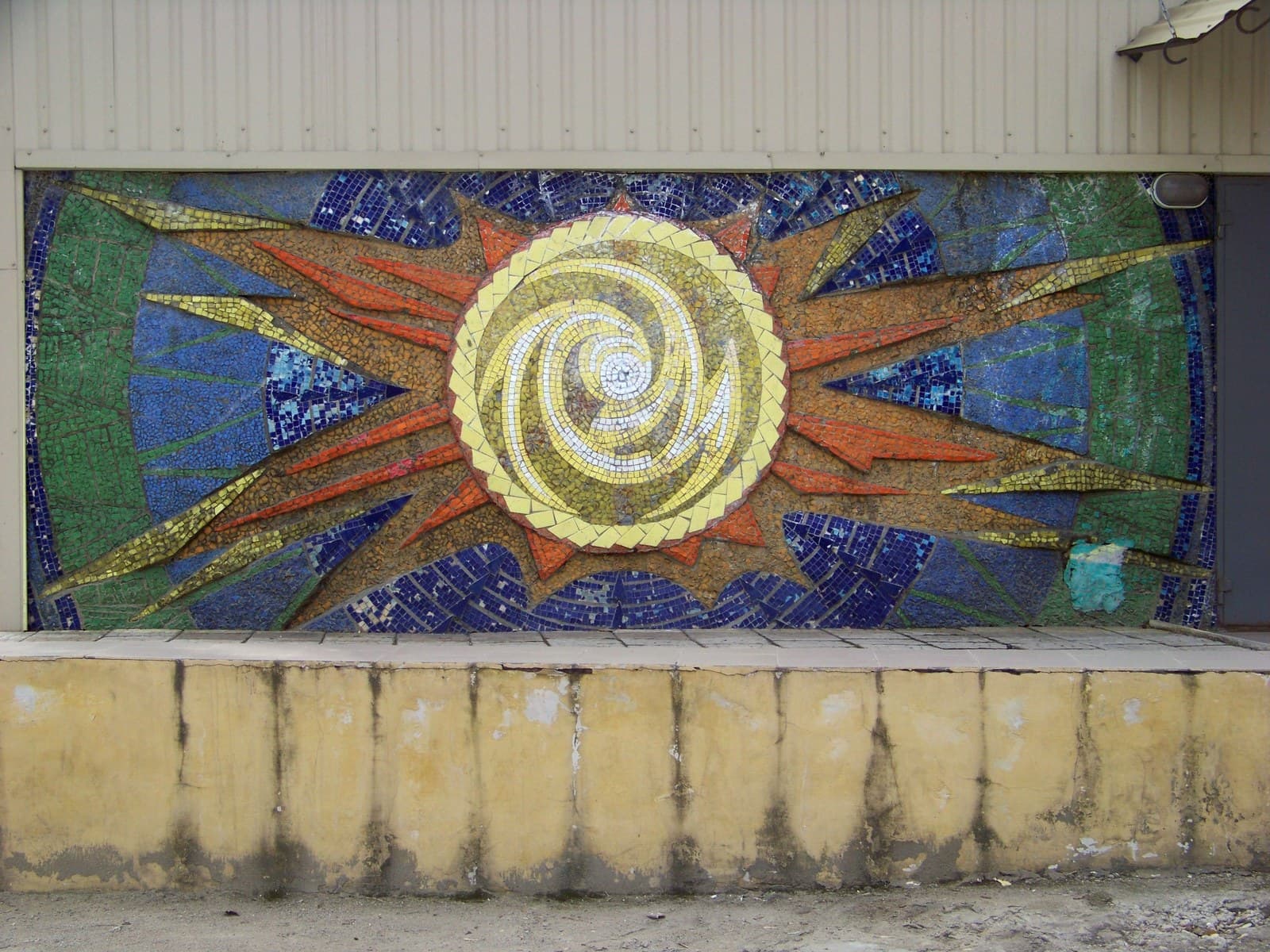
Prometheuses, Earth, Fire (mosaics of School No. 5, Donetsk)
Viktor Zaretskyi
Zaretskyi's contribution to the nine-panel mosaic cycle made in 1965–1966 by a collective led by Hryhorii Synytsia with Alla Horska, Halyna Zubchenko and Hennadii Marchenko. The central «Прометеї» panel sets two figures raising a flame among cosmic spirals and folk-ornament suns; the cycle fuses Ukrainian folk decoration, Baroque and Mexican muralism.