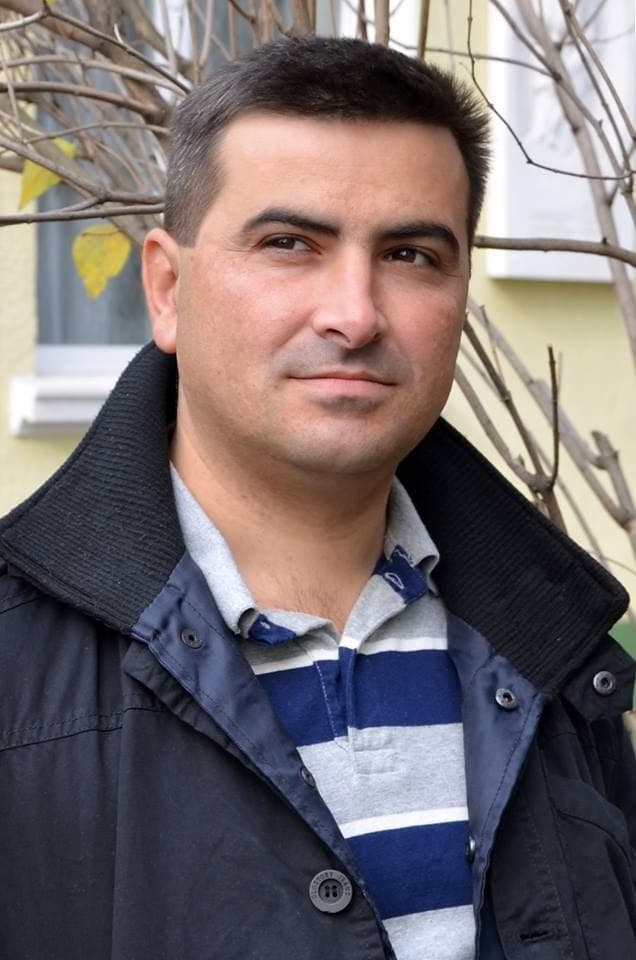
Mykola Yatsurak
Микола Яцурак
· Velykyi Kliuchiv, Ivano-Frankivsk Oblast, Ukraine
Mykola Yatsurak is a Ukrainian painter from Velykyi Kliuchiv in Ivano-Frankivsk Oblast, now living in Kolomyia, where he teaches at the Yaroslav Pstrak Art School. A member of the National Union of Artists of Ukraine, he paints Hutsul village life, weddings and Carpathian landscapes.
Mykola Yatsurak was born in the village of Velykyi Kliuchiv in Ivano-Frankivsk Oblast; his birth year is not recorded in any source located. He took his artistic education at the Institute of Arts of the Vasyl Stefanyk Precarpathian National University, also studied at the philosophy and theology faculty of the Yurii Fedkovych Chernivtsi National University, and holds a master's degree from the National University 'Ostroh Academy'. He lives in Kolomyia and teaches at the Yaroslav Pstrak Kolomyia Art School, and is a member of the National Union of Artists of Ukraine. His painting is rooted in the Hutsul region: wedding processions in his native Kliuchiv, young couples from Kosmach in embroidered dress, shepherds and their flocks, a bonfire in the pastures, frost on the Cheremosh river, and the flowers of the village garden — jasmine, lilac, marigolds, cherry blossom, sunflowers. Alongside the ethnographic subjects he paints allegorical works such as 'Sin'. He is documented as an Ivano-Frankivsk-region artist in Ukrainian art-blog surveys, but has no traceable personal website or gallery representation online, and his exhibition record could not be established.
Portrait: photograph sourced from ams3.digitaloceanspaces.com. © the photographer / rights holder; shown for editorial purposes. Contact us for attribution or removal.
Art Movements
Realism
Realism is an artistic movement that sought to depict reality as accurately and objectively as possible, holding that the purpose of art is to reflect all aspects of existence, rather than merely its idealized representation. The term was introduced by the French literary critic Jules Champfleury in the 1850s to denote art that opposed Romanticism and Academicism. In the visual arts, the significance of Realism as a style is quite controversial, and its boundaries are undefined. In a narrower sense, realism is understood as positivism, a movement in the visual arts of the second half of the 19th century. One of the first realists was the French artist Gustave Courbet (1819–1877), who opened his solo exhibition “The Pavilion of Realism” in Paris in 1855. Before him, artists of the Barbizon School—Théodore Rousseau, Jean-François Millet, and Jules Breton—worked in a realistic style. In the 1870s, realism split into two main movements: naturalism and impressionism. In contemporary painting, realism borders on the grotesque and anti-glamour.
Explore movement →Folk Decorative Art
Folk decorative art is the visual language of a community, traditionally created by untrained artisans rather than academic artists. It combines utility with ornament, transforming everyday objects like furniture, textiles, and tools into works of cultural expression.
Explore movement →1991–presentContemporary Ukrainian Painting
Painting made in independent Ukraine, from the 1991 declaration of independence onward. It is pluralist rather than programmatic: plein-air landscape and psychological portraiture continue alongside conceptual, minimalist and symbolist strands, with a marked turn after 2014 and especially after 2022 toward wartime subjects, national memory and the vernacular Ukrainian village.
Explore movement →Works by Mykola Yatsurak
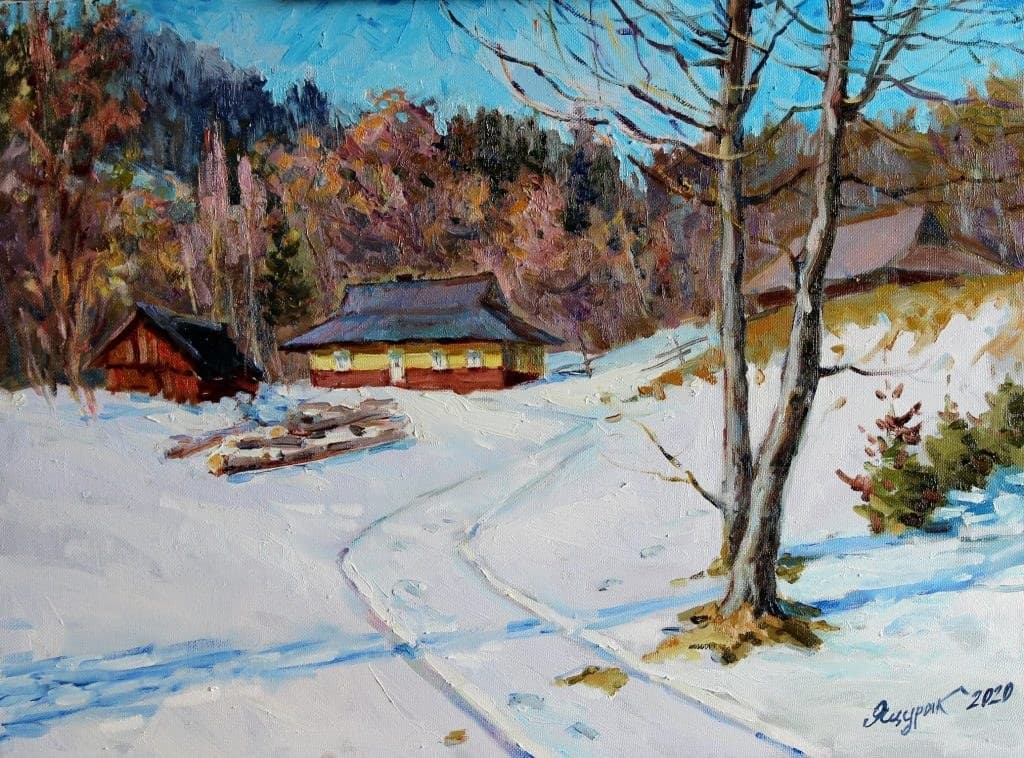
Coming to Spring
A Carpathian foothill landscape at the turn from winter to spring, with melting snow among the village fences.
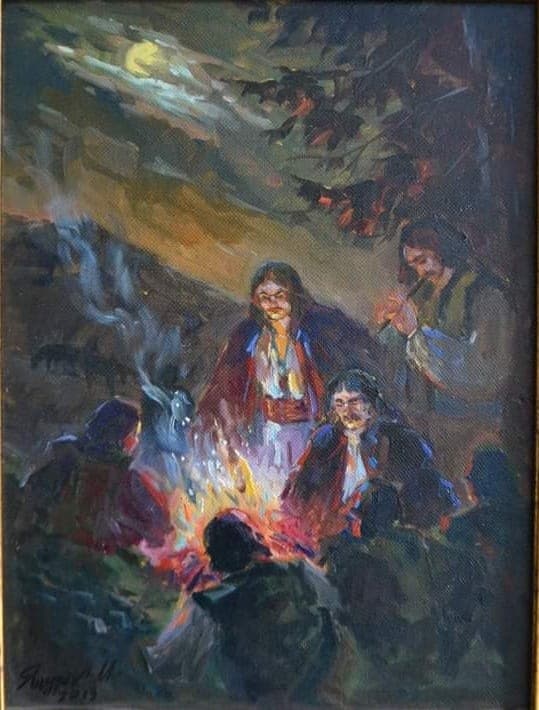
Around the Campfire
Figures gathered around a shepherds' bonfire ('vatra') in the high pastures, a central image of Hutsul pastoral life.
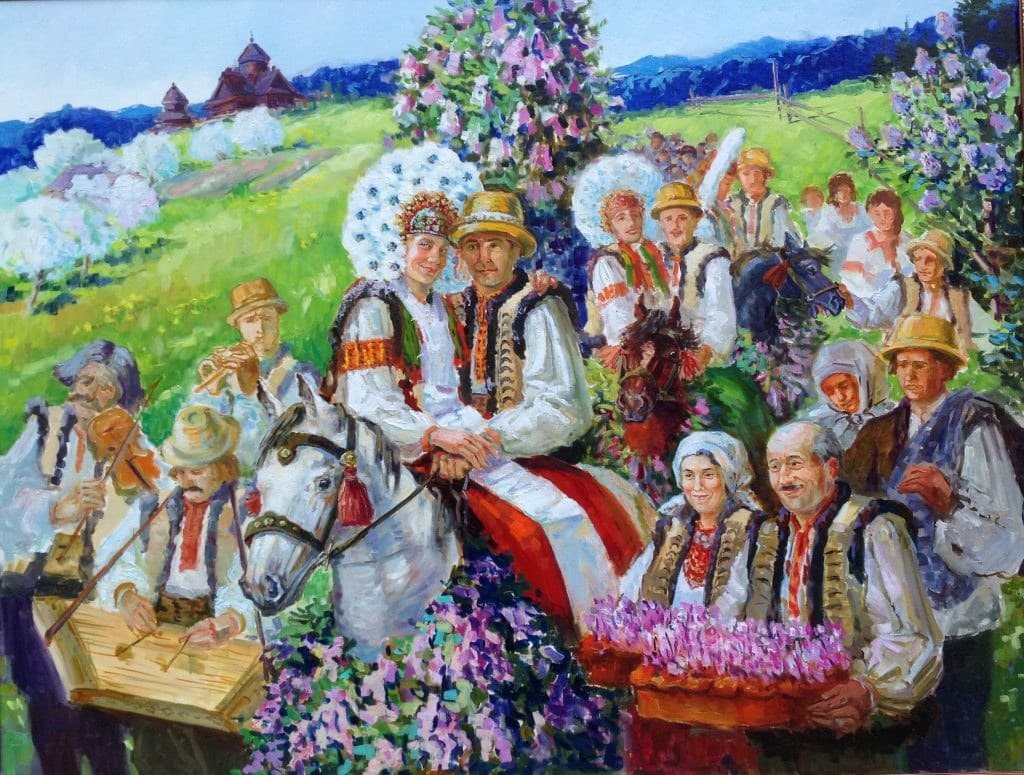
Kliuchiv Wedding
A wedding procession in the artist's native village of Velykyi Kliuchiv, painted as a broad multi-figure ethnographic composition.
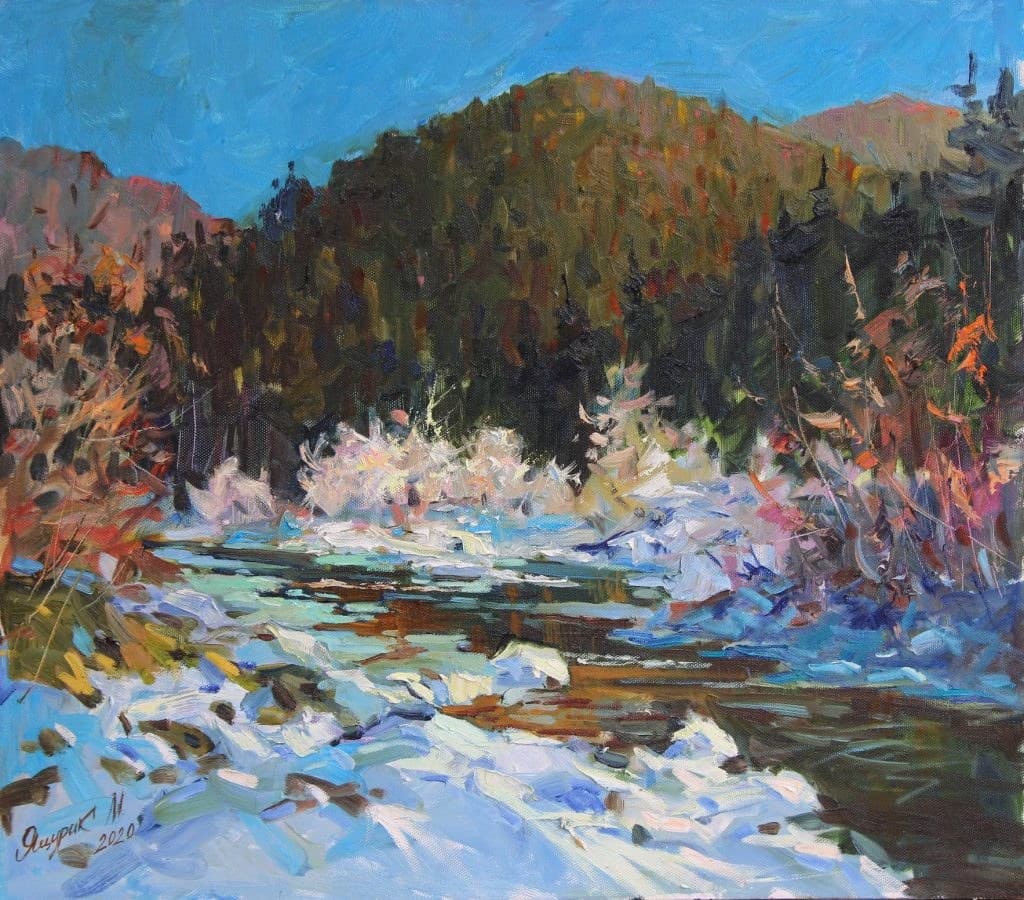
Frost on the Cheremosh
The Cheremosh river in the Hutsul highlands under early frost, one of the artist's recurring Carpathian water motifs.
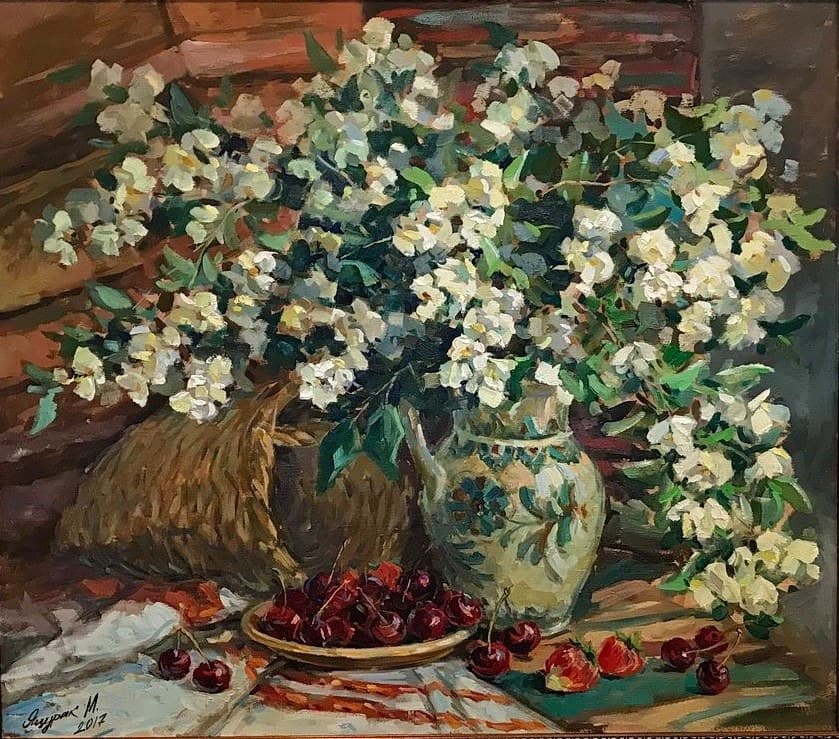
Jasmine
A study of jasmine in flower, from the group of garden-flower subjects that runs through the artist's work.