European Connections
Ukrainians Who Shaped Europe
Scientists, poets, rulers, and artists — Ukrainians have been part of the European story for centuries.
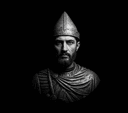
Yaroslav the Wise
c. 978–1054
Grand Prince of Kyiv
Kyiv
Yaroslav the Wise transformed Kyiv into one of Europe's premier capitals. He built Saint Sophia Cathedral, founded monasteries and schools, codified Ukrainian law (Ruska Pravda), and married his children into the royal families of France, Norway, Hungary, and Poland. Medieval Europe's rulers viewed Kyiv as a peer — not a periphery.
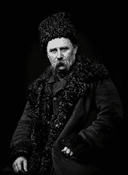
Taras Shevchenko
1814–1861
Poet, Artist & National Symbol
Moryntsi, Kyiv region, Ukraine
Born a serf, Taras Shevchenko was bought free in 1838 by Russian artists who recognised his extraordinary talent. He went on to become Ukraine's greatest poet — the father of modern Ukrainian literary language — and a accomplished painter trained at the St. Petersburg Academy of Arts. His poetry collection 'Kobzar' is the foundational text of Ukrainian literature, combining Romanticism with a fierce demand for national dignity. He was exiled for a decade by the Tsar for his political poems. Today his monuments stand in cities across Europe, North America, and beyond.
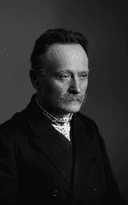
Ivan Franko
1856–1916
Writer, Poet & Intellectual
Nahuievychi, Galicia (then Austria-Hungary), Ukraine
Ivan Franko was born in Habsburg Galicia — the most European part of Ukraine — and became Ukraine's second most important literary figure after Shevchenko. Enormously prolific, he wrote poetry, novels, plays, and scholarly works in Ukrainian, Polish, and German. A social democrat and tireless advocate for Ukrainian identity within the Austro-Hungarian Empire, he was nominated for the Nobel Prize in Literature. He studied in Lviv, Chernivtsi, and Vienna, and was a fully European intellectual engaged with Zola, Marx, and Darwin.
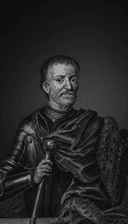
Ivan Mazepa
1639–1709
Hetman of Ukraine
Bila Tserkva, Ukraine
Ivan Mazepa, Hetman of the Zaporozhian Host, was one of the most educated and sophisticated leaders of his age — fluent in Latin, Polish, German, Italian, and Ukrainian. He allied with King Charles XII of Sweden in 1708 to free Ukraine from Muscovite domination. Though defeated at Poltava, he became an enduring symbol of Ukrainian independence — immortalised in works by Lord Byron, Victor Hugo, Voltaire, and Franz Liszt.
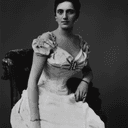
Solomiia Krushelnytska
1872–1952
Opera Singer (Soprano)
Bila, near Buchach, Galicia (then Austria-Hungary), Ukraine
Solomiia Krushelnytska was one of the greatest opera sopranos of the early 20th century. Born in Galicia under the Habsburgs, she studied in Lviv and Italy and went on to perform at La Scala, the Vienna Opera, Covent Garden, and every major European opera house. When Puccini's Madame Butterfly failed at its 1904 premiere in Milan, he rewrote it — and entrusted the revised version to Krushelnytska. Her performance that same year was a triumph, and Madame Butterfly went on to become one of the most performed operas in history.
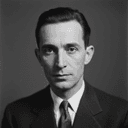
Paul Celan
1920–1970
Poet
Chernivtsi (then Romania), Ukraine
Paul Celan (born Paul Antschel) grew up in the multilingual Czernowitz (Chernivtsi) — a city where Ukrainian, German, Romanian, and Yiddish coexisted under the Habsburg legacy. A survivor of the Holocaust who lost both parents in Nazi camps, he became one of the most important German-language poets of the 20th century. His poem 'Todesfuge' (Death Fugue) is among the most studied poems in any language.
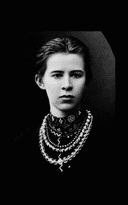
Lesia Ukrainka
1871–1913
Poet & Playwright
Novohrad-Volynsky, Ukraine
Larysa Kosach, known as Lesia Ukrainka, was Ukraine's greatest female writer and one of the most important figures in European Symbolism. Ill with tuberculosis for most of her life, she drew on Ancient Greek drama, medieval European epics, and biblical themes to write plays of extraordinary intellectual ambition. She spoke a dozen languages and her work is part of world literature.
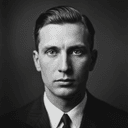
Kazymyr Malevych
1879–1935
Artist, Founder of Suprematism
Kyiv, Ukraine
Kazymyr Malevych was born in Kyiv to a Polish-Ukrainian family and is one of the most consequential artists in the history of European modernism. He invented Suprematism — the first purely abstract art movement — and his 'Black Square' (1915) is among the most studied and debated works of art ever made. Malevych's ideas directly influenced the Bauhaus in Germany, De Stijl in the Netherlands, and virtually the entire course of abstract art in the 20th century. He saw himself as Ukrainian, not Russian.
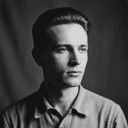
Yuriі Kondratіuk
1897–1941
Engineer & Space Pioneer
Poltava region, Ukraine
Yuriі Kondratyuk (born Oleksandr Shargei) was a self-taught Ukrainian engineer who independently derived the mathematics for the optimal route to the Moon — lunar orbit rendezvous — in the 1920s, without access to Western scientific literature. NASA used his calculations for the Apollo missions. The path from Earth orbit to lunar landing and back is still called the 'Kondratіuk Route'.
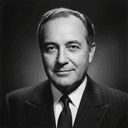
Ihor Sikorskyi
1889–1972
Aviation Pioneer, Inventor of the Helicopter
Kyiv, Ukraine
Ihor Sikorskyi was born in Kyiv and built Europe's first four-engine aircraft — the Ilia Muromets — in 1913, before the First World War made it famous as a bomber. After the Russian Revolution he emigrated to the United States, where he founded Sikorskyi Aircraft and designed the VS-300 (1939) — the prototype for the modern helicopter. His inventions shaped both civilian aviation and military operations for the rest of the 20th century. He is one of the most consequential engineers born on Ukrainian soil.
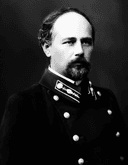
Mykola Leontovych
1877–1921
Composer
Vinnytsia region, Ukraine
Mykola Leontovych composed 'Shchedryk' in 1916 — a choral work based on a Ukrainian New Year folk melody. When the Ukrainian National Chorus performed it in Europe and New York in 1921–1922, the American arranger Peter Wilhousky added English lyrics calling it 'Carol of the Bells' — now one of the most recognised Christmas songs in the world. Leontovych was assassinated by a Soviet secret agent in 1921.
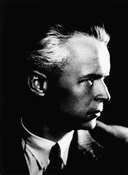
Oleksandr Dovzhenko
1894–1956
Film Director
Sosnytsia, Chernihiv region, Ukraine
Oleksandr Dovzhenko is regarded as one of the greatest filmmakers in the history of cinema. His silent film 'Earth' (1930) — a lyrical meditation on Ukrainian rural life, death, and the Soviet collectivisation — was voted one of the ten greatest films ever made at the Brussels World's Fair in 1958. He studied in Berlin in the 1920s and was deeply influenced by German Expressionism and European avant-garde cinema. Despite heavy Soviet censorship of his work, his poetic vision of Ukraine's landscapes and people remains incomparable.
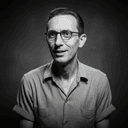
Lev Landau
1908–1968
Physicist & Nobel Laureate
Baku (worked in Kharkiv), Azerbaijan/Ukraine
Lev Landau spent the most formative years of his career at the Ukrainian Physico-Technical Institute (UPTI) in Kharkiv — the USSR's leading physics centre — from 1932 to 1937. He developed the theory of second-order phase transitions, worked on quantum mechanics, and co-authored the legendary 'Course of Theoretical Physics' series (10 volumes). He won the Nobel Prize in Physics in 1962.
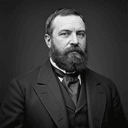
John Hughes
1814–1889
Industrial Pioneer
Merthyr Tydfil, Wales, UK
John James Hughes was a Welsh ironmaster who founded the city that became Donetsk. In 1869 he won a contract to build a steel plant and railway in the Donbas region. He brought Welsh and English workers and their families, building not just a factory but a company town — schools, hospitals, an Anglican church. The city was named Yuzivka (Hughes's town) until 1924. He is the most prominent example of British-European industrial investment in Ukraine.
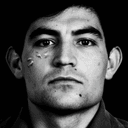
Vasyl Stus
1938–1985
Poet & Dissident
Rakhivka, Donetsk region, Ukraine
Vasyl Stus was Ukraine's most important dissident poet of the Soviet era — arrested for protesting political repression, he spent 23 of his last 25 years in Soviet labour camps. He was nominated for the Nobel Prize in Literature in 1985 by the West German PEN Centre; the Soviet authorities responded by transferring him to a harsher regime where he died in September 1985 under disputed circumstances. He was posthumously rehabilitated and is now recognised as one of Ukraine's greatest literary figures.
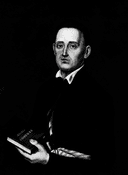
Hryhorii Skovoroda
1722–1794
Philosopher, Poet & Wandering Teacher
Chornukhy, Poltava region, Ukraine
Hryhorii Skovoroda is Ukraine's greatest philosopher — a wandering sage who refused every academic post and church position offered to him, choosing instead to teach ordinary people through conversation, fables, and poetry. Educated at the Kyiv Mohyla Academy (one of Europe's oldest higher institutions), he spent years in Hungary, Austria, and Italy, absorbing European philosophy firsthand. Blending Stoicism, Neoplatonism, and Christian mysticism, he developed a philosophy of 'self-knowledge' and 'the kindred work' — finding one's true calling. His epitaph, which he wrote himself: 'The world tried to catch me but did not succeed.' The museum dedicated to him in Skovorodynivka was destroyed by a Russian airstrike in May 2022.
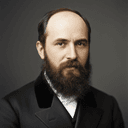
Pamfil Yurkevych
1826–1874
Philosopher
Lipliave, Poltava region, Ukraine
Pamfil Yurkevych is one of the most original Ukrainian philosophers of the 19th century. Educated at the Kyiv Theological Academy — where he later taught — he developed a sophisticated 'philosophy of the heart' (Cordocentrism), arguing that the heart, not the brain, is the true centre of human spiritual and moral life. This concept runs through Ukrainian philosophy from Skovoroda to the 20th century and distinguishes Ukrainian thought from rationalist Western European traditions. He was later appointed professor at Moscow University, where his student Vladimir Solovyov — who became Russia's greatest philosopher — credited Yurkevych as his primary influence. Yurkevych engaged critically and deeply with Kant, Hegel, and the empiricists.
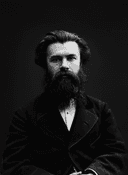
Mykhailo Drahomanov
1841–1895
Political Philosopher & Historian
Hadyach, Poltava region, Ukraine
Mykhailo Drahomanov was the most important Ukrainian political thinker of the 19th century — a federalist, liberal, and champion of individual rights who insisted that Ukrainian national liberation and European democratic values were inseparable. Forced into emigration in 1876 after the Tsarist Ems Decree banned Ukrainian-language publishing, he settled in Geneva — the centre of European socialist and liberal exile politics — where he published Ukrainian political literature freely. He later taught at Sofia University in Bulgaria. He was Lesya Ukrainka's uncle and a major intellectual influence on her. Ivan Franko called him the greatest Ukrainian political mind of their era.
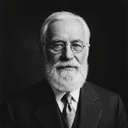
Volodymyr Vernadskyі
1863–1945
Scientist & Philosopher of the Biosphere
Kyiv, Ukraine
Volodymyr Vernadskyі was born in Kyiv and became one of the most original scientific thinkers of the 20th century. He founded geochemistry and biogeochemistry, and developed the concept of the 'noosphere' — the sphere of human thought as a geological force transforming the planet — which preceded and influenced the modern idea of the Anthropocene. His noosphere concept was developed in parallel with the French Jesuit philosopher Pierre Teilhard de Chardin and popularised in the West through French scientific circles. He founded the Ukrainian Academy of Sciences in 1918 and was its first president. His ideas on the interconnectedness of life, mind, and the Earth remain deeply influential in European ecological and philosophical thought.
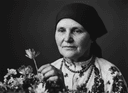
Mariia Prymachenko
1909–1997
Folk Artist
Bolotnya, Kyiv region, Ukraine
Mariia Pryimachenko was a self-taught Ukrainian folk artist whose vibrant, fantastical paintings of animals and mythical creatures have been exhibited at the Louvre in Paris, the Museum of Folk Art in Montreal, and galleries across Europe. Pablo Picasso said of her work: 'I bow before the artistic miracle of this wonderful Ukrainian woman.' On 27 February 2022, three days into the full-scale invasion, Russian forces burned 25 of her original paintings in the Ivankiv Museum.
Profiles based on verified historical sources. Sources linked within each card.