Ukrainian Visual Art
A personal selection of Ukrainian artists and works we love — landscapes, still lifes, portraits, folk art and more. Not a textbook, not a survey: just paintings worth looking at, gathered in one place.
Recent Additions
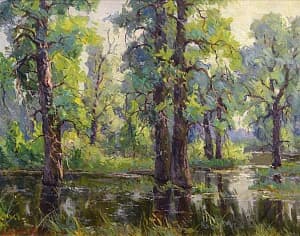
“A Poplar in the Water. Koncha-Zaspa”
Vasyl Nepyipyvo
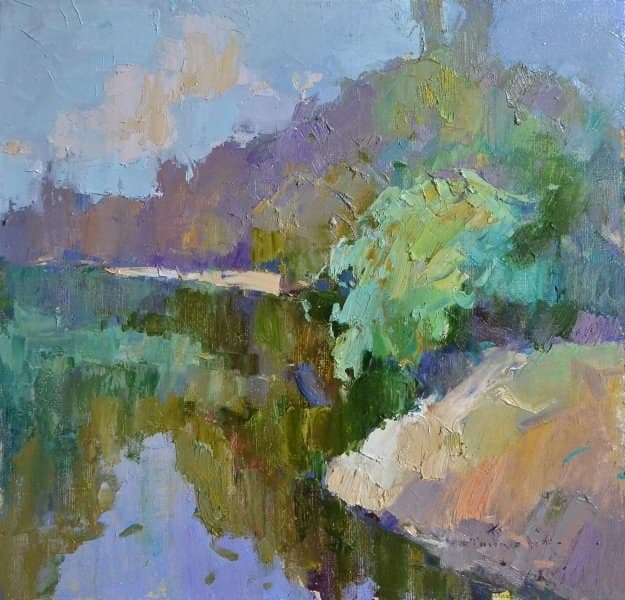
On the river Tisza in summer
Oleksandr Shandor
Summer on the Tysa, the river that runs past the artist's native Vynohradiv, painted in full sunlight with heavy impasto and reflected colour.
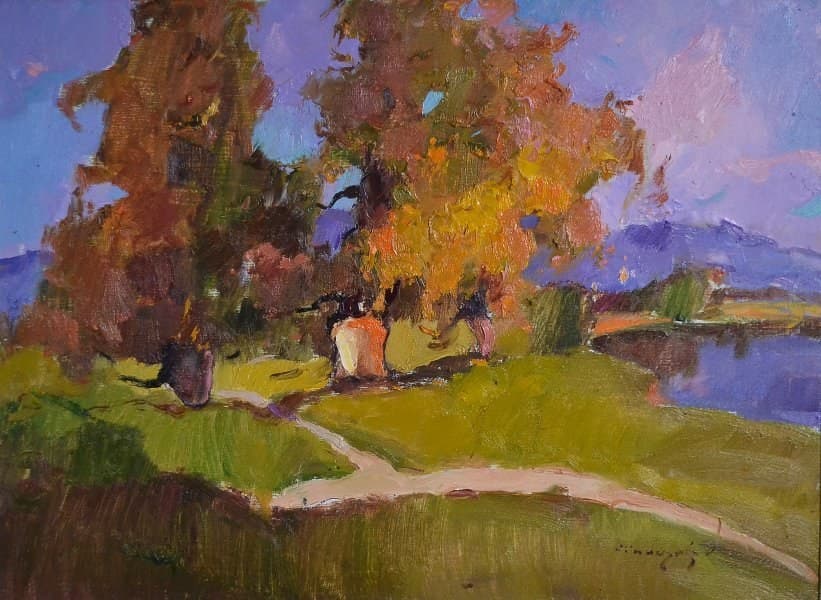
Road to autumn
Oleksandr Shandor
A country road running between trees turning gold, built up in warm yellows against cooler shadow. One of the artist's recurring seasonal landscapes.
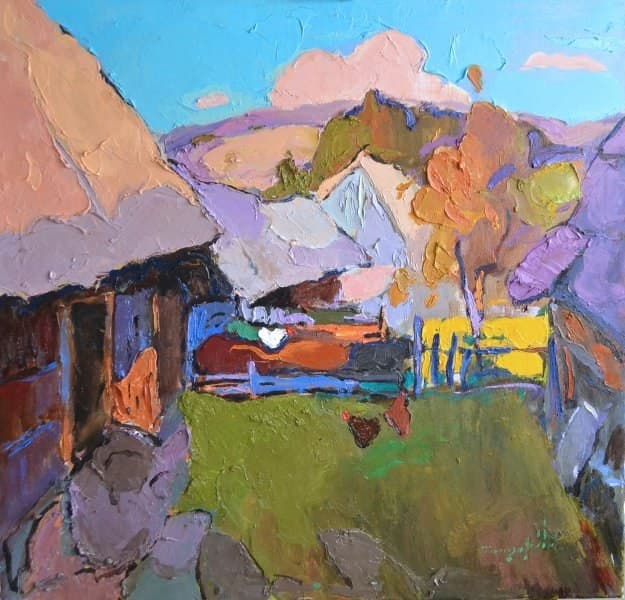
Chicken coop
Oleksandr Shandor
An unglamorous village outbuilding turned into a study of dappled light and broken colour, typical of the artist's attention to ordinary Transcarpathian yards.
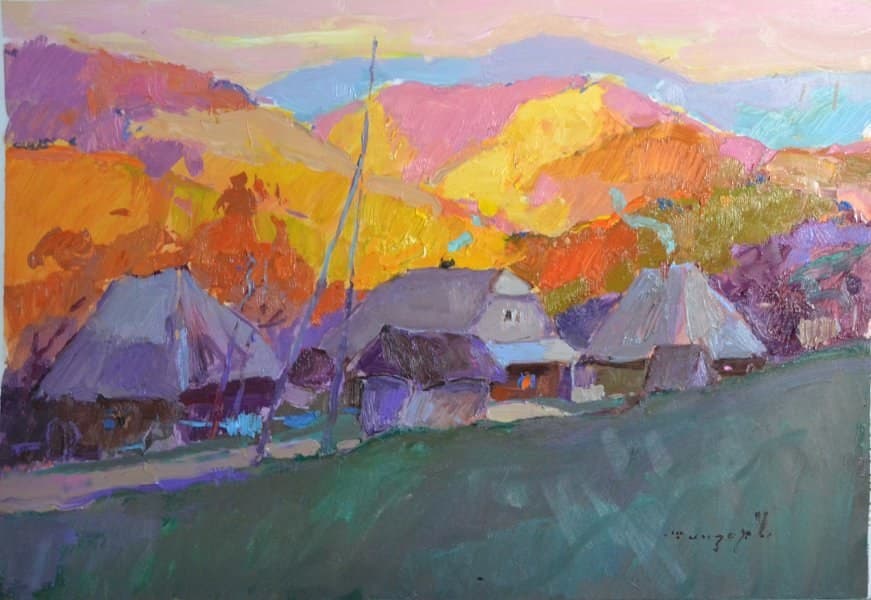
Evening chores
Oleksandr Shandor
A Transcarpathian farmyard at dusk, the last low light picking out the work still being finished. Oil on cardboard in the artist's warm impressionist manner.
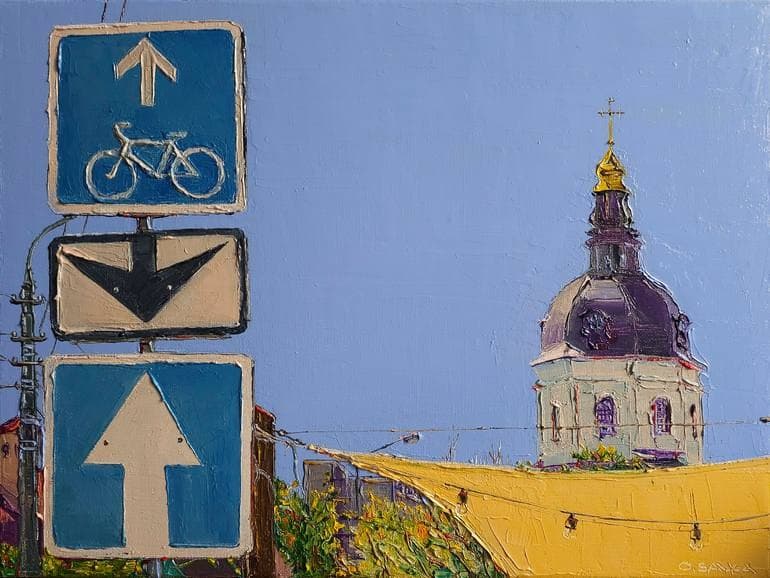
The Annunciation
Oleh Savka
Old Podil in golden light with the dome of the Church of the Annunciation at the Kyiv-Mohyla Academy behind it. The artist dedicated the painting to the events in Sumy of 13 April 2025: "We will not forget. We will not forgive."
Art Movements
Periods, styles, and schools that shaped Ukrainian art history
Cossack Baroque (Ukrainian Baroque Painting)
A national variant of Baroque fusing the Byzantine icon tradition with Western European Baroque realism and ornament: monumental gilded iconostases, parsuna portraiture, and the Zhovkva and Kyivan Cave Monastery workshops.
Symbolism
A late nineteenth- and early twentieth-century movement that turned away from the documentary aims of realism toward myth, allegory, dream and inner experience. In Ukraine it arrived through Kyiv, Poltava, Kharkiv and Lviv art circles and through artists trained in Munich, Paris and St Petersburg, and it fed directly into Ukrainian Art Nouveau and early modernism. Ukrainian symbolists favoured antique and folk mythology, ritual and allegorical figure compositions over contemporary social subjects.
Naive Art
A current of self-taught, non-academic painting in which artists without formal training build highly personal pictorial worlds out of folk memory, religious imagery, dreams and invented flora and fauna. In Ukraine it is the tradition of Kateryna Bilokur, Maria Prymachenko and Polina Raiko: flat, ornamentally organised, intensely coloured compositions that reject perspective and academic modelling in favour of rhythm, pattern and symbolic narrative. Ukrainian naive art is closely intertwined with village decorative painting, and after 2022 became a widely used emblem of national cultural resilience.
Optical Illusion Art
Art built on ambiguous or double images, where a single painted surface reads as two different subjects depending on how the eye organises it. Rooted in the 16th-century composite heads of Arcimboldo and continued by Dalí's paranoiac-critical images and Escher's impossible figures; in Ukraine its best-known exponent is Oleh Shupliak, who calls his double-image canvases 'dvovzory'.
Mosaic Art
Art made by assembling images from small fragments of glass, smalt, ceramic or stone. In Ukraine the medium ranges from the monumental smalt panels of the Soviet-era public-building programme to contemporary independent and street practice, where artists mount mosaic panels directly on facades and interiors. Since 2022 a distinct wartime strand has appeared in front-line cities, with artists composing mosaics from window glass shattered by Russian strikes and returning the finished works to the sites of the damage.
Expressionism
A modernist approach that distorts colour, drawing and surface to convey inner emotional and spiritual states rather than optical appearances. In Ukrainian art it runs from the early-twentieth-century Galician and Lviv painters through to post-war diaspora artists, who combined heavy impasto, near-abstract structural drawing and saturated non-naturalistic colour.
Artists
Ukrainian painters, sculptors, and visual artists
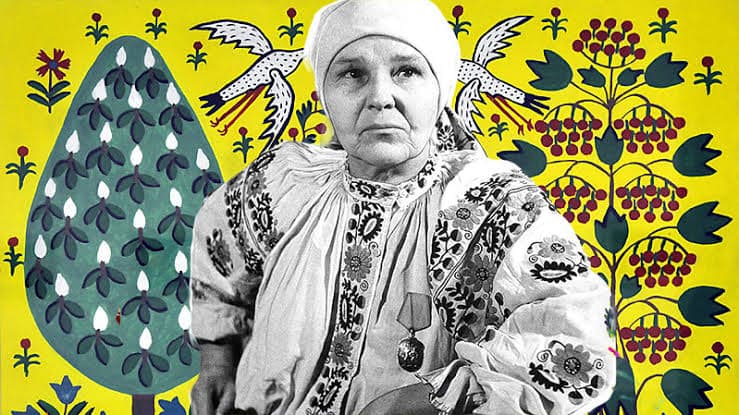
Mariia Prymachenko
1909–1997
Mariia Prymachenko was a Ukrainian folk painter and the best-known figure of twentieth-century Ukrainian naive art. Working in gouache and watercolour on paper, she invented a bestiary of fantastical animals and personified flowers that has become a national visual emblem. She spent almost her whole life in her native village of Bolotnia, north of Kyiv.
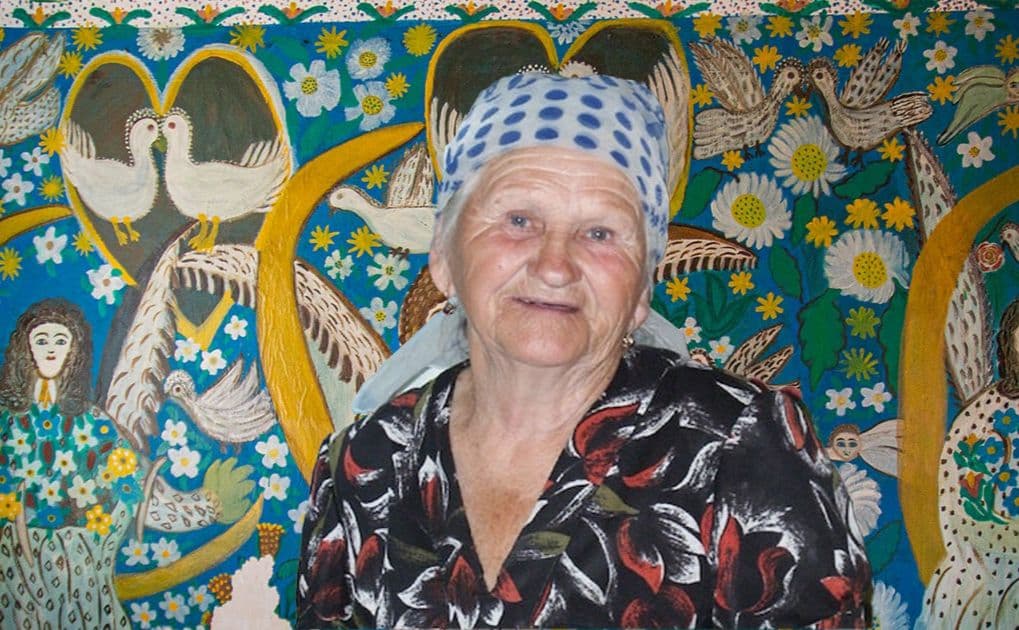
Polina Raiko
1928–2004
Polina Raiko was a Ukrainian self-taught naive artist from Oleshky in the Kherson region who began to paint at the age of sixty-nine. Over roughly six years she covered the walls and ceilings of her own six-room house, its summer kitchen, gates and fences with enamel-paint murals of angels, birds, animals and family memories. The house became a cult site of Ukrainian outsider art and was destroyed in June 2023 by the flooding that followed the Russian destruction of the Kakhovka dam.
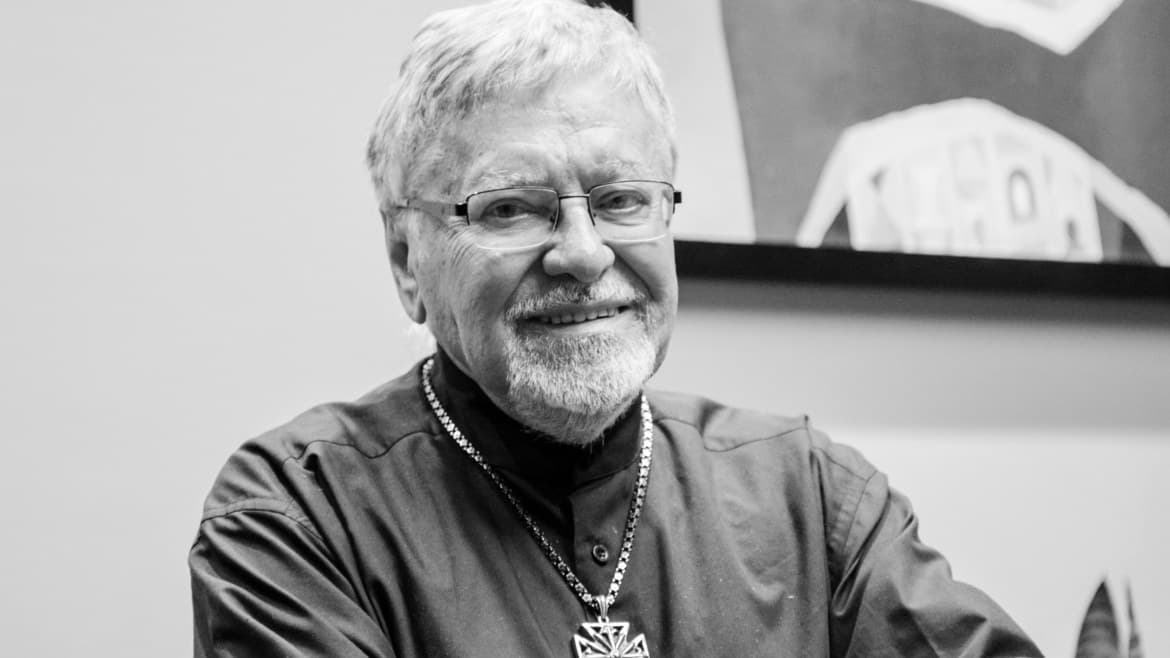
Oleksandr Dubovyk
b. 1931
Oleksandr Dubovyk is a Ukrainian painter, printmaker, monumental artist and writer on art, born in Kyiv in 1931 and still working there. A leading figure of the Kyiv artistic underground of the 1960s–80s, he moved from academic training through the austere realism of the Thaw into an abstract-symbolist language of his own signs — the Bouquet, the Triumphator, the Phantom, the Tree of Life. His work is held by the National Art Museum of Ukraine, the Zimmerli Art Museum's Dodge Collection and museums in Germany, Iran and the USA.
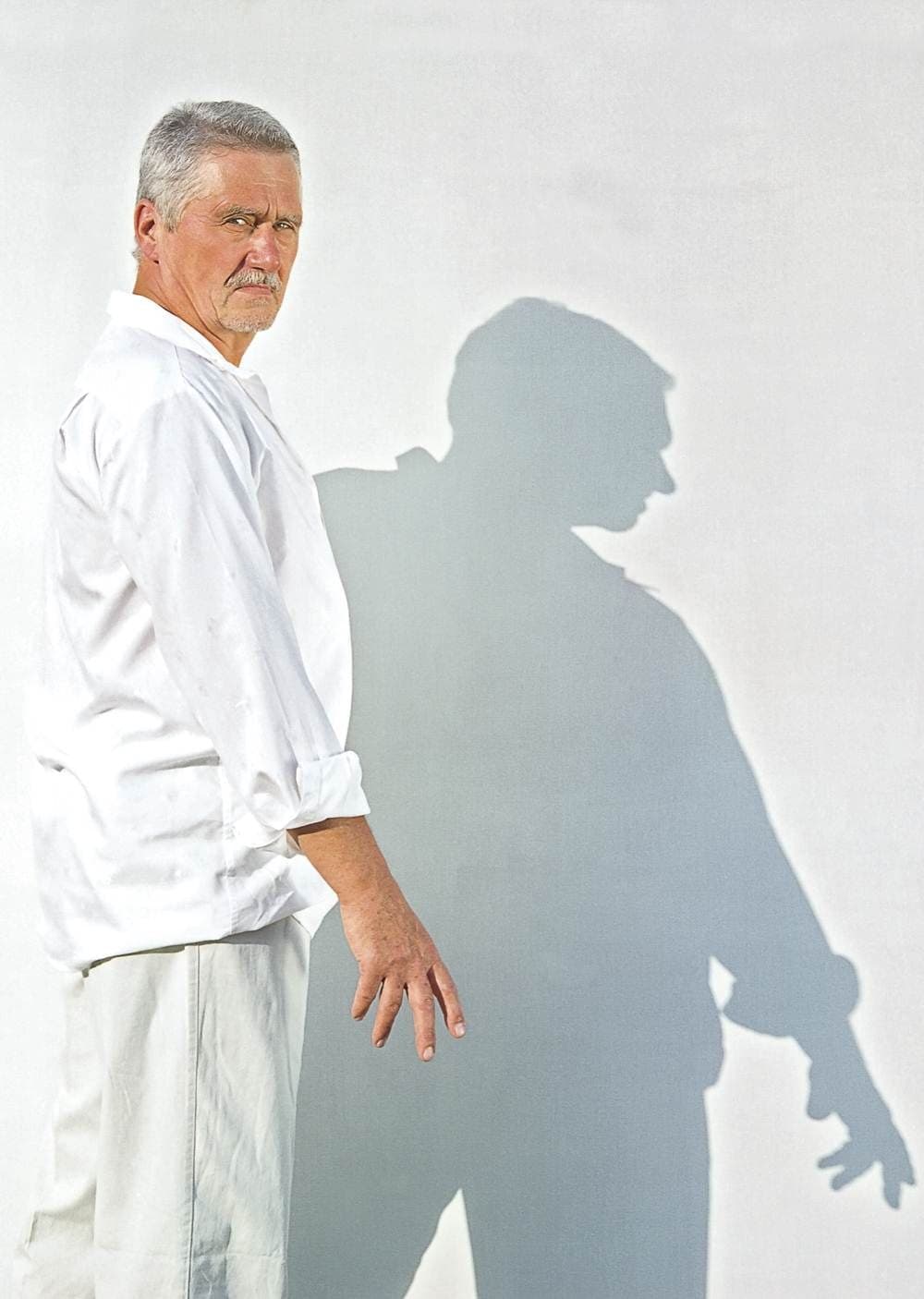
Anatolii Kryvolap
b. 1946
Anatolii Kryvolap, born 1946 in Yahotyn, is the master of Ukrainian non-figurative landscape and one of the highest-selling living Ukrainian painters. Colour is his entire subject — steppe, lake, evening, horse reduced to saturated fields of pigment — and in 2011 his canvases twice set world records for contemporary Ukrainian art at Phillips.
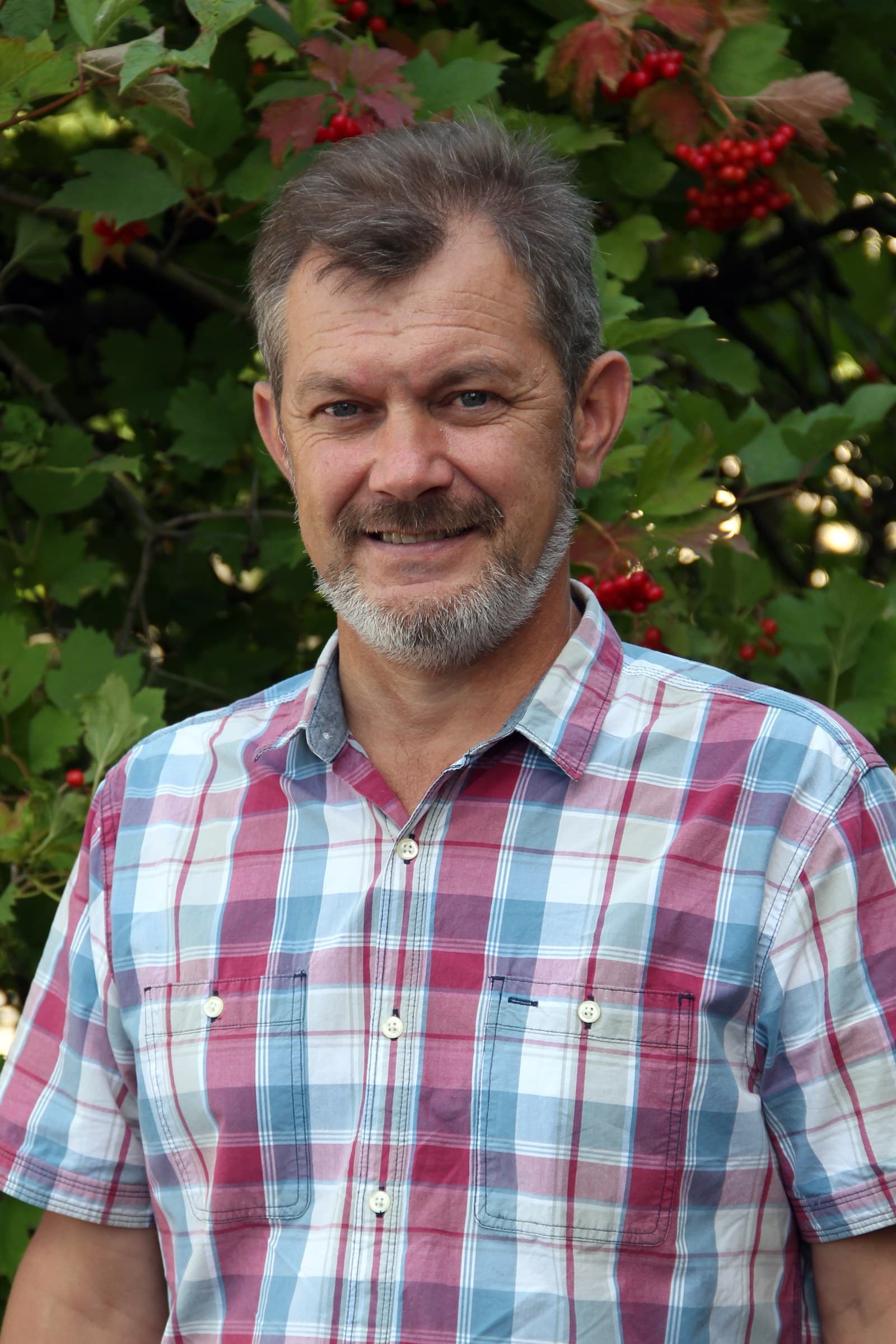
Oleh Shupliak
b. 1967
Oleh Shupliak (b. 1967, Bishche, Ternopil Oblast) is an Honoured Artist of Ukraine best known for his 'dvovzory' — double-image paintings in which a landscape or genre scene resolves, at a second glance, into a portrait. He has been called the Ukrainian Salvador Dalí.
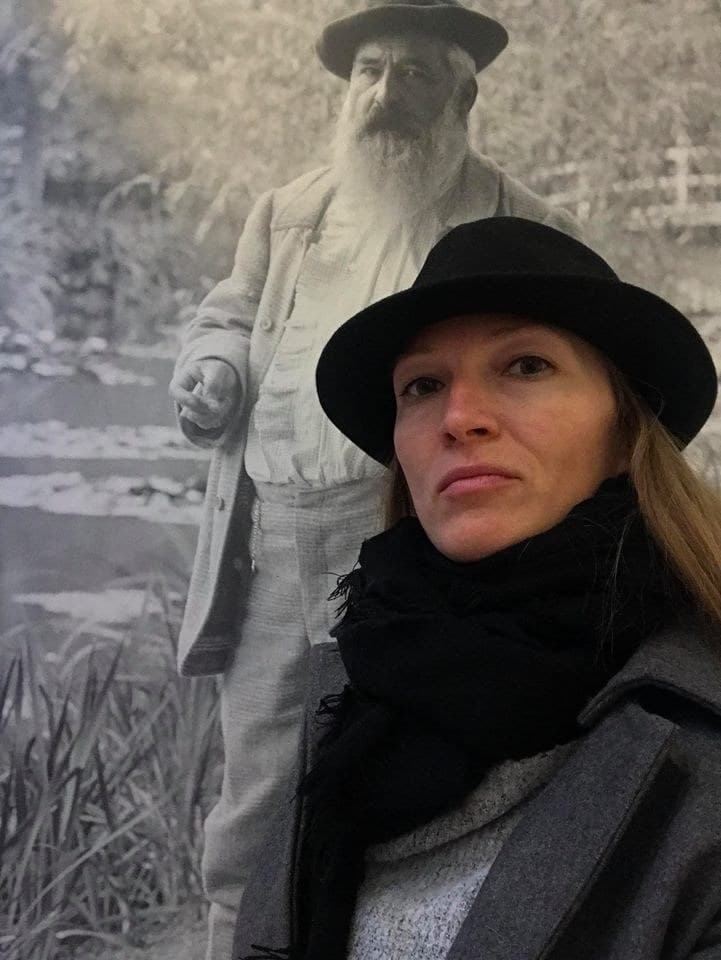
Kateryna Kosianenko
b. 1978
Kateryna Kosianenko is a Kyiv painter and icon-painter whose figurative work fuses Ukrainian Baroque iconography with Renaissance composition and an impressionist feel for landscape light. Honoured Artist of Ukraine (2019) and a member of the National Union of Artists of Ukraine since 2002, she works almost entirely in themed series. She has held more than 35 solo exhibitions and won first prize in painting at the 100th Salon d'Automne in Paris (2003).
About This Collection
This curated collection documents the richness of Ukrainian visual art — from medieval icon painting through the modernist explosion of the early 20th century, the suppressed avant-garde of the Soviet era, and the vibrant contemporary scene that continues to evolve amid Ukraine's struggle for independence and European integration.
Ukrainian art has long been underrepresented in global art history. This project aims to change that by providing accessible, contextualized information about Ukrainian artists, their works, and the movements that shaped them.