Viktor Hvozdynskyi
Віктор Гвоздинський
b. 1951 · Volodymyr-Volynskyi, Volyn Oblast, Ukraine
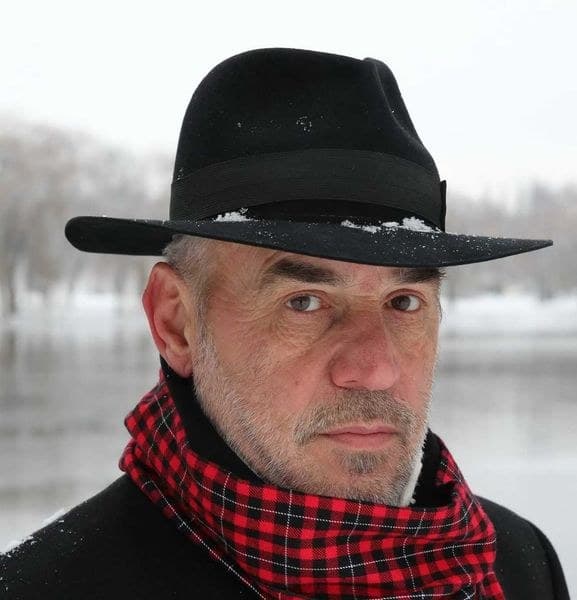
Viktor Vyacheslavovych Hvozdynskyi (born 25 February 1951 in Volodymyr-Volynskyi) is a Ukrainian painter, watercolourist and monumental artist who has worked in Rivne since 1975 and has been a member of the National Union of Artists of Ukraine since 1985. He is best known for watercolour and oil landscapes of Volyn, Polissia, the Carpathians and Central Europe, and for stained glass made with his wife Larysa Hvozdynska.
Viktor Hvozdynskyi was born on 25 February 1951 in Volodymyr-Volynskyi in Volyn Oblast. He trained at the Kharkiv Art School (1966–1970) under V. Bohdanov and T. Shyhimaha, then at the Kharkiv Art-Industrial Institute, now the Kharkiv State Academy of Design and Arts (1970–1975), under S. Besedin, A. Konstantynopolskyi and O. Martynets. From 1975 he worked at the art-production combine of the Rivne regional branch of the National Union of Artists of Ukraine, joining the Union itself in 1985; alongside easel painting he produced monumental stained glass, often in collaboration with his wife Larysa Hvozdynska, and architectural-design schemes for buildings in Rivne. He spent much of the 1990s living and working in the Czech Republic, exhibiting in Prague, Most, Šumperk and Jeseník, and has since painted extensively in Poland, producing long-running series of Piotrków motifs. His output runs to more than 300 regional and over 40 national and international exhibitions with more than twenty solo shows; works are held in the Rivne Regional Museum of Local Lore among other collections. Later in his career he chaired the Culture, Art and Spirituality Committee of the Public Coordination Council of Rivne Oblast and in 2016 initiated the regional Nil Khasevych Prize in Visual Arts, and in 2021 he received the Georgii Kosmiadi city art prize of Rivne. Critics describe his mature manner as a decorative post-impressionism, alternating near-monochrome winter landscapes with high-keyed, folk-inflected colour, and he continues to live and work in Rivne.
Portrait: photograph sourced from volart.com.ua. © the photographer / rights holder; shown for editorial purposes. Contact us for attribution or removal.
Art Movements
Post-Impressionism
Post-Impressionism (c. 1886–1905) was a French art movement that reacted against the limitations of Impressionism, favoring emotional expression, symbolic content, and structural order over realistic light depiction. Key artists included Cézanne, Van Gogh, Gauguin, and Seurat, who used vivid, unnatural colors and thick paint application to create unique styles that paved the way for modern art. Key Characteristics Symbolic and Emotional Content: Pushing beyond the objective recording of nature to express subjective emotions and symbolic meaning. Structural Order: A move away from fleeting moments toward, as Paul Cézanne aimed, making of Impressionism "something solid and durable, like the art of the museums". Vivid, Non-Naturalistic Color: Using color for emotional or decorative impact rather than just representing natural light. Distinctive Techniques: Examples include Seurat's Pointillism (tiny, systematic dots of color) and Van Gogh's expressive, swirling brushwork.
Explore movement →Folk Decorative Art
Folk decorative art is the visual language of a community, traditionally created by untrained artisans rather than academic artists. It combines utility with ornament, transforming everyday objects like furniture, textiles, and tools into works of cultural expression.
Explore movement →1991–presentContemporary Ukrainian Painting
Painting made in independent Ukraine, from the 1991 declaration of independence onward. It is pluralist rather than programmatic: plein-air landscape and psychological portraiture continue alongside conceptual, minimalist and symbolist strands, with a marked turn after 2014 and especially after 2022 toward wartime subjects, national memory and the vernacular Ukrainian village.
Explore movement →Works by Viktor Hvozdynskyi
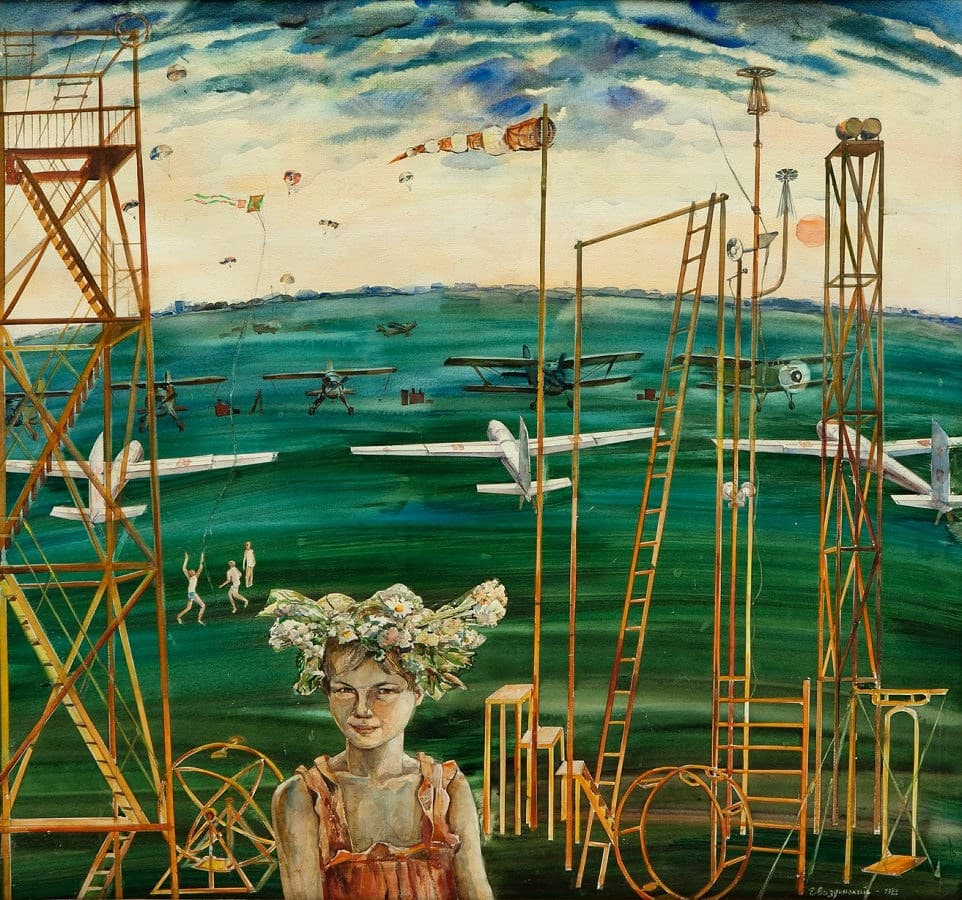
Dreaming of the Sky
An early large-format watercolour from the artist's first decade in Rivne, listed among his defining works in the Encyclopedia of Modern Ukraine.
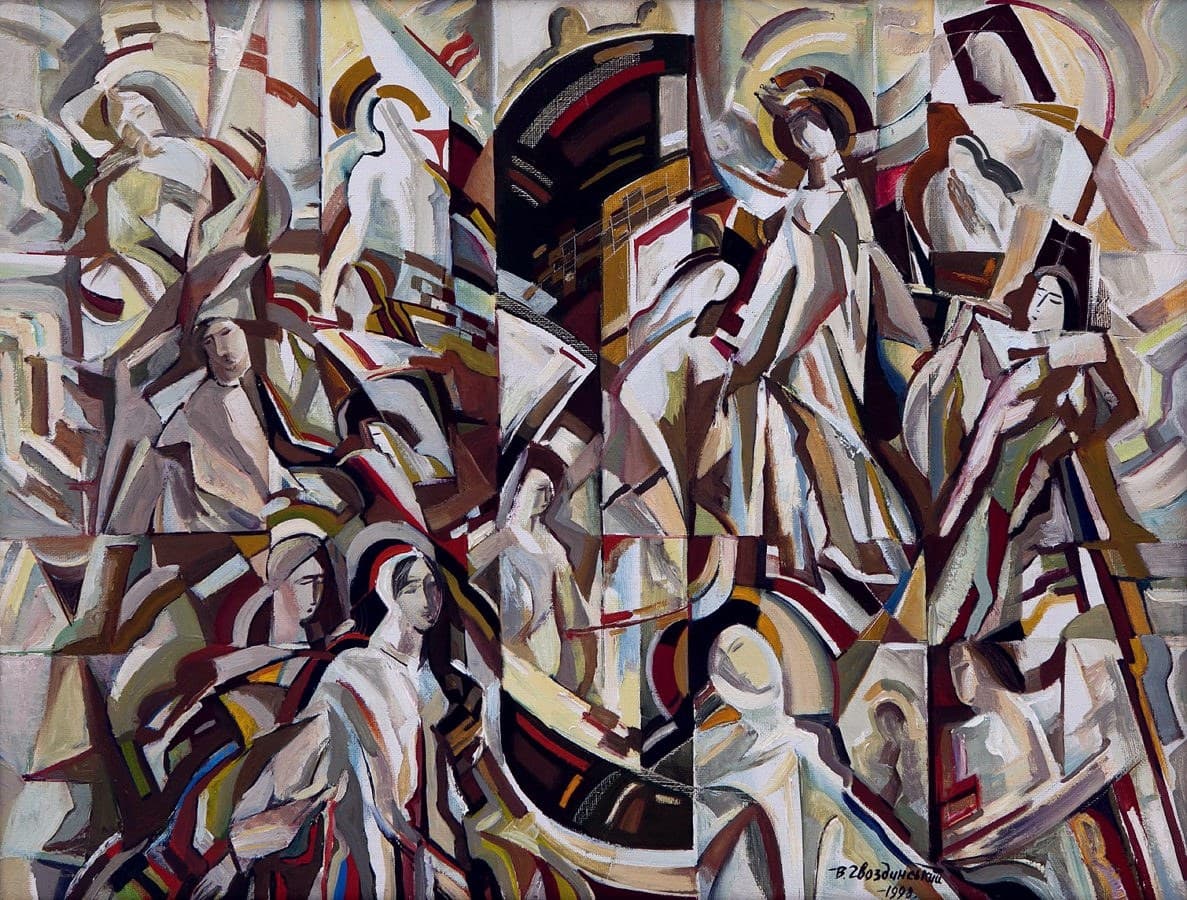
Sensation
One of the artist's late-1990s subject compositions rather than a landscape, singled out in the Encyclopedia of Modern Ukraine as a signature work of that period.
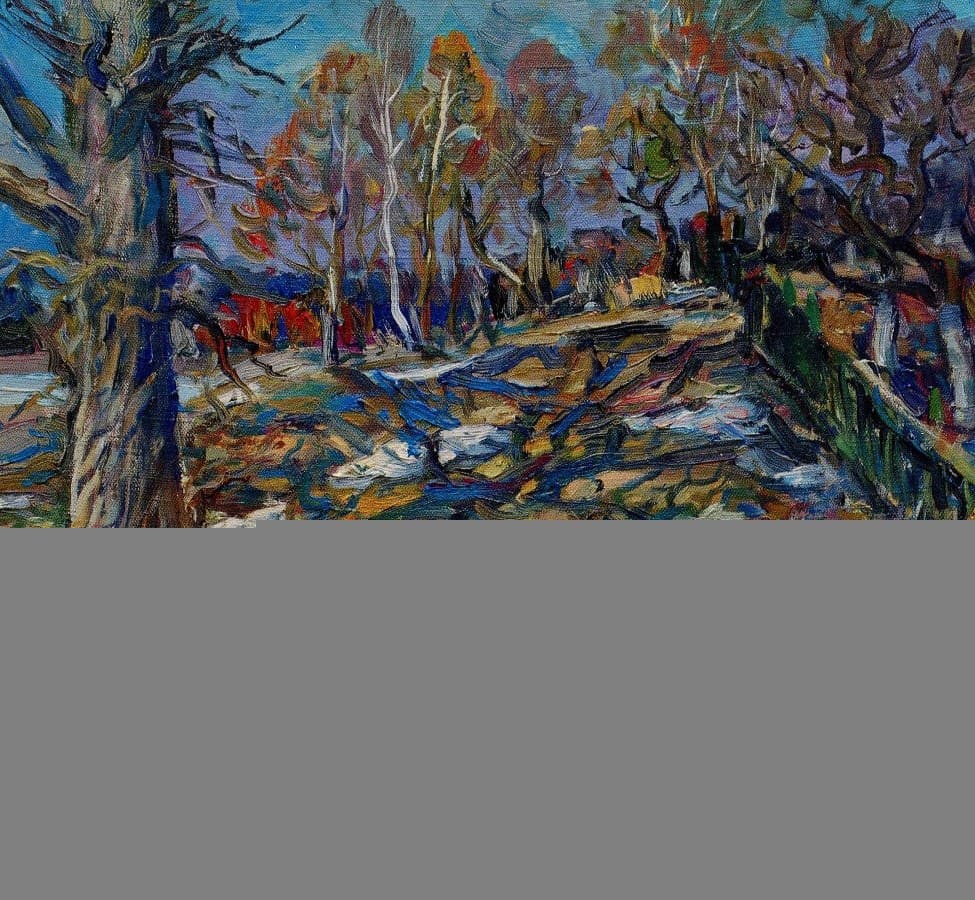
Spring Lace
A small square canvas in which bare spring branches are worked into an all-over decorative tracery — the "lace" of the title — against a thawing landscape. Catalogued by the Rivne Regional Library as no. 56 of the artist's oil paintings.
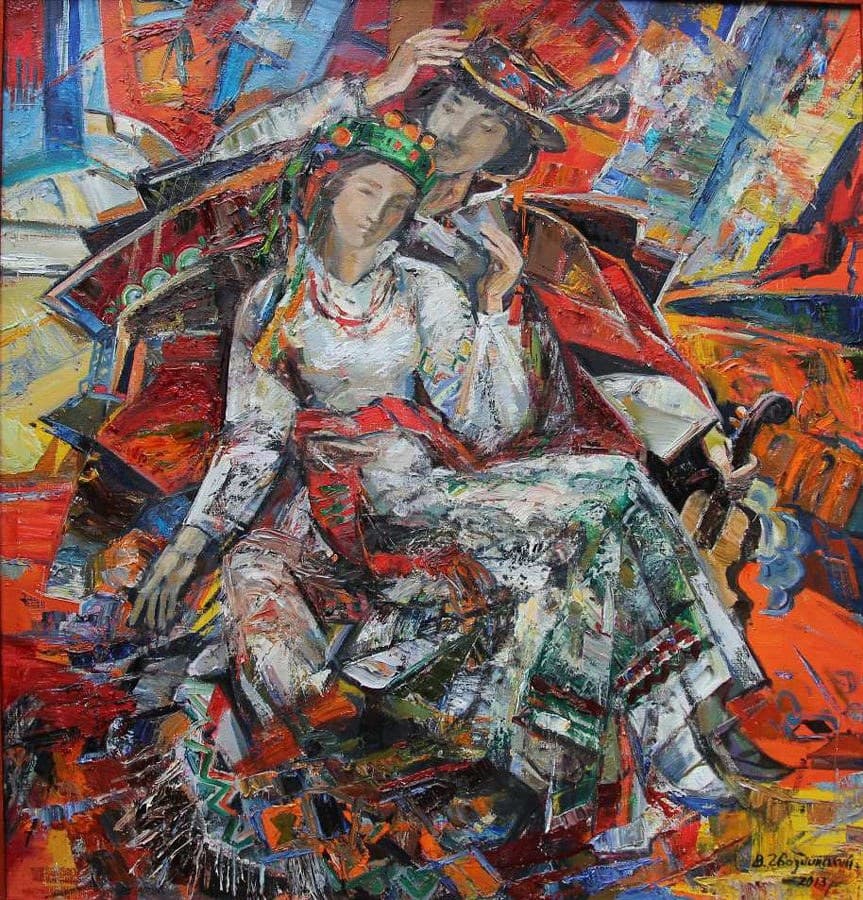
Hutsul Feast
A large, high-keyed Carpathian subject picture in the decorative, folk-inflected manner of the artist's later oils. Catalogued as no. 65 of his oil paintings.