Mosaic Art
Мозаїчне мистецтво
Art made by assembling images from small fragments of glass, smalt, ceramic or stone. In Ukraine the medium ranges from the monumental smalt panels of the Soviet-era public-building programme to contemporary independent and street practice, where artists mount mosaic panels directly on facades and interiors. Since 2022 a distinct wartime strand has appeared in front-line cities, with artists composing mosaics from window glass shattered by Russian strikes and returning the finished works to the sites of the damage.
Artists of the Movement
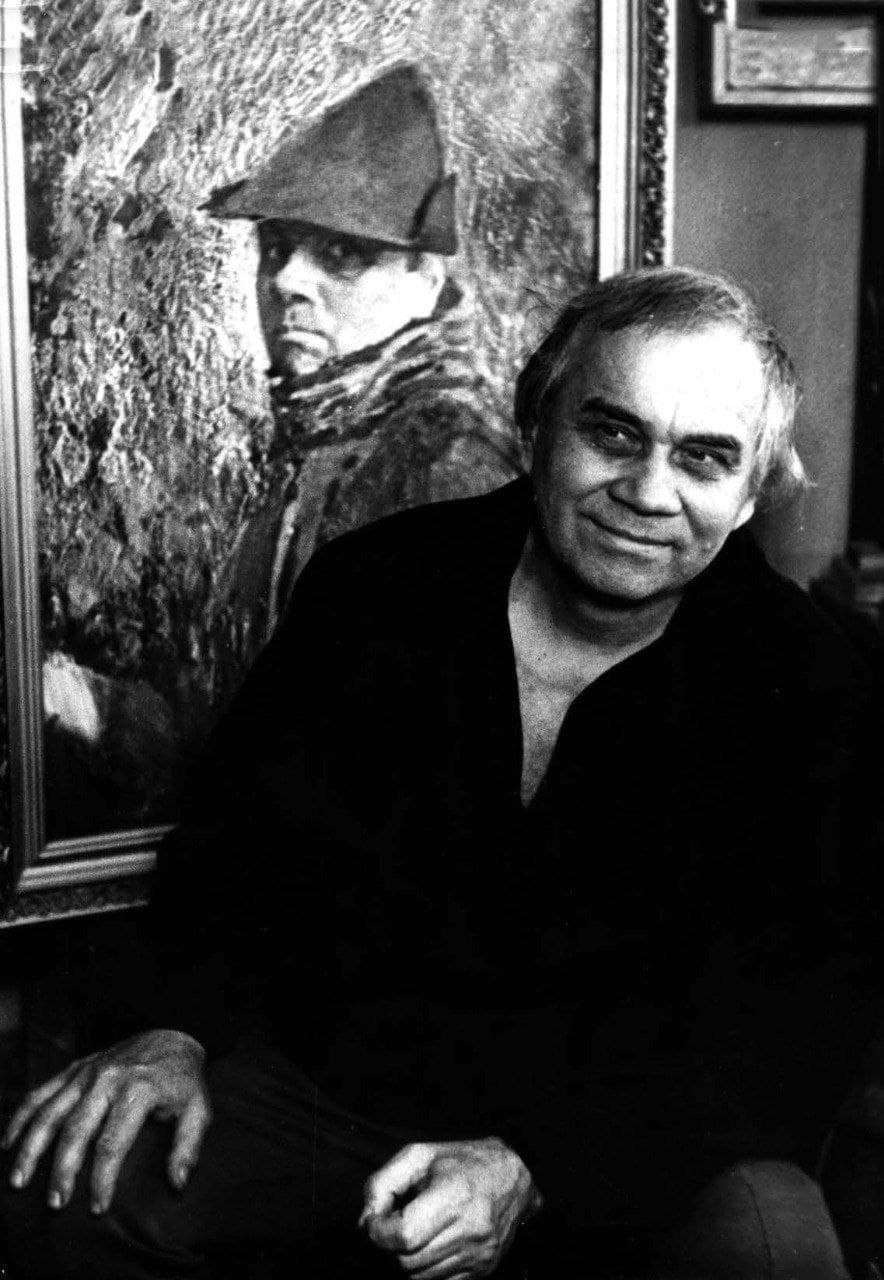
Viktor Zaretskyi
1925–1990
Viktor Zaretskyi (1925–1990) was a Ukrainian painter, monumentalist and teacher, husband of Alla Horska and one of the leaders of the Sixtiers generation. After beginning with a socially observant Donbas miners' cycle he turned in the 1980s to an ornamental, gold-laden manner indebted to the Vienna Secession that earned him the nickname "the Ukrainian Klimt".
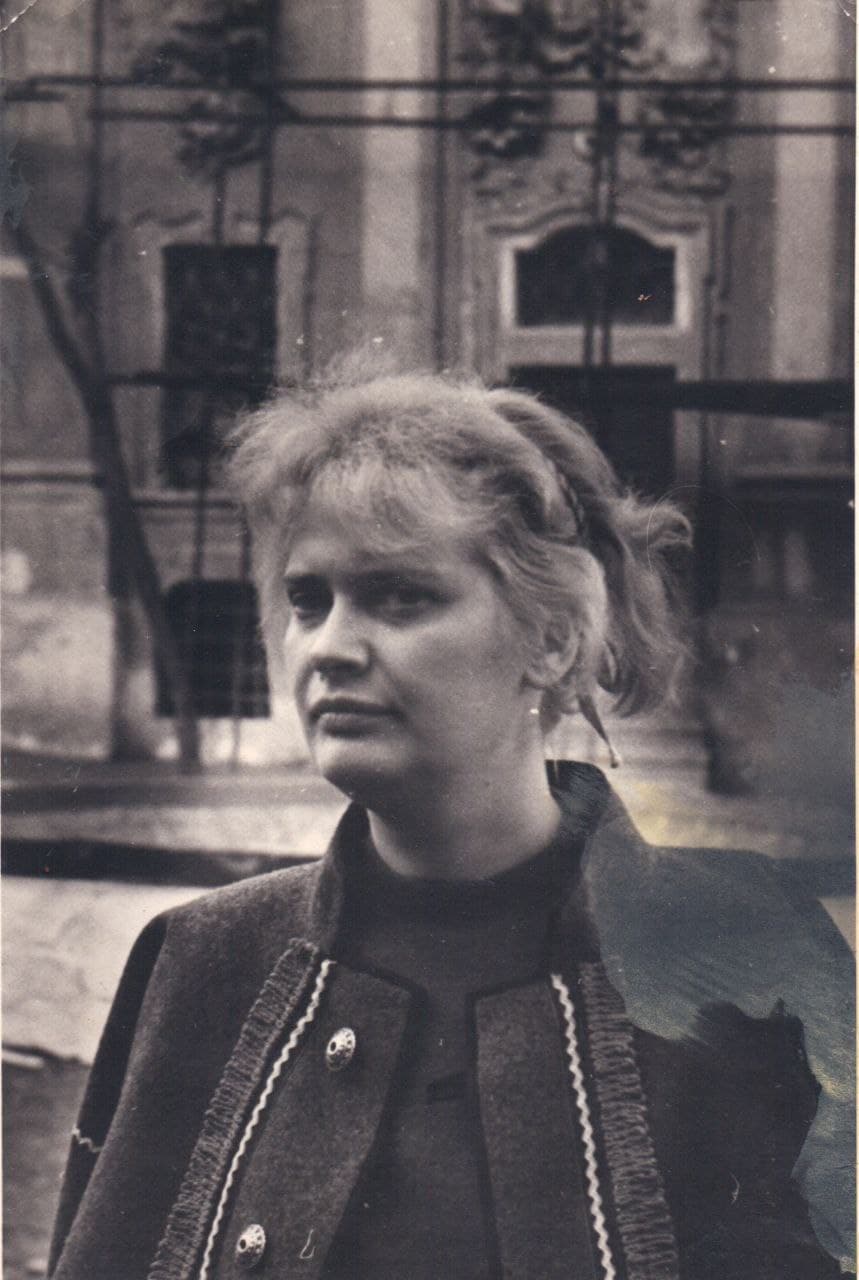
Alla Horska
1929–1970
Alla Horska (1929–1970) was a Ukrainian painter and monumentalist, and with her husband Viktor Zaretskyi a founder of the Club of Creative Youth "Suchasnyk" and a central figure of the Sixtiers and the dissident movement. Her output spans easel painting and portrait drawing, banned stage designs for Les Taniuk, and large mosaic and stained-glass cycles. She was murdered in Vasylkiv in November 1970 at the age of 41, and much of her monumental work has since been destroyed or is endangered.
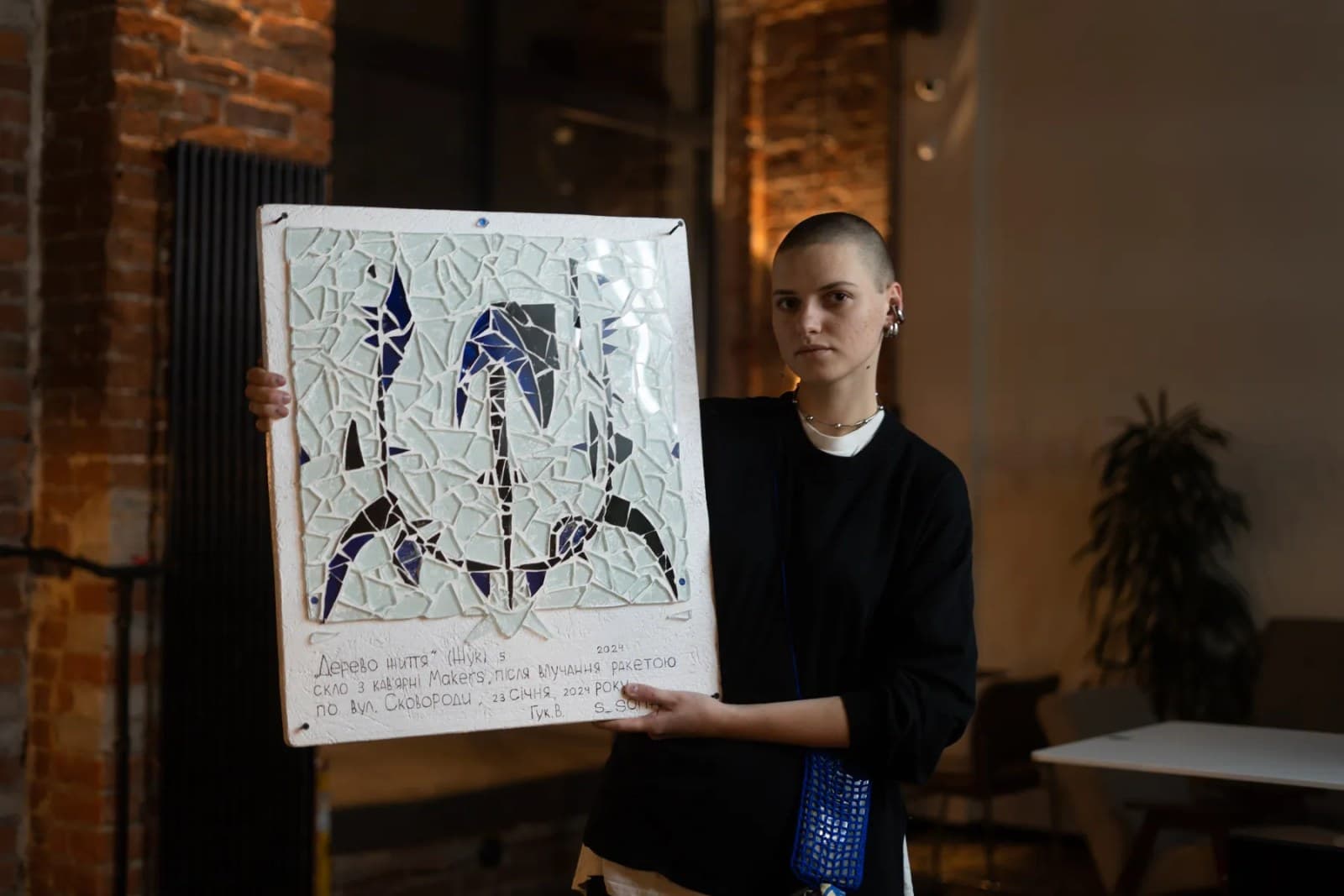
Valentyna Huk
Valentyna Huk, who signs her work "Sonce" ("Sun"), is a young Kharkiv artist who makes mosaics from window glass shattered by Russian missile and drone strikes. She collects the fragments at the impact sites and mounts the finished panels on facades and interiors at or beside the same locations, in a series titled "Tree of Life". Alongside the mosaics she draws in watercolour pencil, acrylic and pastel, and teaches drawing to children and adults.
Works from this Movement
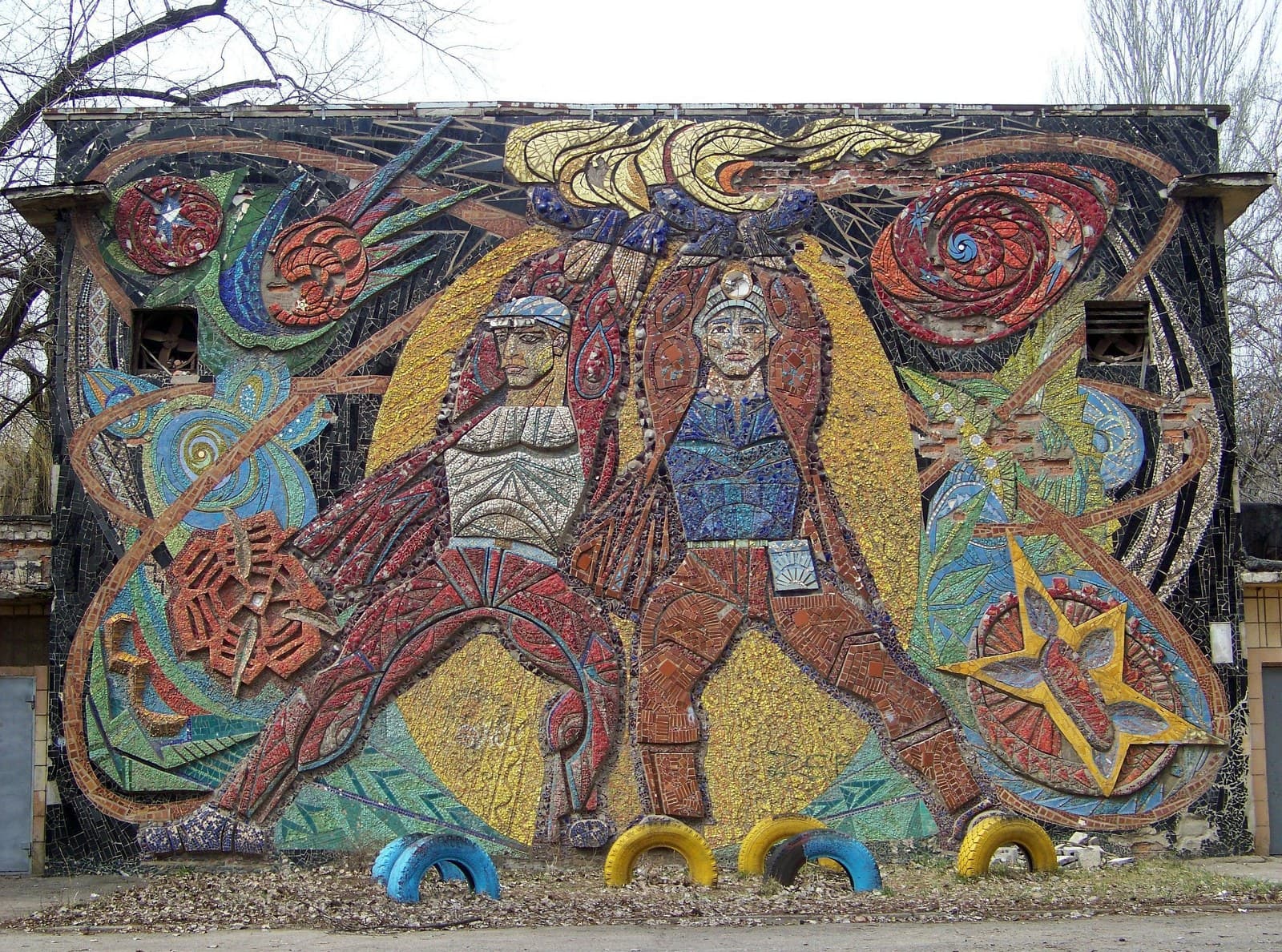
Prometheuses (mosaic cycle of School No. 5, Donetsk)
Alla Horska
The central panel of a nine-part cycle made in 1965–1966 by a collective led by Hryhorii Synytsia with Alla Horska, Halyna Zubchenko, Viktor Zaretskyi and Hennadii Marchenko: two figures raise a flame between cosmic spirals and folk-ornament suns. Eight smaller panels — «Космос», «Вода», «Вогонь», «Земля», «Життя», «Надра», «Сонце», «Повітря/Верба» — were completed in 1965, the central «Прометеї» in 1966.
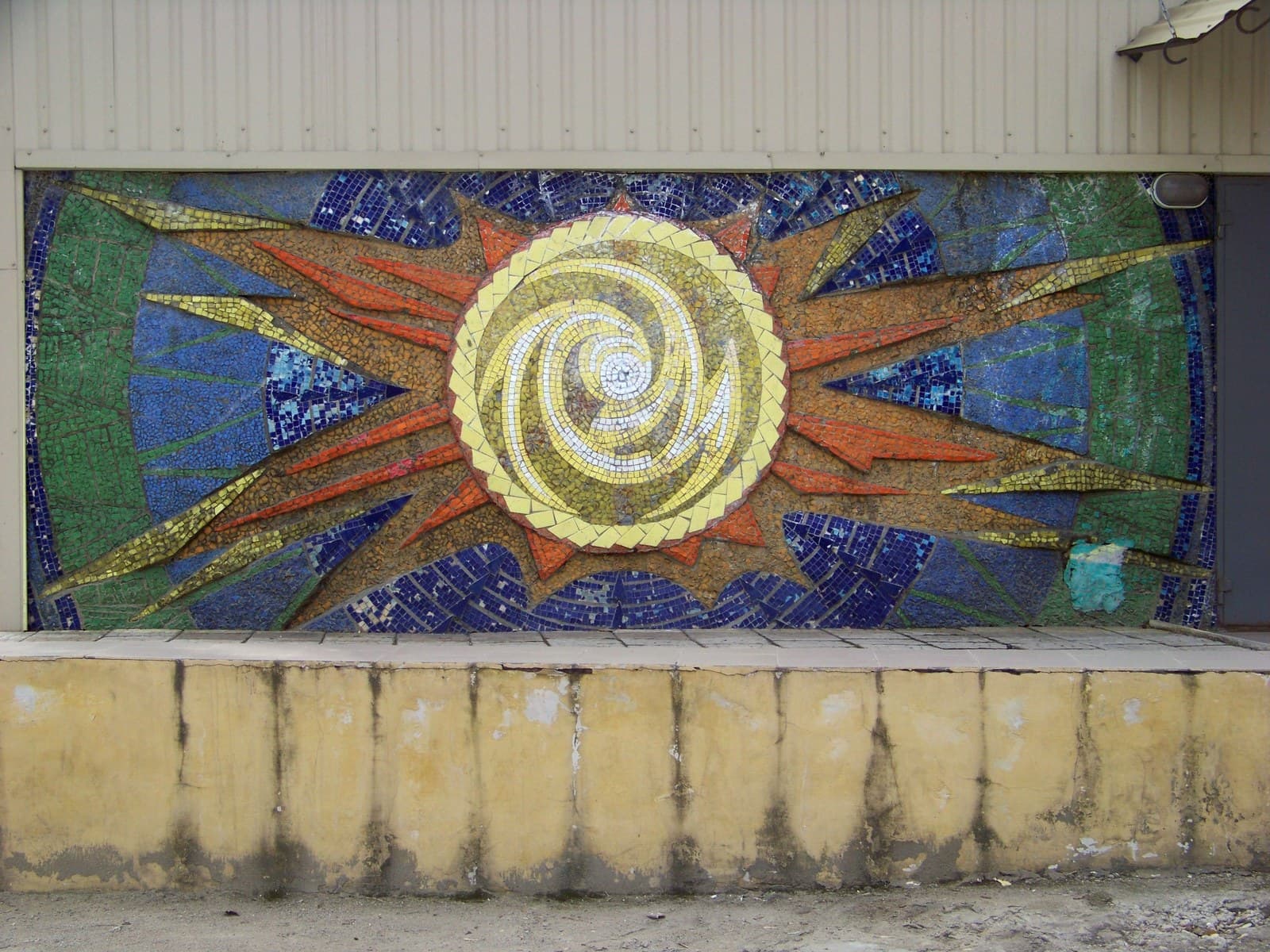
Prometheuses, Earth, Fire (mosaics of School No. 5, Donetsk)
Viktor Zaretskyi
Zaretskyi's contribution to the nine-panel mosaic cycle made in 1965–1966 by a collective led by Hryhorii Synytsia with Alla Horska, Halyna Zubchenko and Hennadii Marchenko. The central «Прометеї» panel sets two figures raising a flame among cosmic spirals and folk-ornament suns; the cycle fuses Ukrainian folk decoration, Baroque and Mexican muralism.
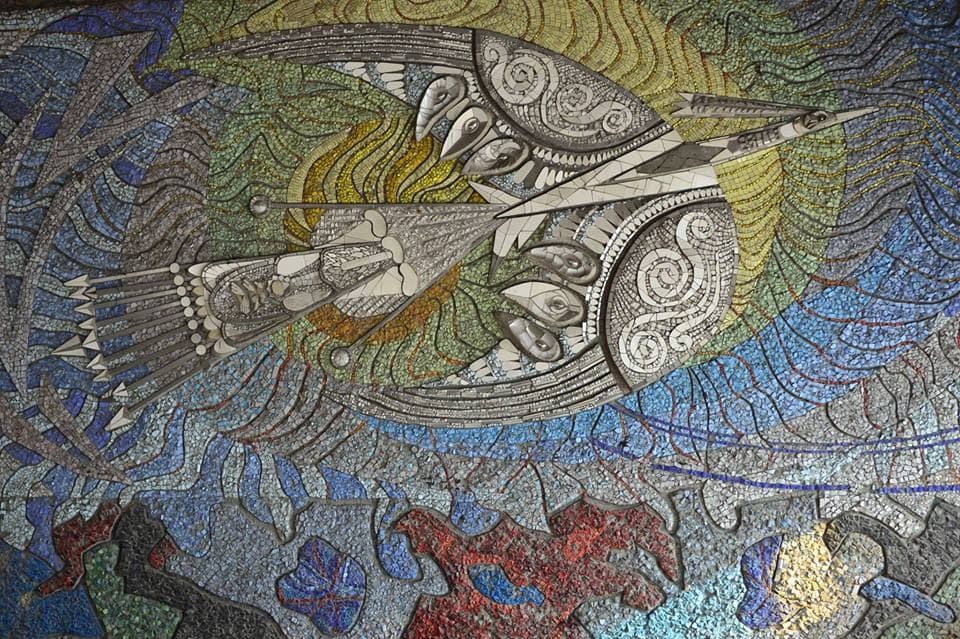
Kestrel (Boryviter)
Alla Horska
A hovering kestrel built from smalt, its silver-grey plumage spread across a sun and a field of blue that answered the sea visible from the restaurant windows; the bird was read as an emblem of artistic freedom. Made with a team including Viktor Zaretskyi, Halyna Zubchenko, Borys Plaksii, Hryhorii Pryshedko, Vasyl Prakhnin and Nadiia Svitlychna in under two months, rediscovered behind a wall during a 2008 renovation, and destroyed with its companion panel during the Russian bombardment of Mariupol in 2022. It gave its name to Horska's 2024 retrospective at the Ukrainian House in Kyiv. Also referred to in Ukrainian sources as «Птах-мрія».
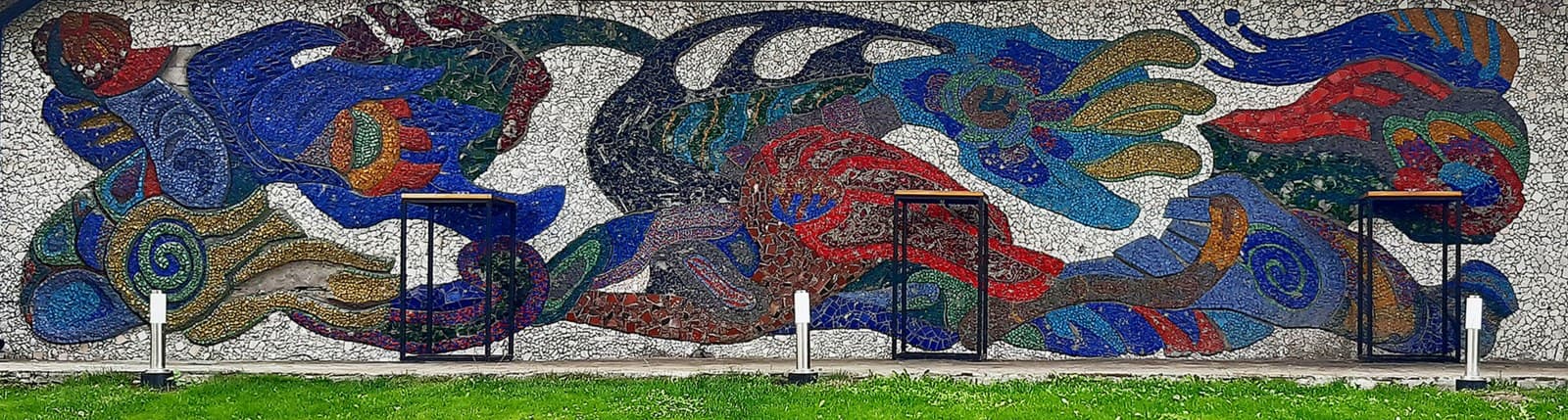
Wind
Alla Horska
An abstract composition begun in 1967 and finished in 1968 by Horska with Viktor Zaretskyi and Borys Plaksii, fusing folk-ornament motifs with a Ukrainian avant-garde vocabulary. It is one of the few Horska mosaics still in place in Kyiv.
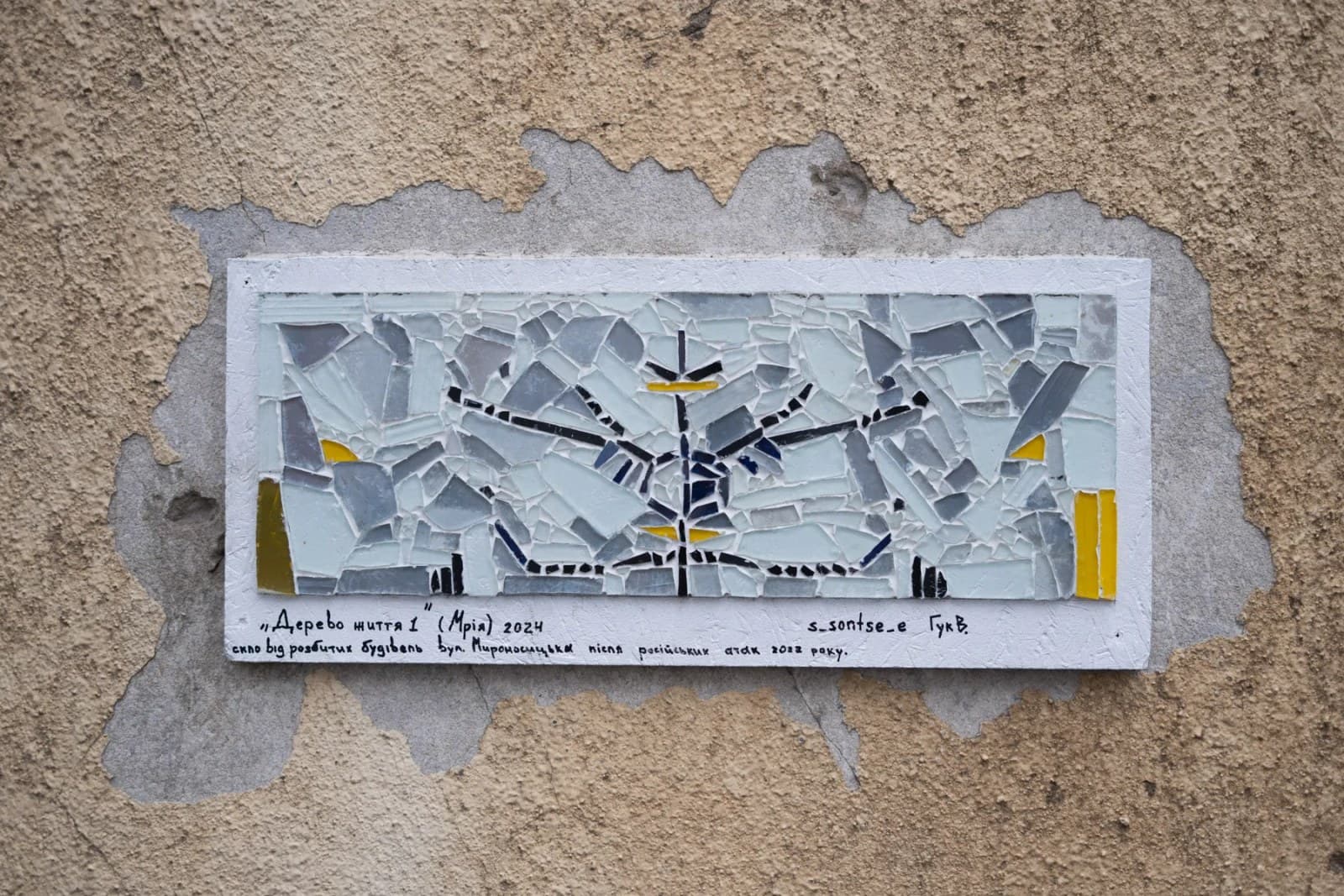
Tree of Life 1 (Dream)
Valentyna Huk
The first street work of the "Tree of Life" series, assembled from glass broken by a Russian strike near the artist's own home and mounted on Myronosytska Street. It set the rule that each panel returns the shattered glass to the place it came from.
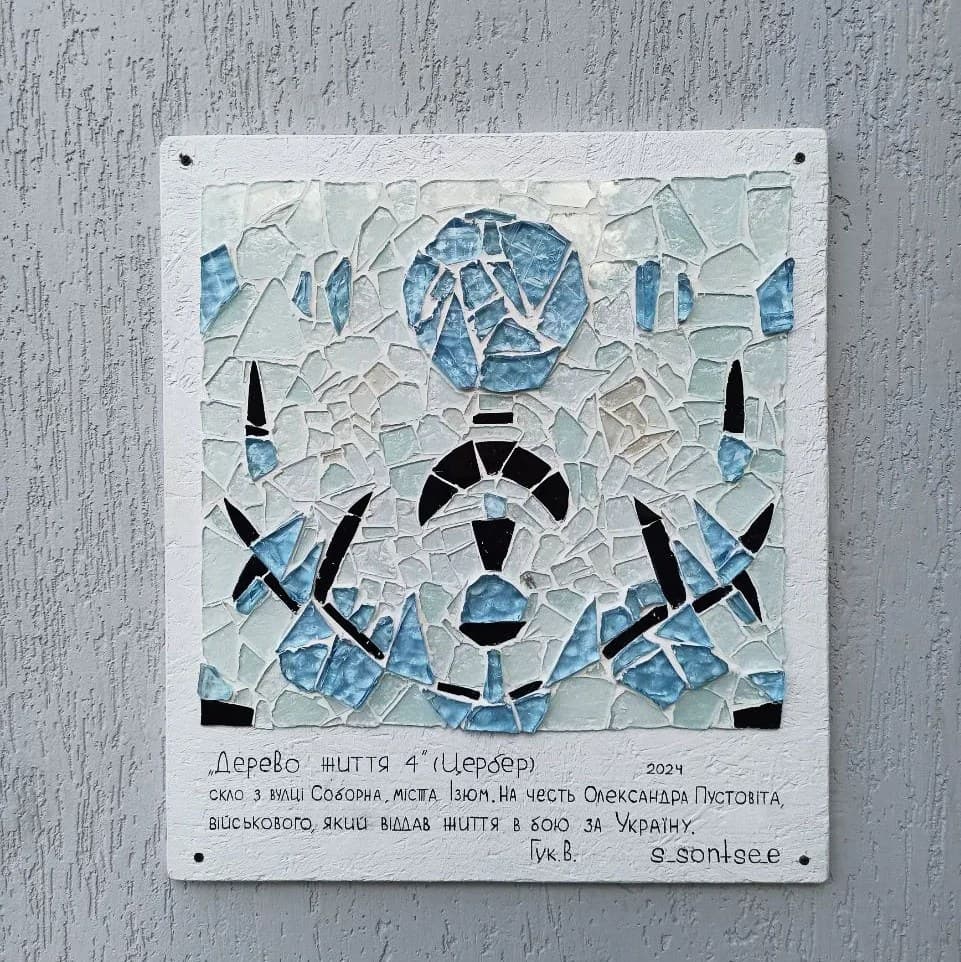
Tree of Life 4 (Cerberus)
Valentyna Huk
Made from shards collected on Soborna Street in Izium after the town's occupation and continuing shelling, and dedicated to Oleksandr Pustovit, a Ukrainian commander killed in action. Huk made it deliberately for a town close to the front line rather than for Kharkiv.
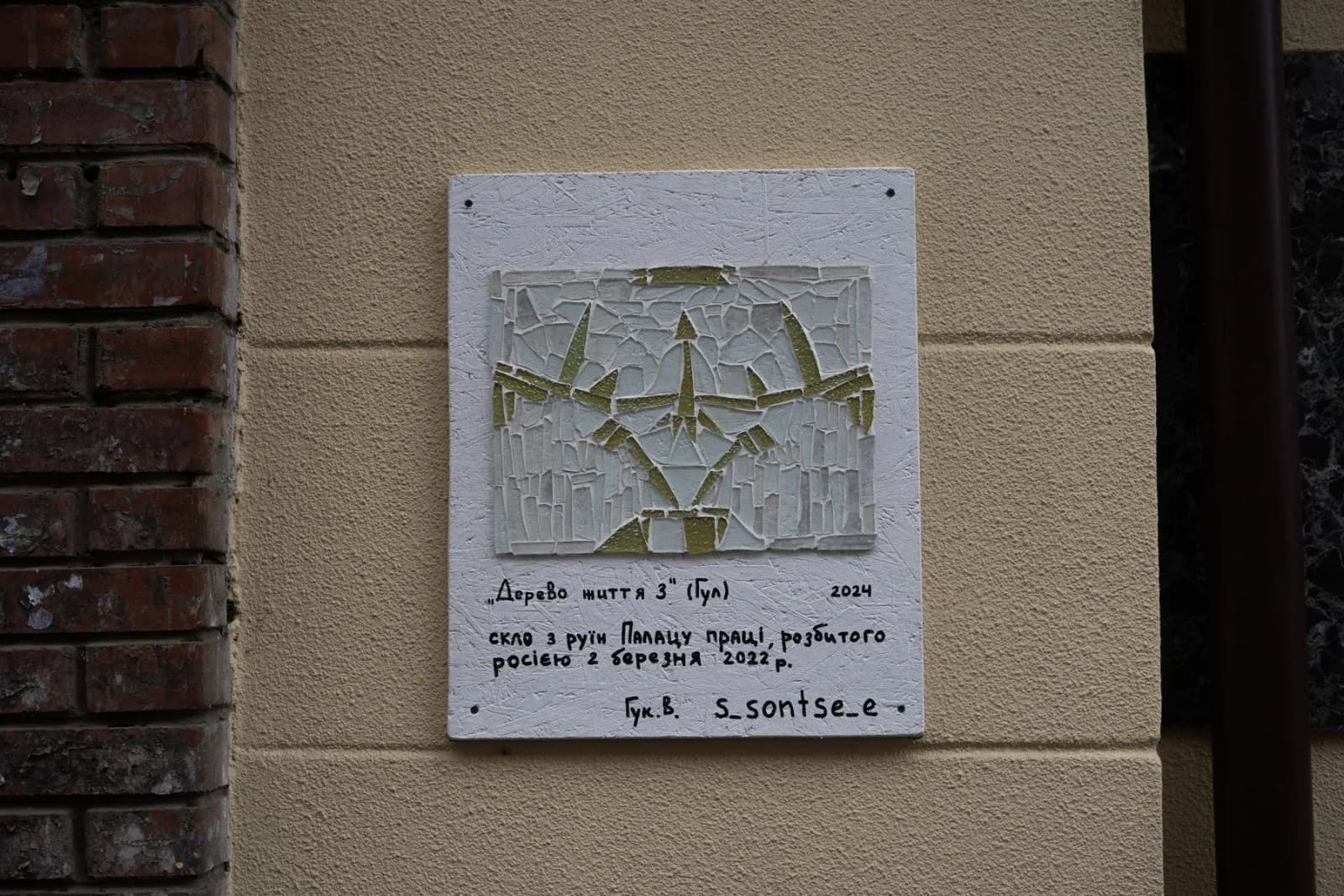
Tree of Life 3 (Rumble)
Valentyna Huk
The companion panel to "Eye of War" at the Palace of Labour, titled after the sound of incoming fire. Both were built from the same collection of shards so that the glass would stay on the site where it was broken.
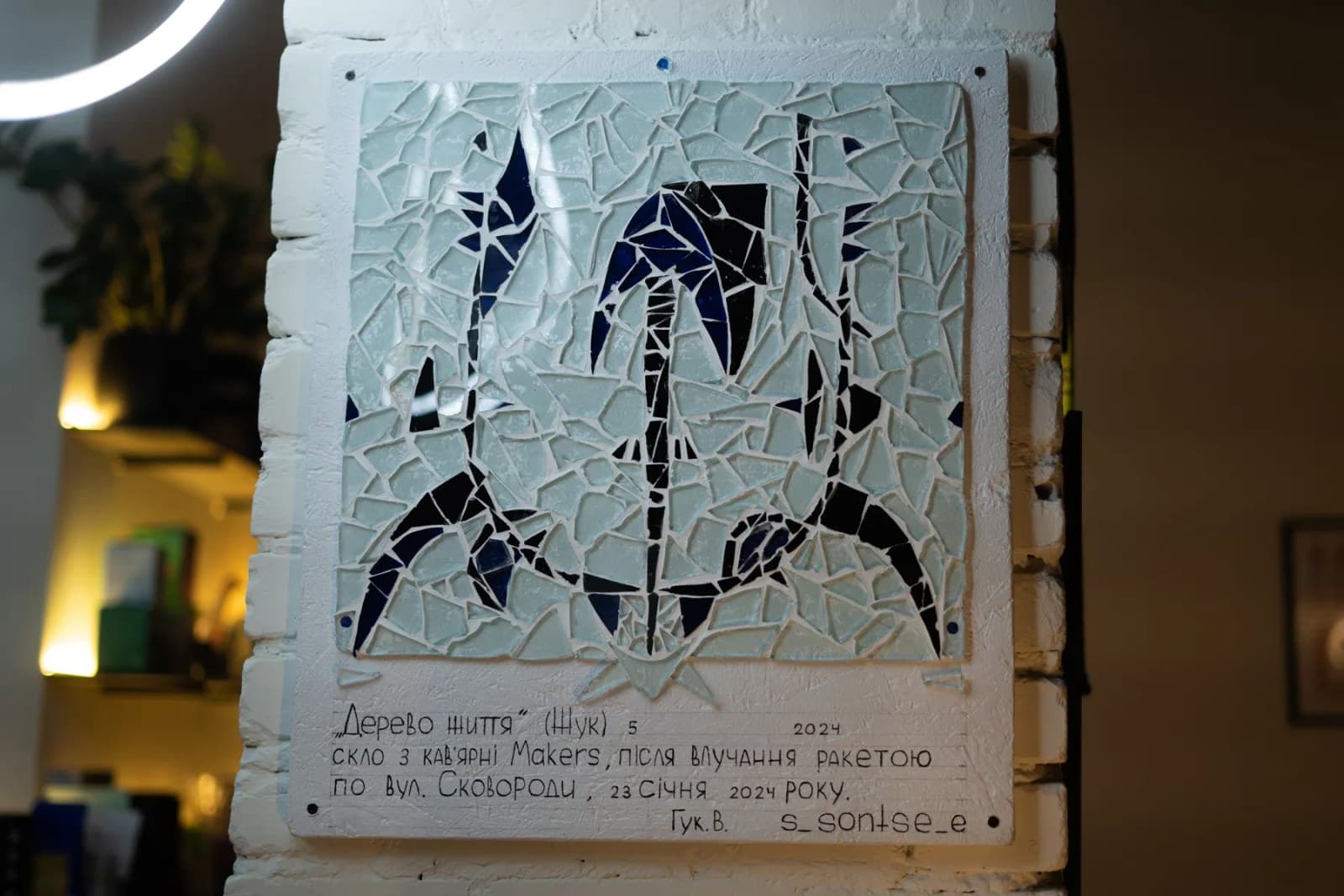
Tree of Life 5 (Beetle)
Valentyna Huk
Built from glass broken at the Makers café when the building of the National Academy of Legal Sciences was hit on 23 January 2024. Unlike the outdoor panels, it hangs inside the café that supplied its material.
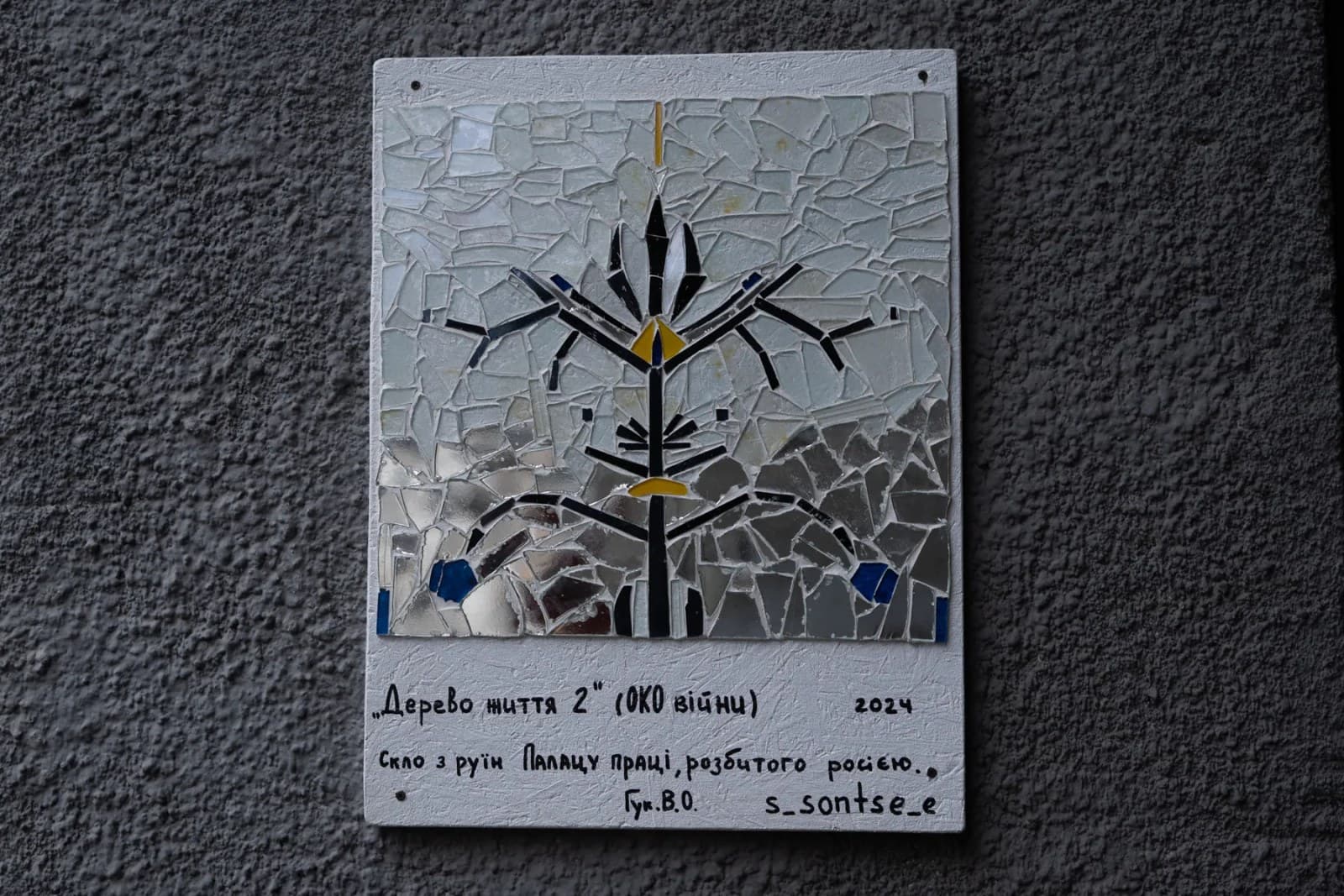
Tree of Life 2 (Eye of War)
Valentyna Huk
One of two panels installed beside Kharkiv's Palace of Labour, made entirely from glass gathered in the building's own courtyards after a strike. The composition resolves into a single watching eye set in the branching tree form.