Naive Art
Наївне мистецтво
A current of self-taught, non-academic painting in which artists without formal training build highly personal pictorial worlds out of folk memory, religious imagery, dreams and invented flora and fauna. In Ukraine it is the tradition of Kateryna Bilokur, Maria Prymachenko and Polina Raiko: flat, ornamentally organised, intensely coloured compositions that reject perspective and academic modelling in favour of rhythm, pattern and symbolic narrative. Ukrainian naive art is closely intertwined with village decorative painting, and after 2022 became a widely used emblem of national cultural resilience.
Artists of the Movement
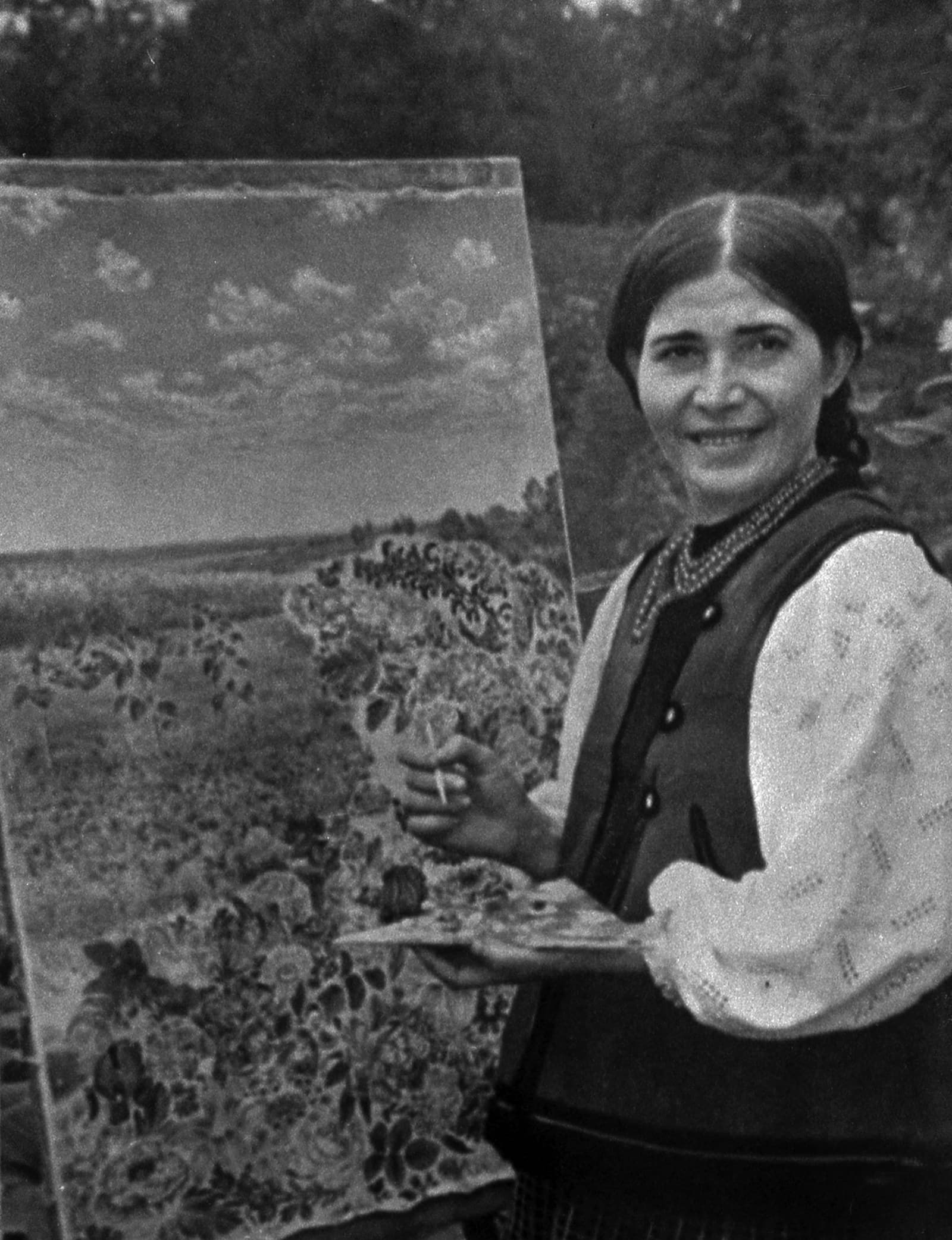
Kateryna Bilokur
1900–1961
Kateryna Bilokur was a self-taught peasant painter from the Poltava region who became one of the great figures of Ukrainian folk decorative art, working almost entirely in oil on canvas without ever attending an art school. Refused entry to art colleges twice for lacking a school certificate, she painted in secret against her family's opposition, making her own brushes from cat and cow hair and cherry twigs. Her densely worked flower compositions on deep blue grounds brought her national recognition from 1940 onwards and are now the core of the collection of the National Museum of Ukrainian Folk Decorative Art in Kyiv.
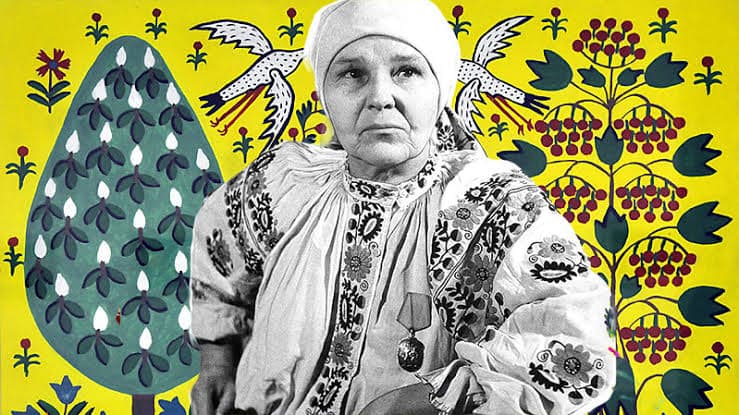
Mariia Prymachenko
1909–1997
Mariia Prymachenko was a Ukrainian folk painter and the best-known figure of twentieth-century Ukrainian naive art. Working in gouache and watercolour on paper, she invented a bestiary of fantastical animals and personified flowers that has become a national visual emblem. She spent almost her whole life in her native village of Bolotnia, north of Kyiv.
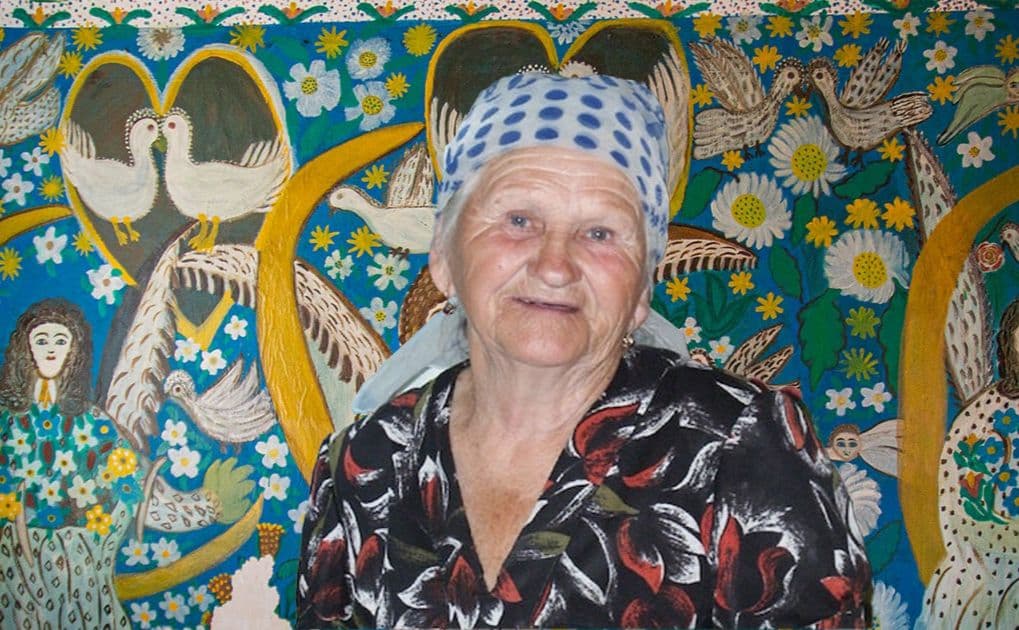
Polina Raiko
1928–2004
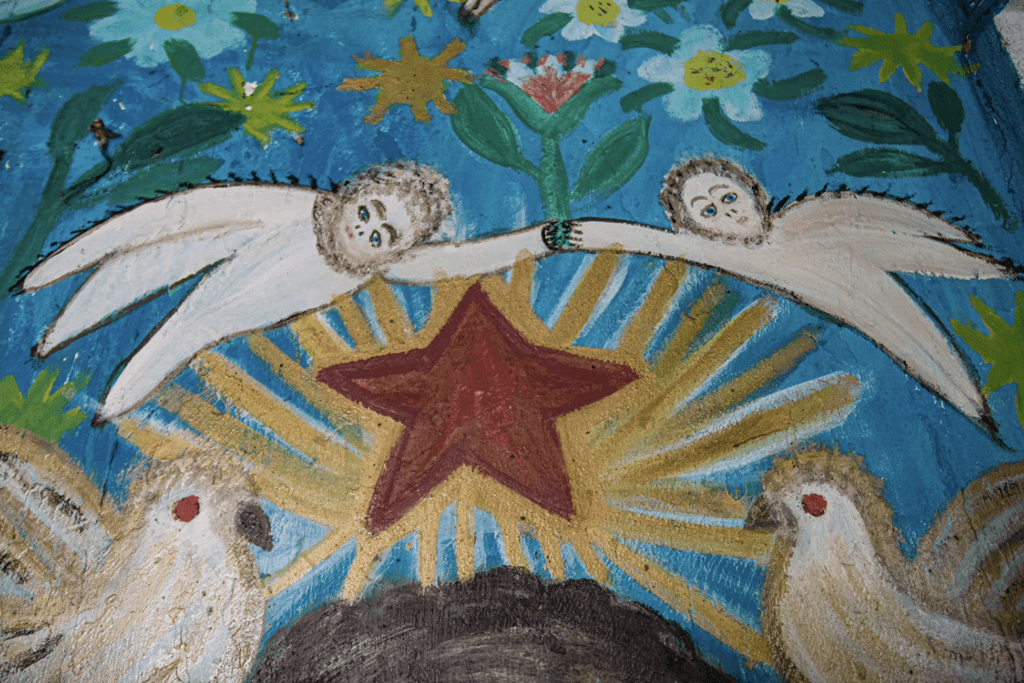
Polina Raiko was a Ukrainian self-taught naive artist from Oleshky in the Kherson region who began to paint at the age of sixty-nine. Over roughly six years she covered the walls and ceilings of her own six-room house, its summer kitchen, gates and fences with enamel-paint murals of angels, birds, animals and family memories. The house became a cult site of Ukrainian outsider art and was destroyed in June 2023 by the flooding that followed the Russian destruction of the Kakhovka dam.
Works from this Movement
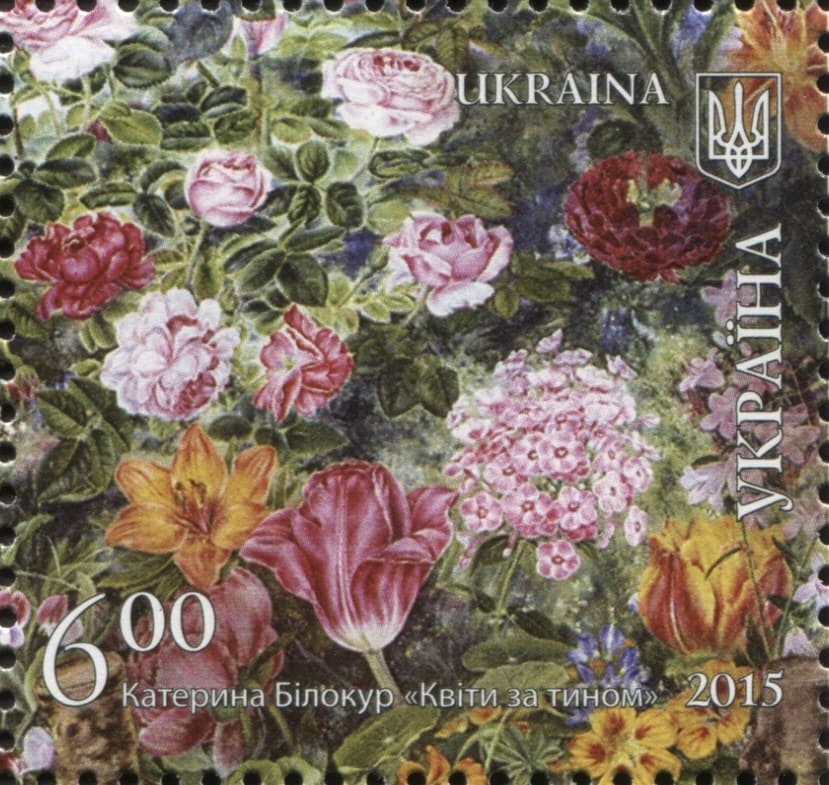
Flowers Behind the Fence
Kateryna Bilokur
One of Bilokur's earliest surviving flower compositions, a wall of roses, phlox, lilies and tulips pressing forward out of a dark garden so densely that no single light source can be found in it. Ukrposhta reproduced it in full bleed on a 2015 stamp.
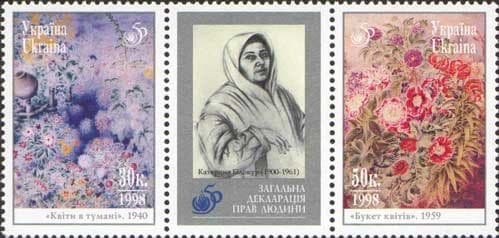
Flowers in the Mist
Kateryna Bilokur
Painted in the year Bilokur was first exhibited, a pale, softly dissolved flower thicket in which the blooms surface out of a silvered haze instead of standing against her usual flat blue ground. It appeared on a Ukrposhta stamp strip issued in 1998.
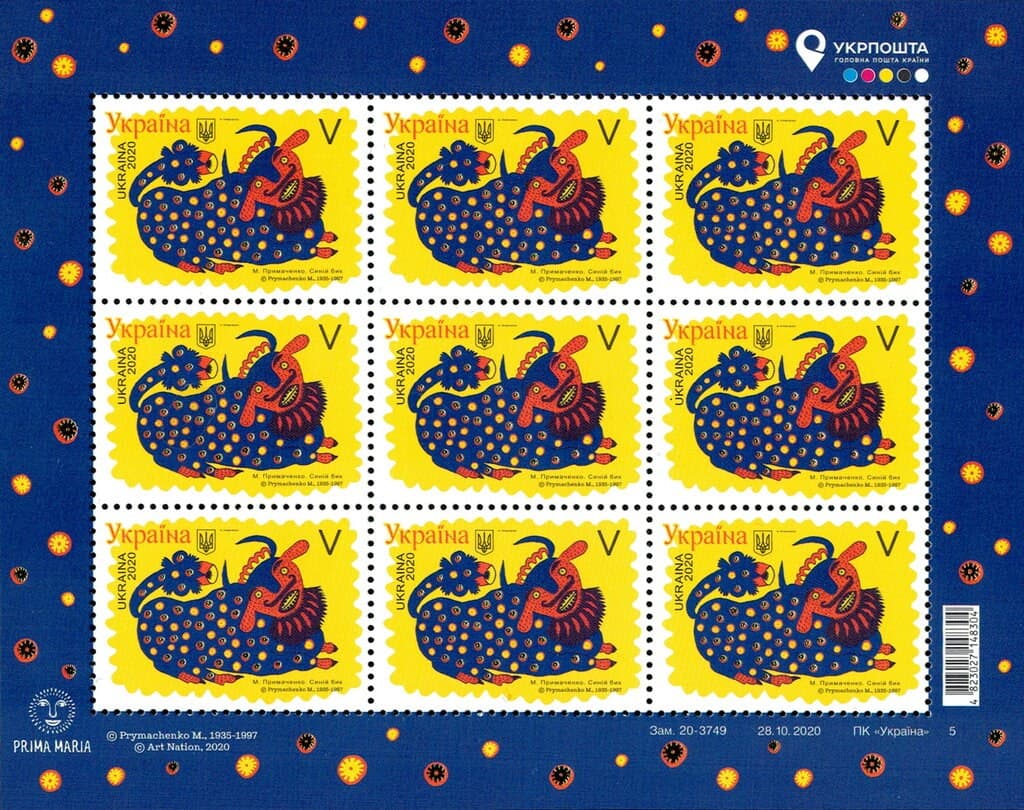
Blue Bull
Mariia Prymachenko
An early post-war beast painting in which a deep blue bull stands against an ornamented ground, one of the works that established Prymachenko's mature idiom. Ukrposhta reproduced it on a 2020 stamp sheet marking the Year of the Ox.
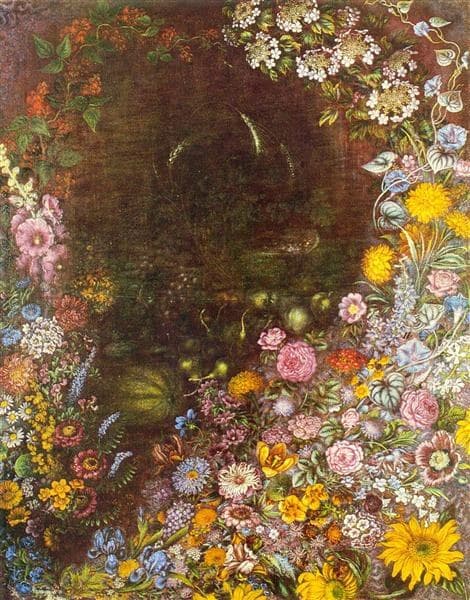
Tsar Kolos
Kateryna Bilokur
Bilokur's best-known painting: ripe golden ears of wheat reigning at the centre of a deep brown ground, ringed by flowers and fruit. It was one of three works sent to the Soviet section of the 1954 international exhibition in Paris, where Picasso is reported to have praised her.
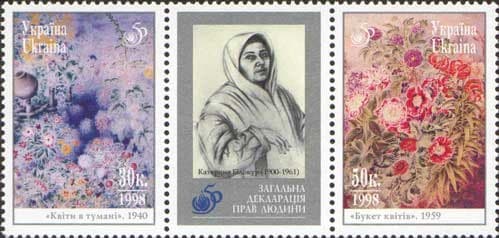
Bouquet of Flowers
Kateryna Bilokur
A late massed bouquet of roses, peonies and phlox in the hot pink-and-crimson register of Bilokur's final years, painted two years before her death. It is the second of the two Bilokur paintings reproduced on Ukrposhta's 1998 stamp strip.
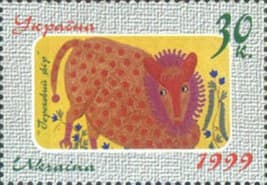
Pea Beast
Mariia Prymachenko
A fantastical creature whose body is covered with pea-like ornament, from the animal series in which Prymachenko gave invented beasts human eyes and an ambiguous moral character. Issued as one of the two 1999 Ukrposhta stamps honouring the artist.
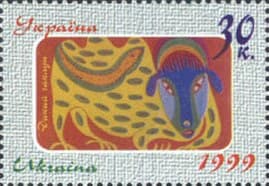
Wild Chaplun
Mariia Prymachenko
One of Prymachenko's invented beasts, named from the verb "chapaty" (to trudge) and built around enormous clawed feet able to push through the thickets of life. Reproduced on the 1999 Ukrposhta stamp pair dedicated to the artist.
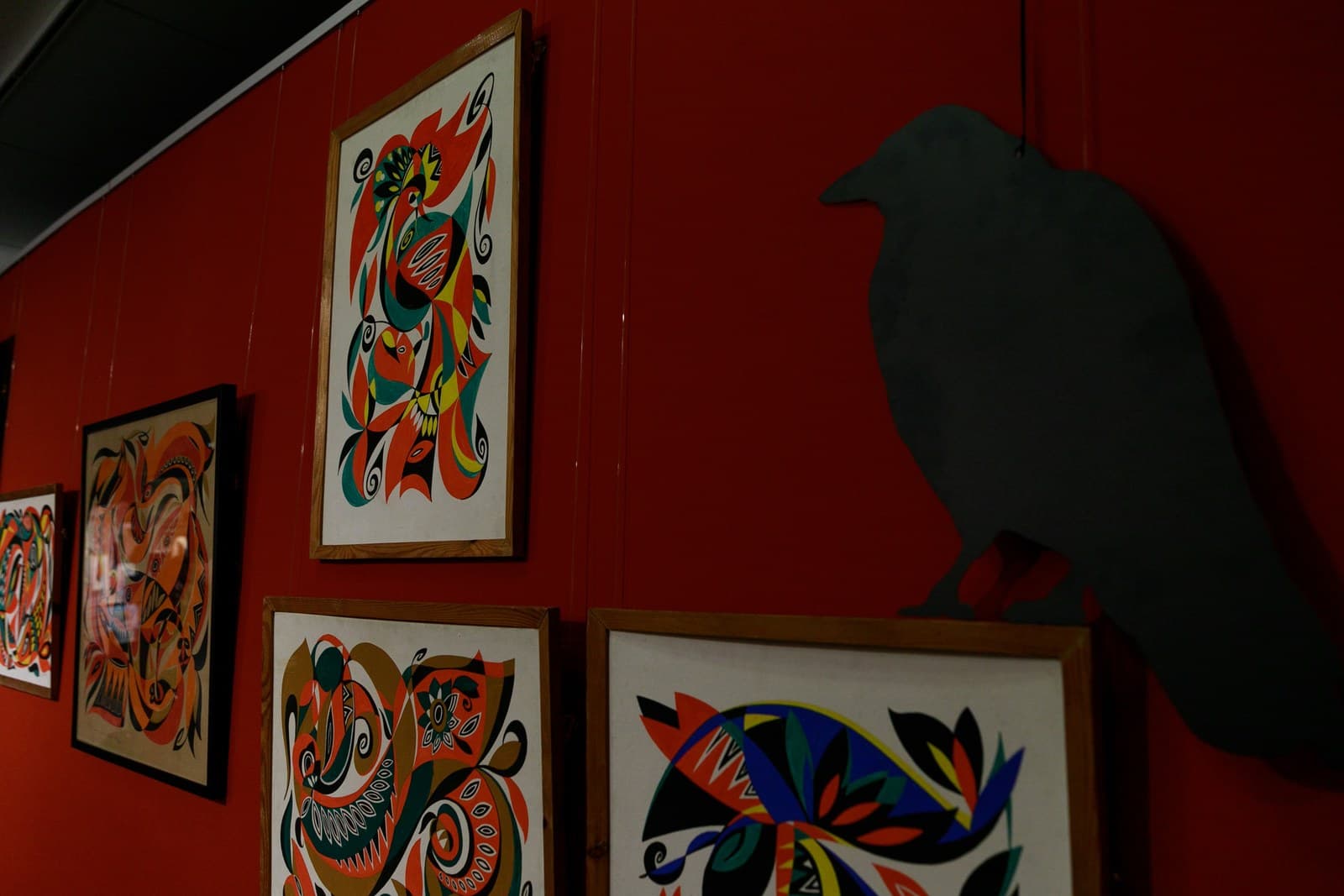
Decorative compositions
Liubov Panchenko
A group of Panchenko's brightly keyed decorative compositions — birds, flowers and interlaced plant forms in flat orange, red, green and black — in which Ukrainian folk ornament is pushed towards near-abstraction. No individual titles or dates are recorded in the sources consulted, so this entry describes the group as exhibited.
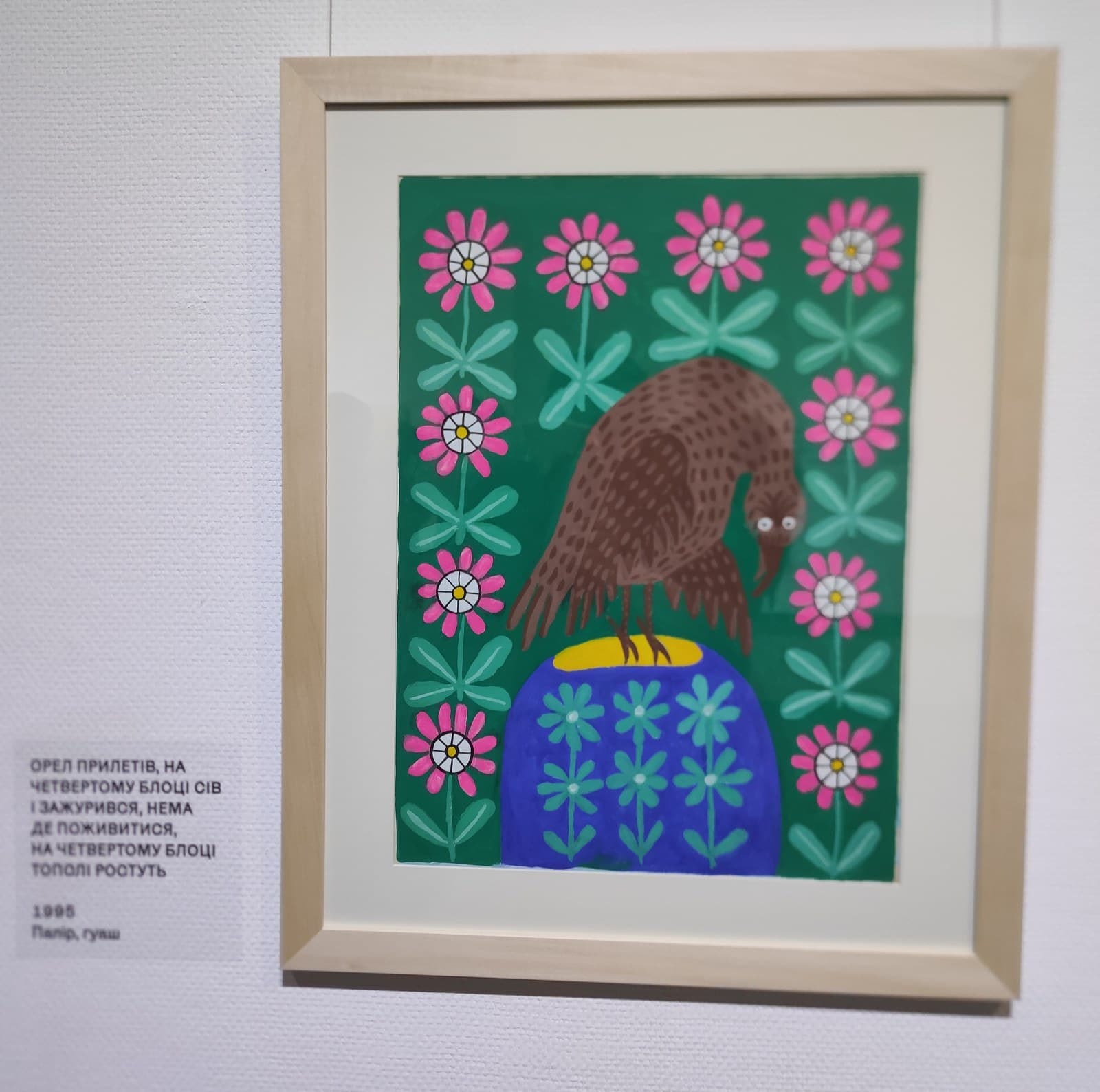
Eagle at the Fourth Block
Mariia Prymachenko
Part of Prymachenko's Chornobyl cycle, in which a great bird presides over the ruined fourth reactor block; the same cycle produced "Flowers Grew Near the Fourth Block" (1990). Photographed at the 2023 Kyiv exhibition of a hundred works never previously shown in public.
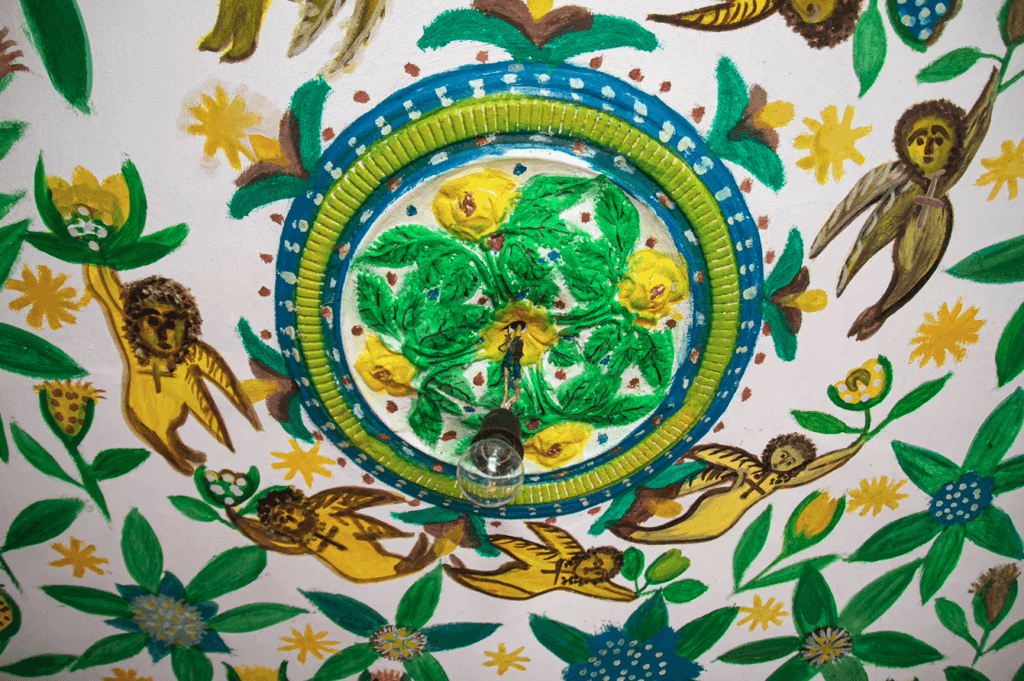
Angels on the Ceiling
Polina Raiko
Flying angels scattered across a ceiling filled with a sea of green and blue flowers, edged with a blue-and-yellow border. Painted between 1998 and 2004 as part of Raiko's total decoration of her own house.
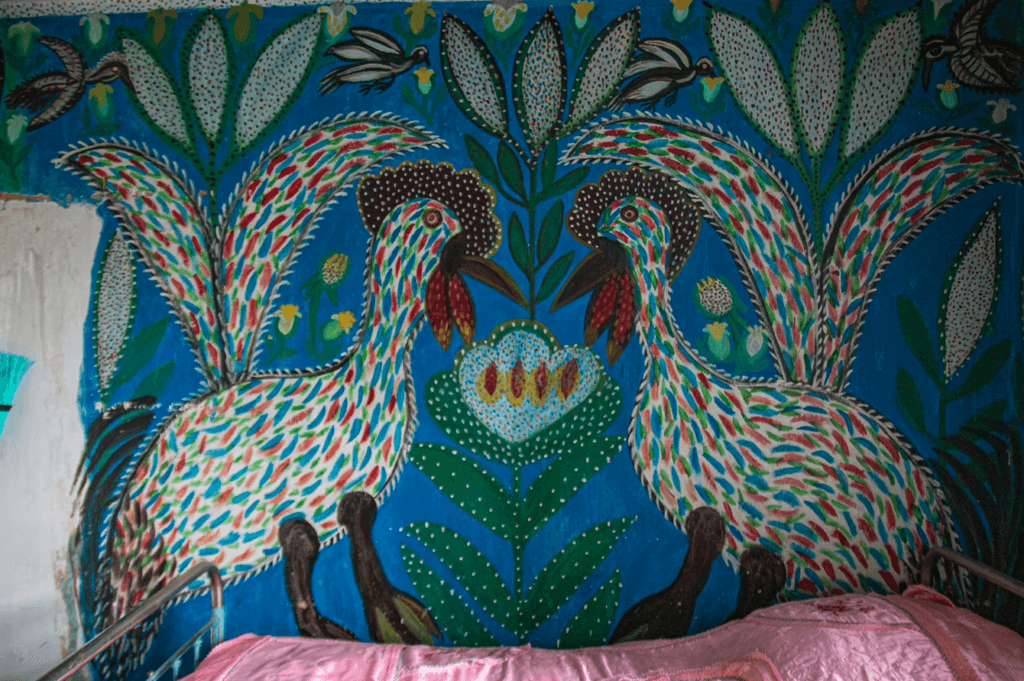
White Roosters
Polina Raiko
Two large white roosters with green and red highlights facing each other across a bedroom wall, among the most reproduced images from the house. Roosters, storks and owls were Raiko's recurring guardians of the domestic interior.
The Fisherman
Polina Raiko
Raiko's husband Mykola shown as a bearded fisherman-boatman playing a stringed instrument amid rows of coloured bottles, an unsparing but affectionate account of his drinking. It is the clearest example of her turning family biography directly into mural narrative.