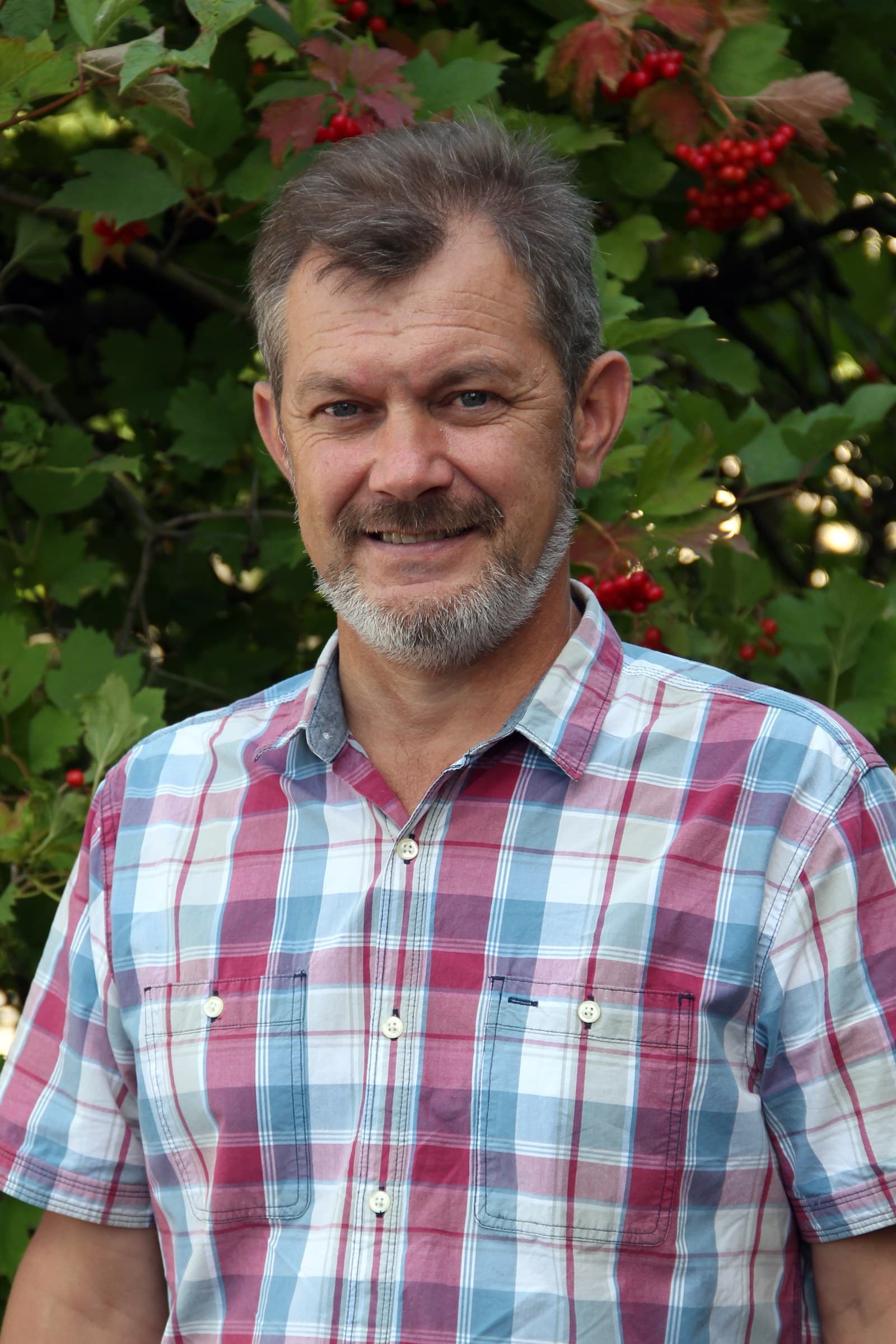
Oleh Shupliak
Олег Шупляк
b. 1967 · Bishche, Berezhany Raion, Ternopil Oblast, Ukraine
Oleh Shupliak (b. 1967, Bishche, Ternopil Oblast) is an Honoured Artist of Ukraine best known for his 'dvovzory' — double-image paintings in which a landscape or genre scene resolves, at a second glance, into a portrait. He has been called the Ukrainian Salvador Dalí.
Oleh Illich Shupliak was born on 23 September 1967 in the village of Bishche in the Berezhany district of Ternopil Oblast. Refused several times by the painting department of the Academy of Arts, he entered the architecture faculty of the Lviv Polytechnic Institute instead, graduating in 1991, then returned to his home district and taught drawing and painting at the Berezhany children's art school from 2000 to 2013. He painted his first double-image canvas in 1992 and coined the Slavic term 'dvovzory' (literally 'double-views') for the genre: a village of thatched cottages becomes a pair of eyes, the hills become eyebrows, and the face of Shevchenko, Lesya Ukrainka, Van Gogh or Gogol emerges from the landscape. He joined the National Union of Artists of Ukraine in 2000, won the Mykhailo Boichuk prize, and was named Honoured Artist of Ukraine in 2017. He also works in associative symbolism, realism and etude painting, in series such as 'Ukrainian Cosmos', 'Native Land' and 'Flights Over Fields'. He designed the official logo for the 200th anniversary of Taras Shevchenko's birth and has provided designs used on Ukrainian stamps and coins. His work is held by the National Taras Shevchenko Museum in Kyiv and the Ministry of Culture of Ukraine; he has had more than thirty solo exhibitions across Europe and Asia, a permanent 'Illusorium' room at the Déjà-vu illusion museum in Berlin, and an art space of over 150 works at Berezhany Castle.
Art Movements
Surrealism
Surrealism is a 20th-century avant-garde movement that sought to release the creative potential of the unconscious mind, blending dream-like imagery with rational absurdity. Founded by André Breton in Paris in 1924, it influenced literature, art, and film by using automatism and unexpected juxtapositions to challenge traditional reality. Key Aspects of Surrealism: Origin: Emerging from the Dada movement in the 1910s, it was officially established by André Breton’s Manifesto of Surrealism (1924). Core Influences: Deeply influenced by Sigmund Freud’s theories on the unconscious mind and dreams, as well as Karl Marx’s political ideology. Techniques: Artists used techniques like automatic drawing/writing, collage, and "exquisite corpse" games to bypass conscious thought and societal constraints. Visual Styles: The movement included two main tendencies: highly detailed, realistic dreamscapes (e.g., Salvador Dalí) and abstract, organic, or suggestive imagery (e.g., Joan Miró). Major Figures: Key artists include Salvador Dalí, René Magritte, Max Ernst, Joan Miró, Meret Oppenheim, and Dorothea Tanning. Impact: Beyond visual arts, Surrealism was a global, interdisciplinary movement that impacted cinema, literature, and political thought.The movement aimed to resolve the contradictory conditions of dream and reality into an absolute reality, or "surreality".
Explore movement →Magical realism
Magical realism is a genre of literature, art, and film that incorporates fantastic, mythical, or surreal elements into otherwise realistic, mundane narratives, treating the magical as normal. It blurs the boundary between reality and fantasy, often used to explore complex social, political, or postcolonial themes through a dreamlike lens. Key Aspects and Characteristics Realistic Setting: Stories are rooted in the real world (e.g., bustling cities, quiet villages), not fantasy realms. Normalised Magic: Strange occurrences are accepted by characters without surprise or terror. Hybridity: Often blends folklore, myths, or spiritual beliefs with modern reality. Sociopolitical Critique: Often used to address issues like colonization, dictatorship, and trauma.
Explore movement →1991–presentContemporary Ukrainian Painting
Painting made in independent Ukraine, from the 1991 declaration of independence onward. It is pluralist rather than programmatic: plein-air landscape and psychological portraiture continue alongside conceptual, minimalist and symbolist strands, with a marked turn after 2014 and especially after 2022 toward wartime subjects, national memory and the vernacular Ukrainian village.
Explore movement →20th century–presentOptical Illusion Art
Art built on ambiguous or double images, where a single painted surface reads as two different subjects depending on how the eye organises it. Rooted in the 16th-century composite heads of Arcimboldo and continued by Dalí's paranoiac-critical images and Escher's impossible figures; in Ukraine its best-known exponent is Oleh Shupliak, who calls his double-image canvases 'dvovzory'.
Explore movement →Works by Oleh Shupliak
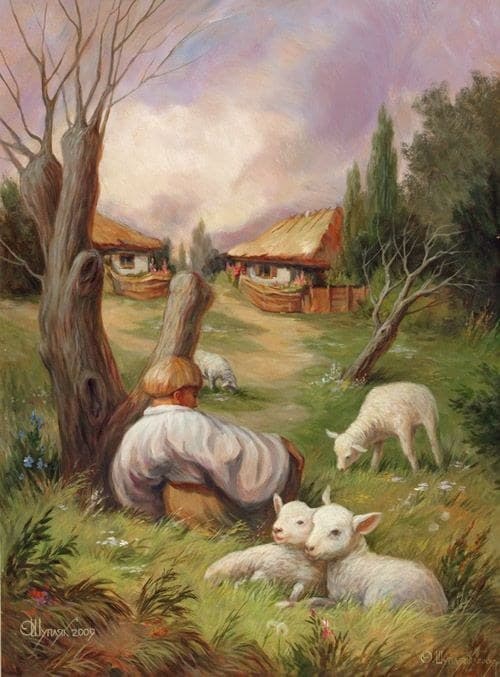
I was thirteen
A boy pasturing lambs outside a village, after the opening lines of Shevchenko's poem; the pastoral scene simultaneously forms the poet's own face. One of Shupliak's most reproduced dvovzory.
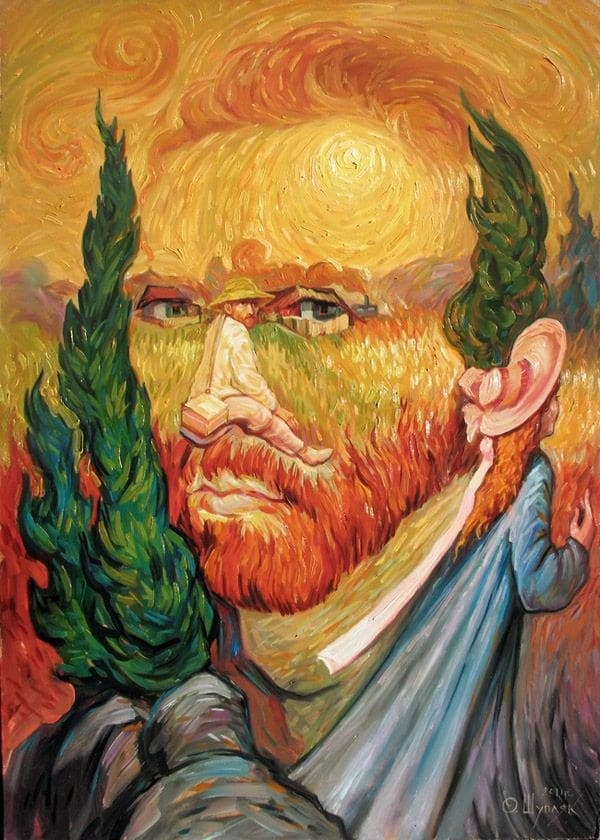
Double portrait of Van Gogh
A Provençal landscape in Van Gogh's own manner that simultaneously reads as the Dutch painter's head and shoulders.
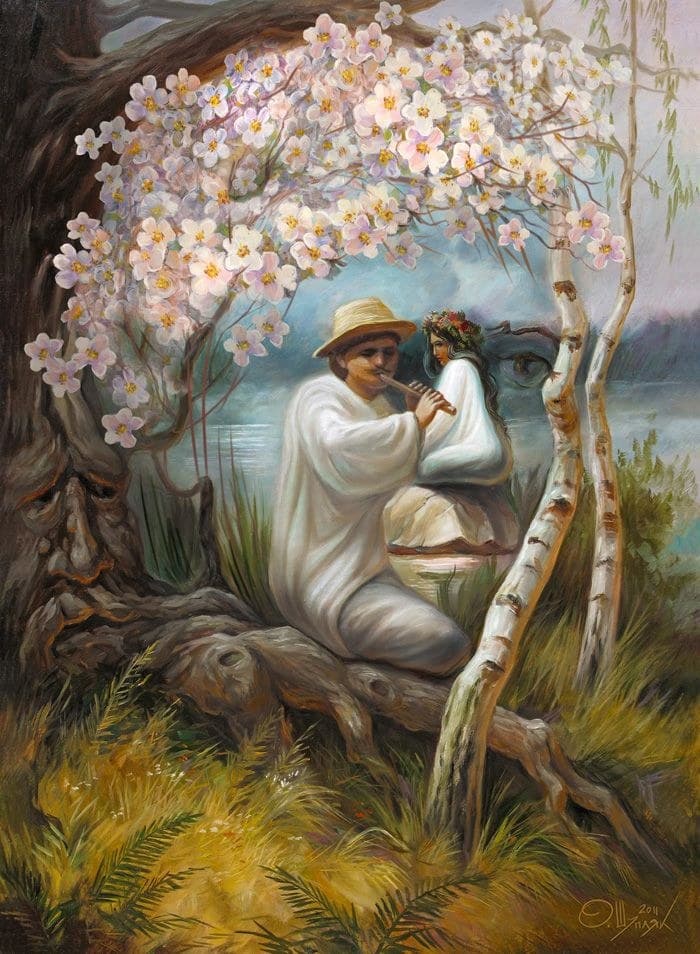
Forest Song. Lesya Ukrainka
A woodland scene from Lesya Ukrainka's drama 'The Forest Song' that resolves into the writer's portrait.
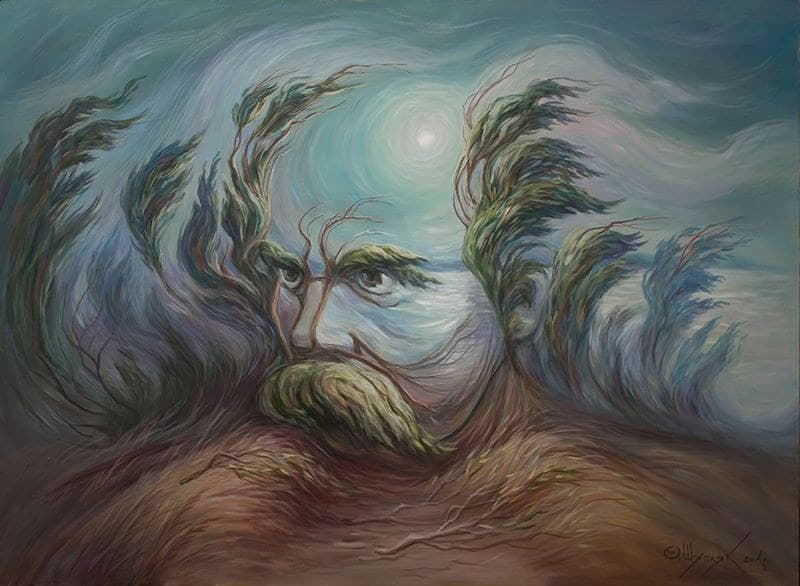
Wide Dnipr roars and groans!
A storm over the Dnipro, taking its title from Shevchenko's ballad 'Prychynna', in which the churning river and clouds compose a hidden face.
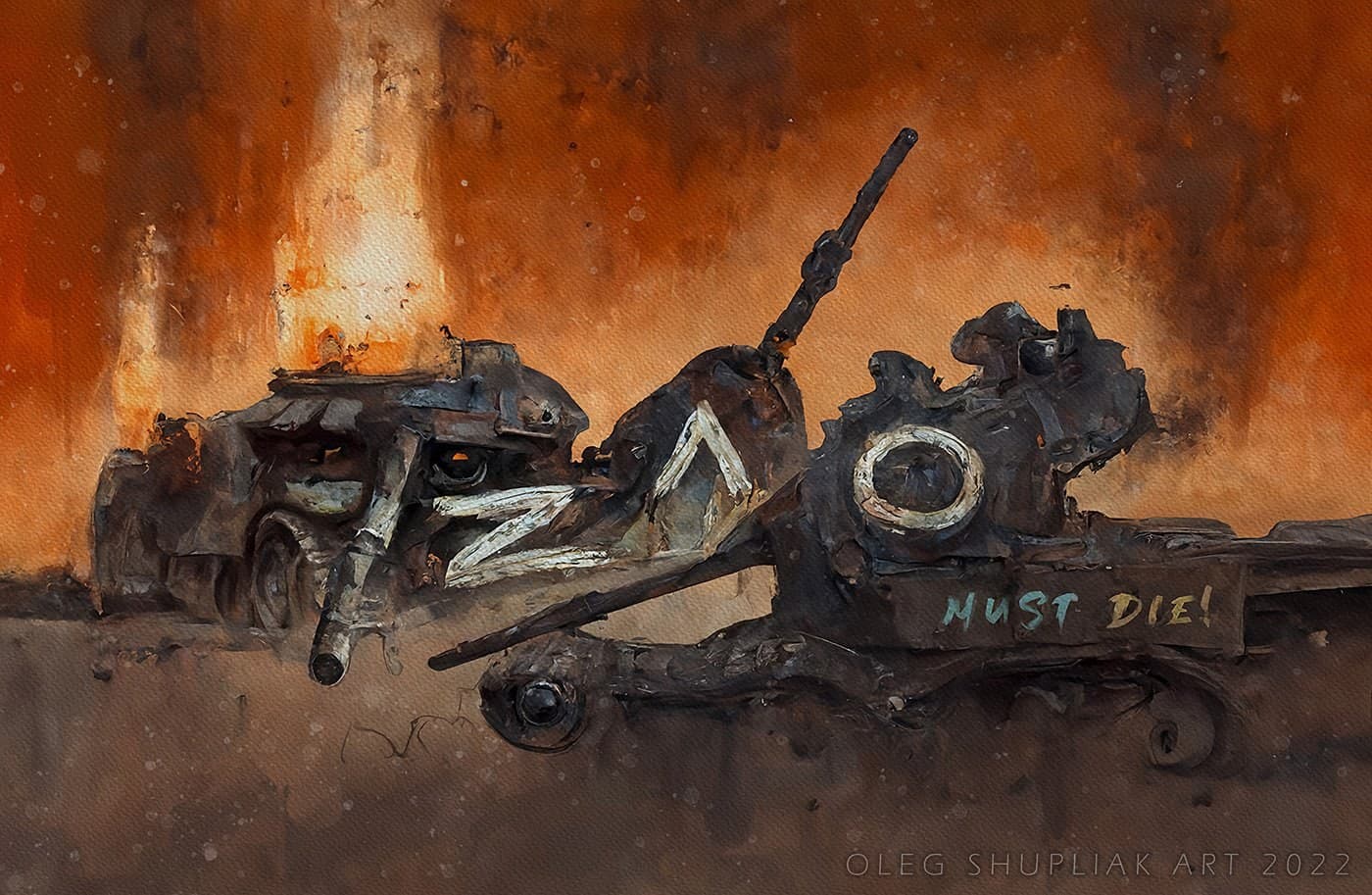
Evil must die!
An allegory of evil built from destroyed Russian military vehicles bearing the 'Z', inverted 'V' and 'O' invasion markings, painted on 5 April 2022. The artist released it himself under a free licence.