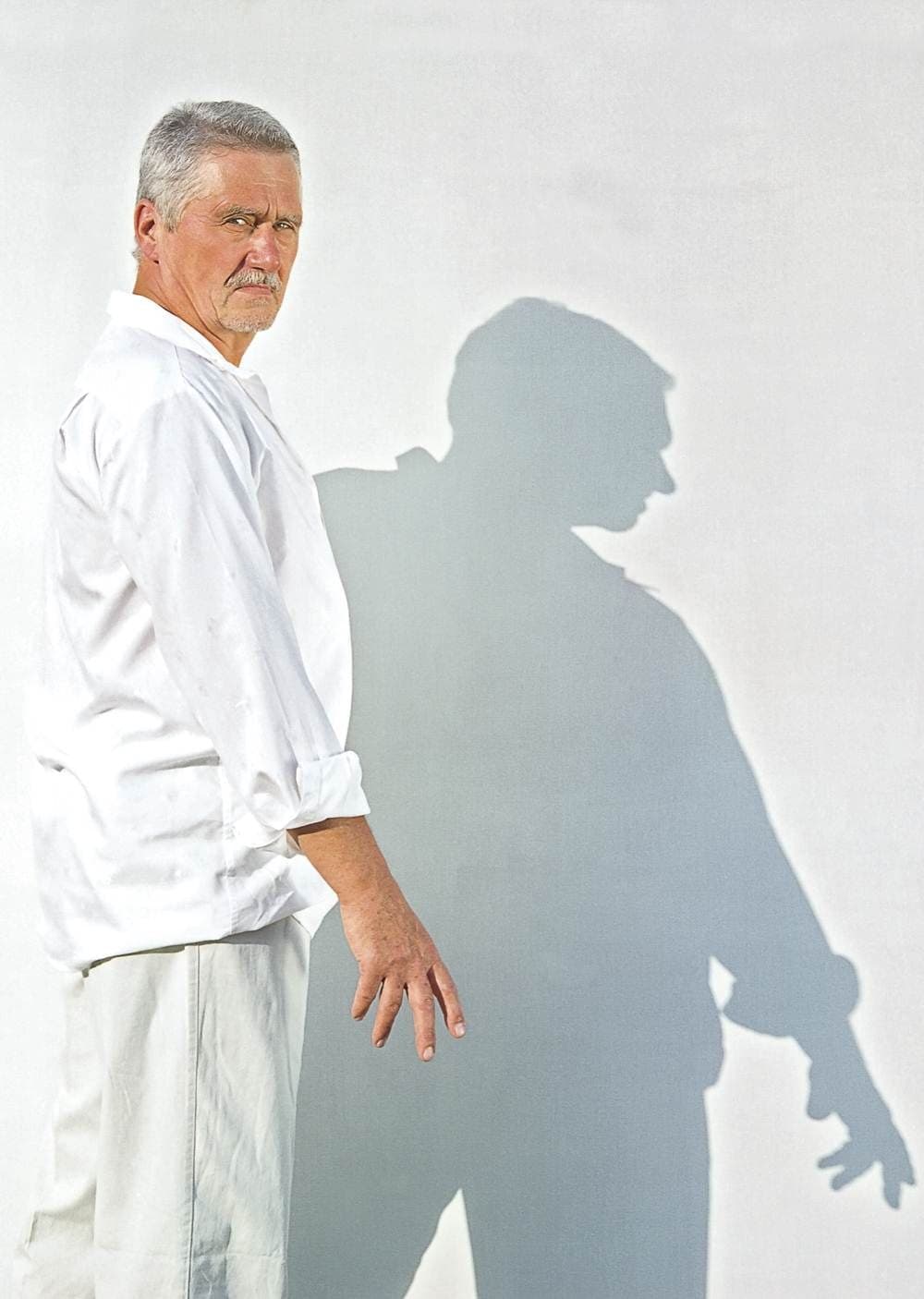
Anatolii Kryvolap
Анатолій Криволап
b. 1946 · Yahotyn, Kyiv Oblast, Ukraine
Anatolii Kryvolap, born 1946 in Yahotyn, is the master of Ukrainian non-figurative landscape and one of the highest-selling living Ukrainian painters. Colour is his entire subject — steppe, lake, evening, horse reduced to saturated fields of pigment — and in 2011 his canvases twice set world records for contemporary Ukrainian art at Phillips.
Anatolii Dmytrovych Kryvolap was born on 11 September 1946 in Yahotyn, Kyiv region. He graduated from the painting faculty of the Kyiv State Art Institute in 1976 in the studio of Viktor Puzyrkov, then withdrew from public life for some fifteen years, refusing to work in the socialist realism that was the only acceptable style and searching instead for his own language of colour; through those years he was supported by the Polish doctor Ryszard Wróblewski, who became his close friend and the owner of the largest collection of his work. His breakthrough came at the 1990 republican exhibition in Kyiv, where his 'Crimson Heights' was hung in the furthest room because its colour was thought too intense, and drew attention anyway. From 1992 to 1995 he was a leading member of the group Zhyvopysnyi Zapovidnyk ('Painting Reserve'), whose influence on Ukrainian contemporary art outlasted it by decades. In 2000 he left Kyiv for the village of Zasupoivka near Yahotyn, where he still keeps his studio in the attic of his own house. His work is organised into long open series — Meditative Landscape, Horse, White Space, Kaniv, The Carpathians, Evening, Lake, Silence, Nostalgia — and closed ones including Structures and Non-Figurative; some 1,200 works in all. In May 2011 'Steppe' sold at Phillips de Pury in New York for $98,500 and in October 'Horse. Night' at Phillips in London for about $124,000, making him officially the most expensive Ukrainian painter; further sales followed at Phillips (£122,500 in 2013) and Sotheby's. He won the Shevchenko National Prize in 2012 for the fifty-work cycle 'Ukrainian Motif', became a full member of the National Academy of Arts of Ukraine in 2021, painted the interior of the rebuilt Church of the Intercession at Lypivka in 2019–2023, and was named a National Legend of Ukraine in August 2025. His wife is the artist Zinaida Vasina and his daughter the painter Hanna Kryvolap.
Portrait: photograph sourced from anatolykryvolap.com. © the photographer / rights holder; shown for editorial purposes. Contact us for attribution or removal.
Art Movements
Expressionism
A modernist approach that distorts colour, drawing and surface to convey inner emotional and spiritual states rather than optical appearances. In Ukrainian art it runs from the early-twentieth-century Galician and Lviv painters through to post-war diaspora artists, who combined heavy impasto, near-abstract structural drawing and saturated non-naturalistic colour.
Explore movement →1991–presentContemporary Ukrainian Painting
Painting made in independent Ukraine, from the 1991 declaration of independence onward. It is pluralist rather than programmatic: plein-air landscape and psychological portraiture continue alongside conceptual, minimalist and symbolist strands, with a marked turn after 2014 and especially after 2022 toward wartime subjects, national memory and the vernacular Ukrainian village.
Explore movement →Works by Anatolii Kryvolap
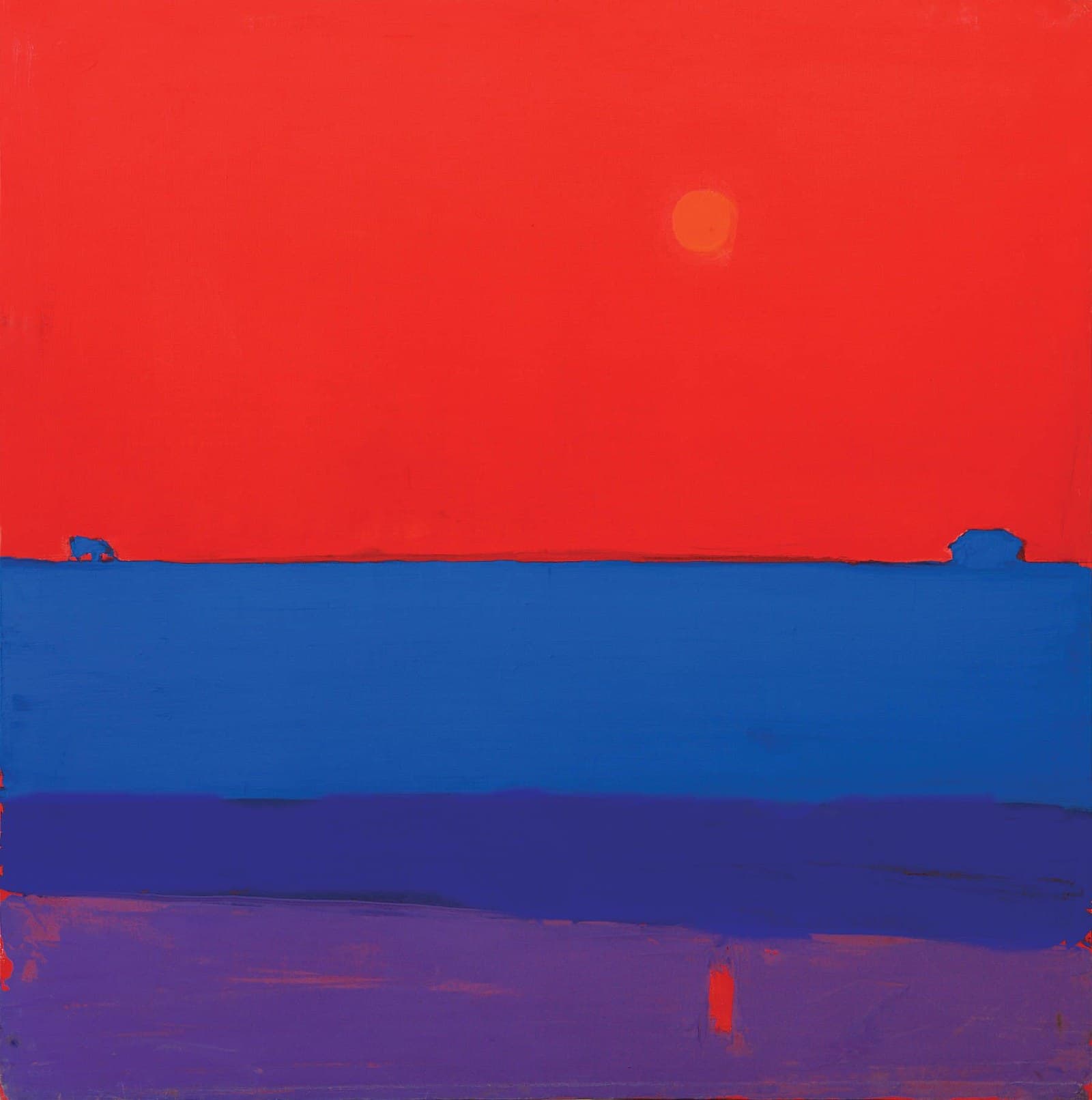
Evening. Steppe
A square steppe landscape from the Meditative Landscape series, where the horizon becomes a single hot band of colour between earth and sky.
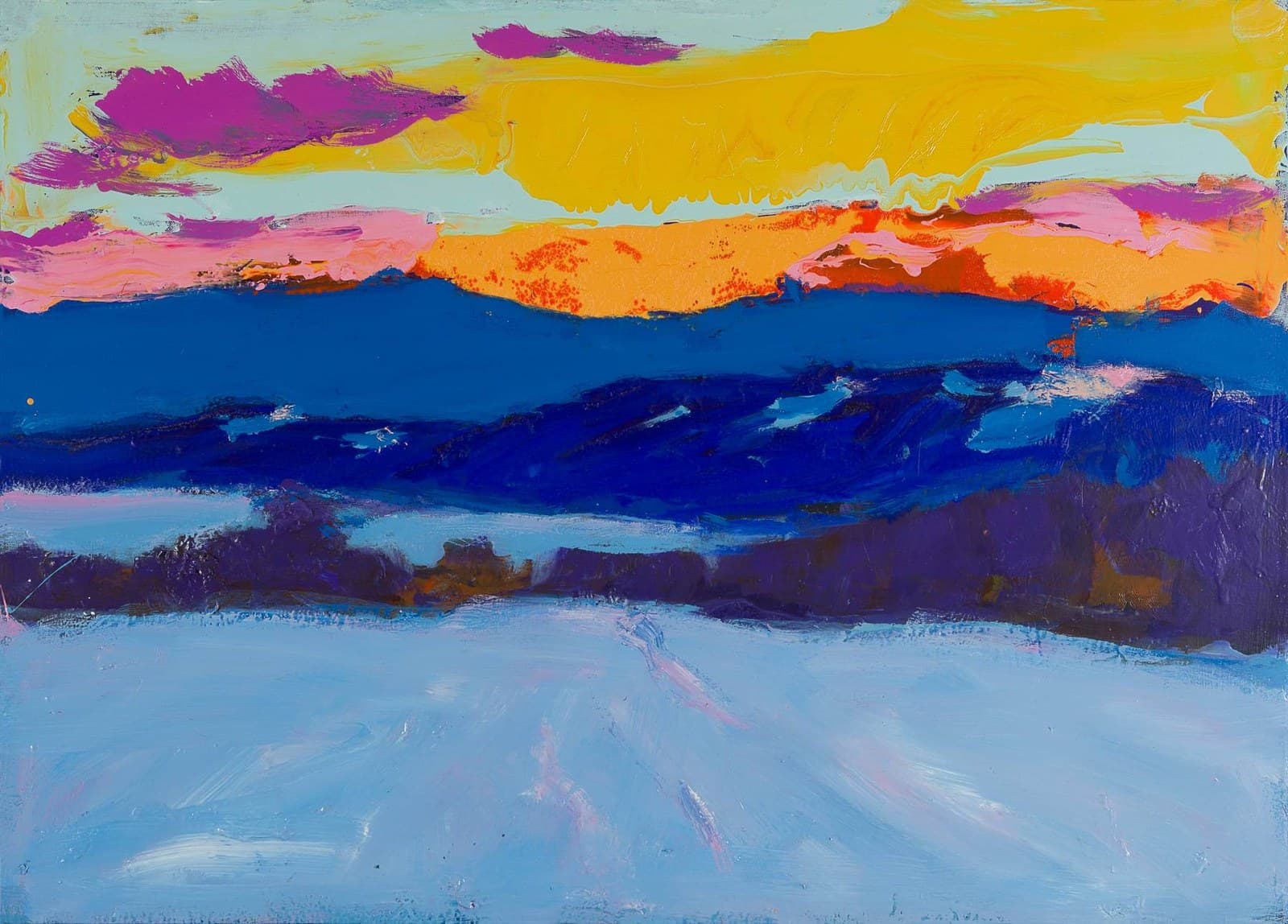
Carpathian Night
From the Carpathians series begun in 2000, part of the 'Ukrainian Motif' cycle: mountain ridges compressed into flat, deep bands of night colour.
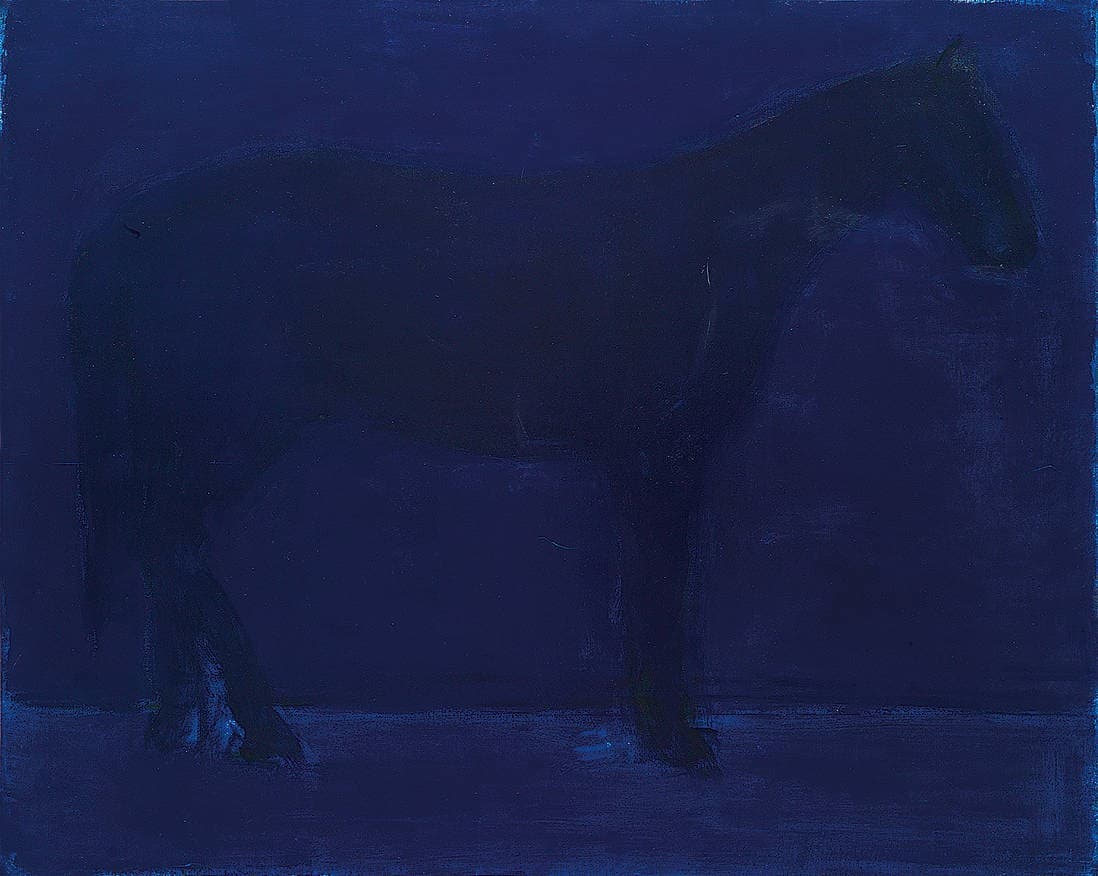
Horse. Night
From the Horse series begun in 2005, in which the animal is reduced to a silhouette floating in a field of saturated night colour. A canvas of this title sold at Phillips de Pury in London in October 2011 for about $124,000, then a world record for contemporary Ukrainian art.
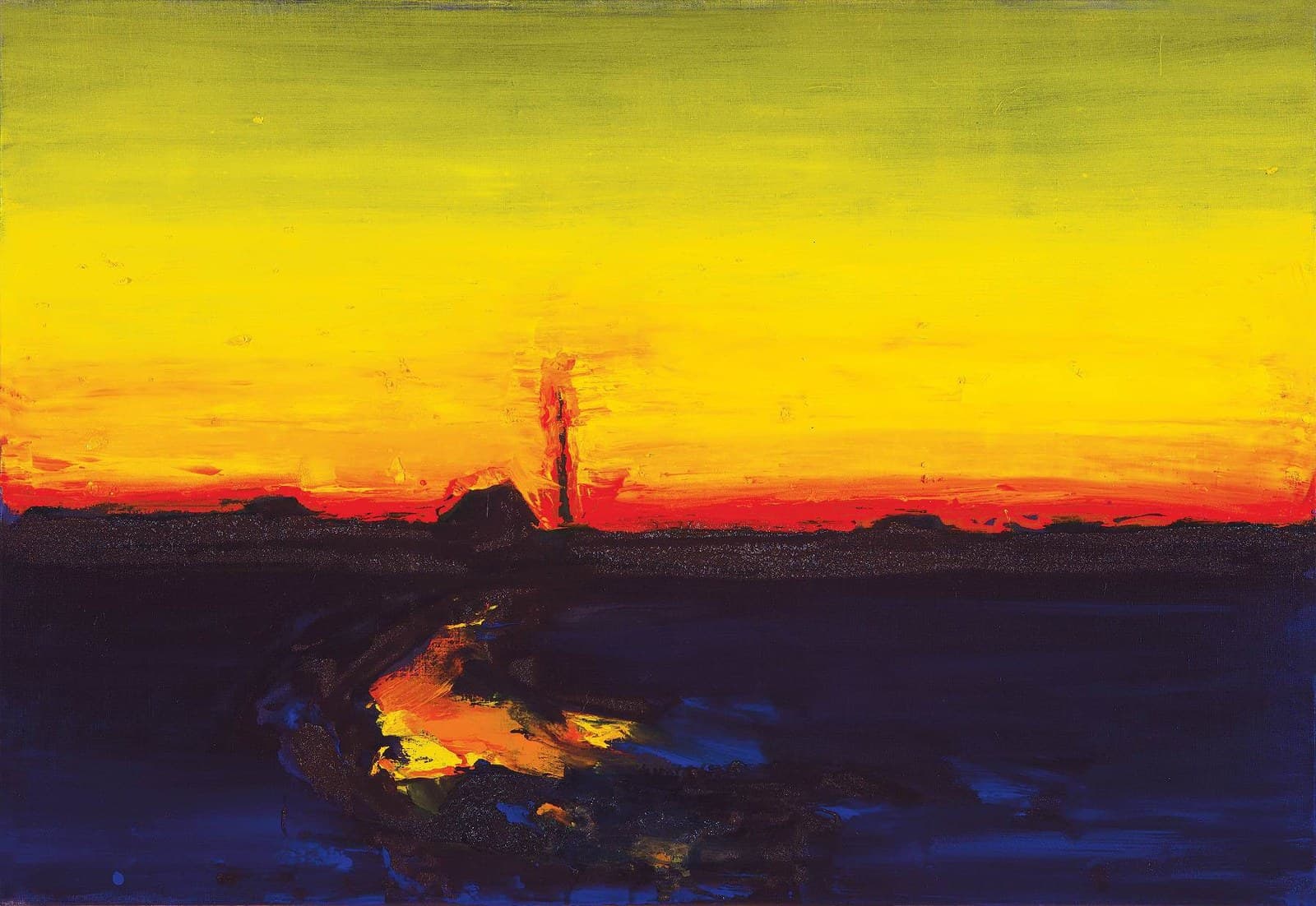
Mirror of Ukraine
From the Evening series in the 'Ukrainian Motif' cycle: still water holding the whole of a Ukrainian dusk, painted the year after the Shevchenko Prize.