Post-Impressionism
Post-Impressionism (c. 1886–1905) was a French art movement that reacted against the limitations of Impressionism, favoring emotional expression, symbolic content, and structural order over realistic light depiction. Key artists included Cézanne, Van Gogh, Gauguin, and Seurat, who used vivid, unnatural colors and thick paint application to create unique styles that paved the way for modern art. Key Characteristics Symbolic and Emotional Content: Pushing beyond the objective recording of nature to express subjective emotions and symbolic meaning. Structural Order: A move away from fleeting moments toward, as Paul Cézanne aimed, making of Impressionism "something solid and durable, like the art of the museums". Vivid, Non-Naturalistic Color: Using color for emotional or decorative impact rather than just representing natural light. Distinctive Techniques: Examples include Seurat's Pointillism (tiny, systematic dots of color) and Van Gogh's expressive, swirling brushwork.
Artists of the Movement
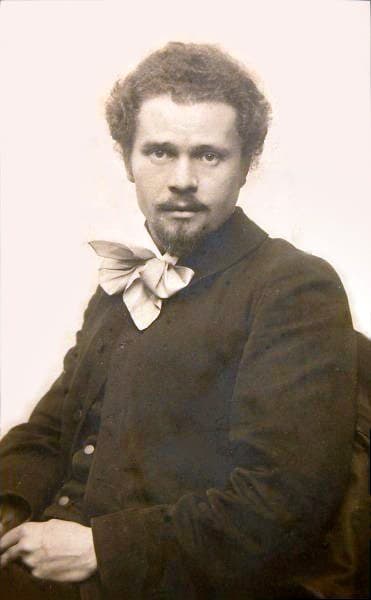
Ivan Trush
1869–1941
One of the foremost Ukrainian Impressionists; ~6,000 works; central to founding the Lviv National Museum; painted luminous landscapes and portraits of Ukrainian cultural figures.
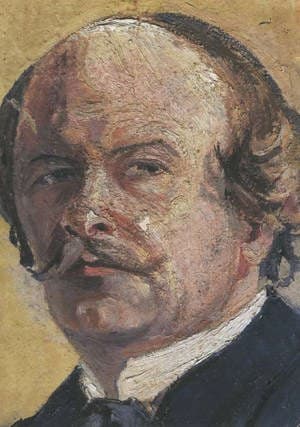
Mykola Burachek
1871–1942
Virtuoso Impressionist landscape painter, theatre designer and writer; studied under Stanisławski and in Matisse's studio; taught in Kyiv and Kharkiv.
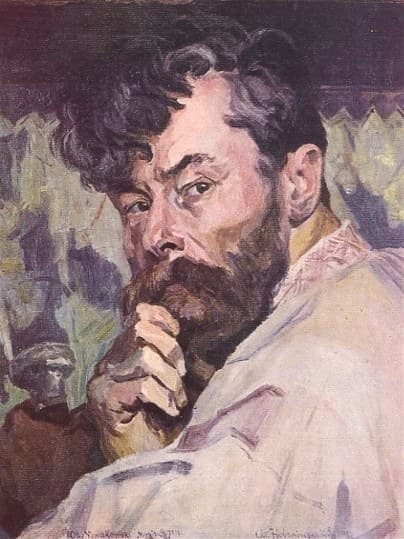
Oleksa Novakivskyi
1872–1935
Evolved from Impressionism through Symbolism to personal Expressionism; under Sheptytsky's patronage founded an influential Lviv art school (1923).
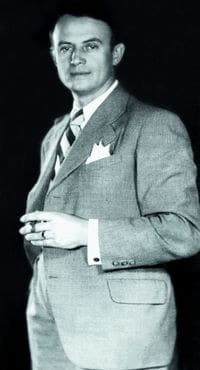
Adalbert Erdeli
1891–1955
Adalbert Erdeli (1891–1955) was a founder of the Transcarpathian school of painting, trained in Budapest, Munich and Paris, where he absorbed impressionism and fauvism. With Yosyp Bokshai he founded the Uzhhorod art school in 1927 and taught most of the region's leading painters, refusing socialist realism throughout the Soviet period.
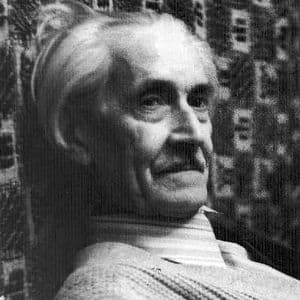
Roman Selskyi
1903–1990
Roman Selskyi was the central figure of twentieth-century Lviv painting and the founder of the school known as Ukrainian colourism, in which colour rather than subject carries the picture. Trained in Kraków and Paris, where he worked at Fernand Léger's Académie Moderne, he brought European modernism back to Galicia and first chaired the avant-garde group 'Artes'. As a professor in Lviv from 1947 he taught for nearly thirty years and shaped a generation of painters who kept a non-doctrinal practice alive in Soviet Ukraine.
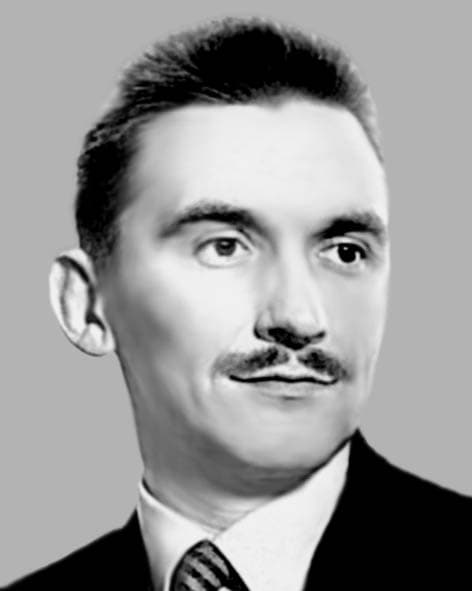
Liuboslav Hutsaliuk
1923–2003
Liuboslav Hutsaliuk was a Lviv-born painter who emigrated to New York in 1949 and became one of the leading figures of Ukrainian diaspora modernism. Working between studios in New York and Paris, he built a distinctive body of cityscapes in which cathedral spires, rooftops and bridges dissolve into thick vertical impasto and two- or three-note colour harmonies.
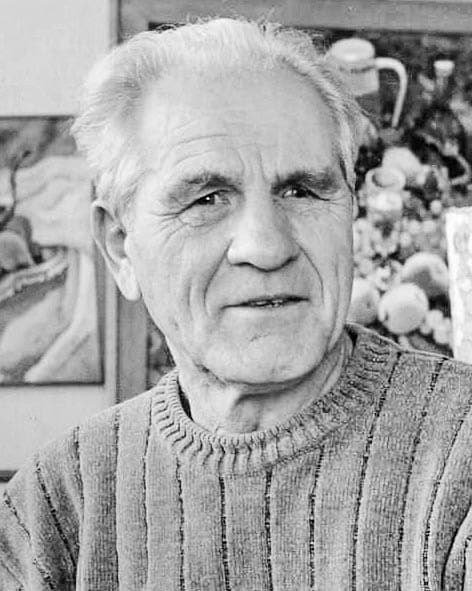
Mykola Maksymenko
1924–2016
Mykola Maksymenko was a Ukrainian painter of still lifes and landscapes, People's Artist of Ukraine (1994) and a laureate of the Shevchenko National Prize for his cycle 'Landscapes of Ukraine'. Blinded in one eye as a front-line scout in 1943, he spent nearly seven decades painting the Polissia countryside around Zhytomyr in a dense, high-keyed impasto. The largest single collection of his work is held by the Zhytomyr Regional Museum of Local Lore.
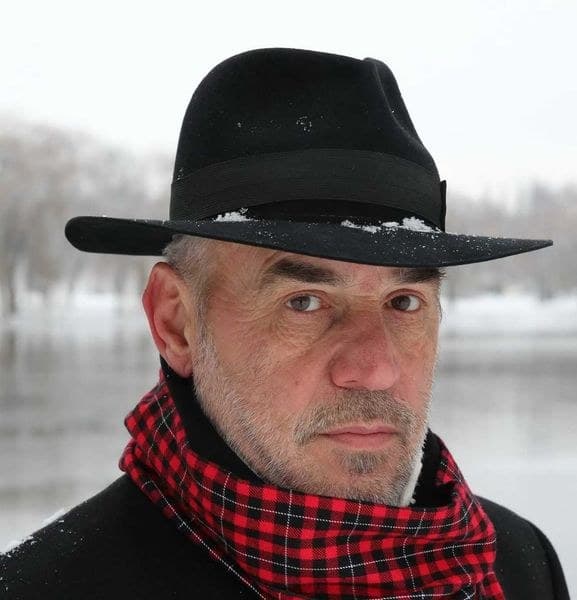
Viktor Hvozdynskyi
b. 1951
Viktor Vyacheslavovych Hvozdynskyi (born 25 February 1951 in Volodymyr-Volynskyi) is a Ukrainian painter, watercolourist and monumental artist who has worked in Rivne since 1975 and has been a member of the National Union of Artists of Ukraine since 1985. He is best known for watercolour and oil landscapes of Volyn, Polissia, the Carpathians and Central Europe, and for stained glass made with his wife Larysa Hvozdynska.
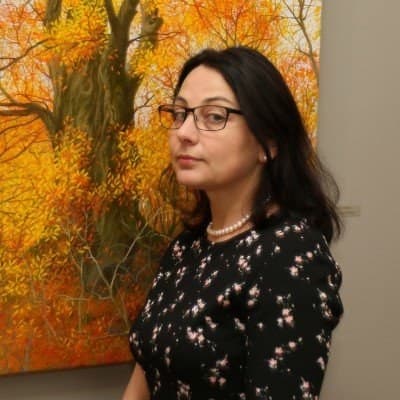
Olha Kvasha
b. 1976
Olha Kvasha is a contemporary Ukrainian painter born in Lutsk in 1976 and based in Lviv, a 1999 graduate of the Lviv Academy of Arts. She paints dreamlike, faintly naive Ukrainian landscapes — orchards, snowy village streets, river valleys and hillsides — in which an ordinary scene is tilted toward fairy tale.
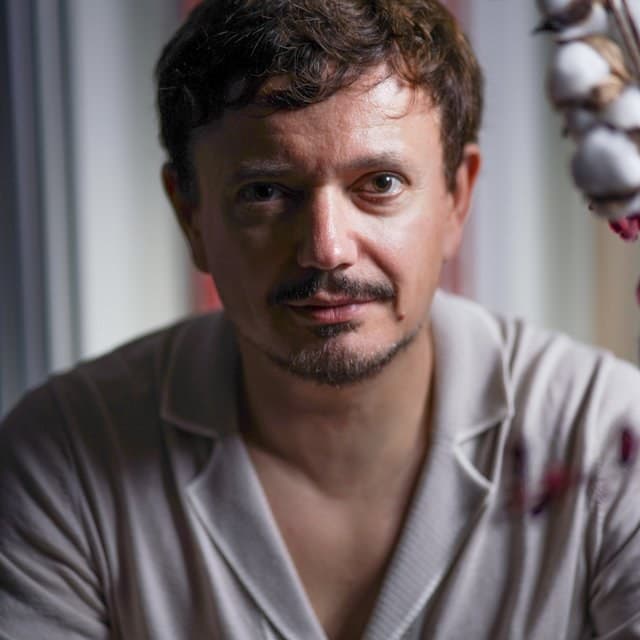
Oleh Savka
b. 1978
Oleh Savka is a contemporary Ukrainian painter, designer and architect who lives in the old town of Kyiv and paints its streets, courtyards and churches with a palette knife. Trained as a furniture and interior designer, he turned intensively to painting in 2022 and by early 2026 had completed some ninety-nine canvases.
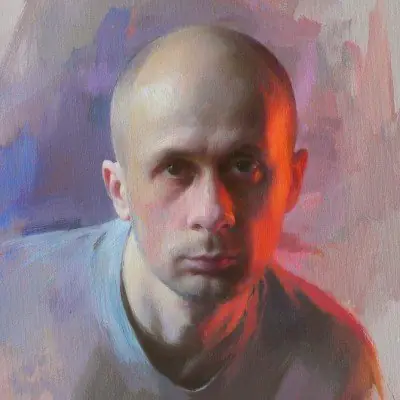
Serhii Poliakov
b. 1982
Serhii Poliakov (b. 1982) is a Kyiv-based Ukrainian painter known for atmospheric cityscapes of Kyiv — Khreshchatyk, Bessarabska Square, the Dnipro bridges — as well as portraits and historical battle scenes. He paints in oil with heavy layering and expressive brushwork drawn from the Impressionists and Post-Impressionists.
Yevhen Cherniakovskyi
b. 1993
Yevhen Cherniakovskyi (listed commercially as Evgeny Chernyakovsky) is a Ukrainian painter born in 1993 who studied at K. D. Ushynskyi university in Odesa. He works in thick, high-impasto oils on canvas, returning repeatedly to water lilies, ponds and river surfaces in a broadly impressionist manner.
Works from this Movement
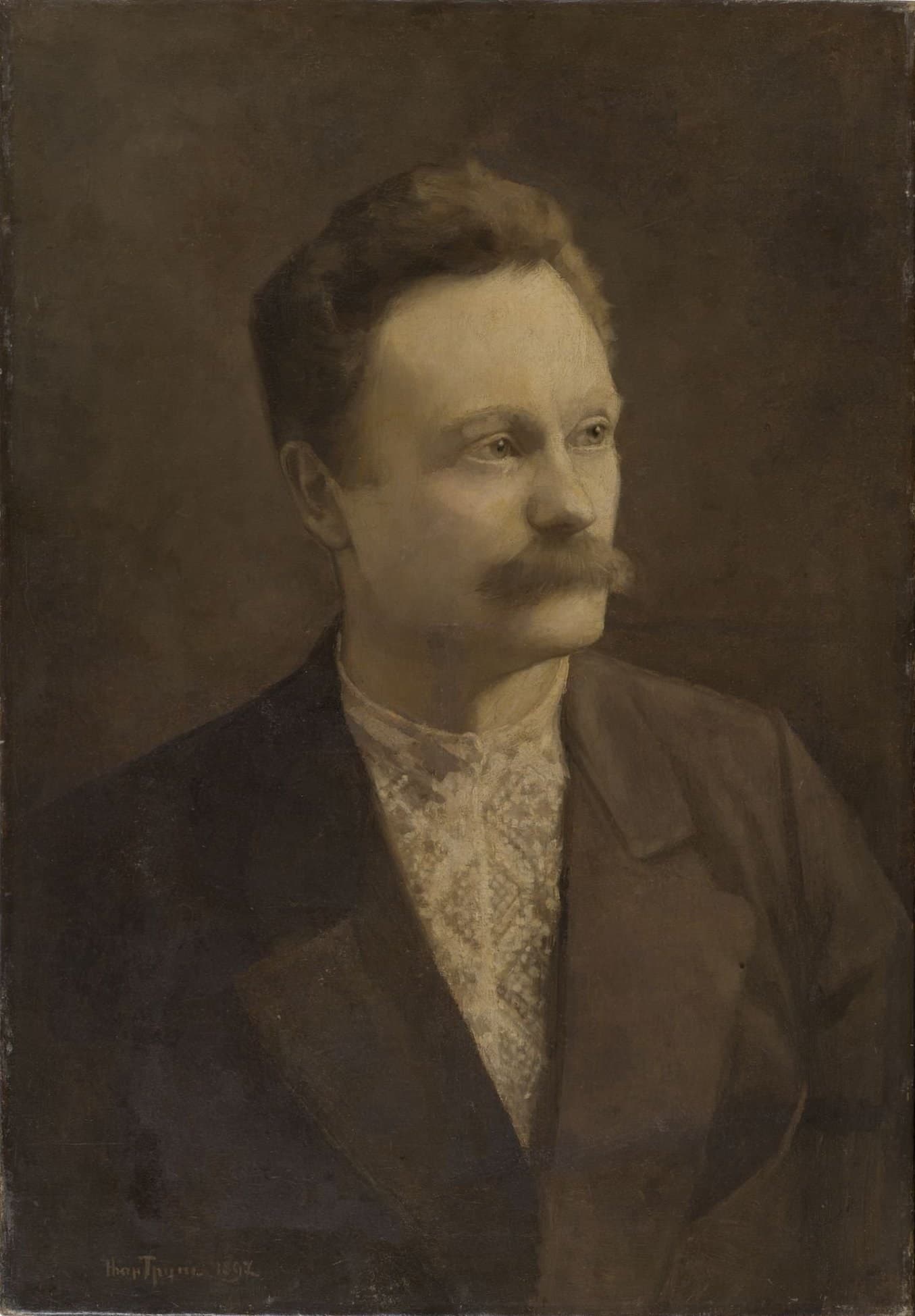
Portrait of Ivan Franko
Ivan Trush
A finely rendered portrait of the Ukrainian writer Ivan Franko.
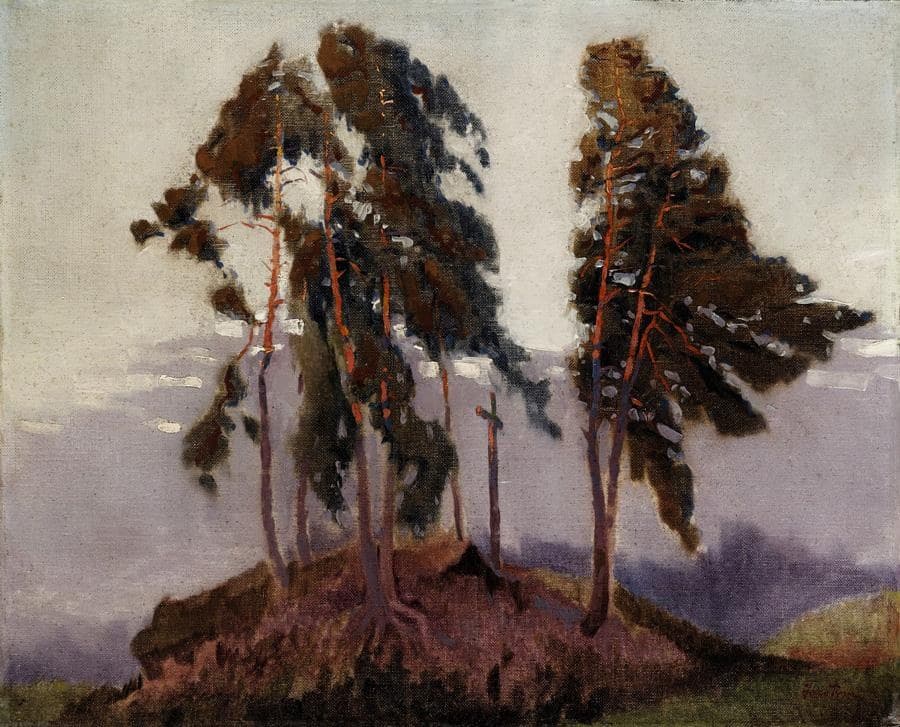
Evening Sun
Ivan Trush
A landscape capturing the warm glow of the setting sun and Trush's love of atmospheric light.
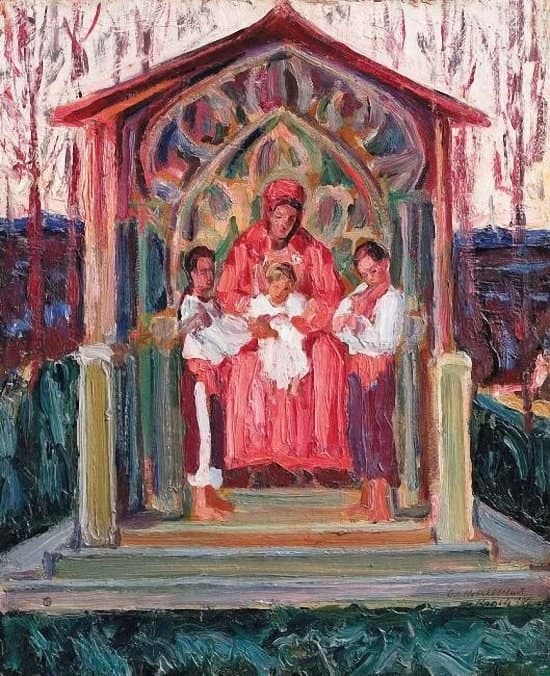
Ukrainian Madonna
Oleksa Novakivskyi
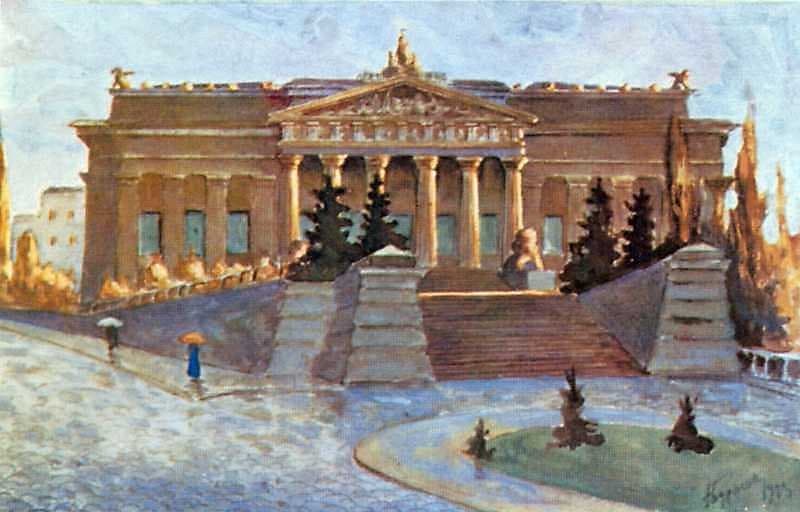
Kyiv Town Museum
Mykola Burachek
A cityscape of the Kyiv City Museum building in Burachek's impressionist style.
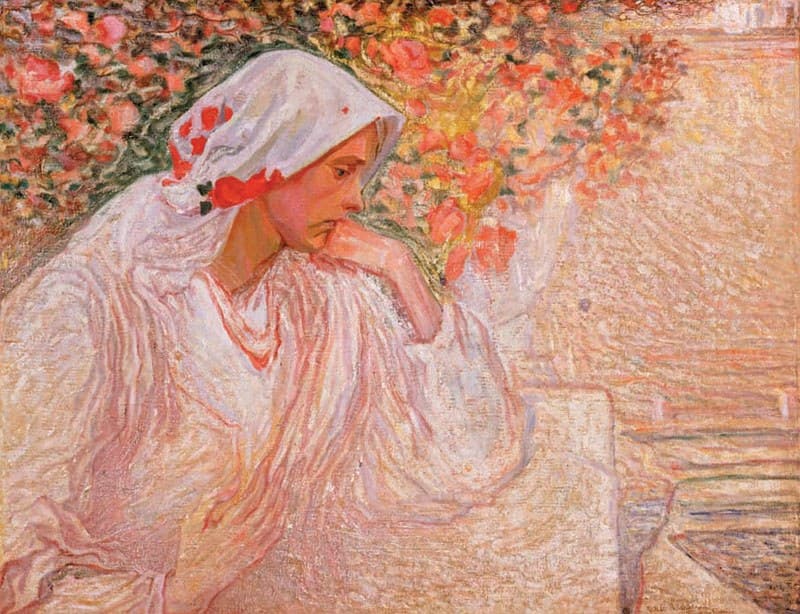
In Thought (Portrait of the Artist's Wife)
Oleksa Novakivskyi
A contemplative portrait of the painter's wife, Anna Novakivska.
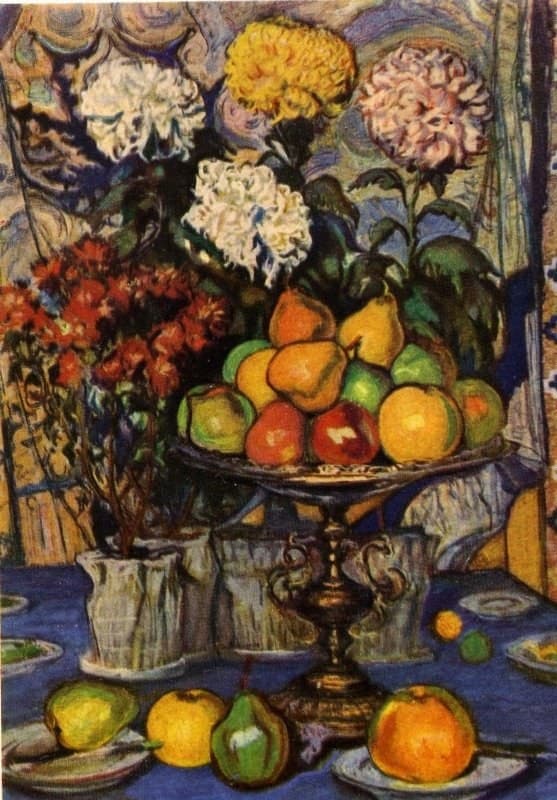
Still Life
Oleksa Novakivskyi
A vivid still life of fruit and flowers from the artist's Lviv period.
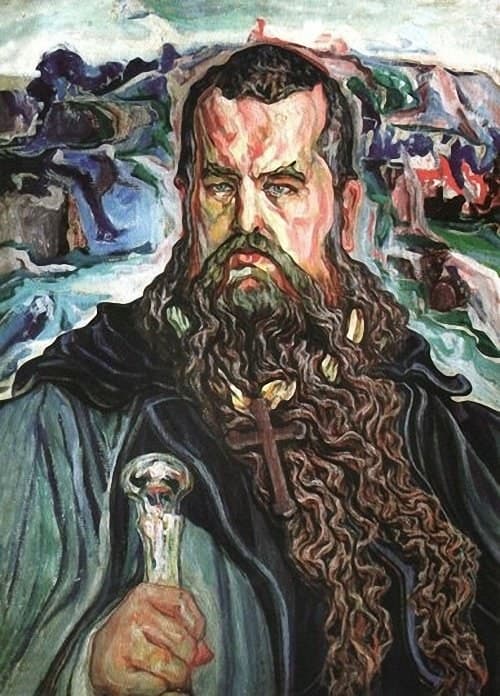
Portrait of Metropolitan Andrei Sheptytsky
Oleksa Novakivskyi
A monumental portrait of the Greek Catholic Metropolitan Andrey Sheptytsky, the artist's Lviv patron.
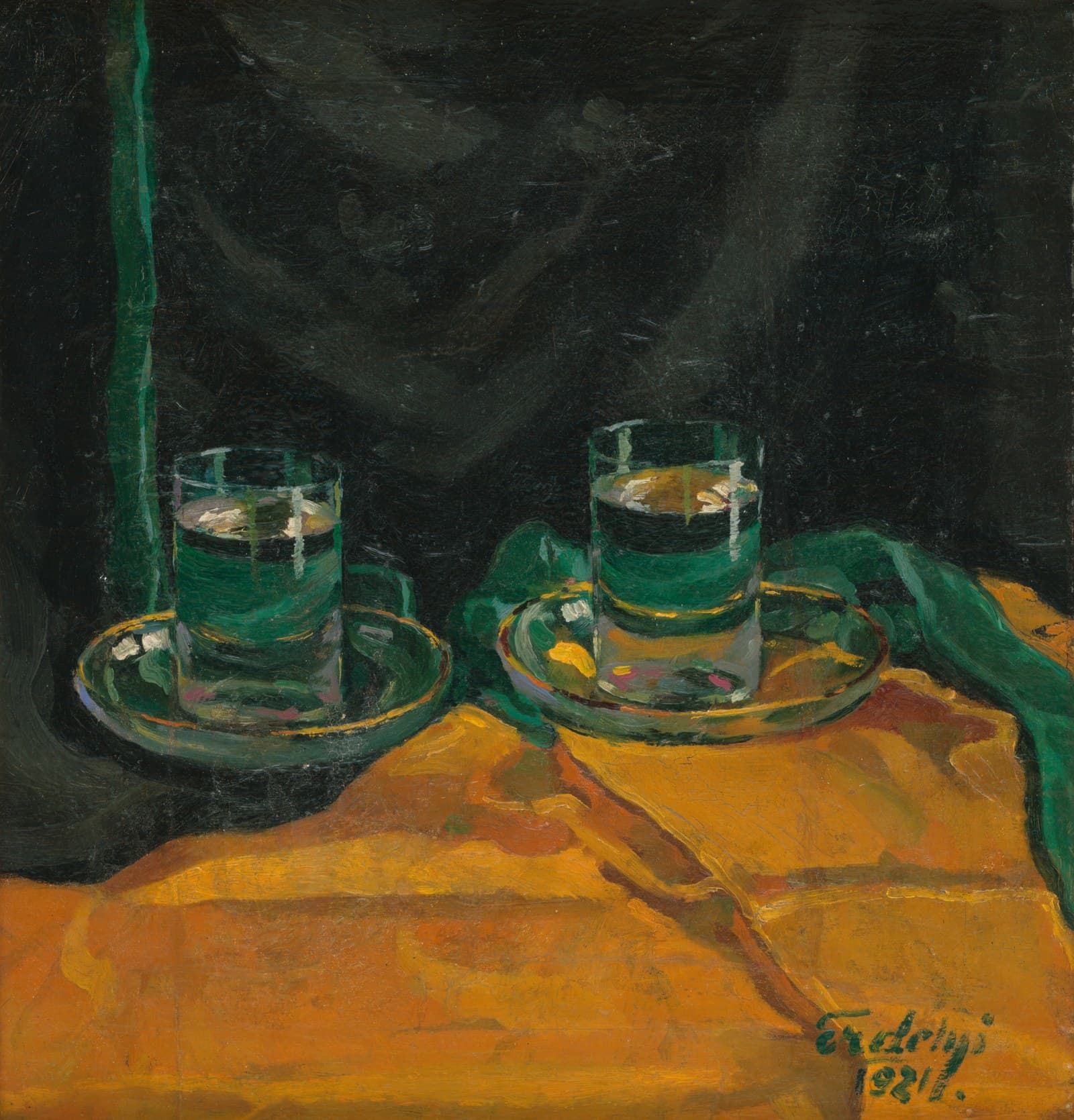
Glasses of Water
Adalbert Erdeli
One of Erdeli's signature still lifes, tackling the notoriously difficult subject of water in clear glass. Ukrainian Wikipedia uses it as a key illustration of his early work.
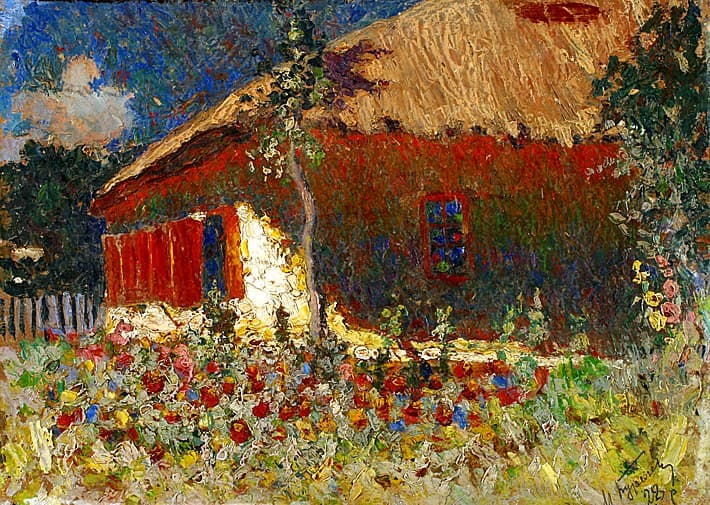
A Cottage at Noon
Mykola Burachek
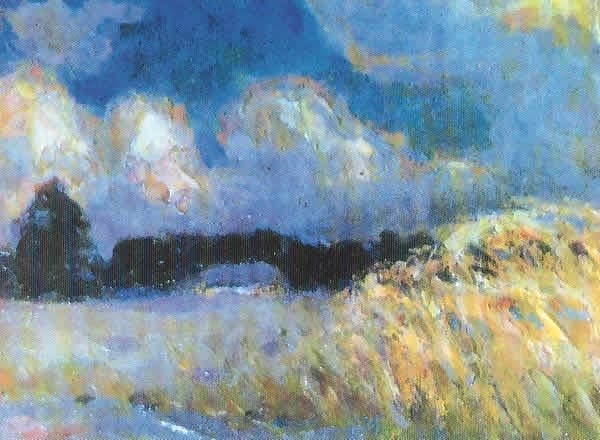
Before the Thunderstorm
Mykola Burachek
An impressionistic landscape capturing the charged sky moments before a thunderstorm.
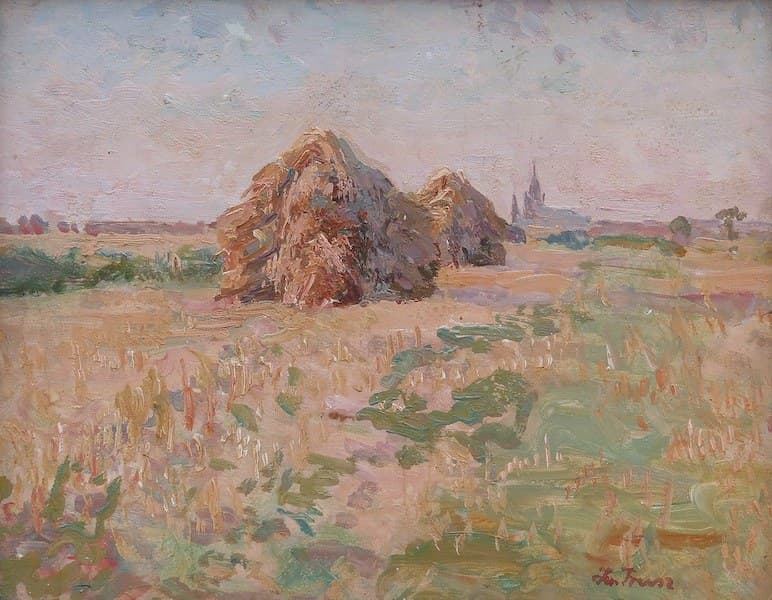
Summer. Haystacks
Ivan Trush
A sunlit landscape of haystacks standing in a summer field, in Trush's impressionist style.
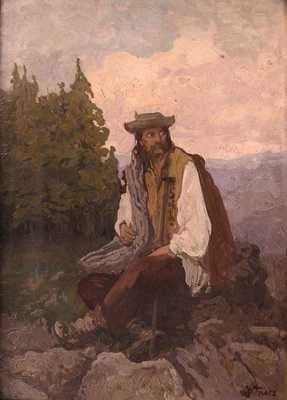
Hutsul
Ivan Trush
A study of a Hutsul highlander from the Carpathian Mountains.