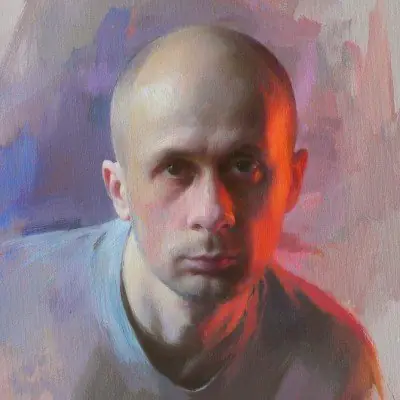
Serhii Poliakov
Сергій Поляков
b. 1982 · Saint Petersburg, Russia (then USSR)
Serhii Poliakov (b. 1982) is a Kyiv-based Ukrainian painter known for atmospheric cityscapes of Kyiv — Khreshchatyk, Bessarabska Square, the Dnipro bridges — as well as portraits and historical battle scenes. He paints in oil with heavy layering and expressive brushwork drawn from the Impressionists and Post-Impressionists.
Serhii Serhiiovych Poliakov was born on 10 April 1982. He graduated in 2000 from the Taras Shevchenko Republican Art School in Kyiv and in 2006 from the National Academy of Fine Arts and Architecture, where he studied painting in the studios of Professors Viktor Shatalin and Mykola Huida. Between 2004 and 2006 he took part in a series of student and national competitions, and in 2011 he was included in the 'Golden Fund of the Nation' album. He lives and works in Kyiv. His central subject is the city itself: crowds on Khreshchatyk under an autumn sky, chestnuts in flower, the frozen Dnipro, the pedestrian bridge, Bessarabska Square — handled with thick, broken paint and a warm impressionist palette. Alongside the cityscapes he paints portraits, figures such as bikers and tennis players, still lifes, and Cossack battle subjects ('Cossacks', 'Battle', 'Before the Battle'). He shows through KyivGallery in Kyiv, ArtIdea Gallery and the international platforms Artsper and Artsy. NOTE: at least two Ukrainian painters share the name Serhii Poliakov — this record is the one born in 1982; a Serhii Viktorovych Poliakov born in 1953 is a separate artist.
Art Movements
Impressionism
Impressionism was a 19th-century French art movement (1870s-1880s) that revolutionized Western art by capturing fleeting moments and the shifting effects of light using visible brushstrokes, open composition, and vibrant colors. Focusing on modern life and landscapes, key artists included Claude Monet, Pierre-Auguste Renoir, Camille Pissarro, and Berthe Morisot. Usage Examples & Characteristics: Plein Air Painting: Painting outdoors to capture natural light, such as Monet’s studies of Rouen Cathedral or haystacks in varying weather conditions. Visible Brushwork: Thick, rapid, or broken brushstrokes intended to convey a sense of motion and the ephemeral nature of a scene. Everyday Subjects: Depicting leisure activities, urban life in Paris, or landscapes rather than historical or mythological scenes. Unusual Visual Angles: Inspired by photography, artists like Degas used candid-style, unconventional framing of subjects, such as dancers or laundresses. "Impressionist Music": A similar approach in music and dance, focusing on mood and atmosphere over rigid structure, with artists like Claude Debussy and Maurice Ravel.
Explore movement →Post-Impressionism
Post-Impressionism (c. 1886–1905) was a French art movement that reacted against the limitations of Impressionism, favoring emotional expression, symbolic content, and structural order over realistic light depiction. Key artists included Cézanne, Van Gogh, Gauguin, and Seurat, who used vivid, unnatural colors and thick paint application to create unique styles that paved the way for modern art. Key Characteristics Symbolic and Emotional Content: Pushing beyond the objective recording of nature to express subjective emotions and symbolic meaning. Structural Order: A move away from fleeting moments toward, as Paul Cézanne aimed, making of Impressionism "something solid and durable, like the art of the museums". Vivid, Non-Naturalistic Color: Using color for emotional or decorative impact rather than just representing natural light. Distinctive Techniques: Examples include Seurat's Pointillism (tiny, systematic dots of color) and Van Gogh's expressive, swirling brushwork.
Explore movement →1991–presentContemporary Ukrainian Painting
Painting made in independent Ukraine, from the 1991 declaration of independence onward. It is pluralist rather than programmatic: plein-air landscape and psychological portraiture continue alongside conceptual, minimalist and symbolist strands, with a marked turn after 2014 and especially after 2022 toward wartime subjects, national memory and the vernacular Ukrainian village.
Explore movement →Works by Serhii Poliakov
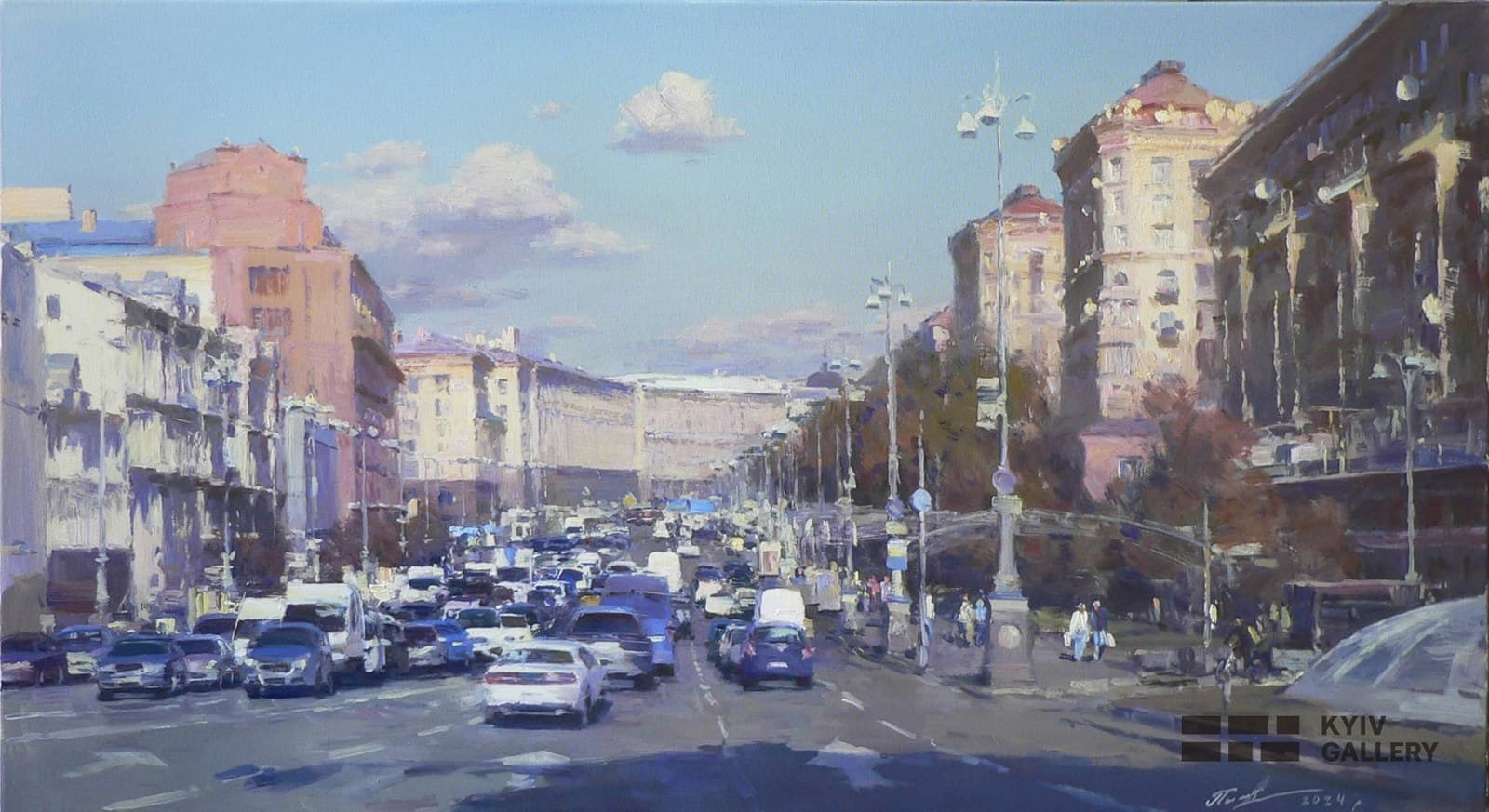
Autumn Sky over Khreshchatyk
A wide horizontal view down Kyiv's main boulevard under a high autumn sky, with a crowd of passers-by and period cars worked into the foreground.
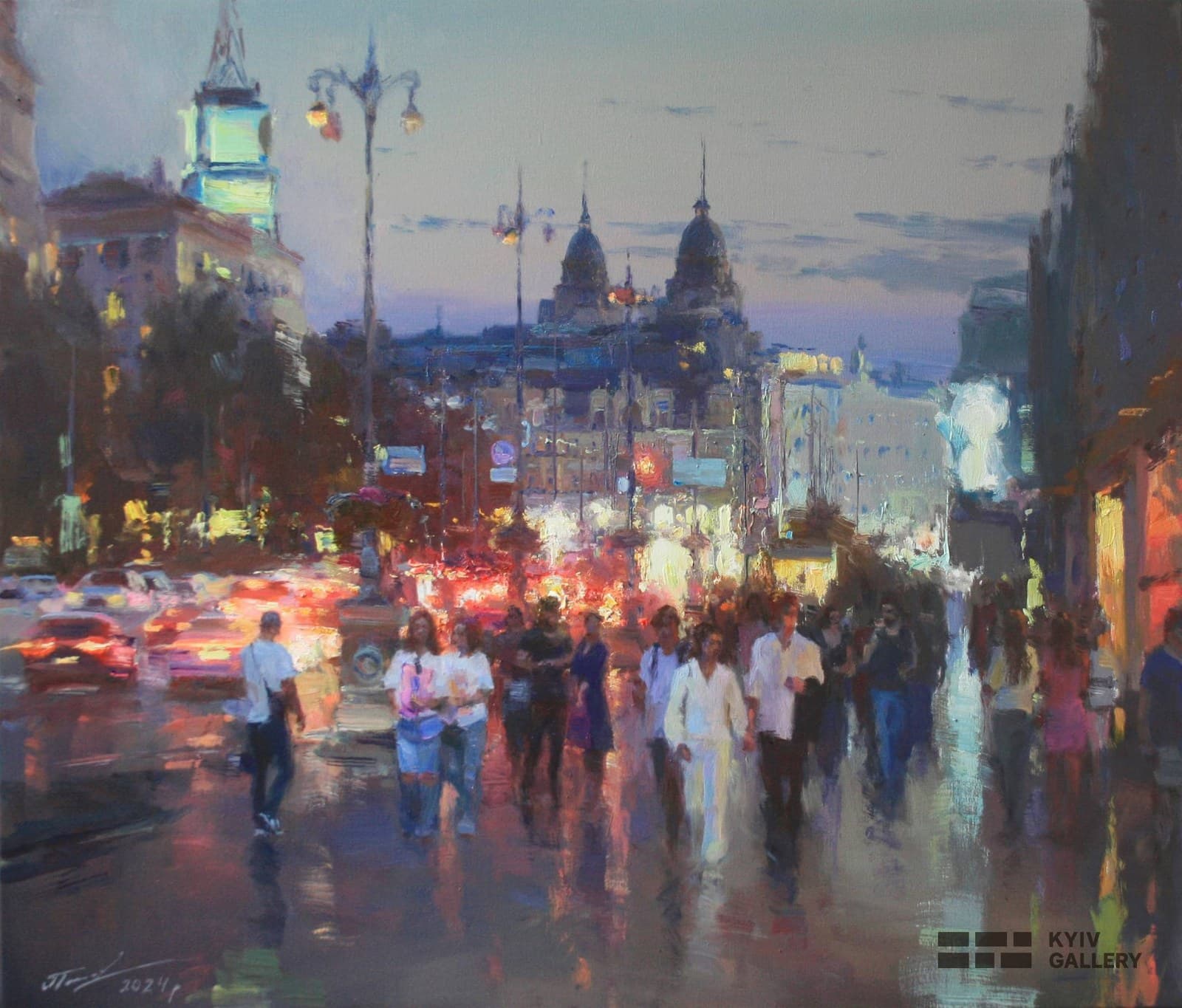
Walking along Khreshchatyk
A group of figures strolling on Khreshchatyk, painted as an impressionist crowd study against Kyiv's post-war architecture.
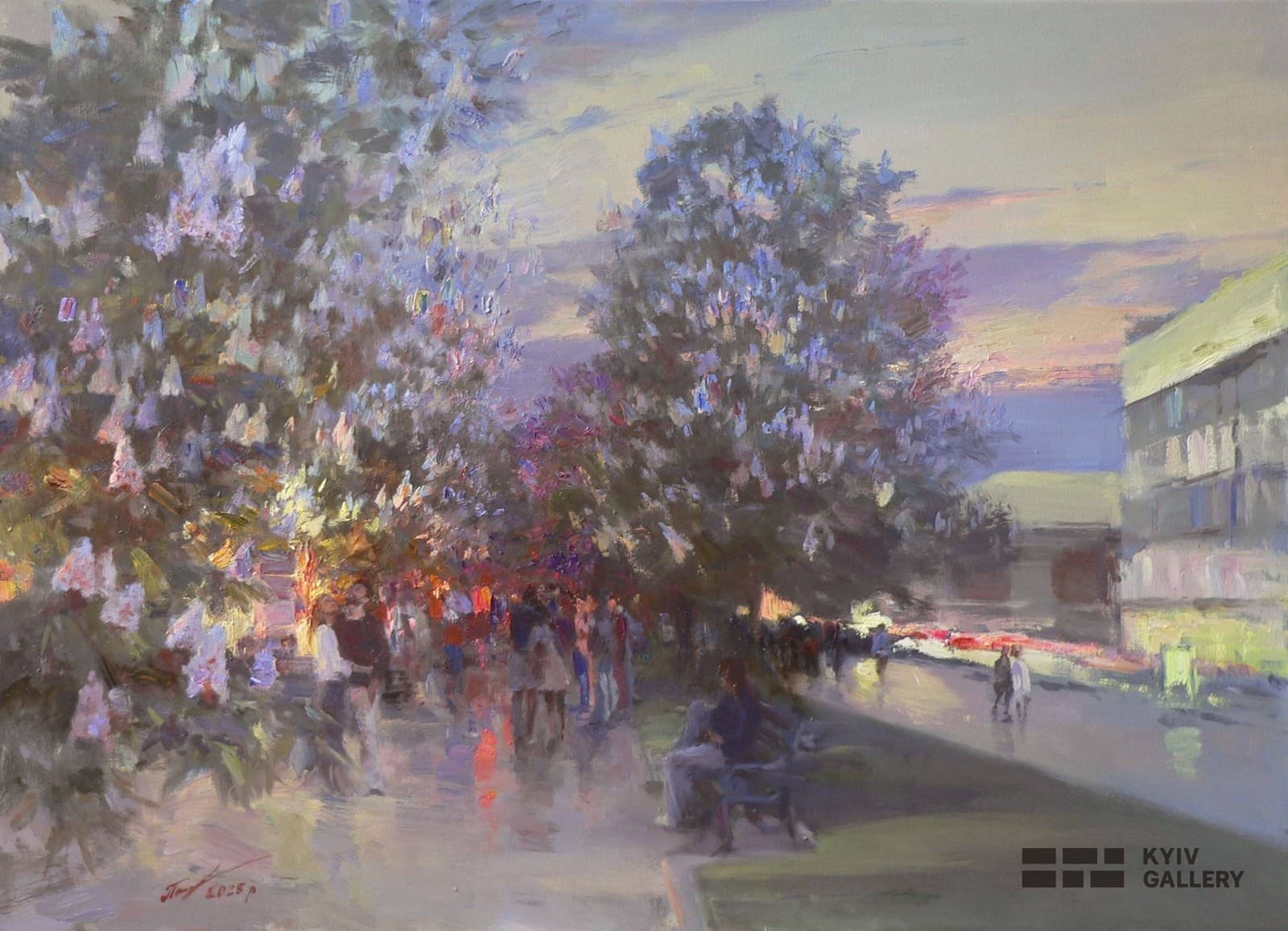
Blossoming chestnuts for lovers
Kyiv's chestnut trees in flower, the city's emblematic spring motif, treated in a loose impressionist-modernist manner.