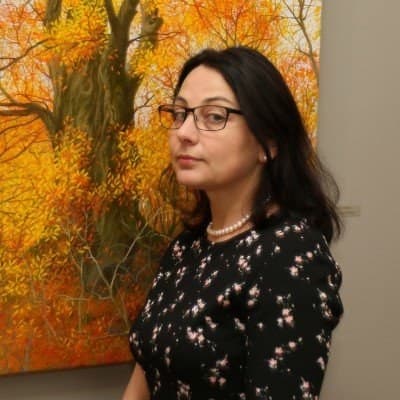
Olha Kvasha
Ольга Кваша
b. 1976 · Lutsk, Volyn Oblast, Ukraine
Olha Kvasha is a contemporary Ukrainian painter born in Lutsk in 1976 and based in Lviv, a 1999 graduate of the Lviv Academy of Arts. She paints dreamlike, faintly naive Ukrainian landscapes — orchards, snowy village streets, river valleys and hillsides — in which an ordinary scene is tilted toward fairy tale.
Olha Kvasha was born in 1976 in Lutsk and graduated from the Lviv Academy of Arts in 1999; she lives and works in Lviv. Her paintings are built almost entirely from the Ukrainian countryside and small-town street — apple trees, mallows, snow-covered yards, misted valleys, the banks of rivers such as the Oril — but handled with a soft, decorative flatness and heightened colour that pushes them toward the fantastical, which is why Ukrainian critics describe her work as "naive" painting or magical realism rather than straightforward landscape. She has said of her practice, "Люблю підглядати за світом" ("I love spying on the world"), and that she counts herself as much an element of the world as "the first cold mornings, a forgotten pumpkin in a field or the hot scent of wormwood on the Dnipro islands." She has exhibited steadily since 1995, with repeated solo shows at the Lviv Palace of Arts and further personal exhibitions in Kyiv, Odesa and Lviv, and took part in international painting plein-airs in Poland in 2001 and 2005. Beyond gallery work she illustrates children's books, and Ukrainian press reports note that her canvases have been used by doctors in psychotherapy for their calming effect. Her paintings are held in private collections in Ukraine, Poland, the United Kingdom, Germany, France, the USA, Canada, Japan and Brazil.
Portrait: photograph sourced from kyiv.gallery. © the photographer / rights holder; shown for editorial purposes. Contact us for attribution or removal.
Art Movements
Post-Impressionism
Post-Impressionism (c. 1886–1905) was a French art movement that reacted against the limitations of Impressionism, favoring emotional expression, symbolic content, and structural order over realistic light depiction. Key artists included Cézanne, Van Gogh, Gauguin, and Seurat, who used vivid, unnatural colors and thick paint application to create unique styles that paved the way for modern art. Key Characteristics Symbolic and Emotional Content: Pushing beyond the objective recording of nature to express subjective emotions and symbolic meaning. Structural Order: A move away from fleeting moments toward, as Paul Cézanne aimed, making of Impressionism "something solid and durable, like the art of the museums". Vivid, Non-Naturalistic Color: Using color for emotional or decorative impact rather than just representing natural light. Distinctive Techniques: Examples include Seurat's Pointillism (tiny, systematic dots of color) and Van Gogh's expressive, swirling brushwork.
Explore movement →Magical realism
Magical realism is a genre of literature, art, and film that incorporates fantastic, mythical, or surreal elements into otherwise realistic, mundane narratives, treating the magical as normal. It blurs the boundary between reality and fantasy, often used to explore complex social, political, or postcolonial themes through a dreamlike lens. Key Aspects and Characteristics Realistic Setting: Stories are rooted in the real world (e.g., bustling cities, quiet villages), not fantasy realms. Normalised Magic: Strange occurrences are accepted by characters without surprise or terror. Hybridity: Often blends folklore, myths, or spiritual beliefs with modern reality. Sociopolitical Critique: Often used to address issues like colonization, dictatorship, and trauma.
Explore movement →1991–presentContemporary Ukrainian Painting
Painting made in independent Ukraine, from the 1991 declaration of independence onward. It is pluralist rather than programmatic: plein-air landscape and psychological portraiture continue alongside conceptual, minimalist and symbolist strands, with a marked turn after 2014 and especially after 2022 toward wartime subjects, national memory and the vernacular Ukrainian village.
Explore movement →Works by Olha Kvasha
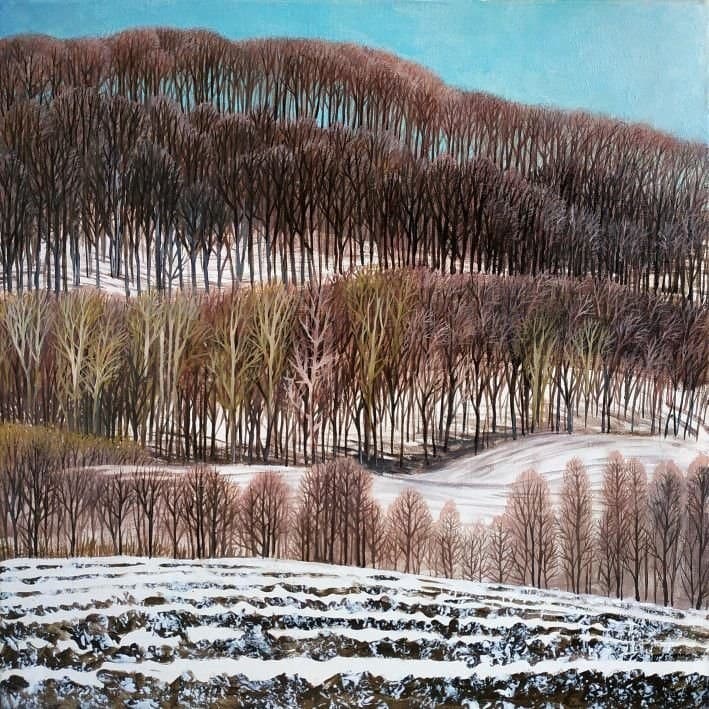
March Outside the City
A late-winter landscape outside town, painted in a modernist key on a palette of greys, beiges, whites, pinks and browns. This is the only Kvasha work in this set with a documented year, medium and size.
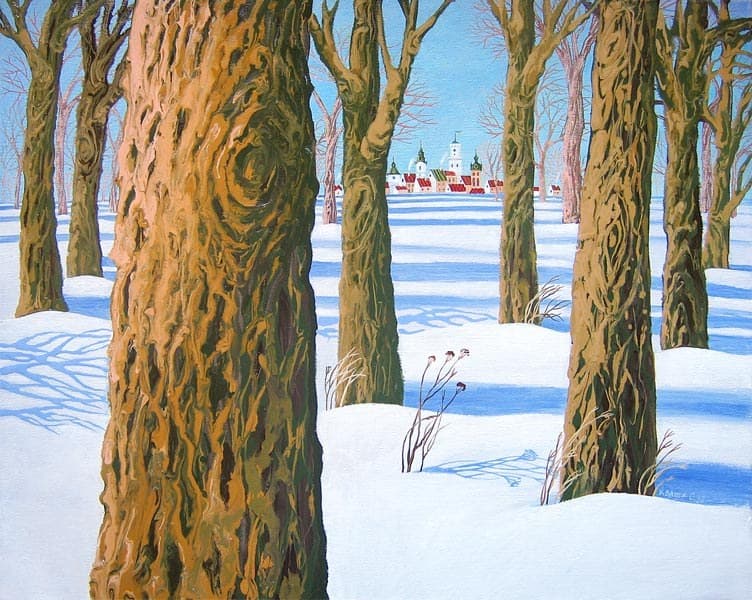
The Morning After Christmas
A winter scene set in the quiet that follows the Christmas feast, one of several Kvasha canvases built around Ukrainian holiday time. Medium and year are not documented by the source gallery.
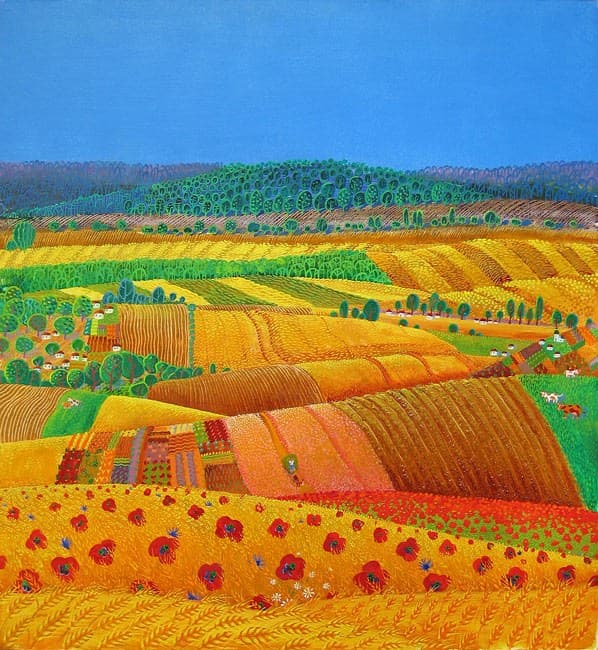
Over Ukraine on a Fair Day
A wide, bright view over the Ukrainian countryside under clear weather, one of the artist's overtly national subjects. Medium and year are not documented by the source gallery.
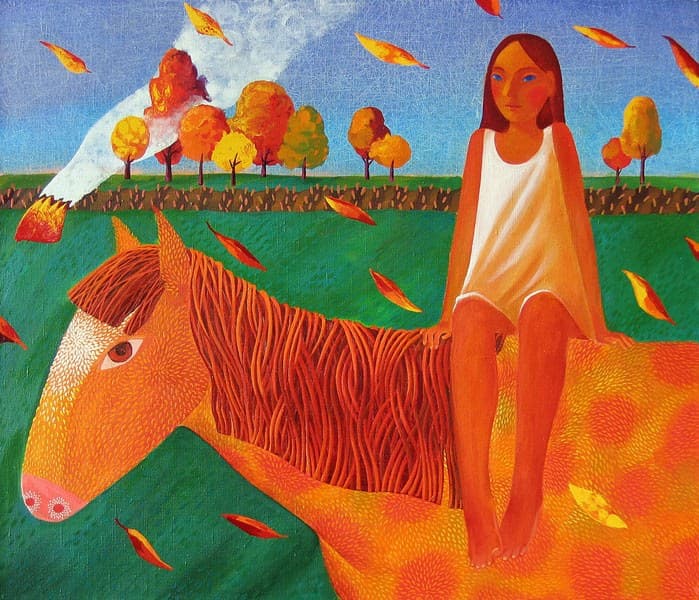
Autumn on a Golden Horse
An autumn landscape whose title turns the season into a rider on a golden horse, typical of Kvasha's habit of folding metaphor into an otherwise ordinary Ukrainian view. Medium and year are not documented by the source gallery.
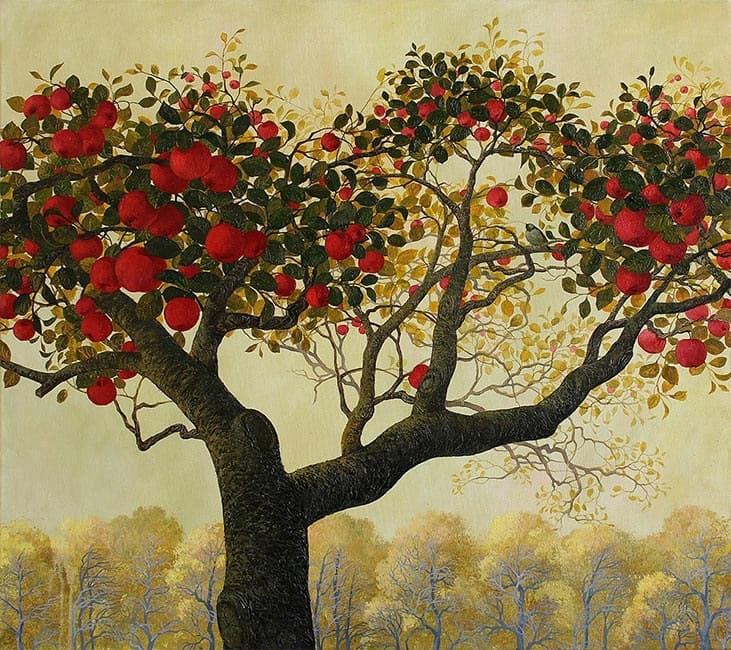
An Apple Tree I Know
A portrait of a single apple tree treated as an acquaintance rather than a motif, showing the intimate, storytelling register of Kvasha's titles. Apple trees and orchards recur throughout her work.