Modernism
Modernism was a radical, early-to-mid-20th-century cultural movement that broke with traditional artistic, literary, and social forms to align with a rapidly industrializing world. Characterized by experimentation, abstraction, and individualism, it sought new modes of expression to address themes of alienation and social change following World War I. Rejection of Tradition: Modernists rejected Victorian morality, academic art, and realistic depictions of subjects, seeking to "make it new". Experimentation: A shift towards abstraction in art (e.g., Cubism) and new techniques in literature, such as stream of consciousness (e.g., Virginia Woolf, James Joyce). Key Themes: Focused on subjectivity, alienation, the fragmentation of reality, and the quest for new meaning. Architecture & Design: Marked by minimalism, functionalism, and the use of industrial materials, famously summarized by Le Corbusier’s "a building is a machine for living in". Time Period: Roughly 1890s–1960s, emerging in Europe and America as a response to urbanization and technological advances.
Artists of the Movement
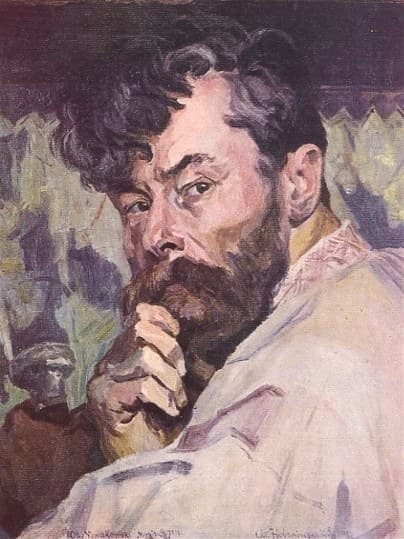
Oleksa Novakivskyi
1872–1935
Evolved from Impressionism through Symbolism to personal Expressionism; under Sheptytsky's patronage founded an influential Lviv art school (1923).
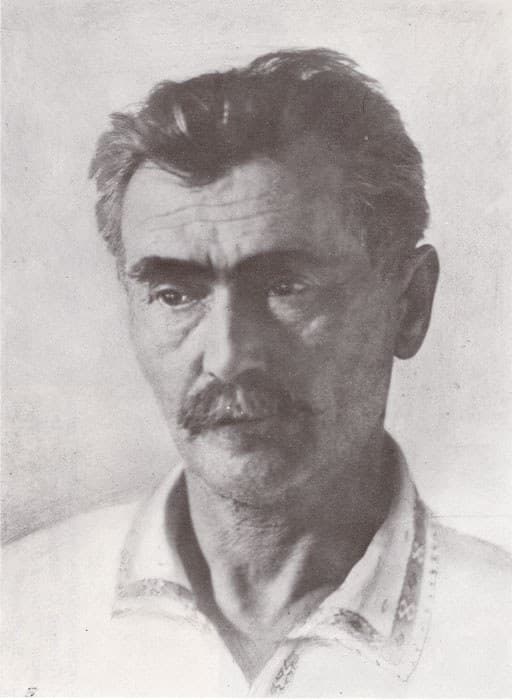
Vasyl Krychevskyi
1873–1952
Pioneering painter, architect and graphic artist; a founder of Ukrainian Art Nouveau; designed the trident state emblem and banknotes of the UNR (1918); emigrated, died in Venezuela.
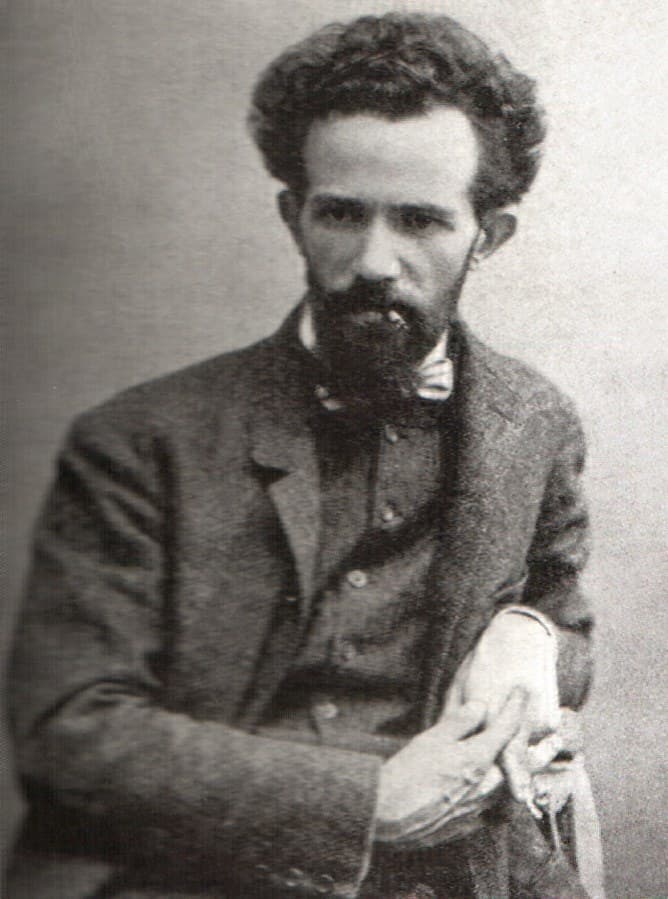
Oleksandr Murashko
1875–1919
Often called the most important Ukrainian artist of the turn of the century; trained under Repin and Ažbe; 'Carousel' won gold at Munich 1909; co-founded the Ukrainian State Academy of Arts (1917); murdered in Kyiv 1919.
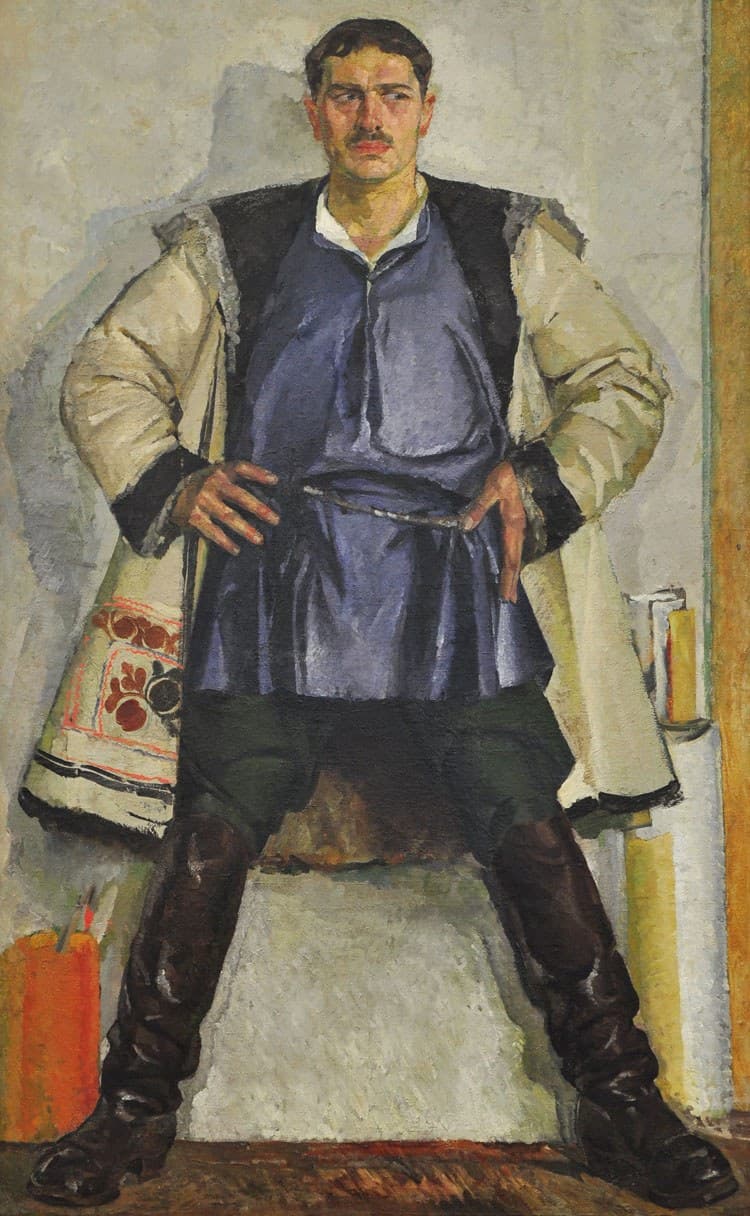
Fedir Krychevskyi
1879–1947
Leading early-modernist painter; co-founder/rector of the Ukrainian State Academy of Arts; created the triptych 'Life' (Venice Biennale 1928); persecuted after WWII, died in poverty 1947.
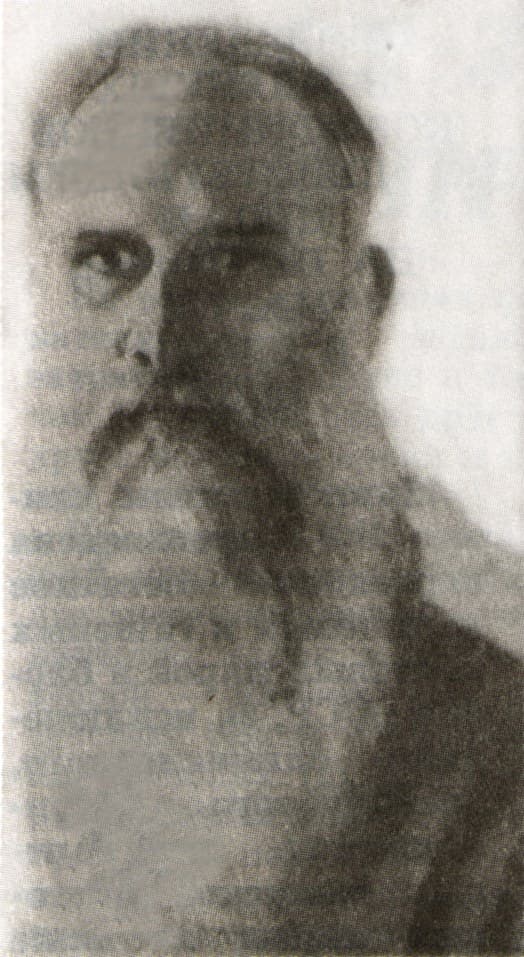
Ivan Miasoiedov
1881–1953
Ivan Miasoiedov was a painter, draughtsman and engraver born in Kharkiv and raised on his family's estate near Poltava, where he led a bohemian artists' circle and painted Ukrainian landscapes alongside large symbolist compositions on antique myth. He was also a champion weightlifter, a wartime artist, a convicted counterfeiter and, from 1938, the designer of Liechtenstein's postage stamps under the name Eugen Zotow. His early Poltava-period work is held by the Poltava Art Museum, and the bulk of his later output by the Zotow–Miasoiedov Foundation in Vaduz.
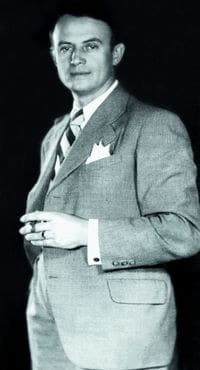
Adalbert Erdeli
1891–1955
Adalbert Erdeli (1891–1955) was a founder of the Transcarpathian school of painting, trained in Budapest, Munich and Paris, where he absorbed impressionism and fauvism. With Yosyp Bokshai he founded the Uzhhorod art school in 1927 and taught most of the region's leading painters, refusing socialist realism throughout the Soviet period.
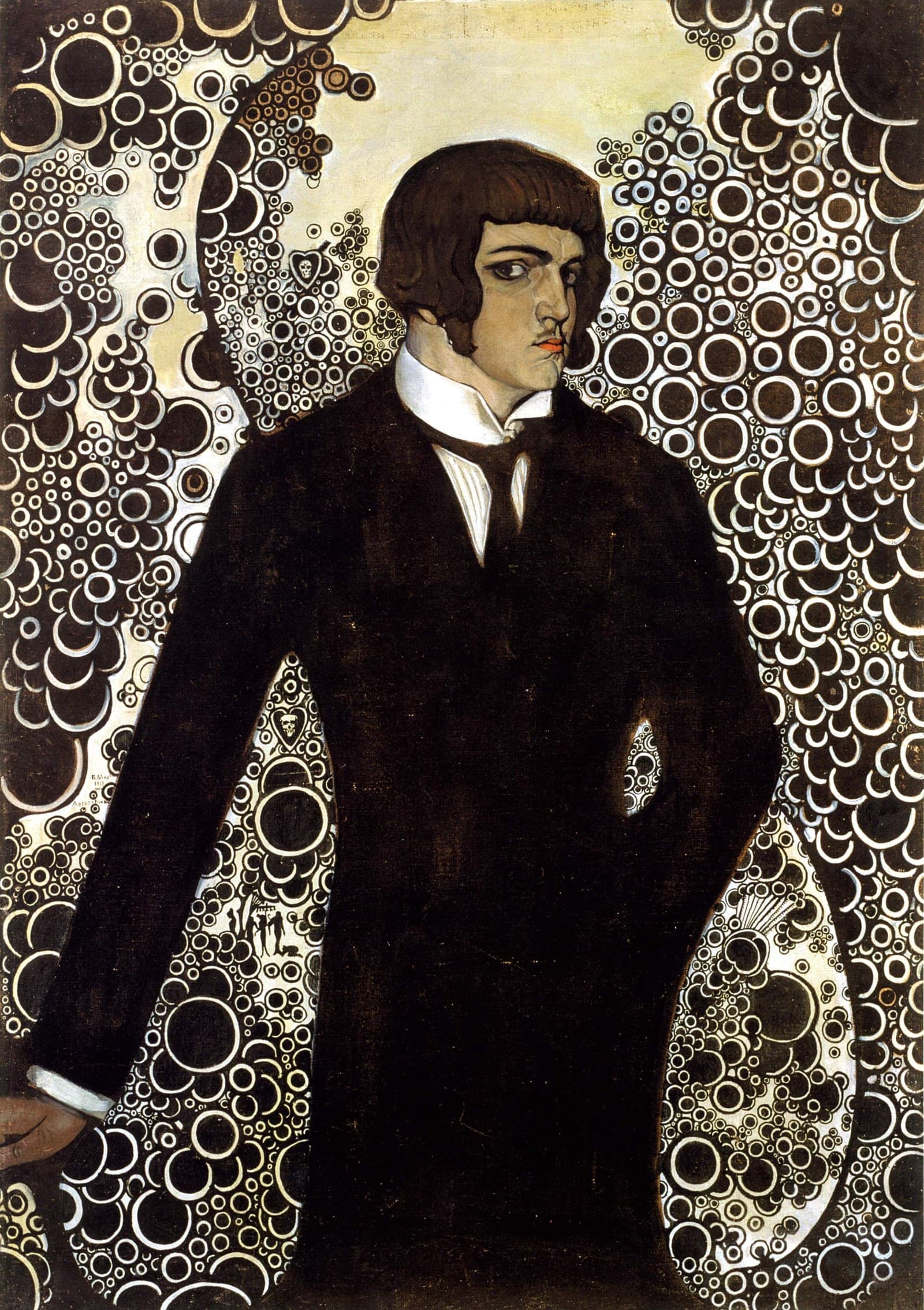
Vsevolod Maksymovych
1894–1914
Short-lived Poltava prodigy ('the Ukrainian Beardsley'); ornate Symbolist/Art Nouveau paintings; most surviving works in the National Art Museum of Ukraine.
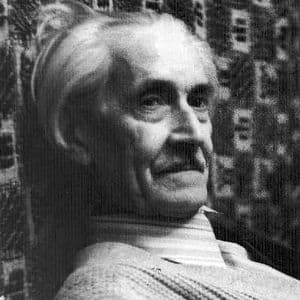
Roman Selskyi
1903–1990
Roman Selskyi was the central figure of twentieth-century Lviv painting and the founder of the school known as Ukrainian colourism, in which colour rather than subject carries the picture. Trained in Kraków and Paris, where he worked at Fernand Léger's Académie Moderne, he brought European modernism back to Galicia and first chaired the avant-garde group 'Artes'. As a professor in Lviv from 1947 he taught for nearly thirty years and shaped a generation of painters who kept a non-doctrinal practice alive in Soviet Ukraine.
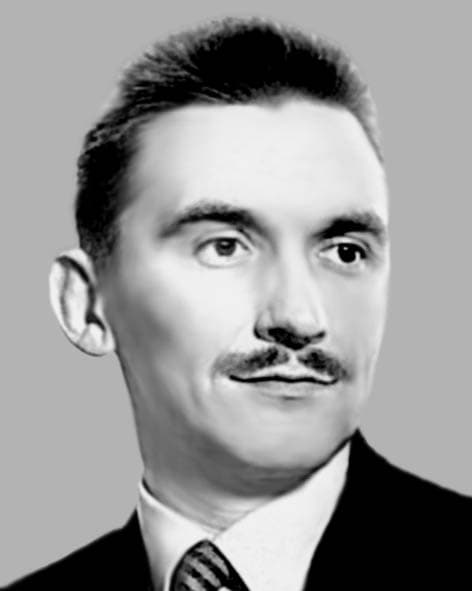
Liuboslav Hutsaliuk
1923–2003
Liuboslav Hutsaliuk was a Lviv-born painter who emigrated to New York in 1949 and became one of the leading figures of Ukrainian diaspora modernism. Working between studios in New York and Paris, he built a distinctive body of cityscapes in which cathedral spires, rooftops and bridges dissolve into thick vertical impasto and two- or three-note colour harmonies.
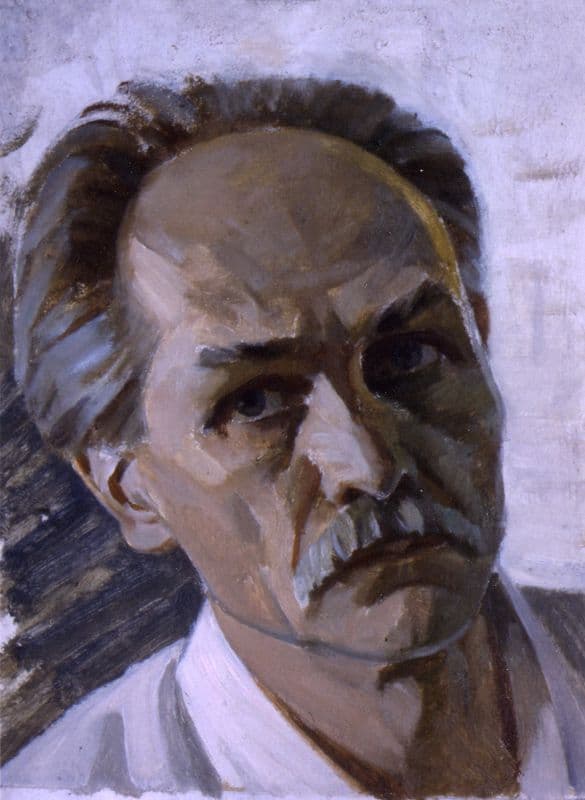
Veniamin Kushnir
1926–1992
Veniamin Kushnir was a Ukrainian painter and monumentalist, and one of the founders of the Kyiv Club of Creative Youth 'Suchasnyk' that gave the Sixtiers movement its centre. He fused Carpathian and Podillian folk form with modernist colour in paintings of motherhood, horses, musicians and Hutsul landscape, and was pushed to the margins of official art for his Ukrainian national convictions.
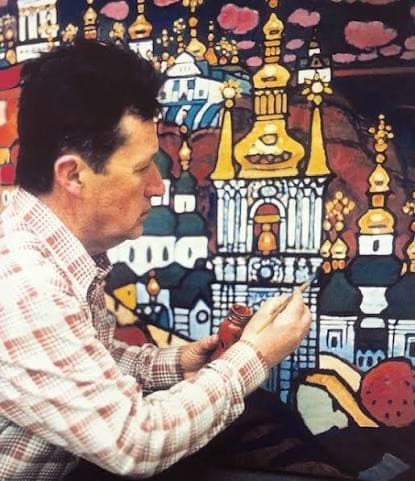
Yurii Khymych
1928–2003
Yurii Khymych was a Ukrainian architect turned painter, the outstanding master of the architectural landscape in twentieth-century Ukrainian art. By the late 1950s he was regarded as one of the finest watercolourists in the USSR, before abruptly switching to gouache, the medium of most of his mature work. Trained as an architect and steeped in years of copying church frescoes and mosaics, he painted what he called 'portraits of buildings' — flattened, open-coloured, black-contoured images closer to icons than to conventional views.
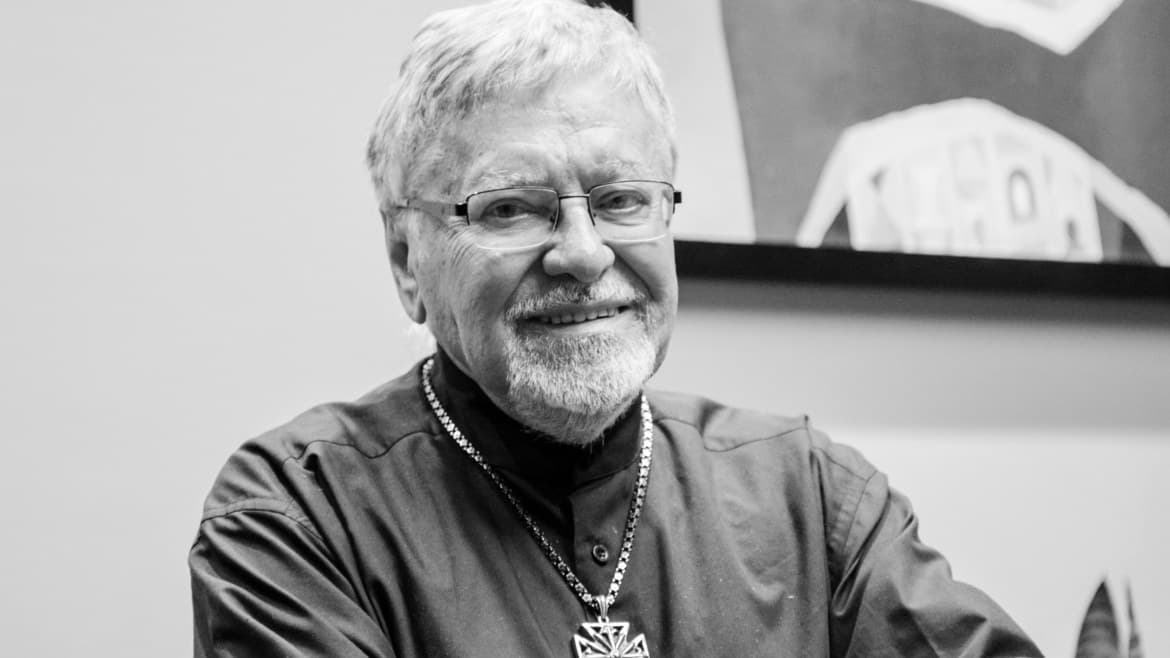
Oleksandr Dubovyk
b. 1931
Oleksandr Dubovyk is a Ukrainian painter, printmaker, monumental artist and writer on art, born in Kyiv in 1931 and still working there. A leading figure of the Kyiv artistic underground of the 1960s–80s, he moved from academic training through the austere realism of the Thaw into an abstract-symbolist language of his own signs — the Bouquet, the Triumphator, the Phantom, the Tree of Life. His work is held by the National Art Museum of Ukraine, the Zimmerli Art Museum's Dodge Collection and museums in Germany, Iran and the USA.
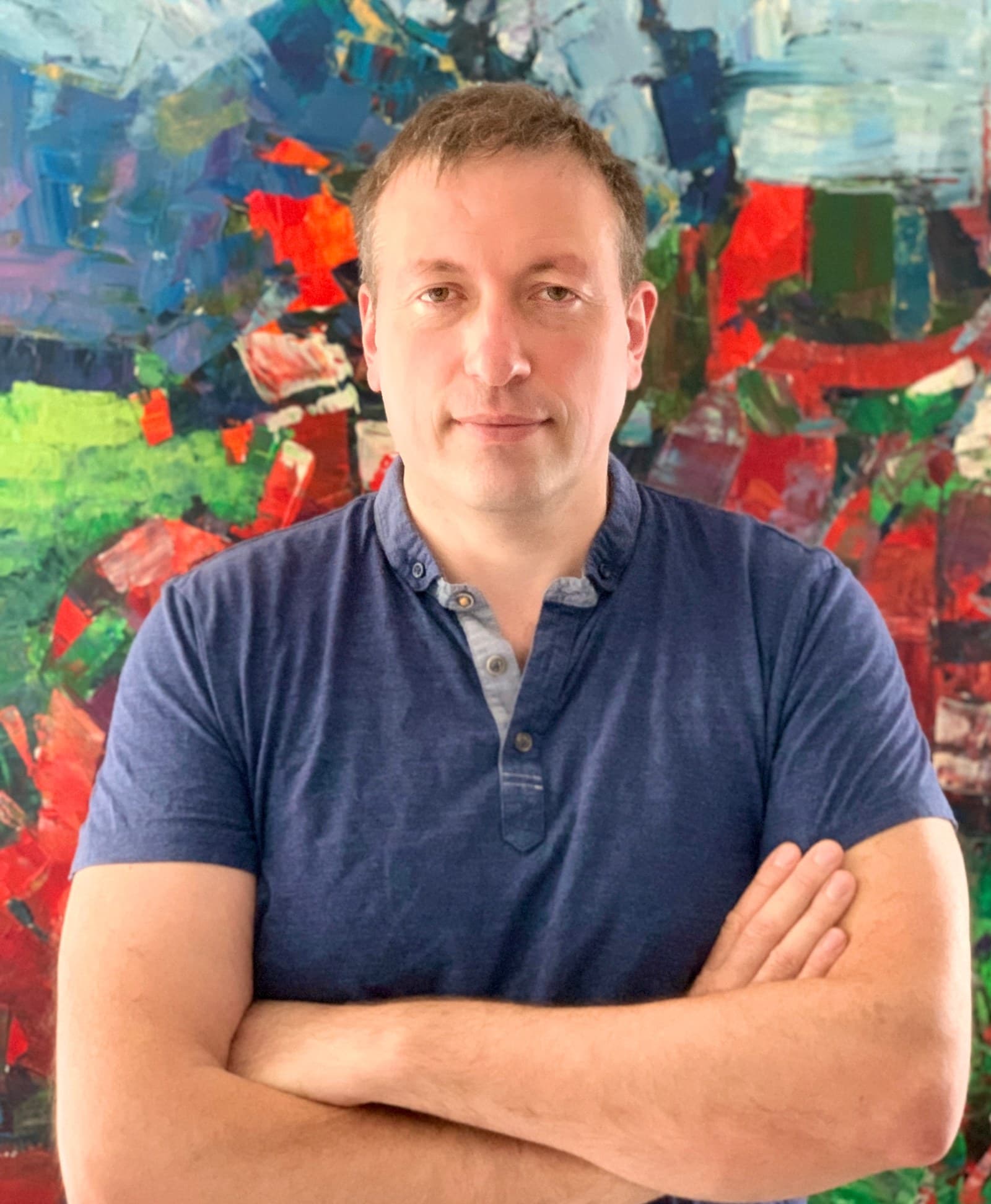
Yurii Vatkin
b. 1975
Yurii Vatkin is a Kharkiv-based abstract painter who moved from realism through expressionism to a colour-driven abstraction rooted in nature. He works in thick, visually tactile impasto strokes, treating each canvas as a record of his emotional state at the moment of painting. A member of the National Union of Artists of Ukraine since 2008, he has exhibited in Kharkiv, Kyiv, Prague, London, Milan, Luxembourg, Glasgow and New York.
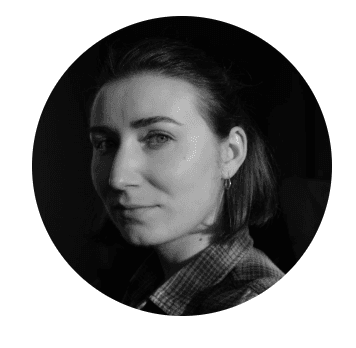
Ilona Shymchyts
Ilona Shymchyts is a Ukrainian painter and relief-carver from the Borshchiv district of Ternopil Oblast, trained at the Lviv National Academy of Arts and based in Lviv. Her work moves between geometric abstraction in acrylic on paper and quiet, meditative rural landscapes in which village architecture carries a sense of calm and rootedness. She has shown in Kyiv, Kharkiv, Lviv and Borshchiv as well as in Canada and Poland.
Works from this Movement
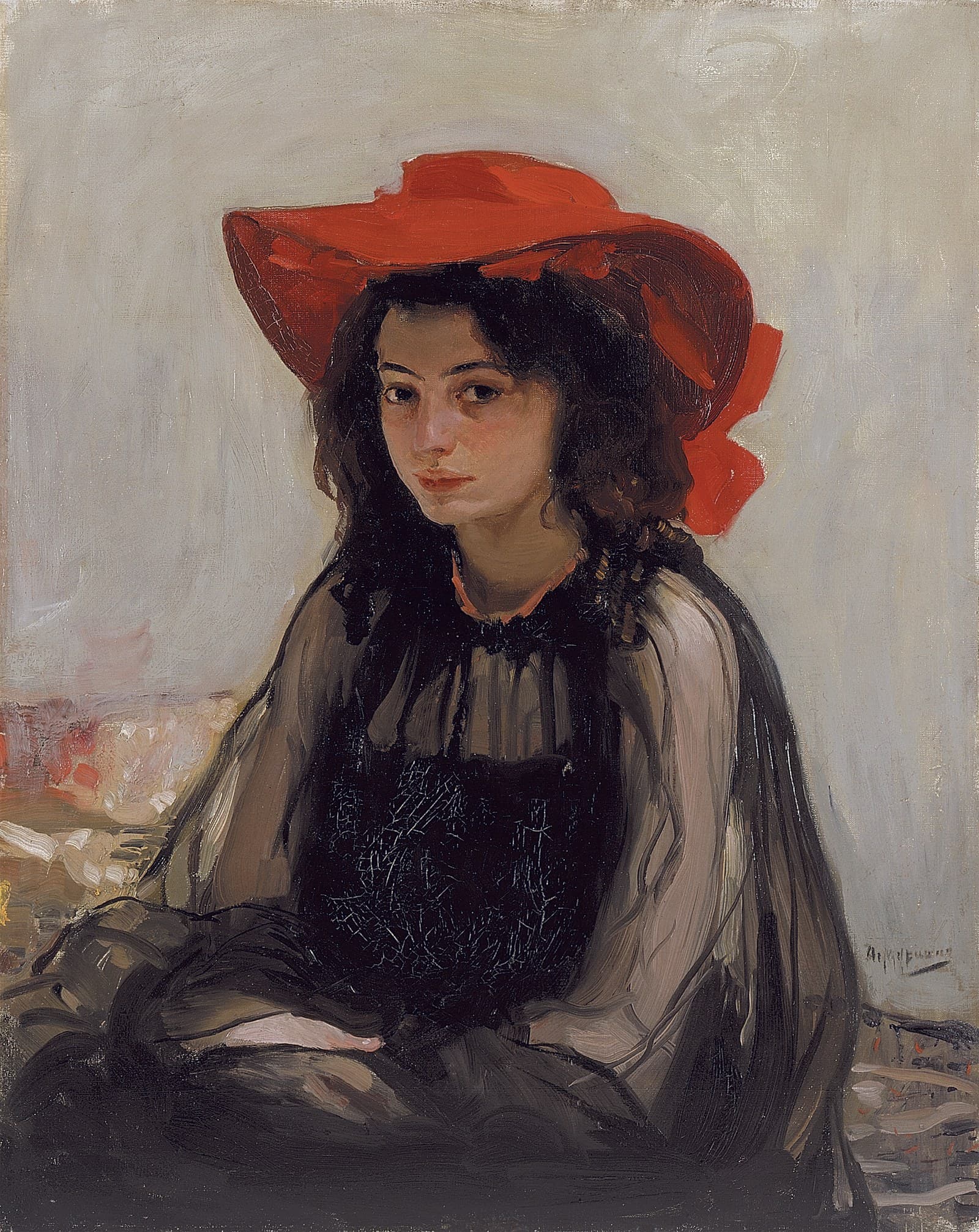
Girl in a Red Hat
Oleksandr Murashko
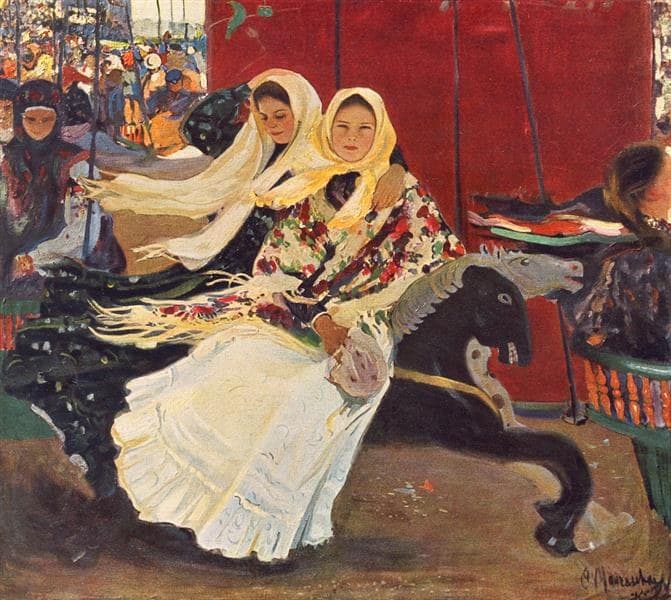
Carousel
Oleksandr Murashko
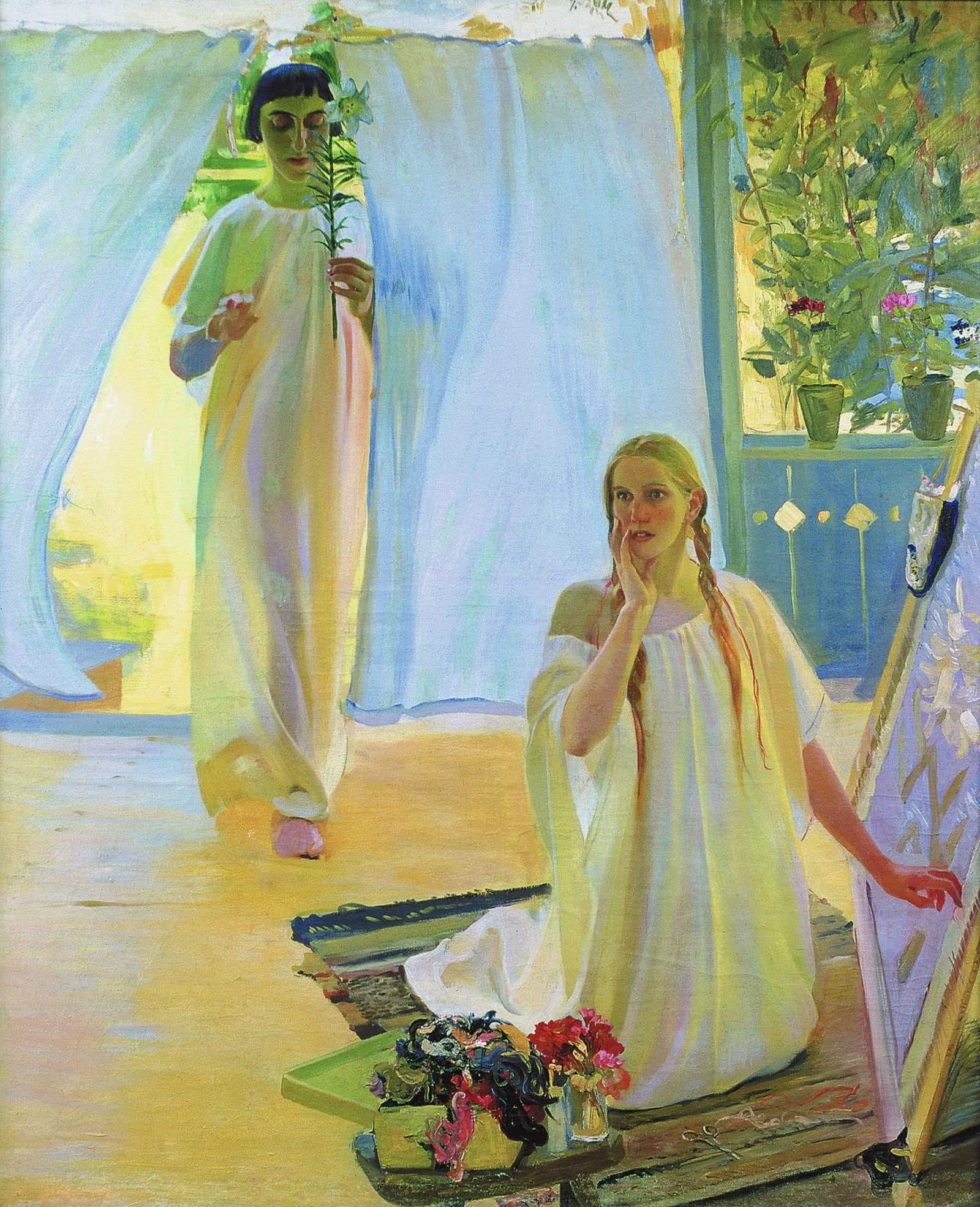
Annunciation
Oleksandr Murashko
A rare religious subject for Murashko, bathed in a deep golden light.
The Voyage of the Minyans
Ivan Miasoiedov
A monumental frieze-like composition of the Minyan heroes — the Argonauts — setting out for Colchis, rowing a long ship past a crowded shore. Painted for the Academy of Arts, it is the clearest example of Miasoiedov's turn from his father's social realism to antique myth handled in the manner of Central European symbolism.
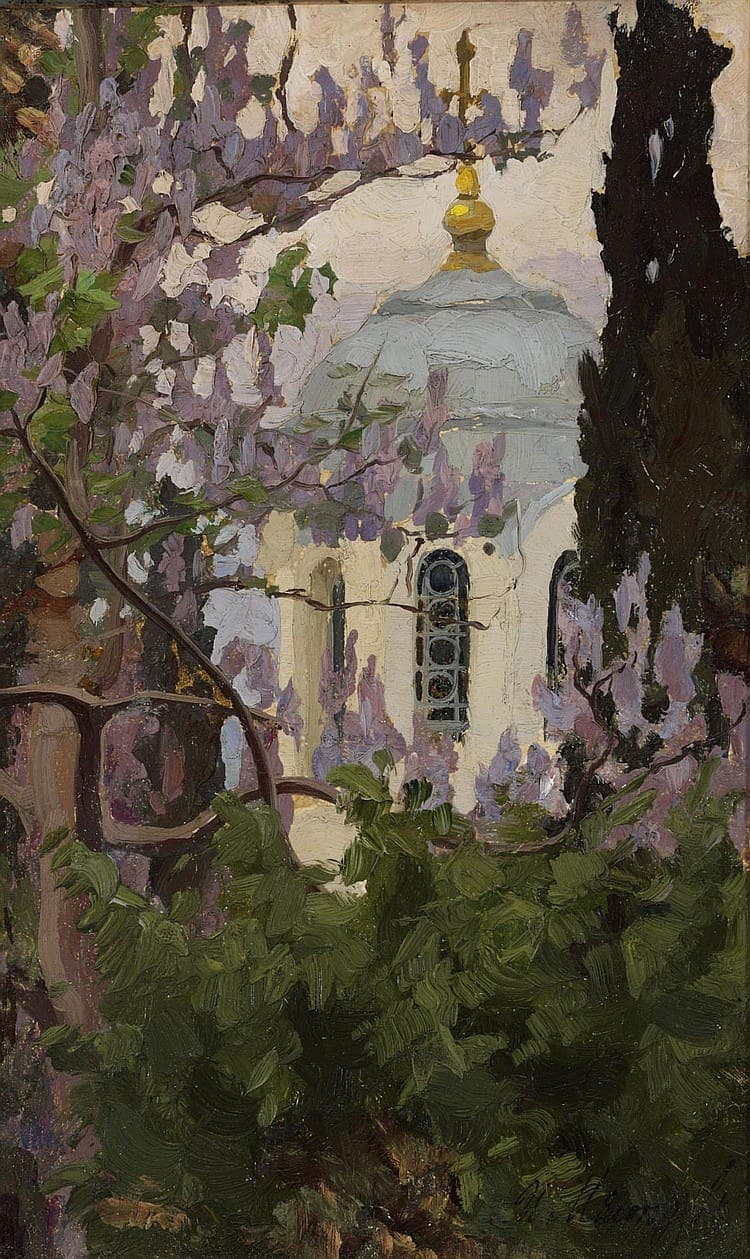
Church Dome (Church in Hurzuf)
Ivan Miasoiedov
A steeply upward-looking view of a church dome painted during one of Miasoiedov's Crimean campaigns in Hurzuf, handled in broad, light-saturated brushwork. It belongs to the Crimean series that also includes Alupka and Tatar Cemetery in the Crimea.
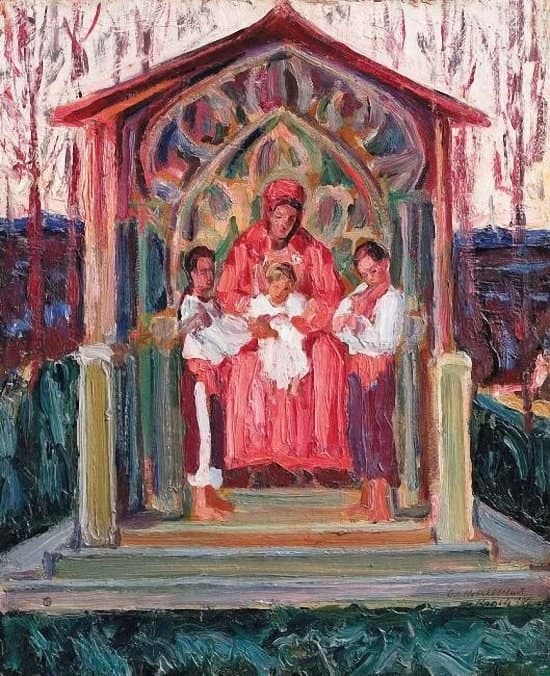
Ukrainian Madonna
Oleksa Novakivskyi
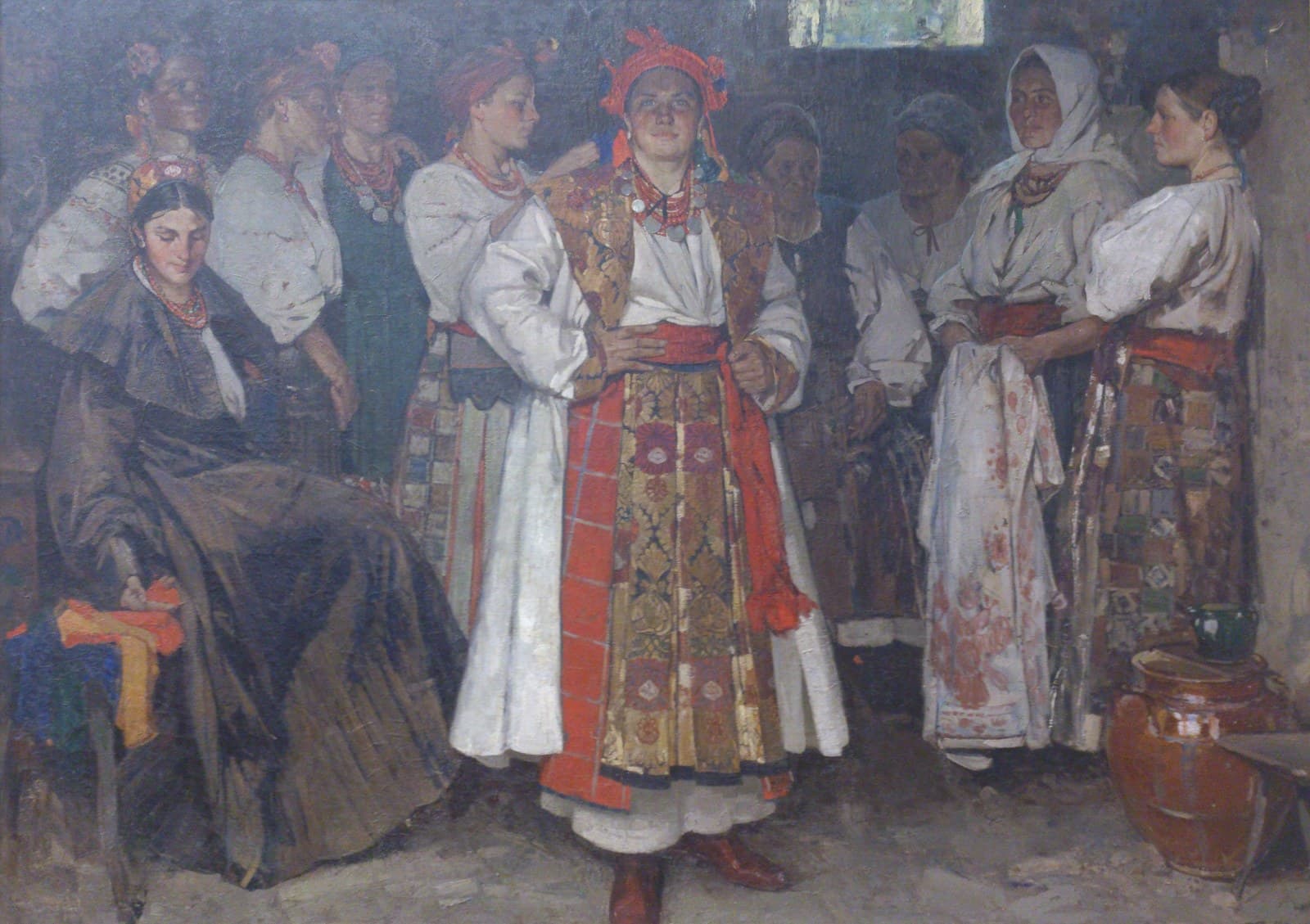
The Bride
Fedir Krychevskyi
A monumental depiction of a Ukrainian bride combining academic skill with national folk themes.
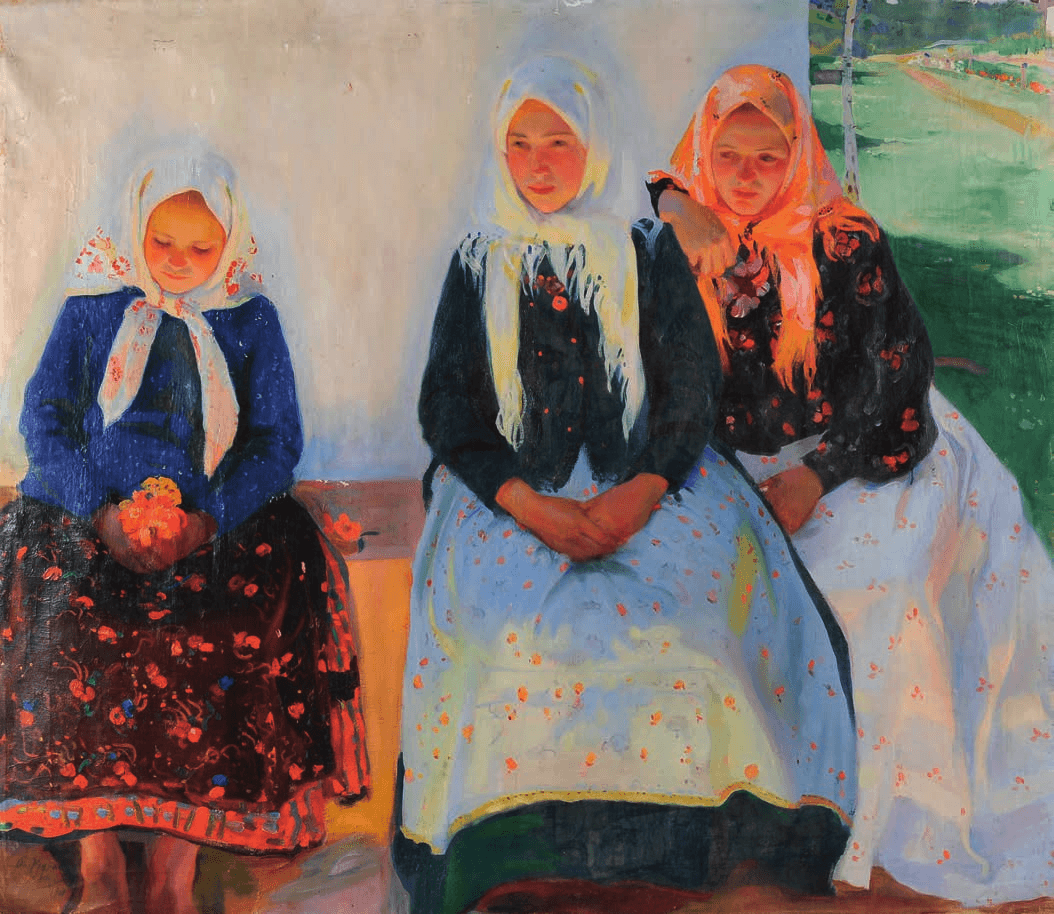
Sunday
Oleksandr Murashko
A quietly melancholic genre scene of peasant women on a Sunday, suffused with subdued light.
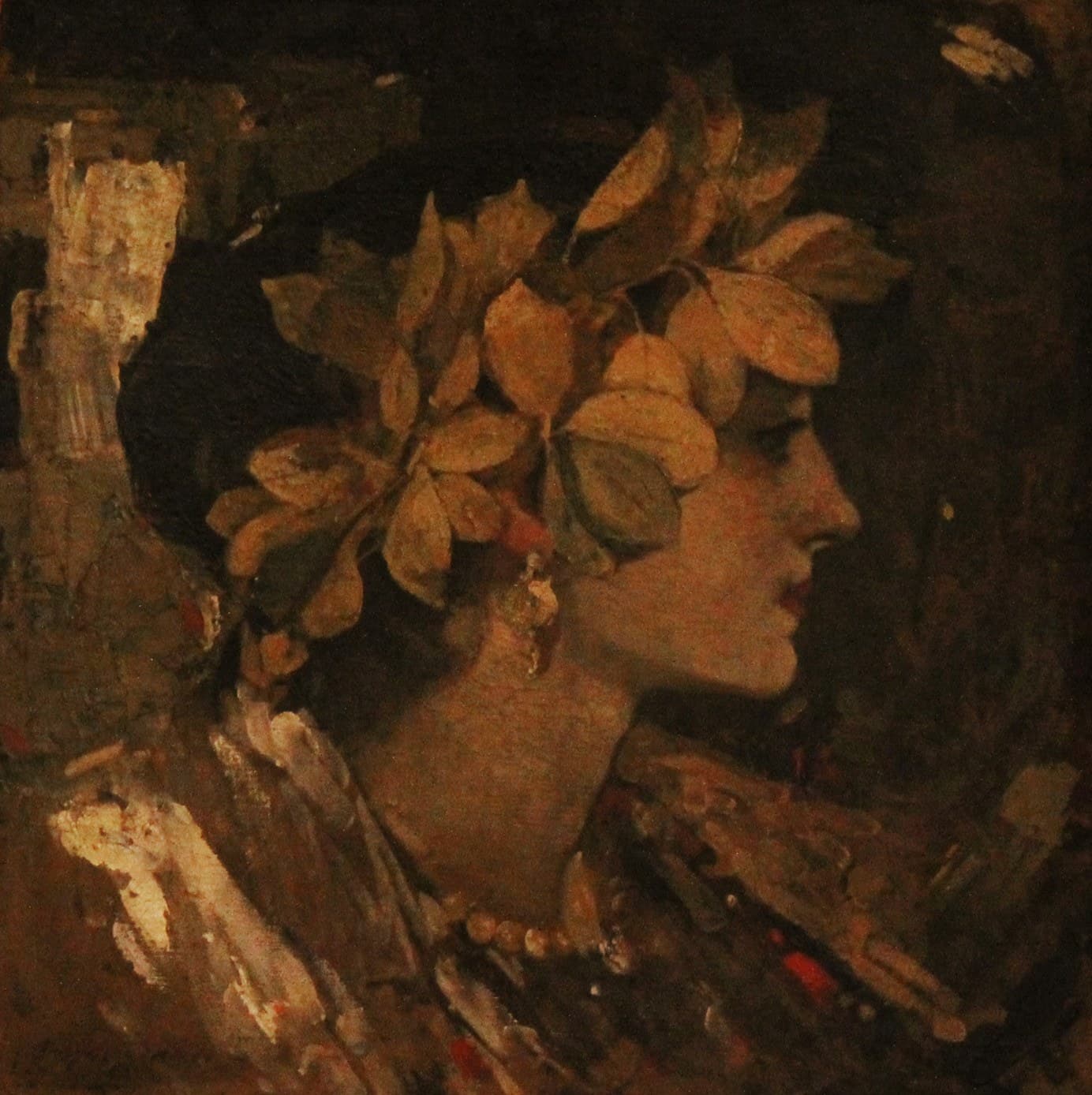
Beatrice
Fedir Krychevskyi
An idealized female figure inspired by Dante's Beatrice, from Krychevsky's early symbolist period.
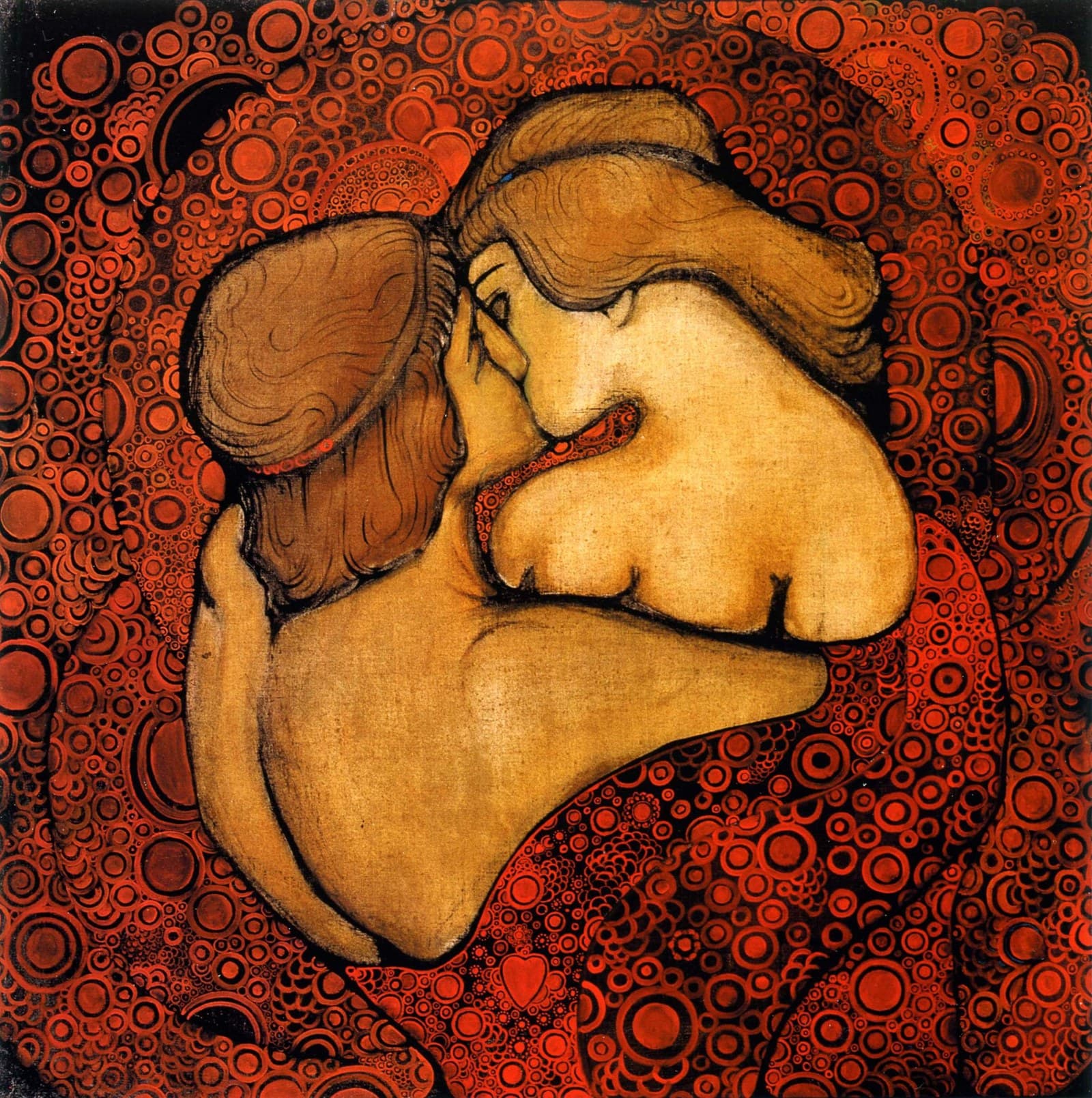
The Kiss
Vsevolod Maksymovych
An ornate, intricately patterned canvas blending Art Nouveau decorativeness with symbolist eroticism.
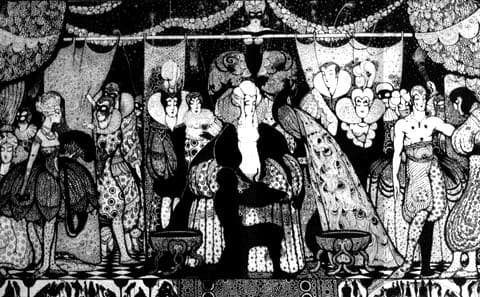
Carnival
Vsevolod Maksymovych
A dense, ornamental composition teeming with masked figures in a swirling decorative rhythm.
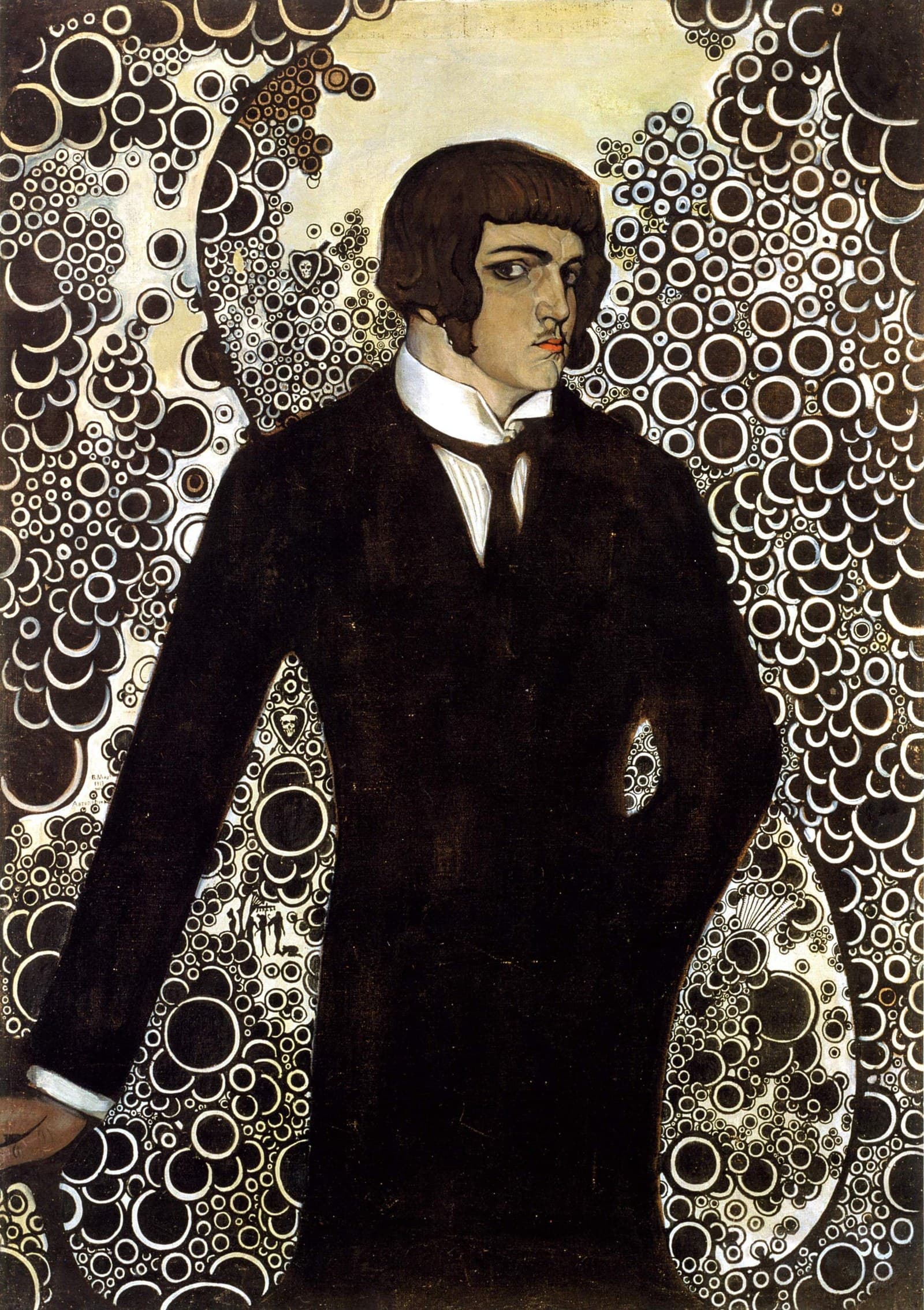
Self-Portrait
Vsevolod Maksymovych