Surrealism
Surrealism is a 20th-century avant-garde movement that sought to release the creative potential of the unconscious mind, blending dream-like imagery with rational absurdity. Founded by André Breton in Paris in 1924, it influenced literature, art, and film by using automatism and unexpected juxtapositions to challenge traditional reality. Key Aspects of Surrealism: Origin: Emerging from the Dada movement in the 1910s, it was officially established by André Breton’s Manifesto of Surrealism (1924). Core Influences: Deeply influenced by Sigmund Freud’s theories on the unconscious mind and dreams, as well as Karl Marx’s political ideology. Techniques: Artists used techniques like automatic drawing/writing, collage, and "exquisite corpse" games to bypass conscious thought and societal constraints. Visual Styles: The movement included two main tendencies: highly detailed, realistic dreamscapes (e.g., Salvador Dalí) and abstract, organic, or suggestive imagery (e.g., Joan Miró). Major Figures: Key artists include Salvador Dalí, René Magritte, Max Ernst, Joan Miró, Meret Oppenheim, and Dorothea Tanning. Impact: Beyond visual arts, Surrealism was a global, interdisciplinary movement that impacted cinema, literature, and political thought.The movement aimed to resolve the contradictory conditions of dream and reality into an absolute reality, or "surreality".
Artists of the Movement
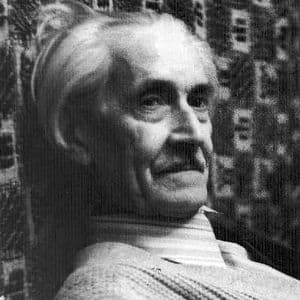
Roman Selskyi
1903–1990
Roman Selskyi was the central figure of twentieth-century Lviv painting and the founder of the school known as Ukrainian colourism, in which colour rather than subject carries the picture. Trained in Kraków and Paris, where he worked at Fernand Léger's Académie Moderne, he brought European modernism back to Galicia and first chaired the avant-garde group 'Artes'. As a professor in Lviv from 1947 he taught for nearly thirty years and shaped a generation of painters who kept a non-doctrinal practice alive in Soviet Ukraine.
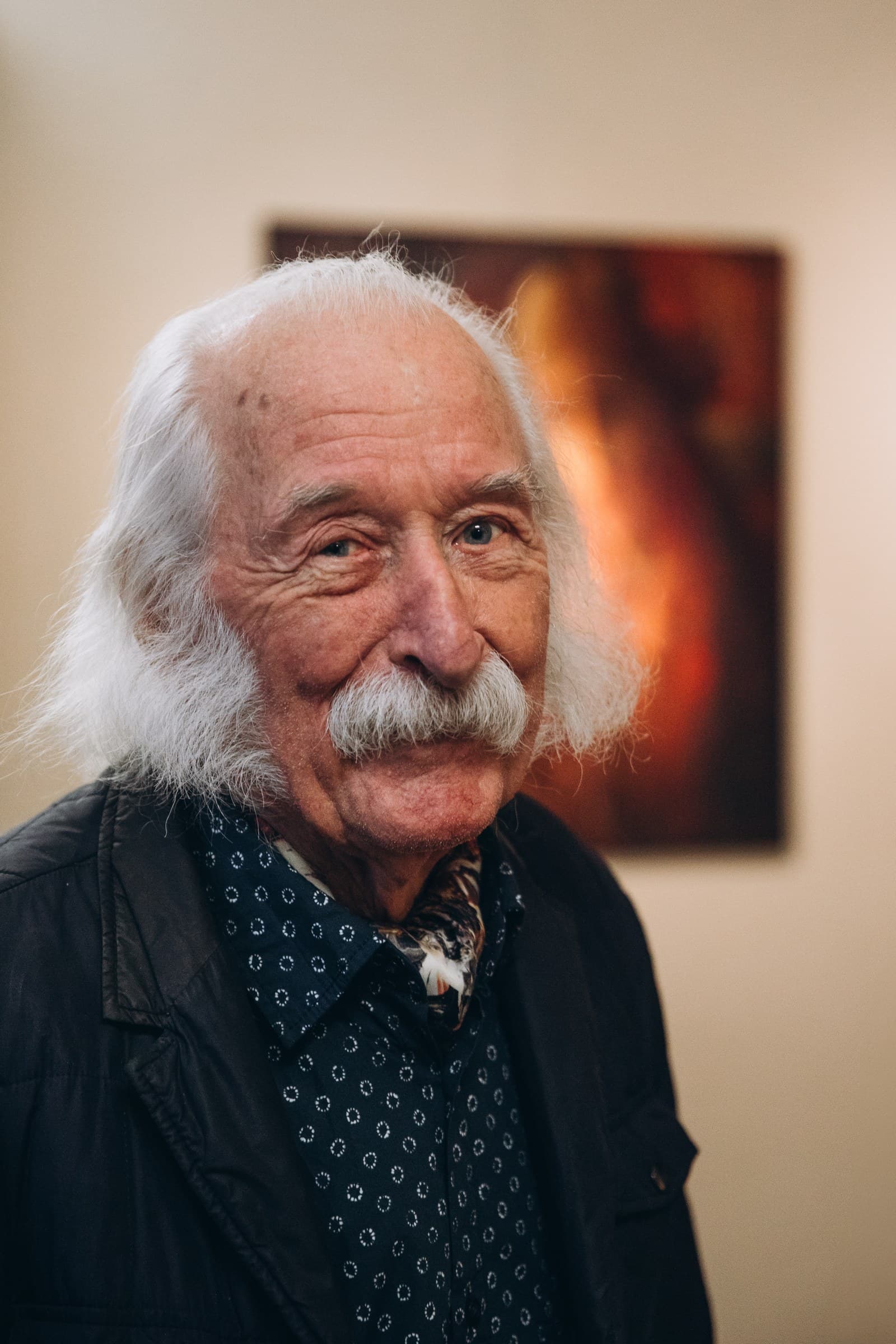
Ivan Marchuk
b. 1936
Ivan Marchuk (b. 1936) is a Ukrainian painter who invented "pliontanizm", a technique of building an image out of thousands of fine interwoven threads of paint instead of brushstrokes. He works in long cycles — among them "Voice of My Soul", "Shevchenkiana", "White Planet" and "Vienna Rhapsodies" — that move between landscape, portrait and visionary allegory.
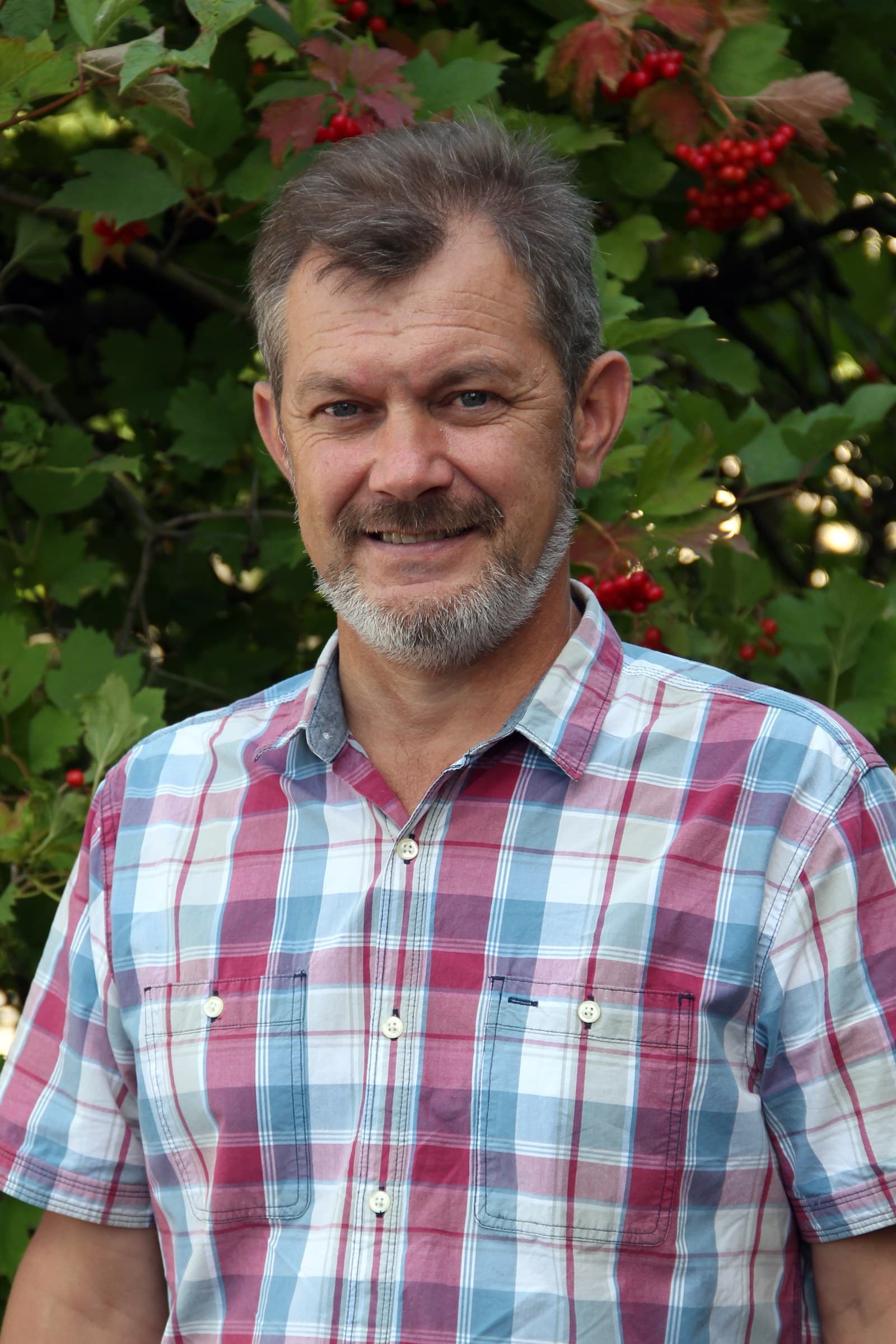
Oleh Shupliak
b. 1967
Oleh Shupliak (b. 1967, Bishche, Ternopil Oblast) is an Honoured Artist of Ukraine best known for his 'dvovzory' — double-image paintings in which a landscape or genre scene resolves, at a second glance, into a portrait. He has been called the Ukrainian Salvador Dalí.
Works from this Movement
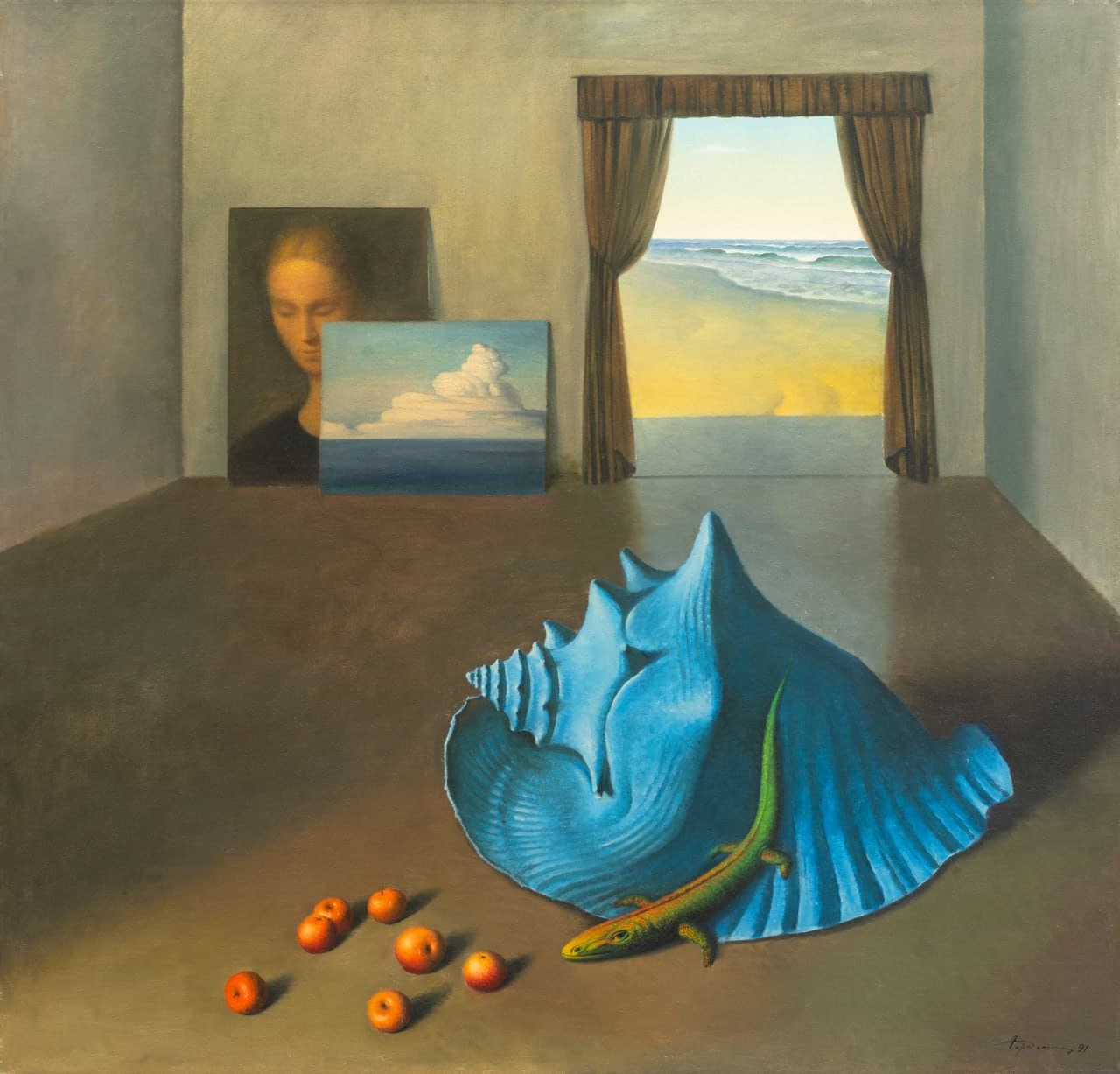
Interior Decor with Apples
Yevhen Hordiiets
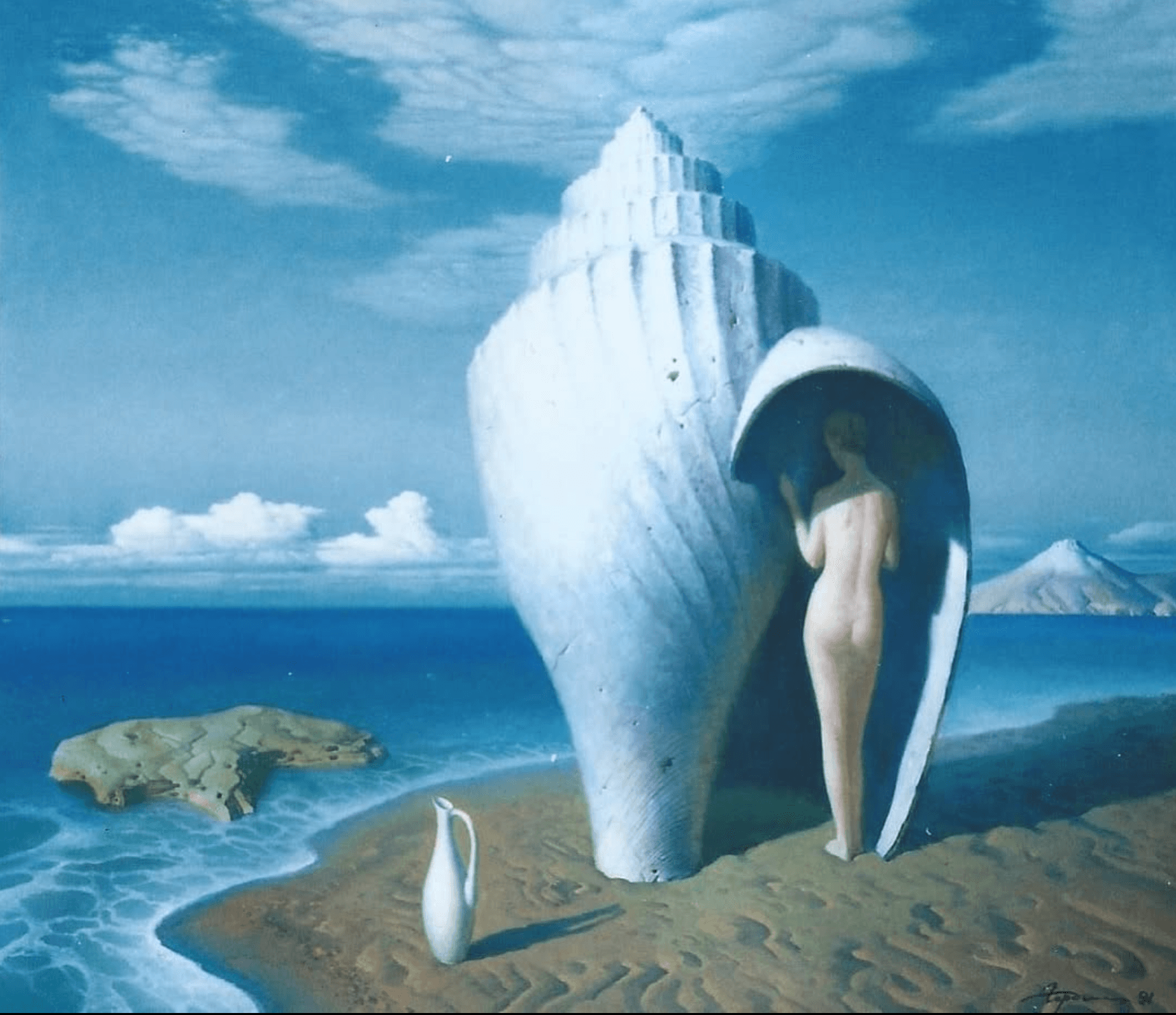
Woman, Seashell and Jug
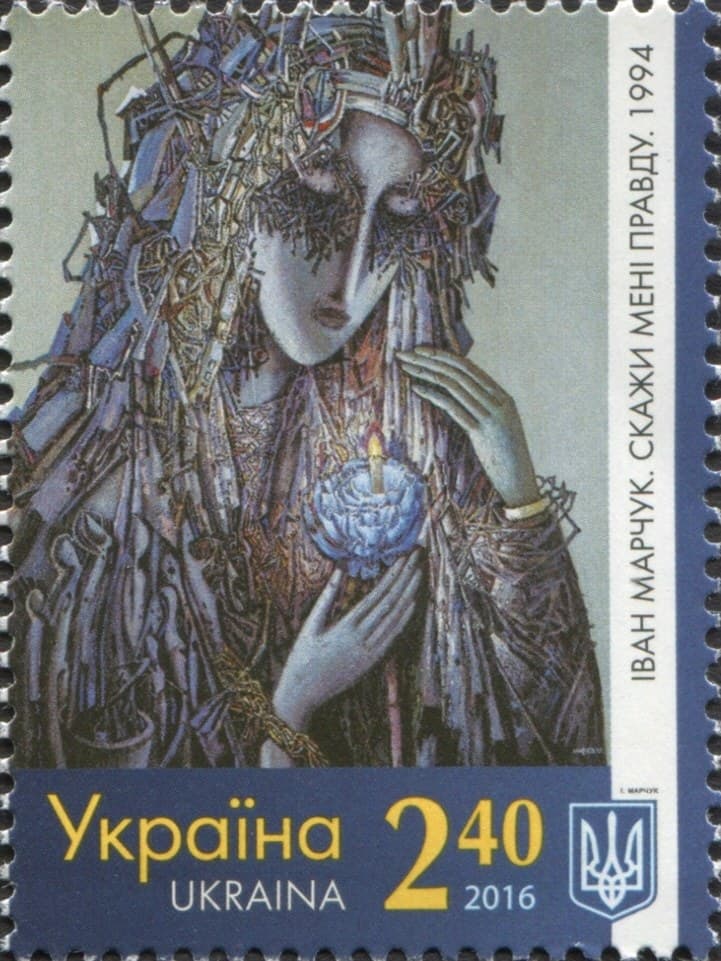
Tell Me the Truth
Ivan Marchuk
A frontal, icon-like female figure sheathed in a bristling armour of thread-fine strands, cupping a lit candle set inside a pale flower. Ukrposhta reproduced the painting in full on a 2.40 UAH definitive stamp in 2016.
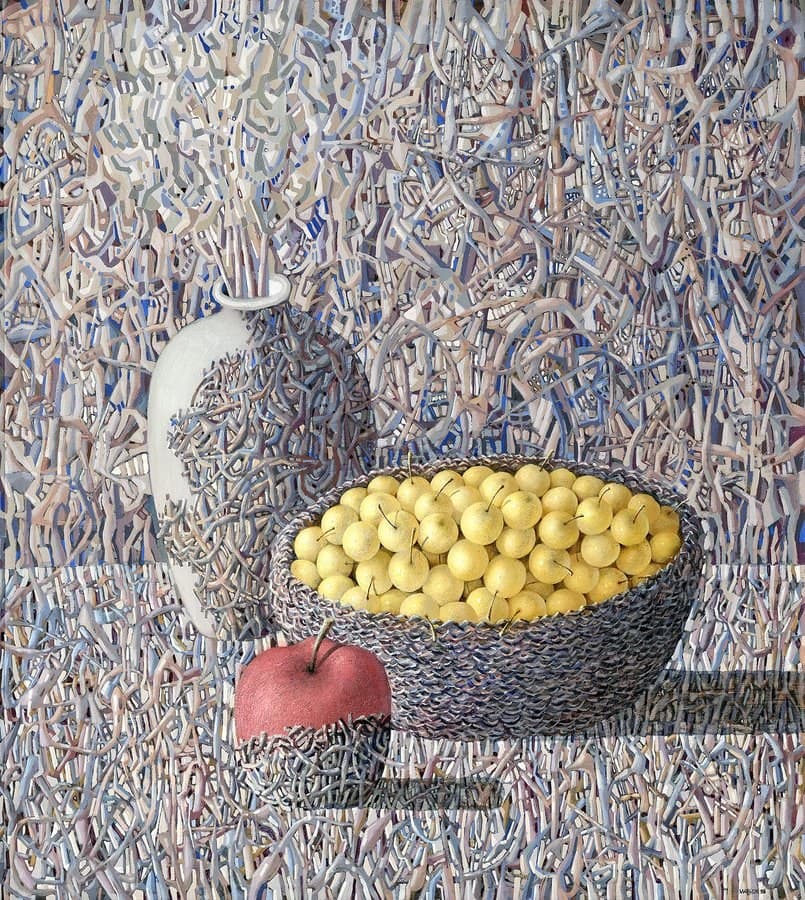
Garden of Temptation
Ivan Marchuk
A still life from Marchuk's mature pliontanizm period, built from dense threads of colour. In June 2022 it sold for USD 120,000 at a charity auction in Kyiv with the proceeds going to the Ukrainian Armed Forces, placing it fifth in Lokalna Istoriia's ranking of the most expensive paintings by Ukrainian artists.
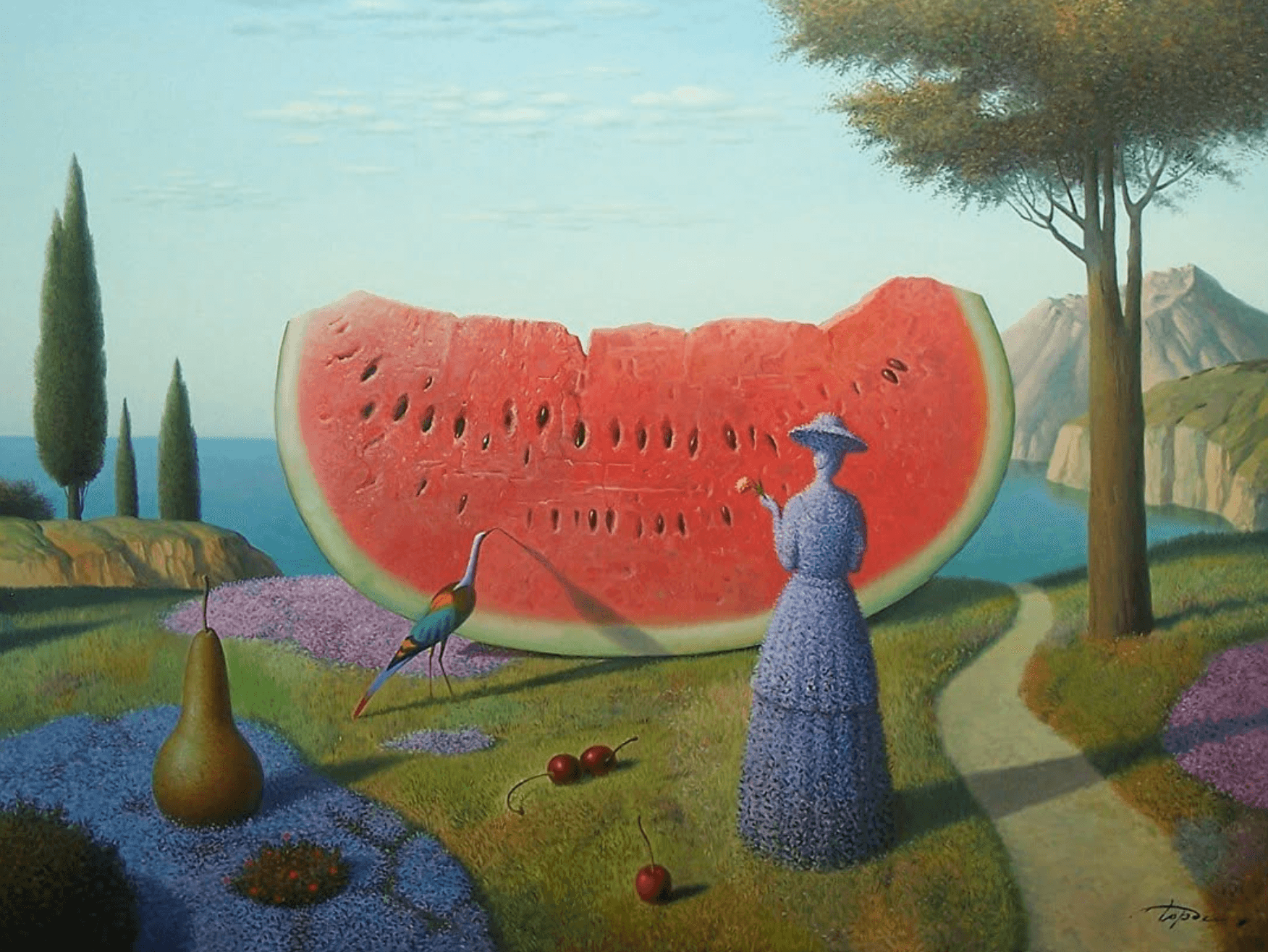
Summer
Yevhen Hordiiets
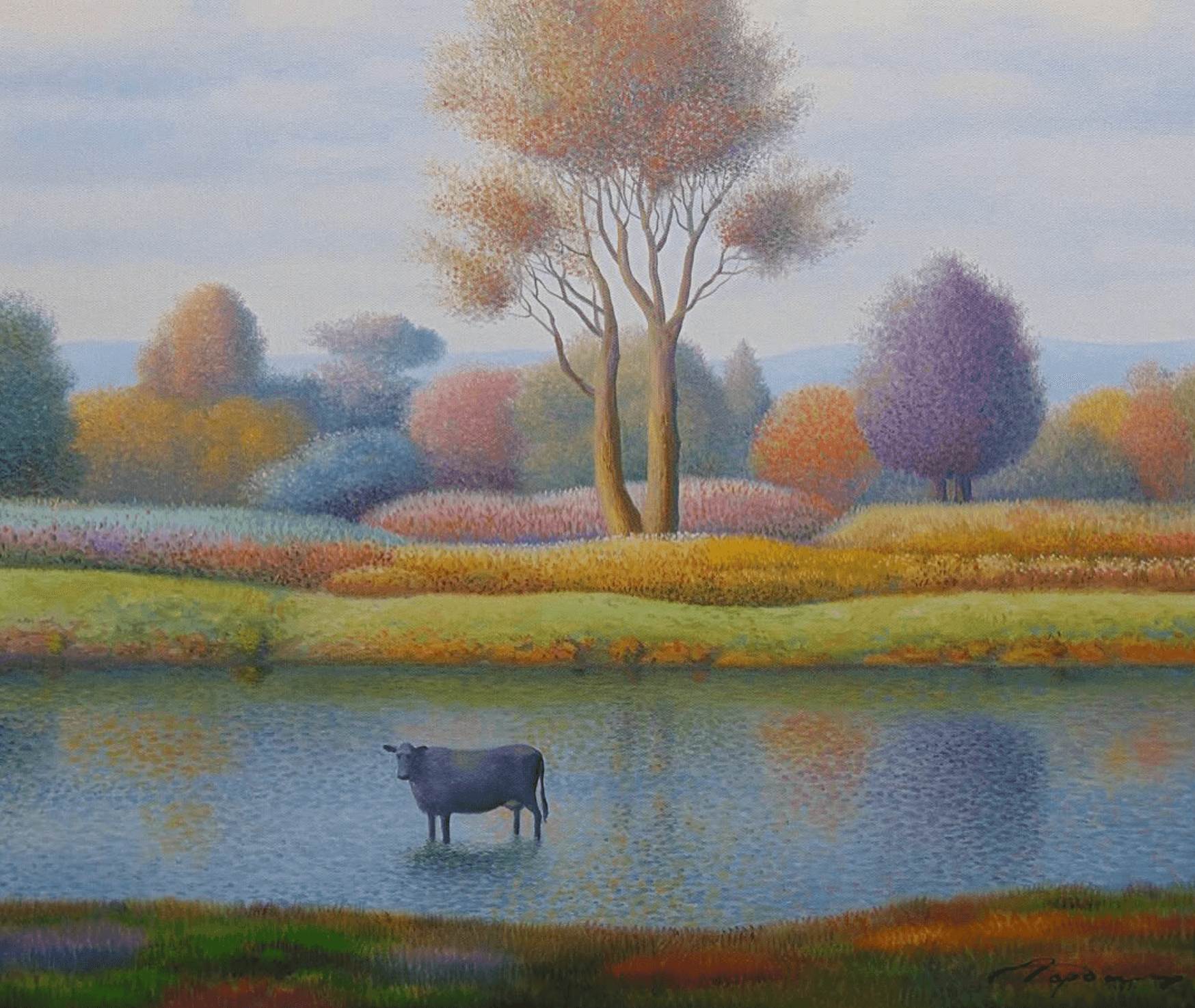
Landscape with black cow
Yevhen Hordiiets
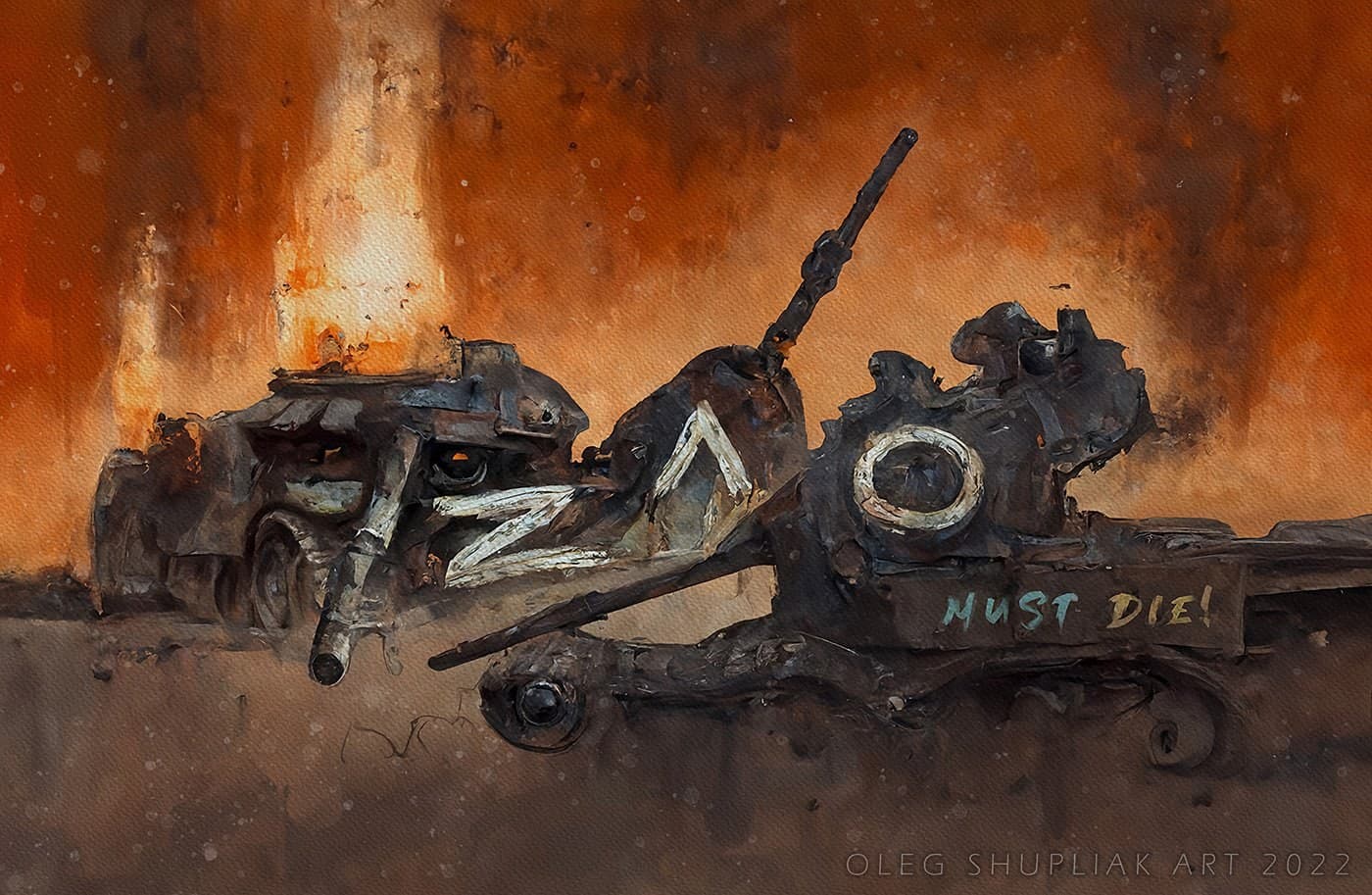
Evil must die!
Oleh Shupliak
An allegory of evil built from destroyed Russian military vehicles bearing the 'Z', inverted 'V' and 'O' invasion markings, painted on 5 April 2022. The artist released it himself under a free licence.