Youth
Юність
A boy with a rucksack stands at the edge of a small blue pond on a green pasture; Yablonska began the picture as a study of the pond at Sedniv and asked the boy, who wandered over from a nearby sports camp, to pose. Ukrainian critics read it as a manifesto of solitary self-possession and a step away from doctrinal Socialist Realism.
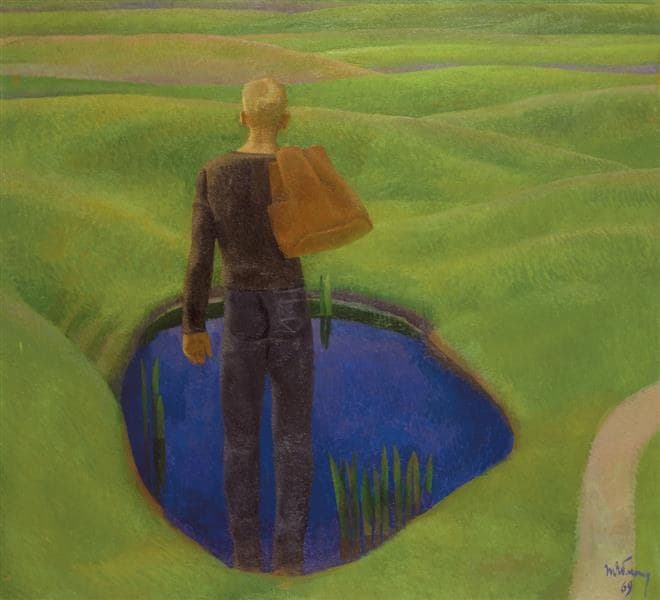
Image: reproduction sourced from uploads6.wikiart.org. This work is still in copyright — © the artist / rights holder. Shown for editorial and educational purposes; contact us for attribution or removal.
Related Works
Bread
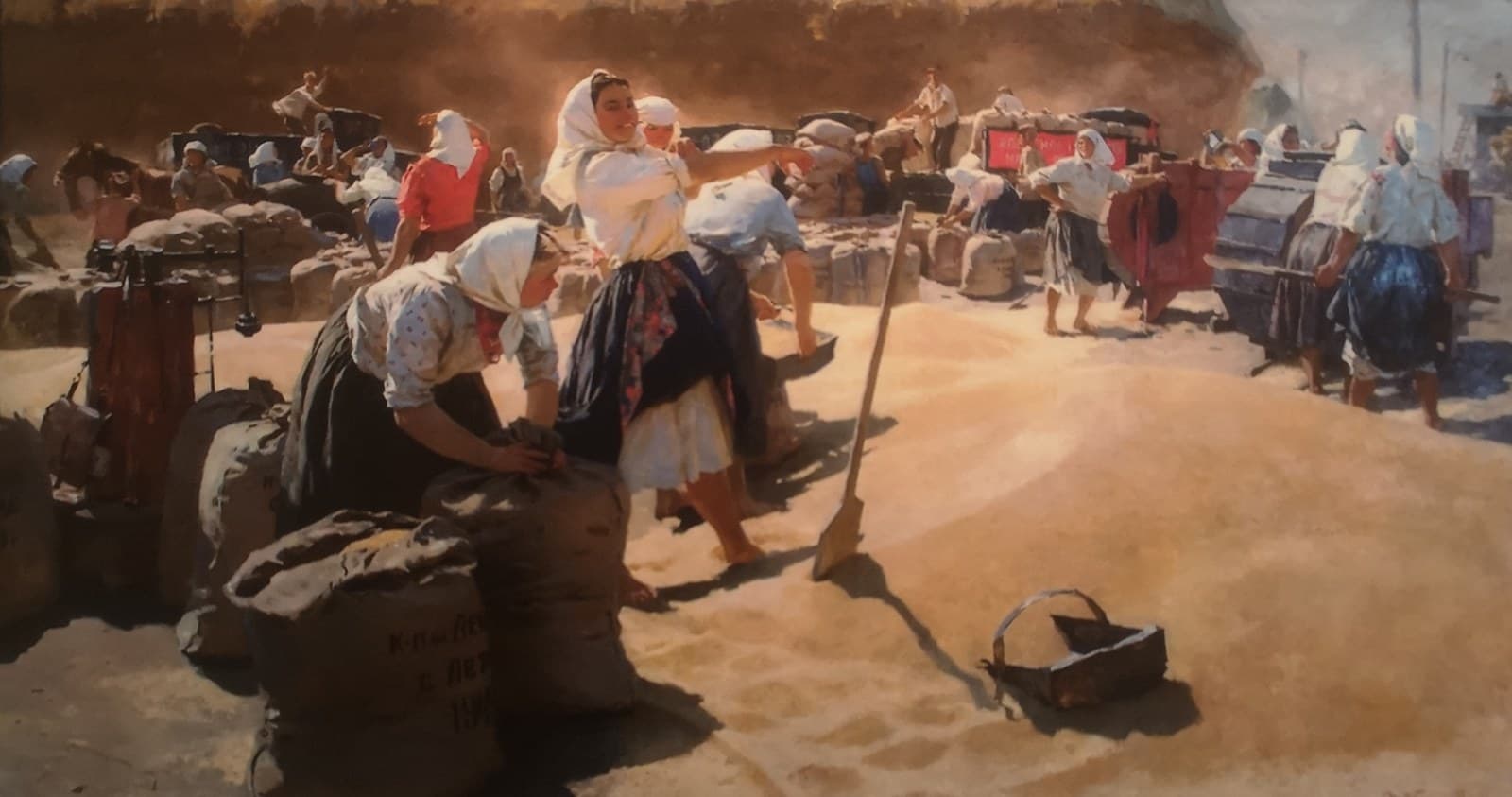
Yablonska's four-metre-wide threshing-floor scene, built from sketches made in the village of Letava in 1948 where 717 of 765 able-bodied villagers were women. It won a Stalin Prize in 1949 and a bronze medal at the 1958 Brussels World's Fair, and hangs in the Tretyakov Gallery as a canonical work of Socialist Realism.
Morning
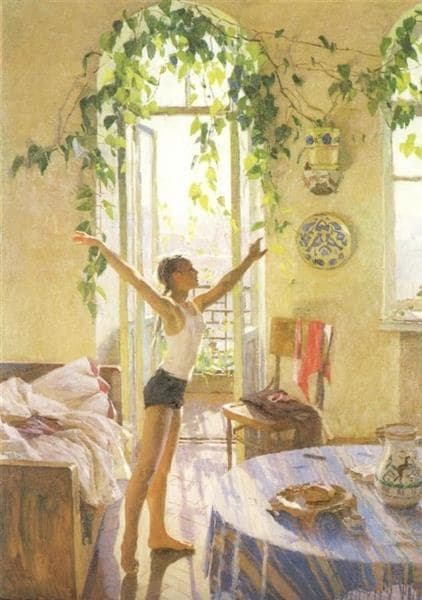
A thirteen-year-old girl — the artist's elder daughter Olena — doing morning exercises in the family's Kyiv flat, painted in the first light of the Khrushchev Thaw. Reproduced in 'Ogoniok', on postcards and in school readers, it became one of the most widely seen Soviet-era paintings, though Yablonska herself was never satisfied with it.
Flax
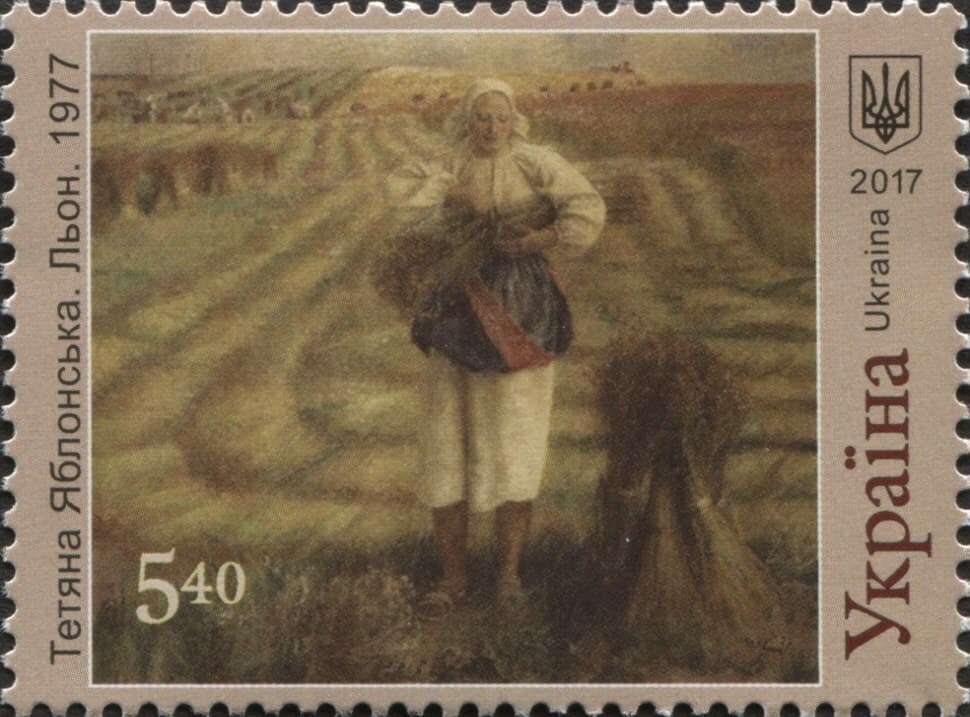
A woman gathering flax in a striped, receding field, painted in the muted earth register of Yablonska's late-1970s village pictures. It won her the USSR State Prize in 1979 and was chosen by Ukrposhta in 2017 for its 'Famous Women of Ukraine' stamp marking her centenary.
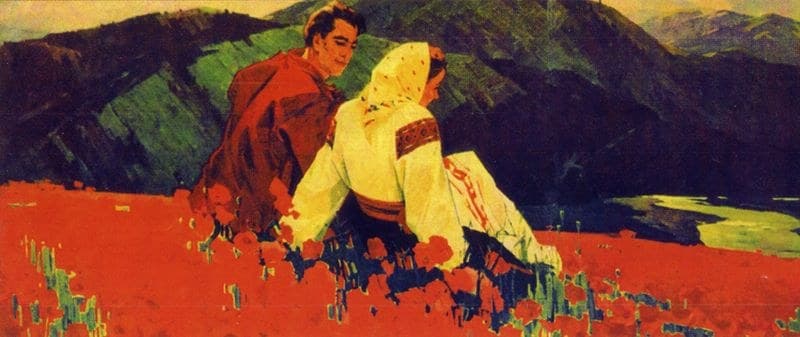
Red Poppies
Veniamin Kushnir
One of the two 1961 canvases, alongside 'Trembita', that established Kushnir's reputation among the Sixtiers, its blazing red poppies read at the time as an unmistakable statement of Ukrainian national feeling.