Social Realism
Social Realism is an international art movement—spanning painting, photography, literature, and film—that emerged in the mid-19th century and peaked in the 20th century to expose the harsh socio-political conditions of the working class. It functions as a critical, unidealized depiction of poverty, labor struggles, and structural inequality to challenge power structures. Key Characteristics and Context Purpose: To draw attention to the everyday hardships of the poor and working classes, often functioning as a critique of capitalist, industrial, or governmental systems. Origin: The movement grew from 19th-century French and Russian realism, reacting against romanticism and bourgeois art styles. Resurgence: It thrived between the World Wars and during the 1930s Great Depression, particularly in the U.S. and Mexico, focusing on themes of labor, community, and resilience. Style: It emphasizes subject matter over form, often using a descriptive, gritty, and direct visual language.
Artists of the Movement
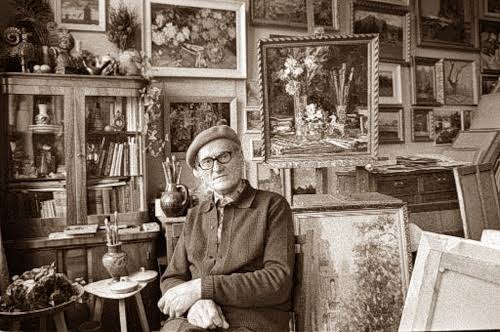
Serhii Shyshko
1911–1997
Serhii Shyshko was a Ukrainian landscape painter who spent five decades recording Kyiv and its surroundings in a loose, light-filled plein-air manner. He is best known for the 'Kyivan Suite', a cycle of more than a hundred canvases of the city, and was among the most decorated landscapists of Soviet Ukraine.
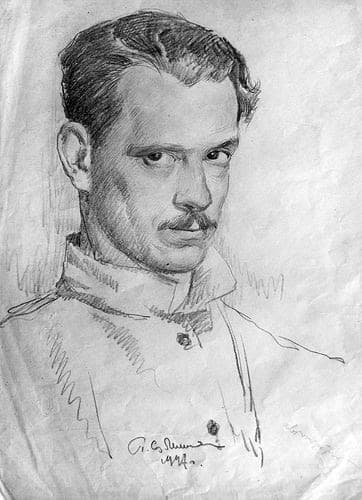
Petro Sulymenko
1914–1996
Petro Stepanovych Sulymenko (1914–1996) was a Ukrainian painter, landscape artist, and creator of thematic paintings. He was named an Honored Artist of Ukraine in 1974. He studied at the Kyiv Art Institute (1939–1947) under O. Shovkunenko. He traveled extensively. His most significant works are dedicated to the heroic deeds of naval soldiers on the fronts of World War II and during the October Revolution. Husband of artist Z. Zatsepina. He lived and worked in Kyiv.
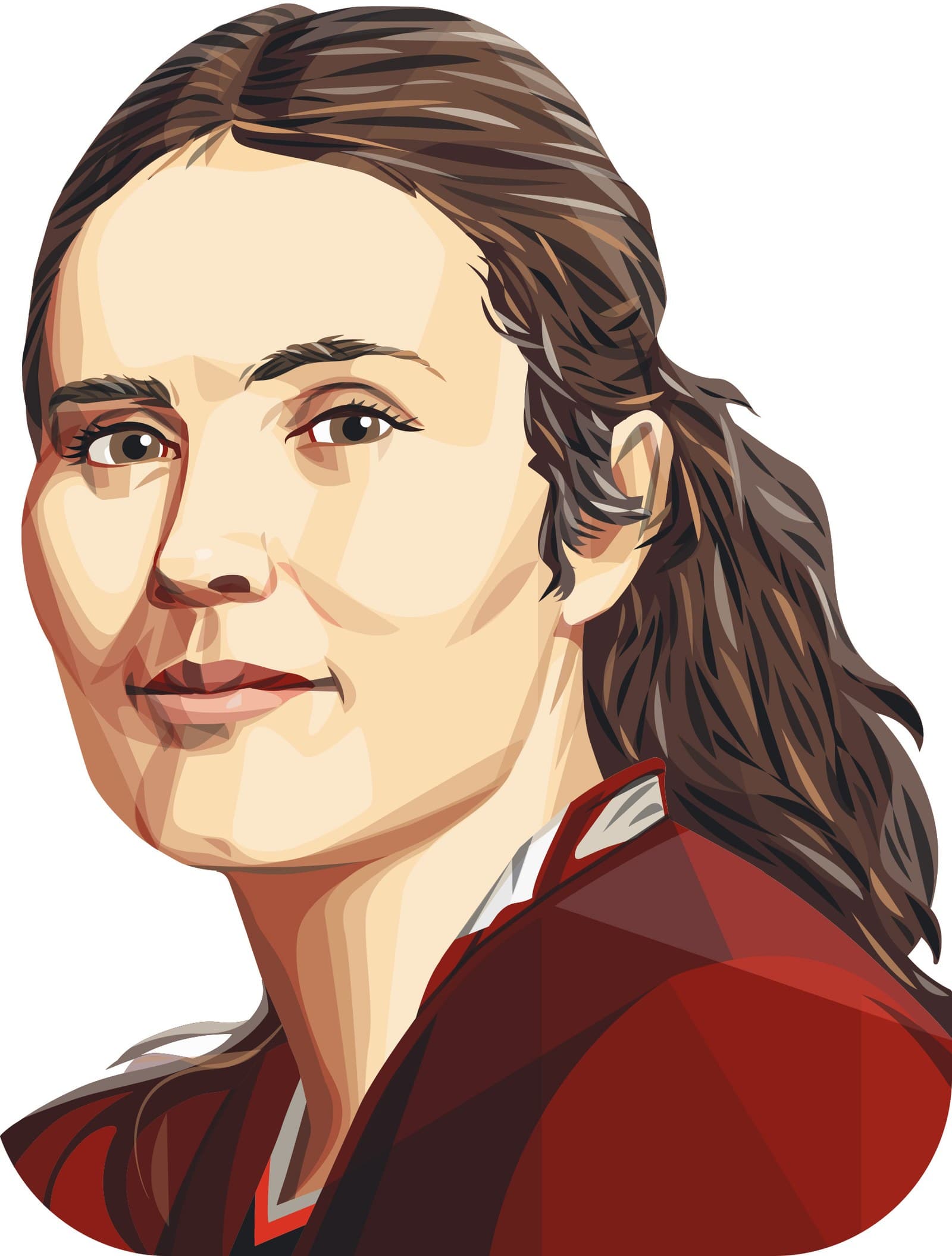
Tetiana Yablonska
1917–2005
Tetiana Yablonska was one of the defining painters of twentieth-century Ukraine, whose sixty-year career ran from prize-winning Socialist Realist canvases to intensely personal late pastels. Trained in Kyiv under Fedir Krychevskyi, she won three USSR State Prizes yet repeatedly collided with the Party over its control of art. Her 1969 canvas 'Youth' and her folk-inflected paintings of the 1960s mark her as one of the artists who reopened Ukrainian painting to something other than official doctrine.
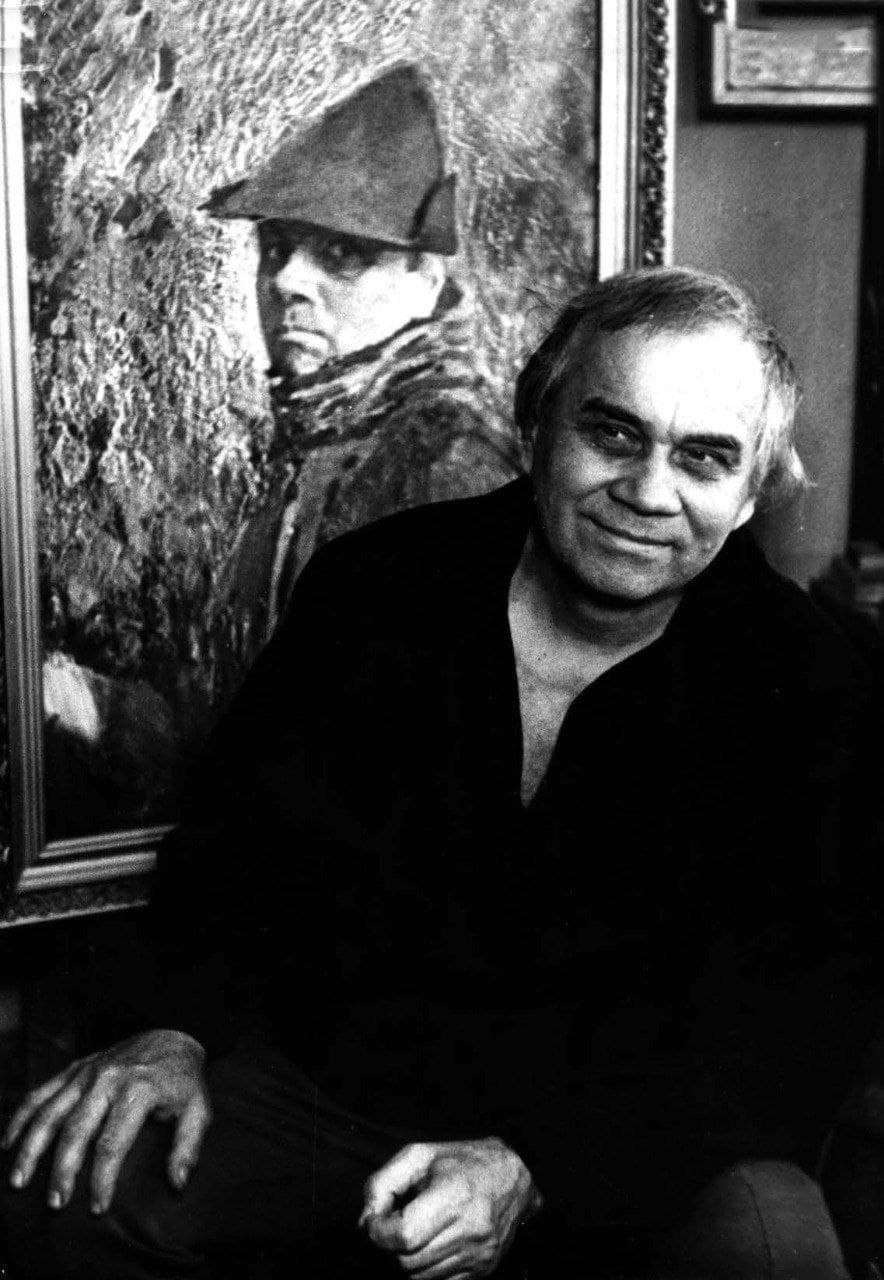
Viktor Zaretskyi
1925–1990
Viktor Zaretskyi (1925–1990) was a Ukrainian painter, monumentalist and teacher, husband of Alla Horska and one of the leaders of the Sixtiers generation. After beginning with a socially observant Donbas miners' cycle he turned in the 1980s to an ornamental, gold-laden manner indebted to the Vienna Secession that earned him the nickname "the Ukrainian Klimt".
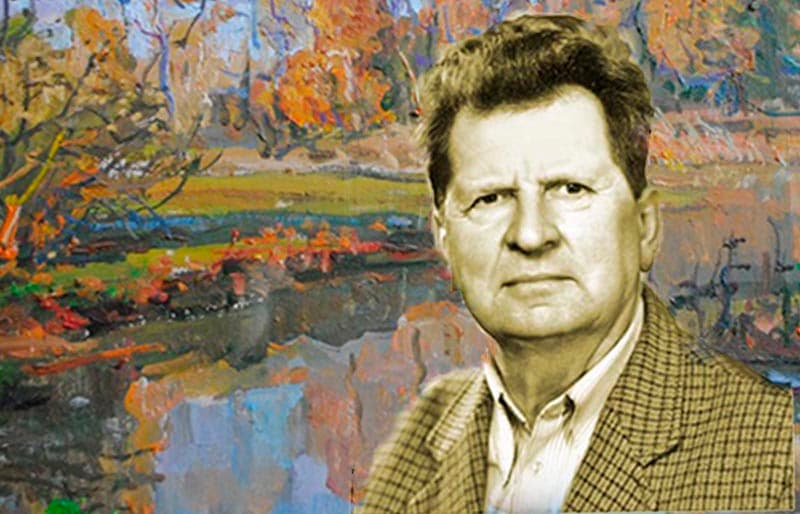
Volodymyr Zhuhan
1926–2008
Volodymyr Zhuhan (1926–2008) was a Ukrainian painter from the Dnipro region and one of the originators of the Ukrainian industrial landscape. A Second World War veteran, he built a career around the scenery, rivers and heavy industry of Dnipropetrovsk and Poltava oblasts. He was made a Merited Artist of Ukraine in 2006.
Works from this Movement
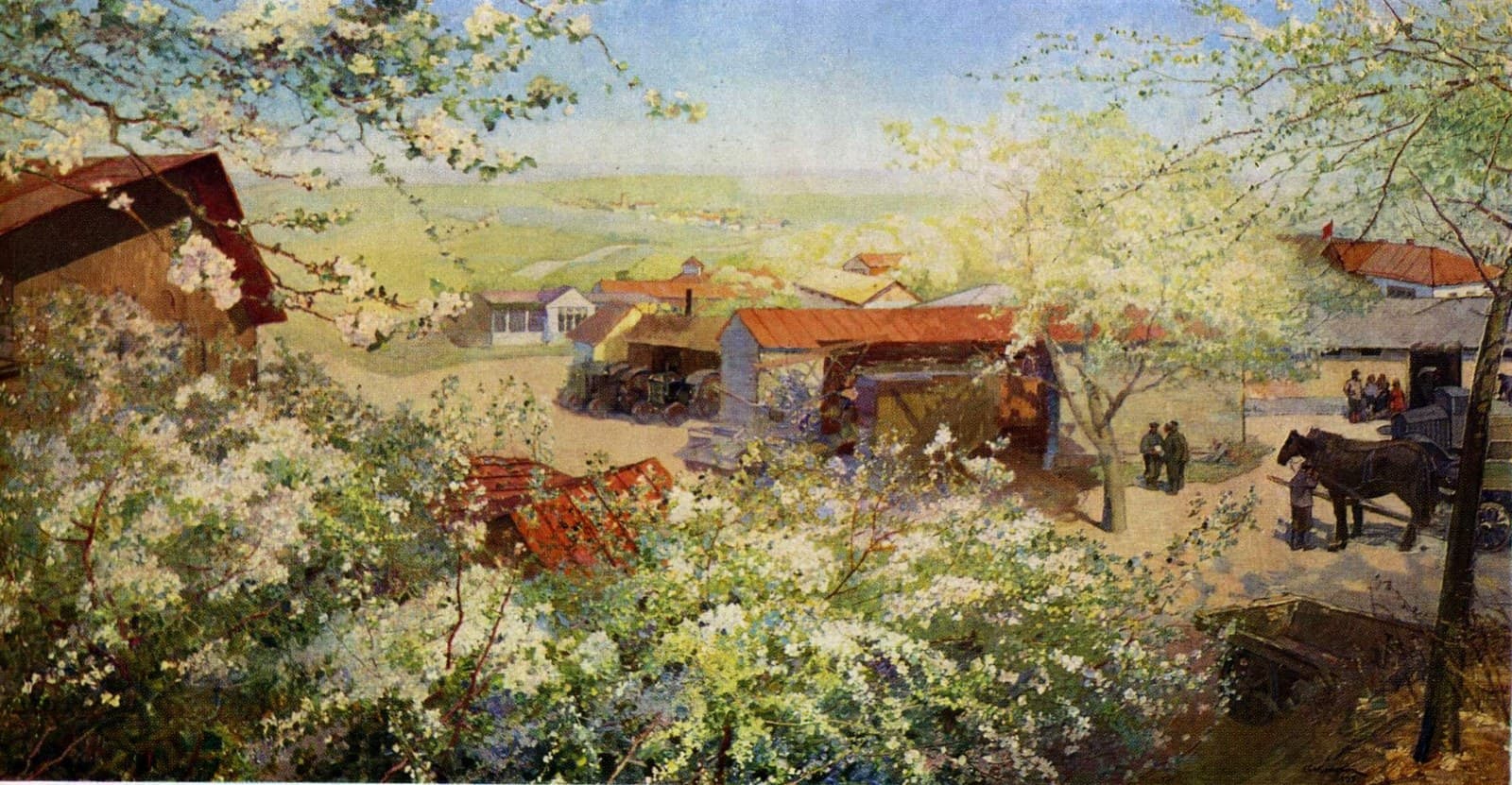
Collective Farm in Bloom
Hryhorii Svitlytskyi
Svitlytskyi's best-known Soviet-period landscape, a flowering orchard turned into an image of collectivised abundance only three years after the Holodomor. It shows how his lyrical light painting was recruited to the required optimism of the 1930s.
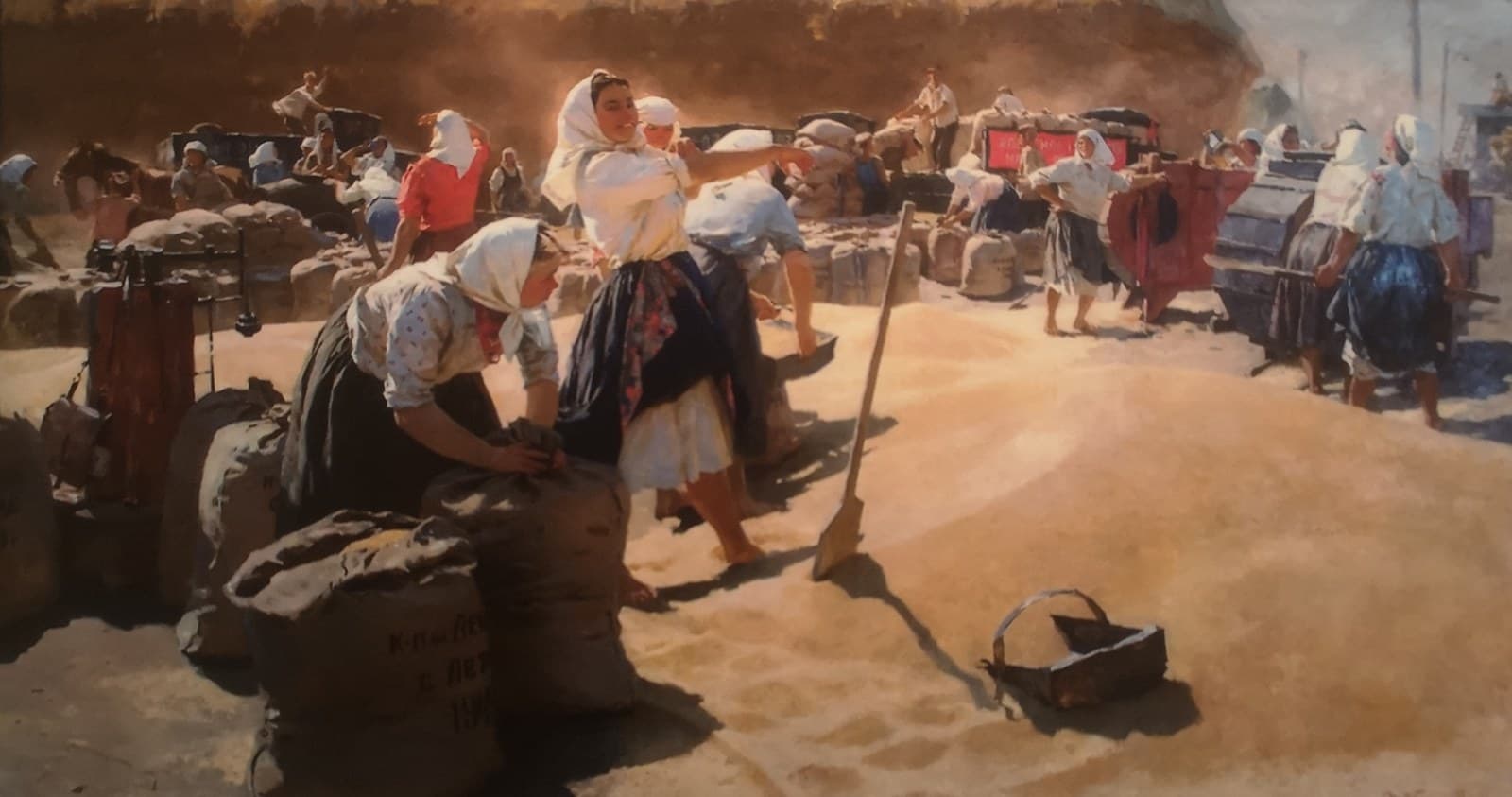
Bread
Tetiana Yablonska
Yablonska's four-metre-wide threshing-floor scene, built from sketches made in the village of Letava in 1948 where 717 of 765 able-bodied villagers were women. It won a Stalin Prize in 1949 and a bronze medal at the 1958 Brussels World's Fair, and hangs in the Tretyakov Gallery as a canonical work of Socialist Realism.
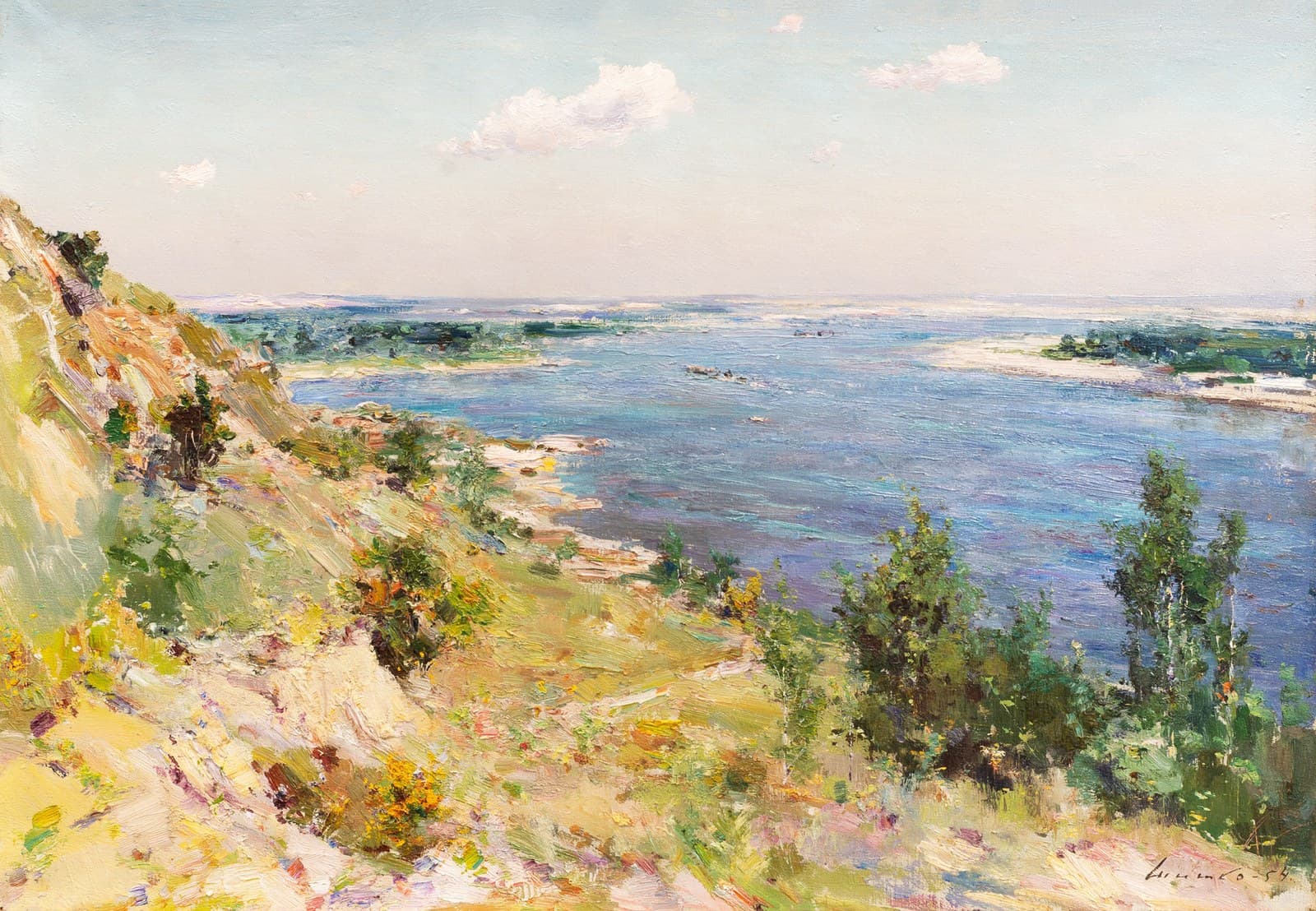
Fresh Morning. Kyiv
Serhii Shyshko
A large early-morning Kyiv landscape from the years in which Shyshko was beginning the Kyivan Suite, built on the cool, damp light he preferred for the city's river slopes.
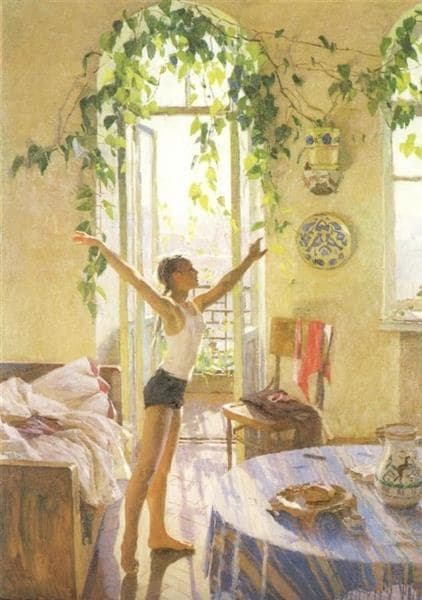
Morning
Tetiana Yablonska
A thirteen-year-old girl — the artist's elder daughter Olena — doing morning exercises in the family's Kyiv flat, painted in the first light of the Khrushchev Thaw. Reproduced in 'Ogoniok', on postcards and in school readers, it became one of the most widely seen Soviet-era paintings, though Yablonska herself was never satisfied with it.
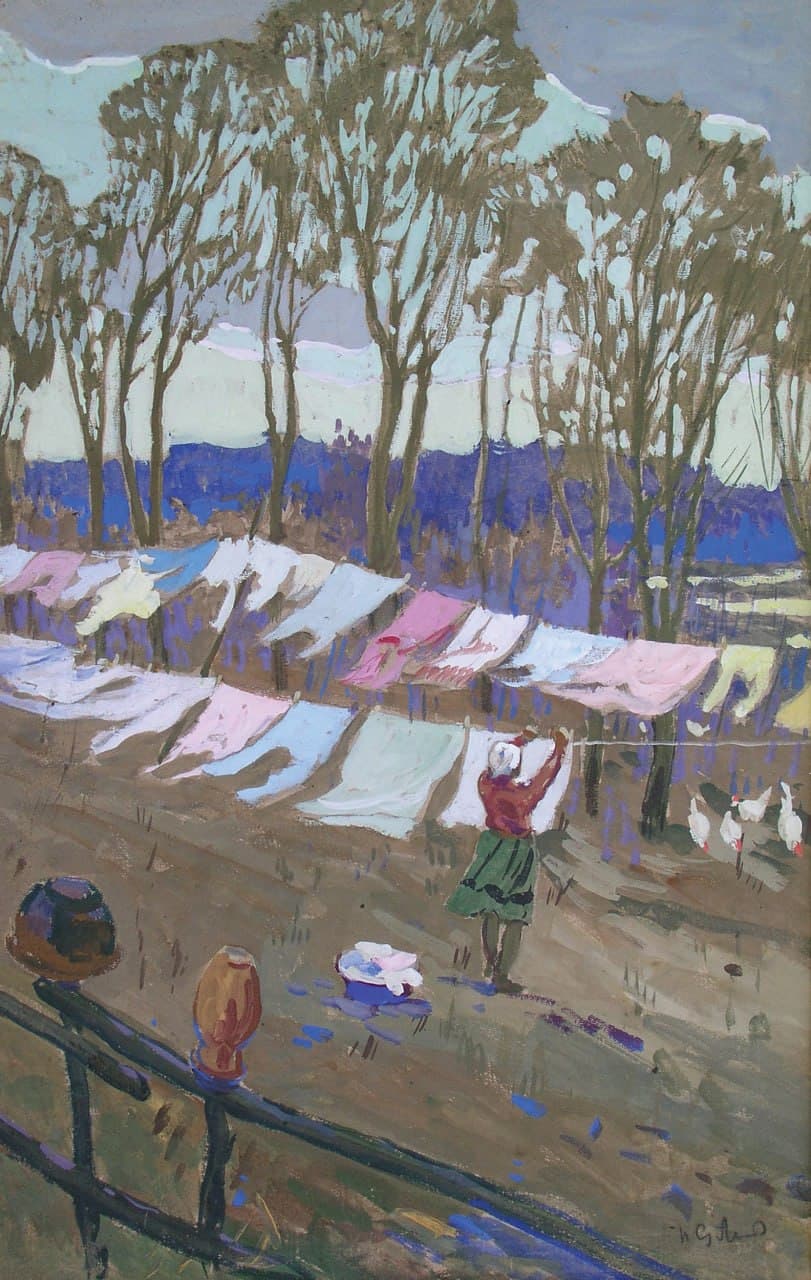
Lingerie
Petro Sulymenko
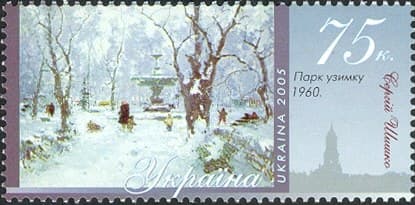
Park in Winter
Serhii Shyshko
A snow-covered Kyiv park with bare, sprawling trees, a frozen fountain and small figures with sledges, worked up in cool blues, greys and lilacs against warm white snow.
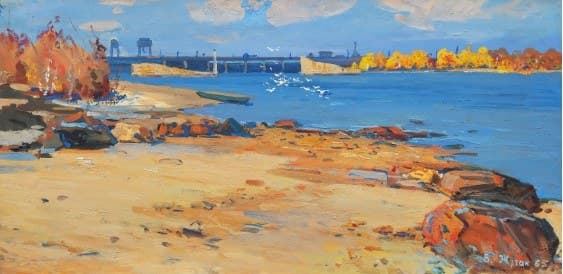
The Dzerzhynsk Dam
Volodymyr Zhuhan
A wide horizontal canvas of the dam serving the Dzerzhynskyi metallurgical works, characteristic of Zhuhan's industrial landscapes of the 1960s.
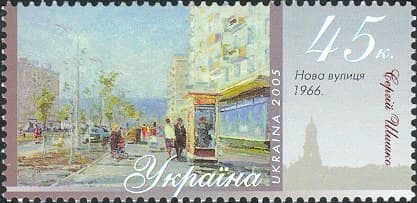
New Street
Serhii Shyshko
A wide new Kyiv thoroughfare of the 1960s seen in soft afternoon light — a modern apartment block, a glazed kiosk, street lamps, passers-by and cars — painted with the loose, silvery touch typical of Shyshko's Kyivan Suite.
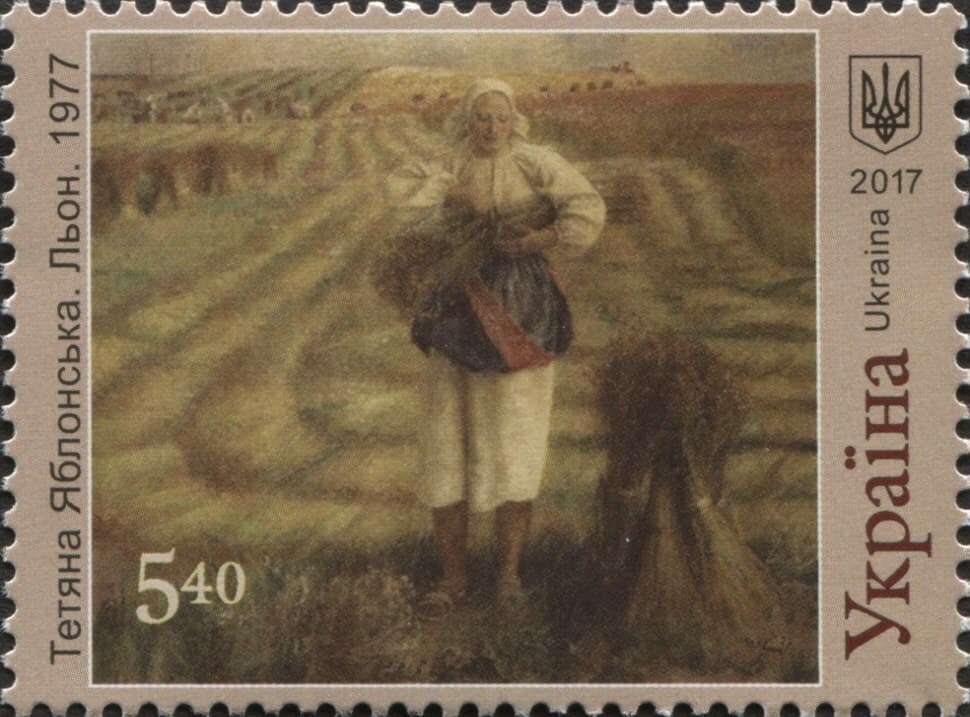
Flax
Tetiana Yablonska
A woman gathering flax in a striped, receding field, painted in the muted earth register of Yablonska's late-1970s village pictures. It won her the USSR State Prize in 1979 and was chosen by Ukrposhta in 2017 for its 'Famous Women of Ukraine' stamp marking her centenary.