Monumentalism
Monumentalism is an architectural and artistic approach emphasizing grand scale, durability, and intense symbolism, designed to evoke awe and project authority or historical significance. It often features austere, symmetrical, and geometric forms crafted from permanent materials like stone or concrete, frequently used to promote political, state, or civic power. Key Characteristics Colossal Scale: Focuses on immense size to dominate the landscape. Permanence & Stability: Utilizes materials intended to last for centuries. Symbolic Power: Commonly used to glorify specific regimes, ideologies, or historical events. Simple Aesthetics: Often features geometric shapes, strong symmetry, and simplified, austere, and massive structures.
Artists of the Movement
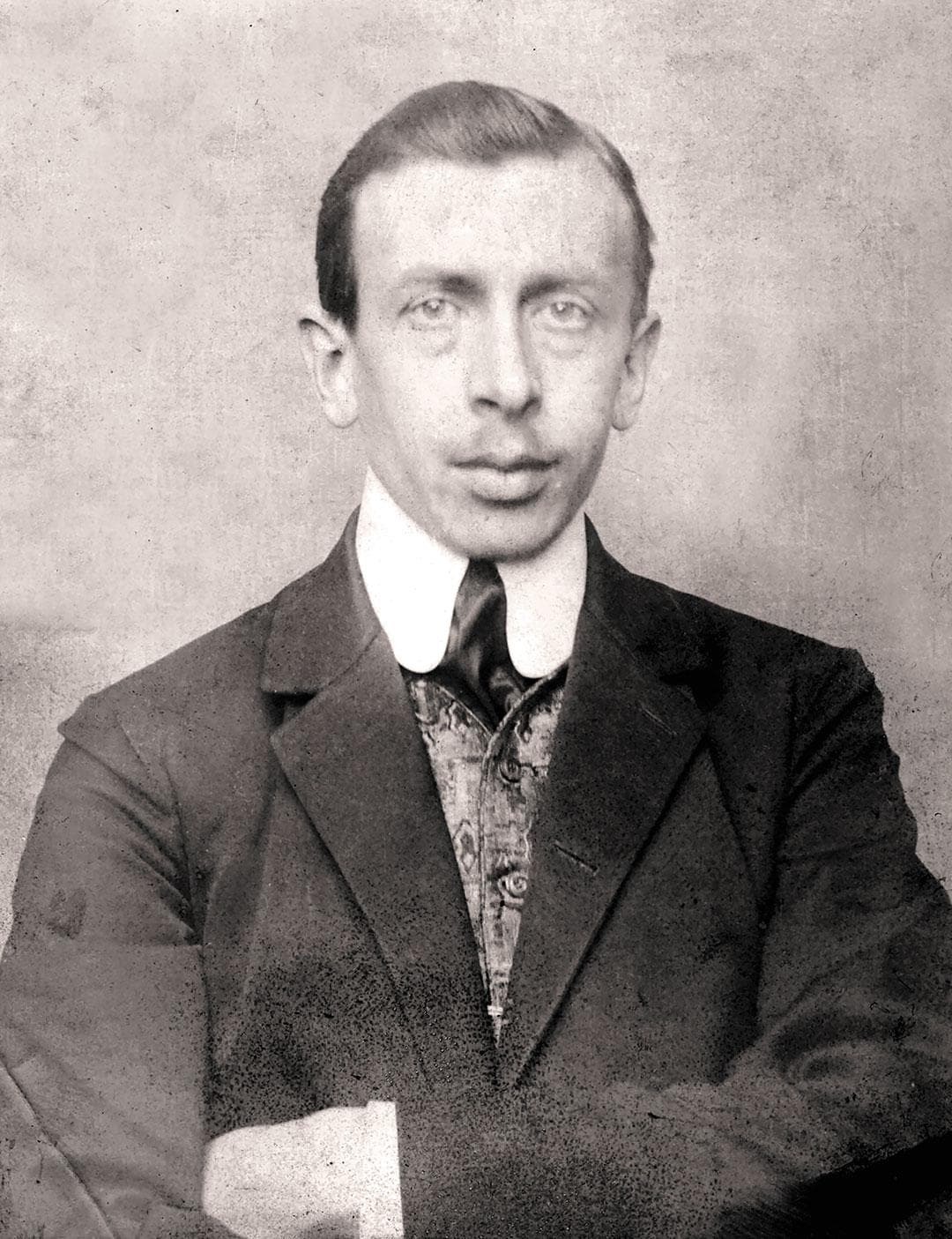
Modest Sosenko
1875–1920
Modest Danylovych Sosenko (April 28, 1875, Porohy, Austro-Hungarian Empire – February 4, 1920, Lviv, West Ukrainian People’s Republic) was a prominent Ukrainian monumentalist whose work is characterized by a synthesis of ancient traditions and modern European trends. His style is often described as a synthetic style or Ukrainian Art Nouveau in sacred art.
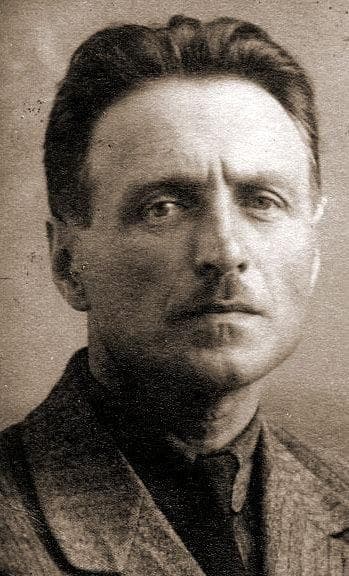
Mykhailo Boichuk
1882–1937
Founder of Boichukism, a monumental school synthesising Byzantine, Quattrocento and Ukrainian folk art; co-founder/rector of the Ukrainian State Academy of Arts. Executed by the NKVD on 13 July 1937; nearly all his monumental works were destroyed.
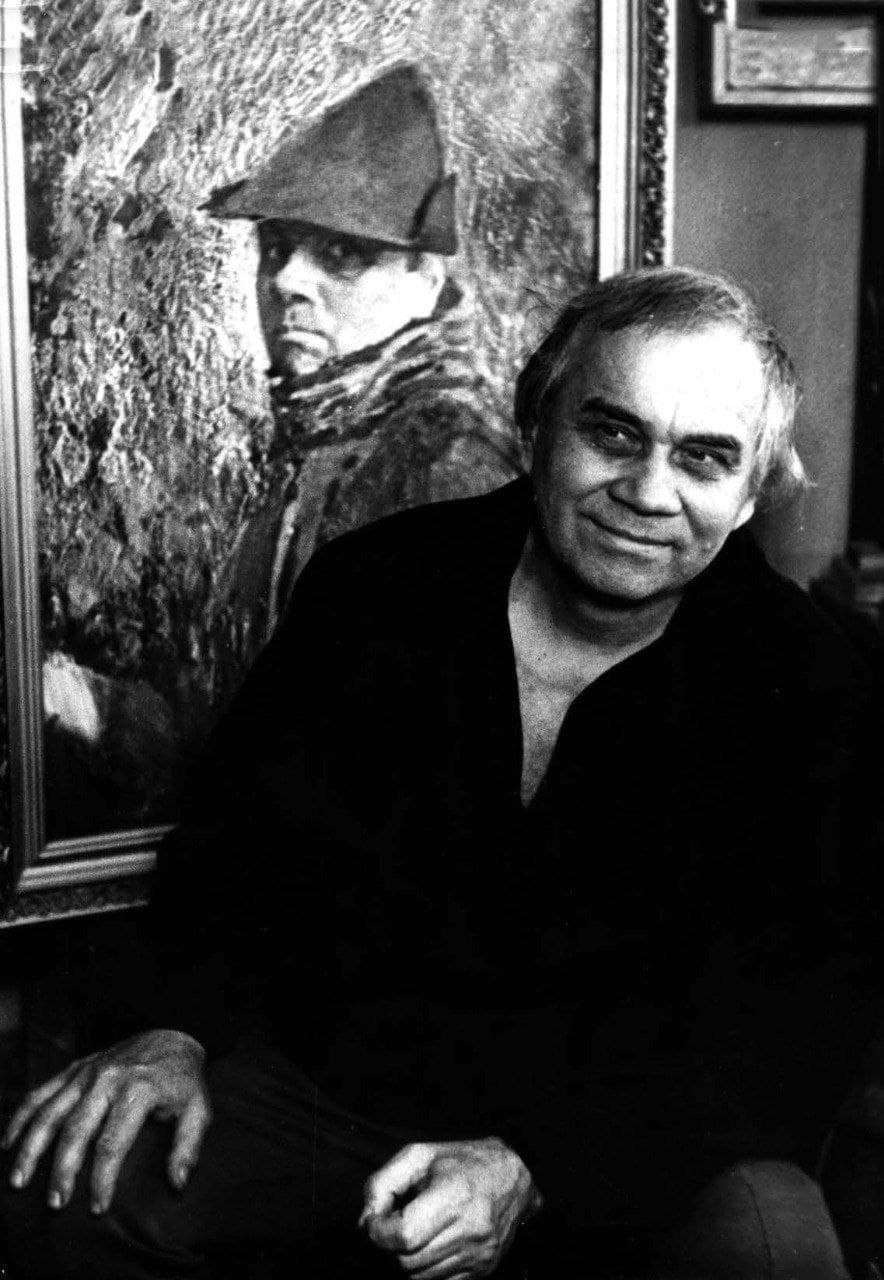
Viktor Zaretskyi
1925–1990
Viktor Zaretskyi (1925–1990) was a Ukrainian painter, monumentalist and teacher, husband of Alla Horska and one of the leaders of the Sixtiers generation. After beginning with a socially observant Donbas miners' cycle he turned in the 1980s to an ornamental, gold-laden manner indebted to the Vienna Secession that earned him the nickname "the Ukrainian Klimt".
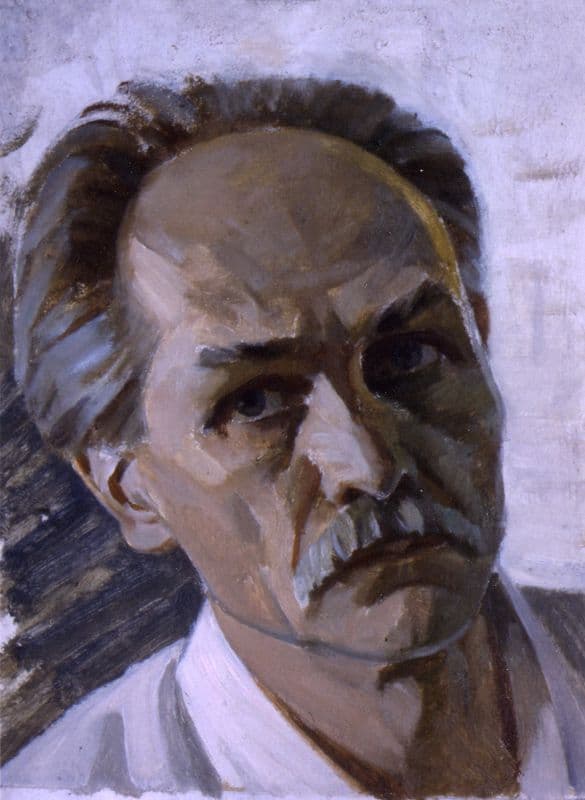
Veniamin Kushnir
1926–1992
Veniamin Kushnir was a Ukrainian painter and monumentalist, and one of the founders of the Kyiv Club of Creative Youth 'Suchasnyk' that gave the Sixtiers movement its centre. He fused Carpathian and Podillian folk form with modernist colour in paintings of motherhood, horses, musicians and Hutsul landscape, and was pushed to the margins of official art for his Ukrainian national convictions.
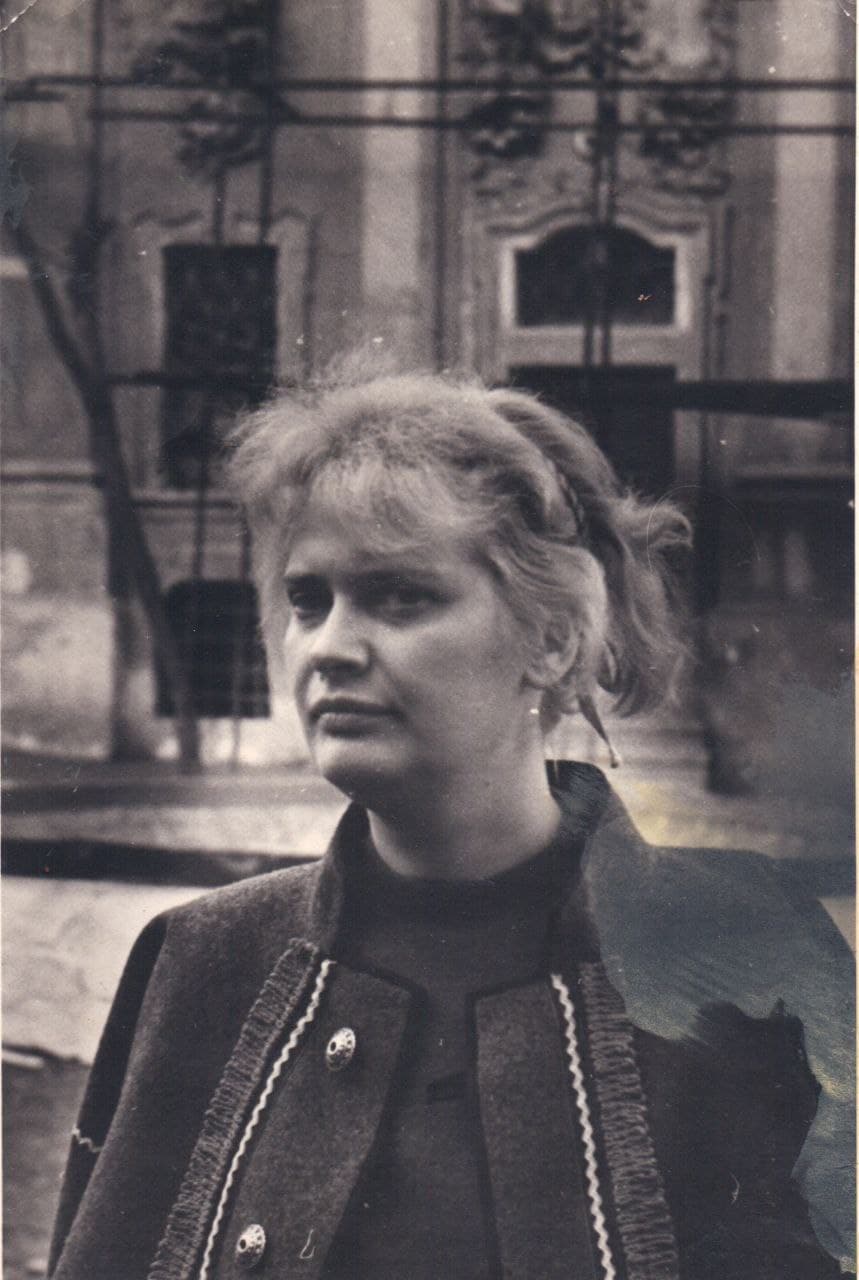
Alla Horska
1929–1970
Alla Horska (1929–1970) was a Ukrainian painter and monumentalist, and with her husband Viktor Zaretskyi a founder of the Club of Creative Youth "Suchasnyk" and a central figure of the Sixtiers and the dissident movement. Her output spans easel painting and portrait drawing, banned stage designs for Les Taniuk, and large mosaic and stained-glass cycles. She was murdered in Vasylkiv in November 1970 at the age of 41, and much of her monumental work has since been destroyed or is endangered.
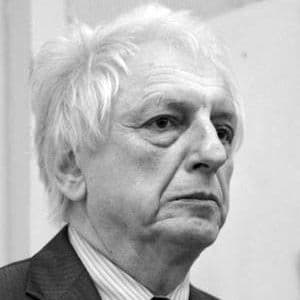
Liubomyr Medvid
b. 1941
Liubomyr Medvid, born in 1941 in the Lviv-region village of Varyazh, is one of the leading painters of the Lviv school and a professor at the Lviv National Academy of Arts. He is a People's Artist of Ukraine and a full academician of the National Academy of Arts of Ukraine, and won the Shevchenko National Prize in 2014 for his cycle «Ремінісценції». His painting moves between meticulously observed Galician landscape and large philosophical cycles on displacement, exile and Christian ethics.
Works from this Movement
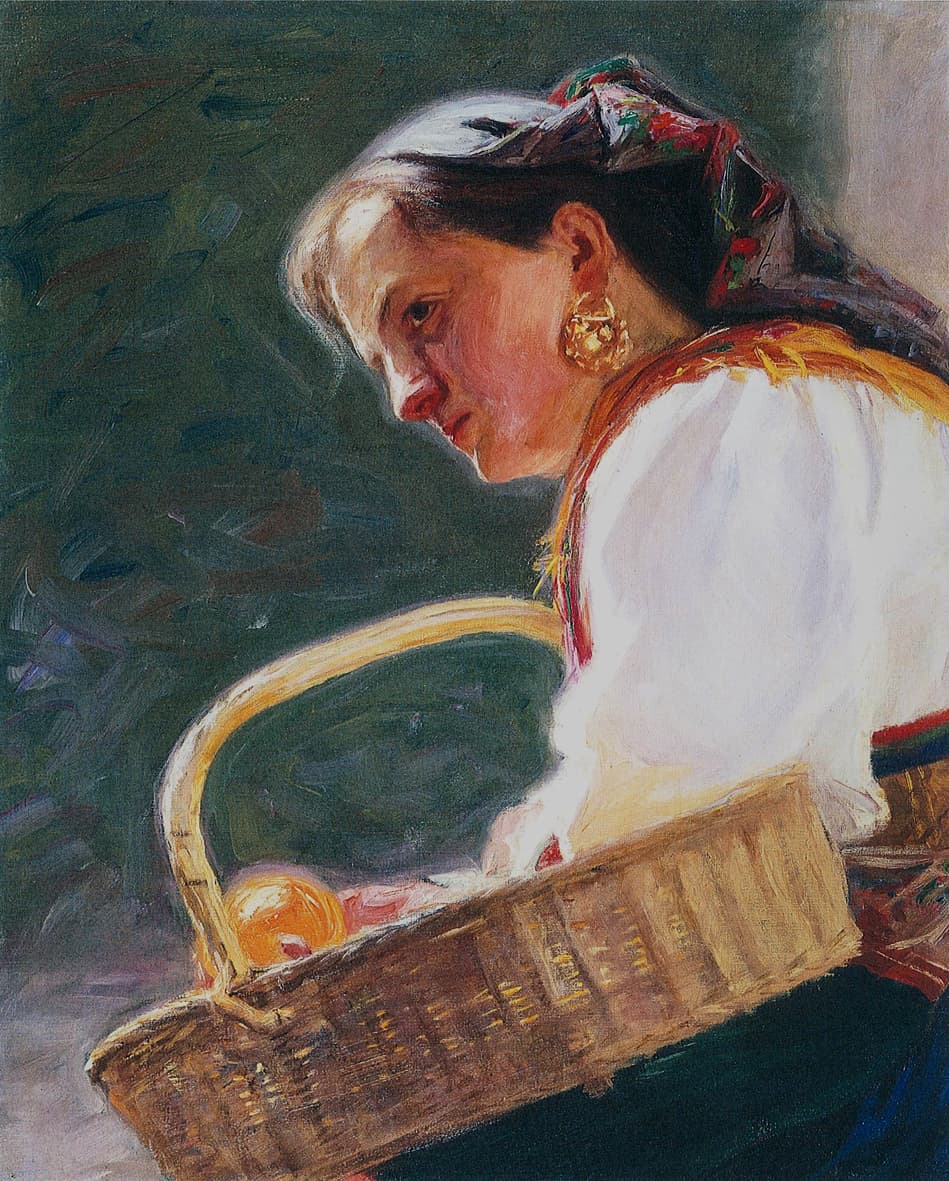
The Orange Seller
Modest Sosenko
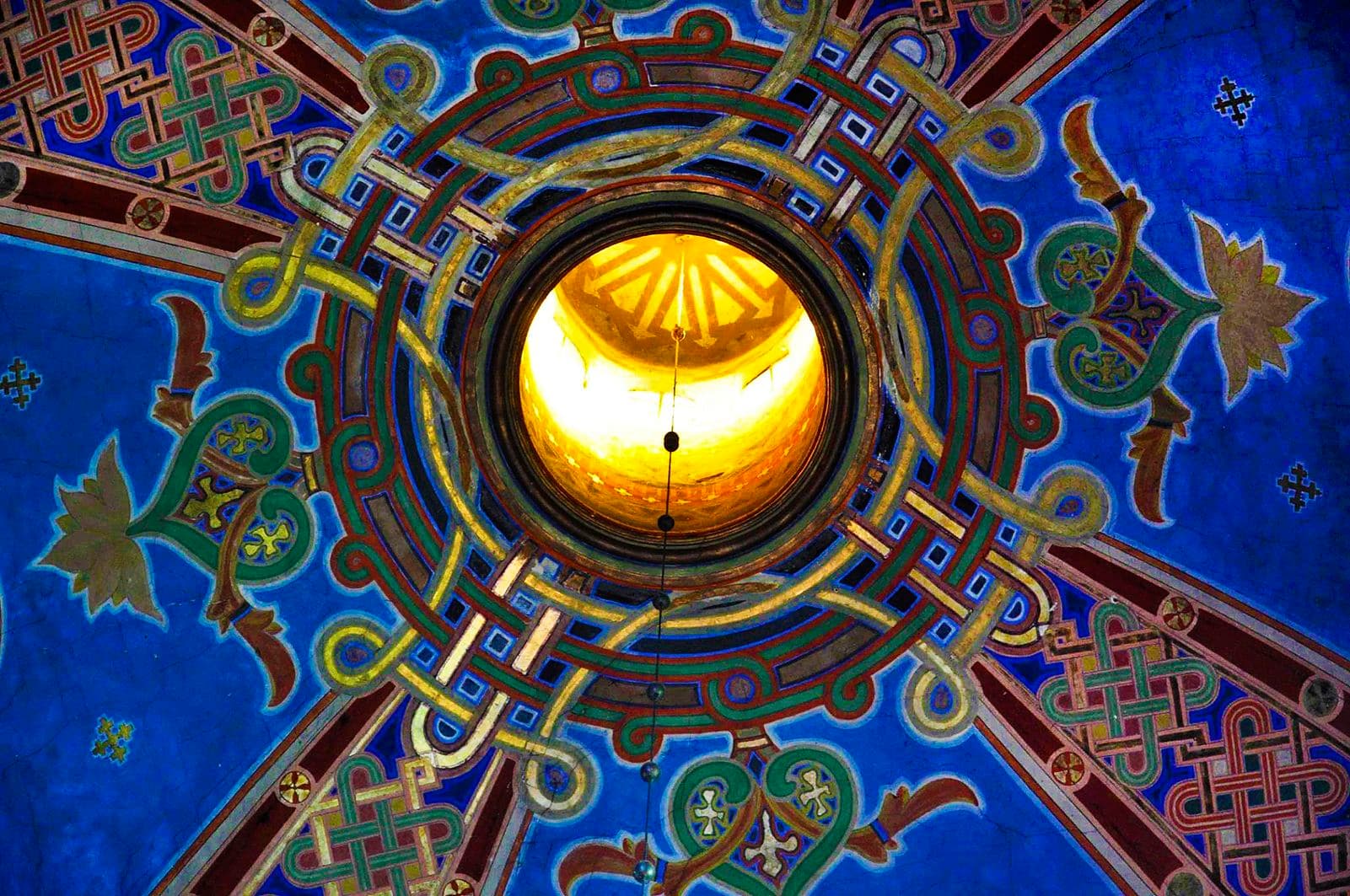
The murals of the church in the village of Pidberiztsi
Modest Sosenko
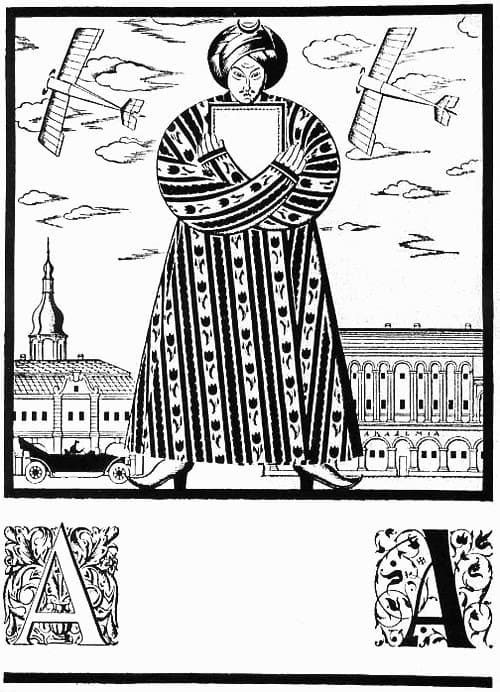
Ukrainian Alphabet (Abetka) — Letter A
Heorhii Narbut
A sheet from Narbut's Ukrainian Alphabet depicting the letter А with folk and Baroque motifs.
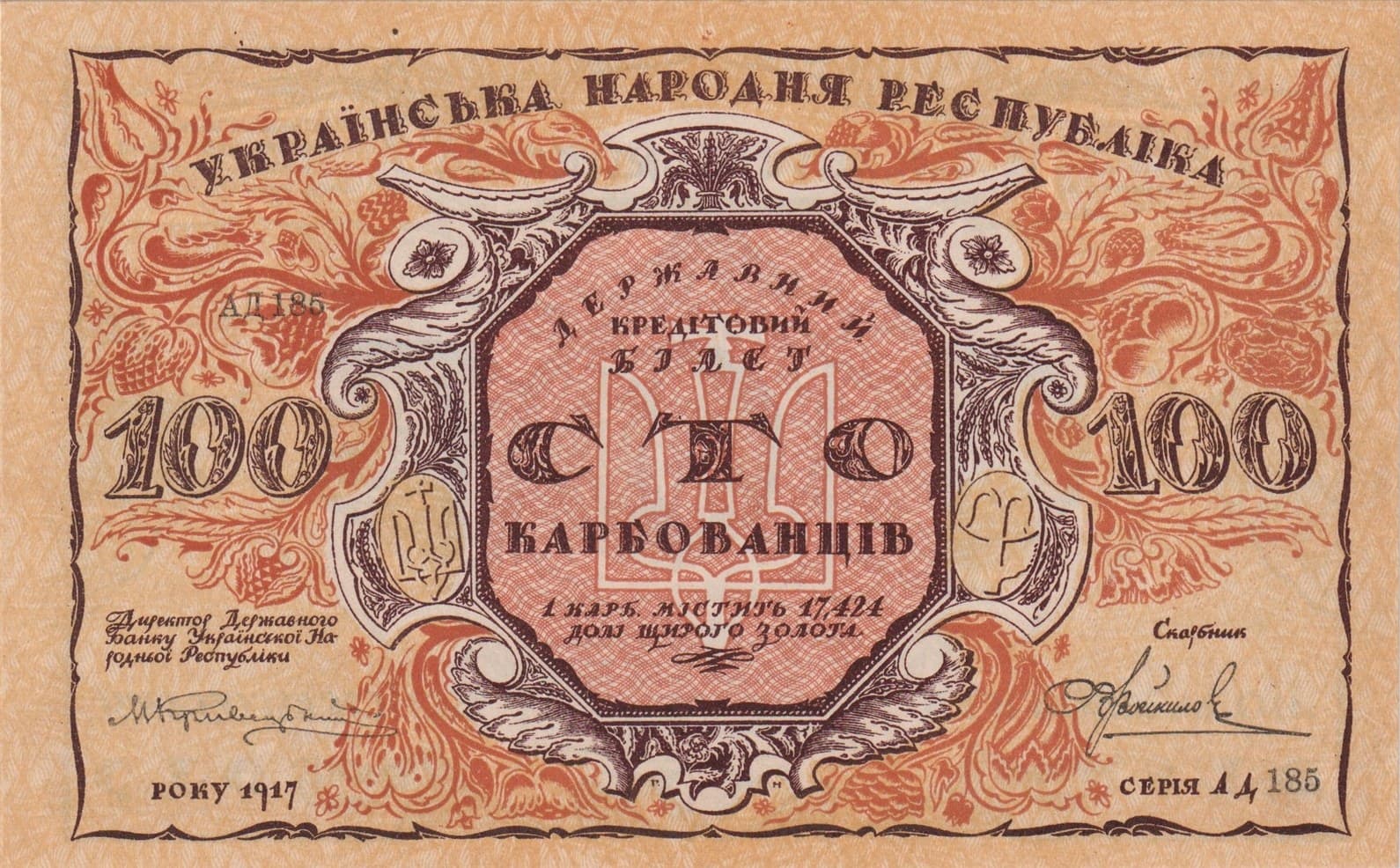
100 Karbovantsiv Banknote of the UNR
Heorhii Narbut
Narbut's design for the 100 karbovantsiv note, the first banknote of the Ukrainian People's Republic.
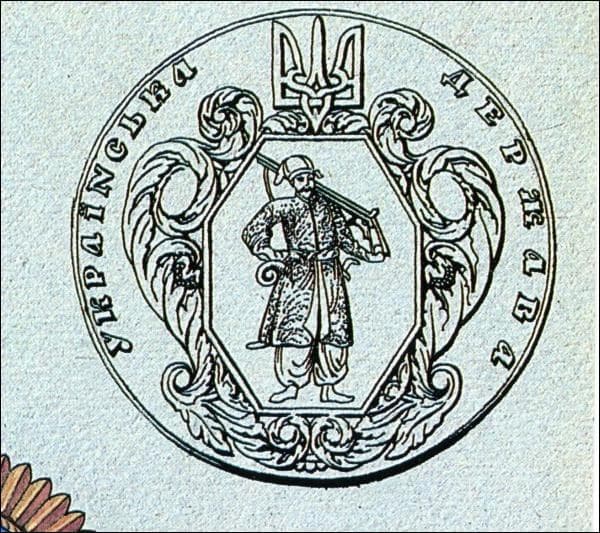
Project for the Coat of Arms of the Ukrainian State
Heorhii Narbut
Narbut's heraldic project for the state coat of arms, built around the Volodymyr trident.
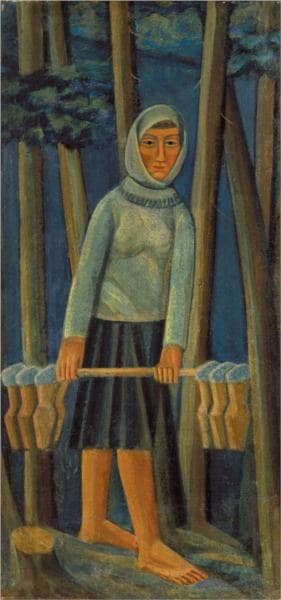
The Milkmaid
Mykhailo Boichuk
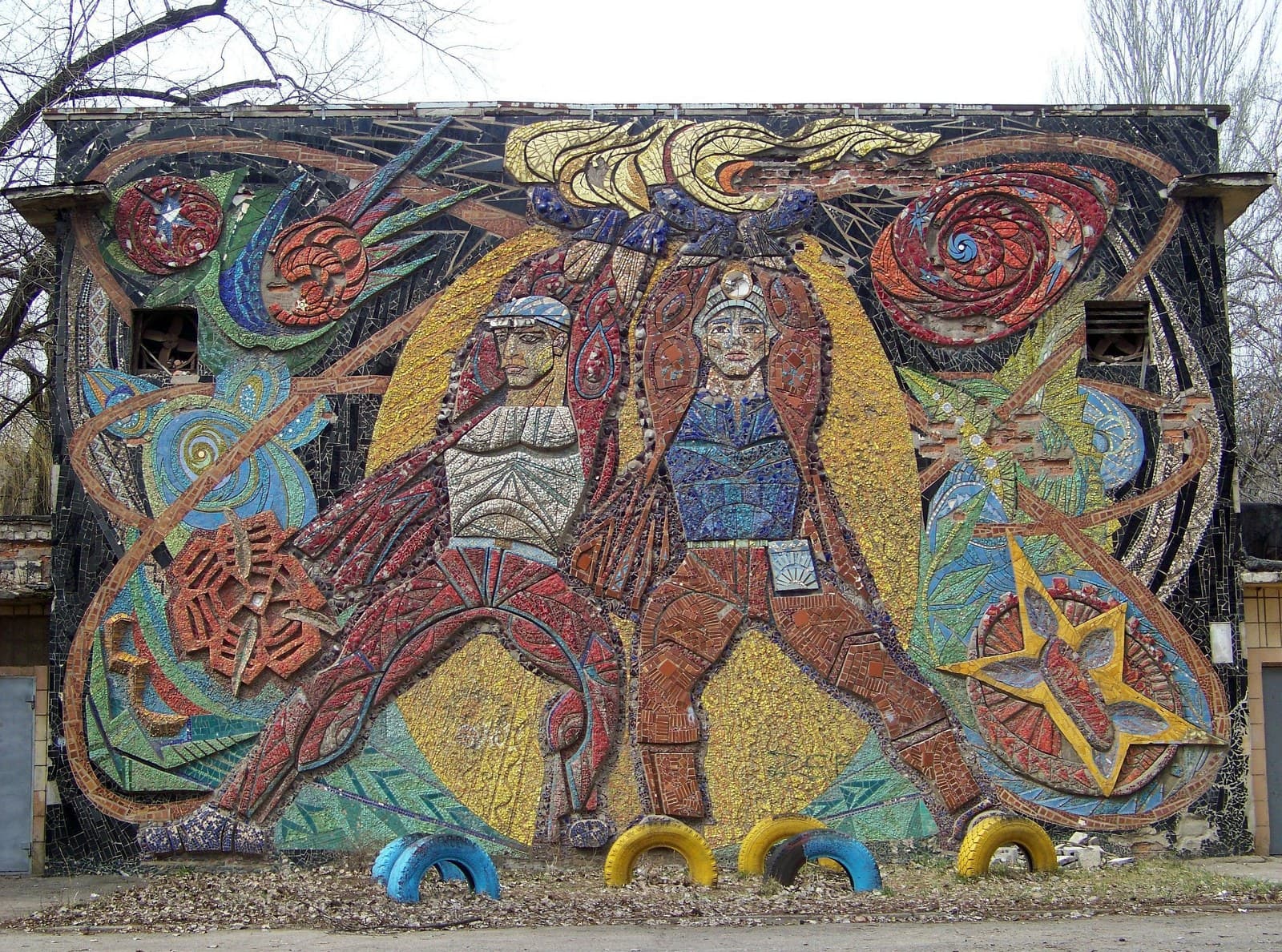
Prometheuses (mosaic cycle of School No. 5, Donetsk)
Alla Horska
The central panel of a nine-part cycle made in 1965–1966 by a collective led by Hryhorii Synytsia with Alla Horska, Halyna Zubchenko, Viktor Zaretskyi and Hennadii Marchenko: two figures raise a flame between cosmic spirals and folk-ornament suns. Eight smaller panels — «Космос», «Вода», «Вогонь», «Земля», «Життя», «Надра», «Сонце», «Повітря/Верба» — were completed in 1965, the central «Прометеї» in 1966.
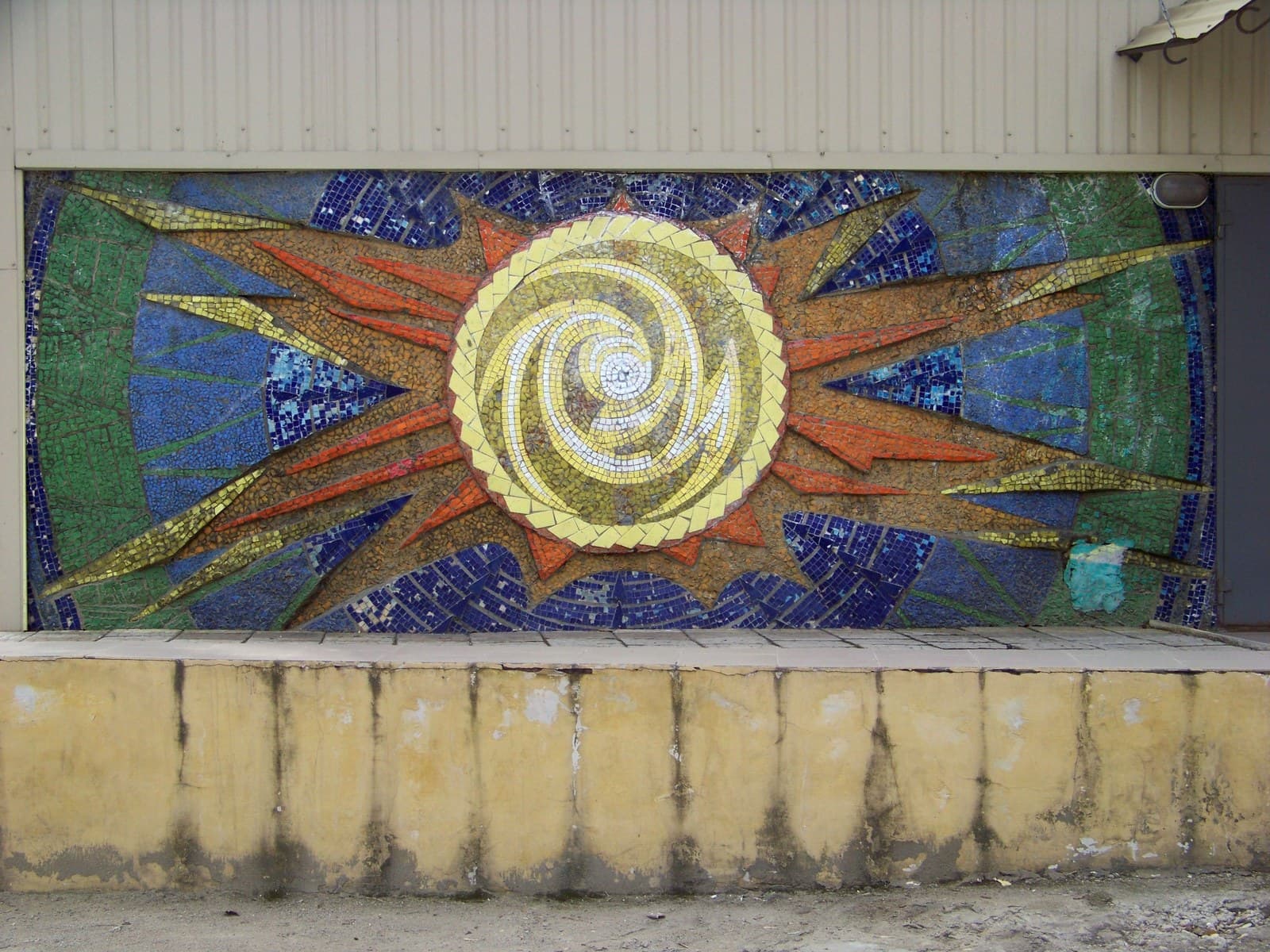
Prometheuses, Earth, Fire (mosaics of School No. 5, Donetsk)
Viktor Zaretskyi
Zaretskyi's contribution to the nine-panel mosaic cycle made in 1965–1966 by a collective led by Hryhorii Synytsia with Alla Horska, Halyna Zubchenko and Hennadii Marchenko. The central «Прометеї» panel sets two figures raising a flame among cosmic spirals and folk-ornament suns; the cycle fuses Ukrainian folk decoration, Baroque and Mexican muralism.
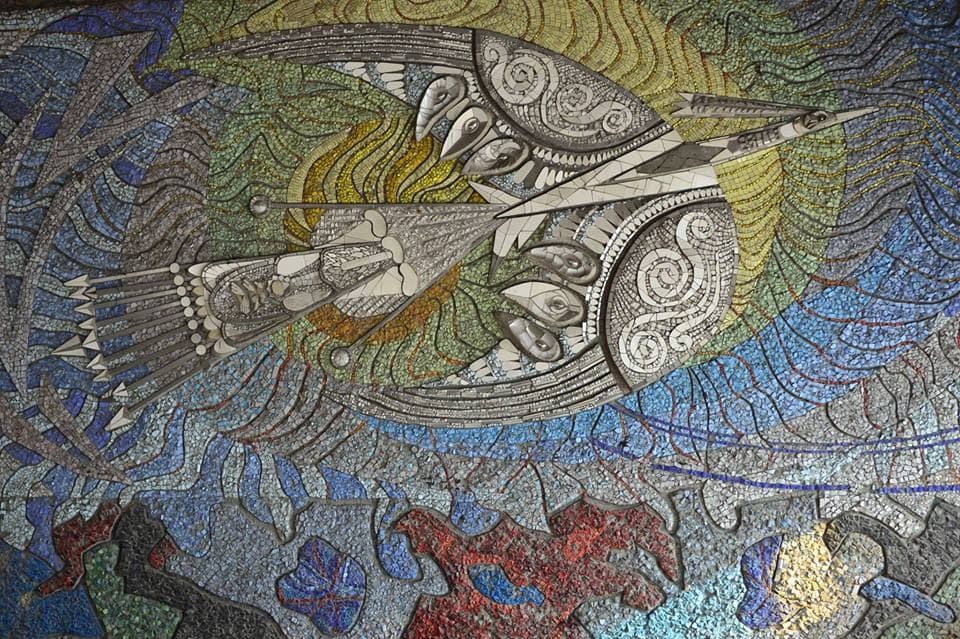
Kestrel (Boryviter)
Alla Horska
A hovering kestrel built from smalt, its silver-grey plumage spread across a sun and a field of blue that answered the sea visible from the restaurant windows; the bird was read as an emblem of artistic freedom. Made with a team including Viktor Zaretskyi, Halyna Zubchenko, Borys Plaksii, Hryhorii Pryshedko, Vasyl Prakhnin and Nadiia Svitlychna in under two months, rediscovered behind a wall during a 2008 renovation, and destroyed with its companion panel during the Russian bombardment of Mariupol in 2022. It gave its name to Horska's 2024 retrospective at the Ukrainian House in Kyiv. Also referred to in Ukrainian sources as «Птах-мрія».
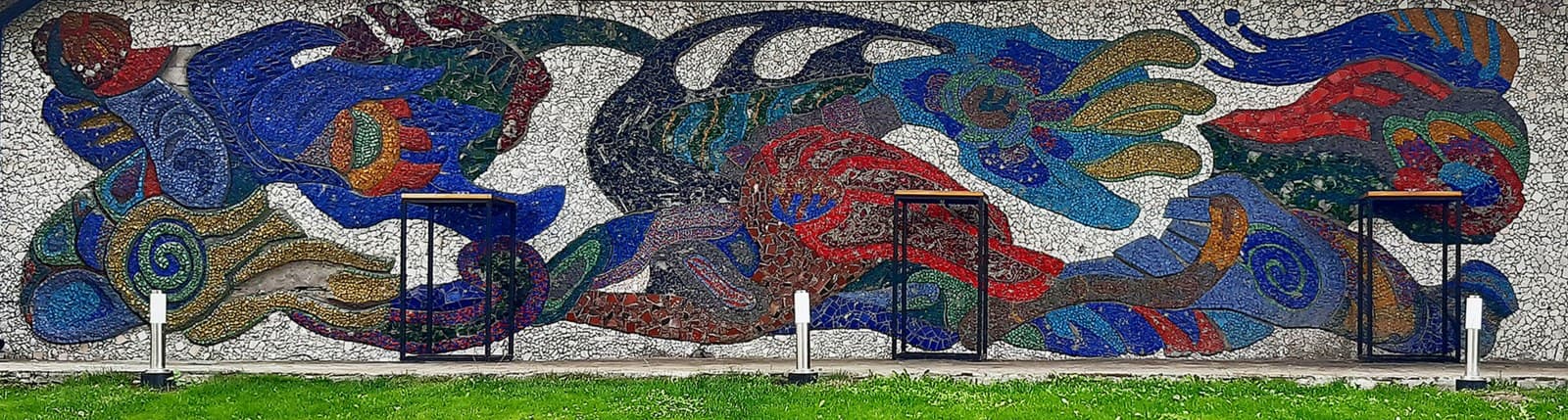
Wind
Alla Horska
An abstract composition begun in 1967 and finished in 1968 by Horska with Viktor Zaretskyi and Borys Plaksii, fusing folk-ornament motifs with a Ukrainian avant-garde vocabulary. It is one of the few Horska mosaics still in place in Kyiv.
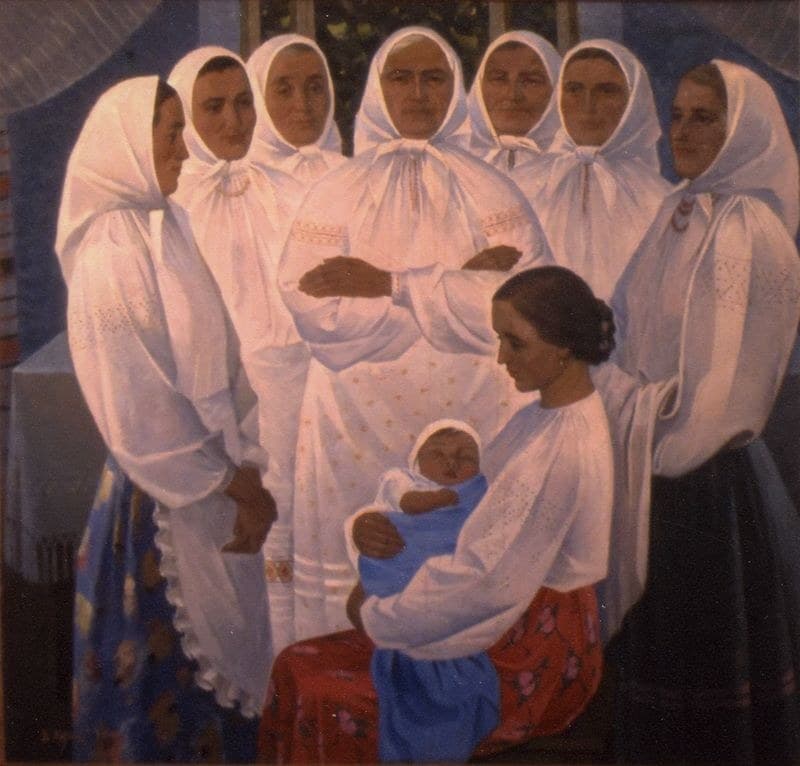
Mothers
Veniamin Kushnir
A group of Ukrainian mothers rendered as near-iconic, monumental figures — the central work in the cycle on motherhood that runs through Kushnir's painting from the 1960s onward.
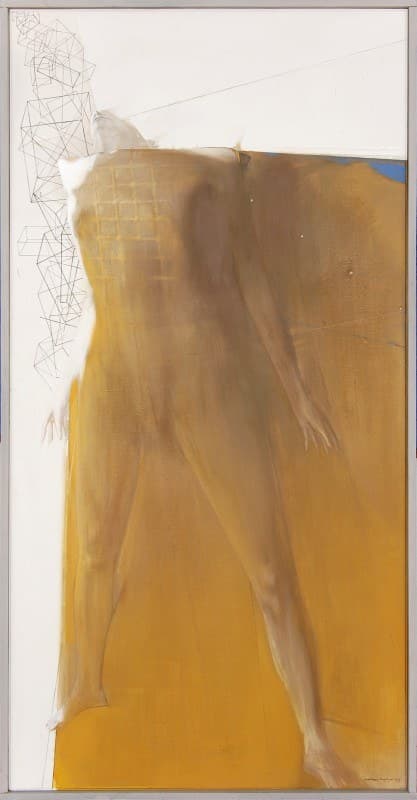
Babylon, from the series Reminiscences. The Prodigal Son
Liubomyr Medvid
A frontal human figure with its head thrown back is set against an ochre plane broken by blue accents and geometric forms. The canvas belongs to the Prodigal Son strand of the cycle for which Medvid received the Shevchenko National Prize.