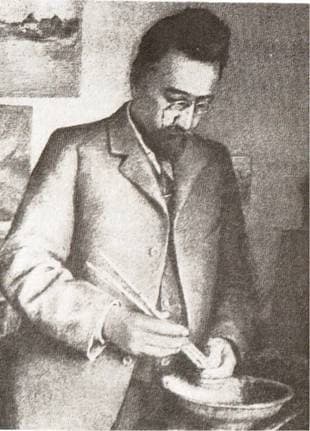
Kharkiv landscape painter of intimate, lyrical Ukrainian villages and courtyards in increasingly impressionist colour; ~800 landscapes.
Art Movements
Realism
Realism is an artistic movement that sought to depict reality as accurately and objectively as possible, holding that the purpose of art is to reflect all aspects of existence, rather than merely its idealized representation. The term was introduced by the French literary critic Jules Champfleury in the 1850s to denote art that opposed Romanticism and Academicism. In the visual arts, the significance of Realism as a style is quite controversial, and its boundaries are undefined. In a narrower sense, realism is understood as positivism, a movement in the visual arts of the second half of the 19th century. One of the first realists was the French artist Gustave Courbet (1819–1877), who opened his solo exhibition “The Pavilion of Realism” in Paris in 1855. Before him, artists of the Barbizon School—Théodore Rousseau, Jean-François Millet, and Jules Breton—worked in a realistic style. In the 1870s, realism split into two main movements: naturalism and impressionism. In contemporary painting, realism borders on the grotesque and anti-glamour.
Explore movement →Impressionism
Impressionism was a 19th-century French art movement (1870s-1880s) that revolutionized Western art by capturing fleeting moments and the shifting effects of light using visible brushstrokes, open composition, and vibrant colors. Focusing on modern life and landscapes, key artists included Claude Monet, Pierre-Auguste Renoir, Camille Pissarro, and Berthe Morisot. Usage Examples & Characteristics: Plein Air Painting: Painting outdoors to capture natural light, such as Monet’s studies of Rouen Cathedral or haystacks in varying weather conditions. Visible Brushwork: Thick, rapid, or broken brushstrokes intended to convey a sense of motion and the ephemeral nature of a scene. Everyday Subjects: Depicting leisure activities, urban life in Paris, or landscapes rather than historical or mythological scenes. Unusual Visual Angles: Inspired by photography, artists like Degas used candid-style, unconventional framing of subjects, such as dancers or laundresses. "Impressionist Music": A similar approach in music and dance, focusing on mood and atmosphere over rigid structure, with artists like Claude Debussy and Maurice Ravel.
Explore movement →Works by Petro Levchenko
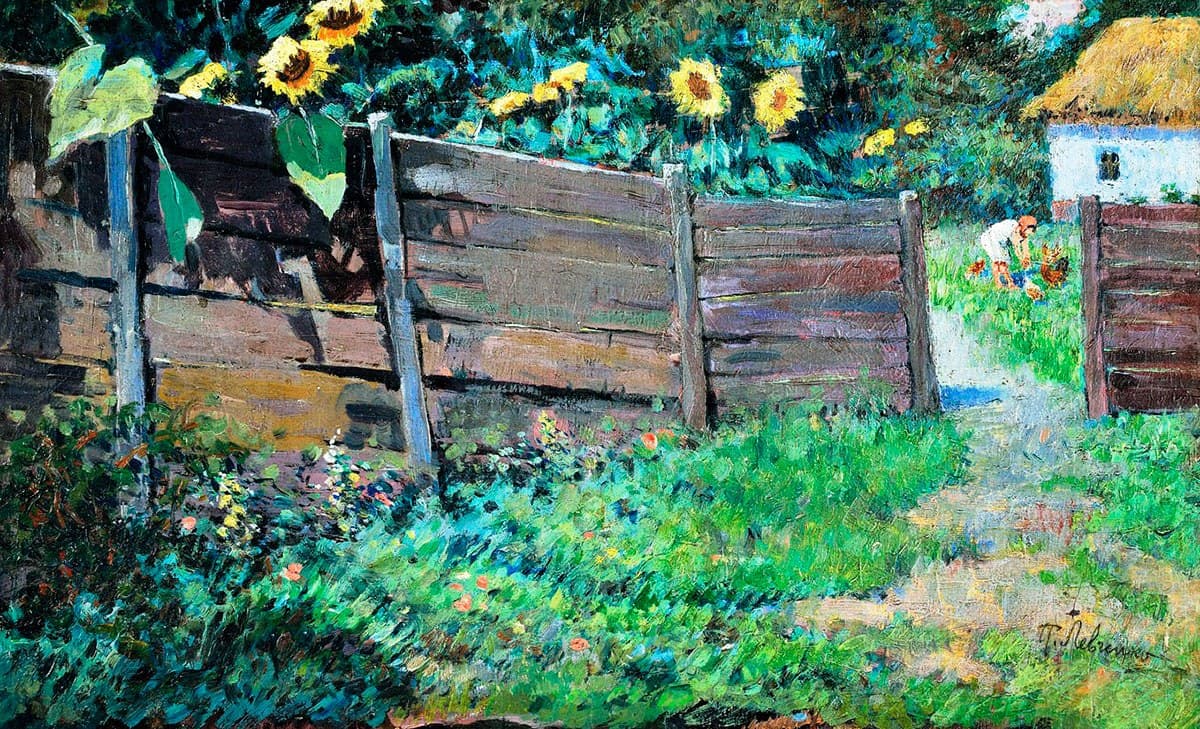
Summer in Ukraine (Summer in Little Russia)
Requested priority title «Літо в Україні», via its historical variant «Лето в Малороссии».
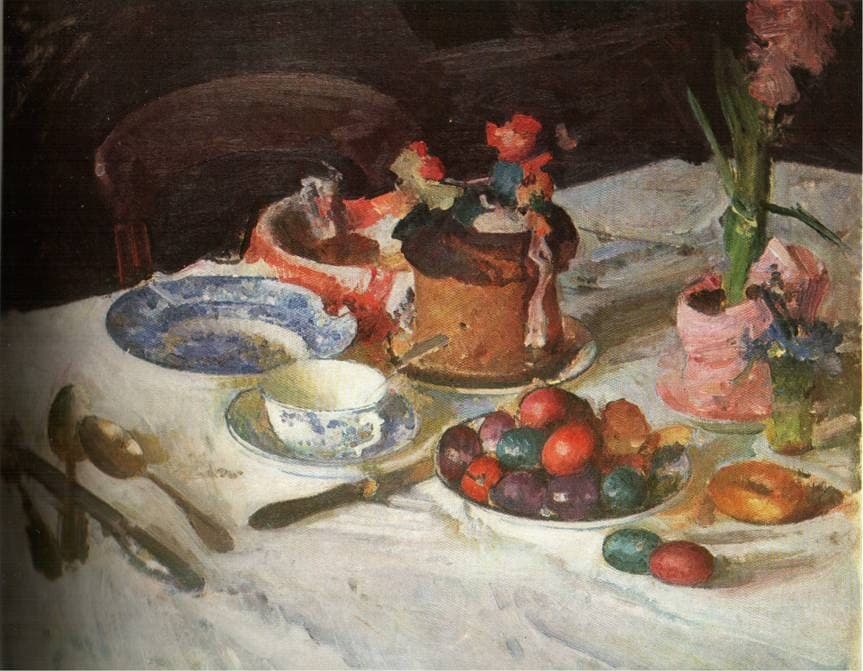
A Holiday Table
One of the quiet interiors that form the second strand of Levchenko's output, showing a laid table in a domestic room. The picture treats an empty, waiting interior with the same atmospheric attention he gave to open landscape.
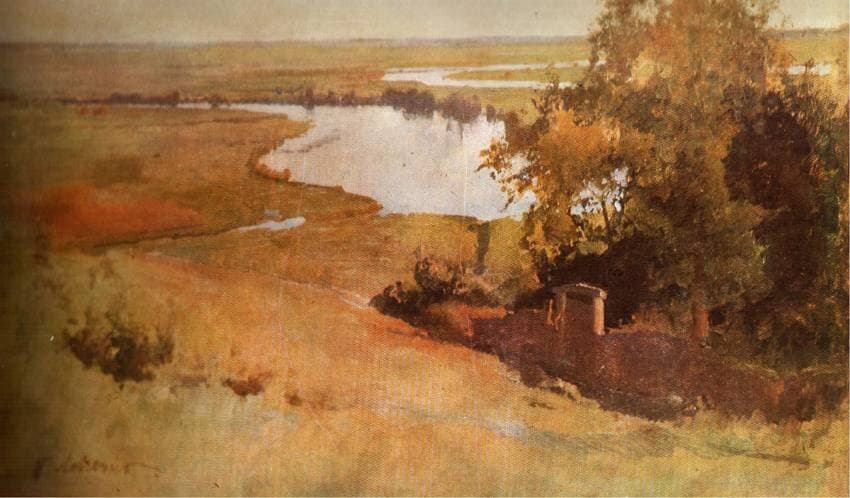
A View of the Kharkiv Region, by the River
A wide, low-horizon view of the Slobozhanshchyna countryside above a river, the subject Levchenko returned to more than any other. The landscape is built from muted greens and greys that register the humidity of the air rather than local colour.
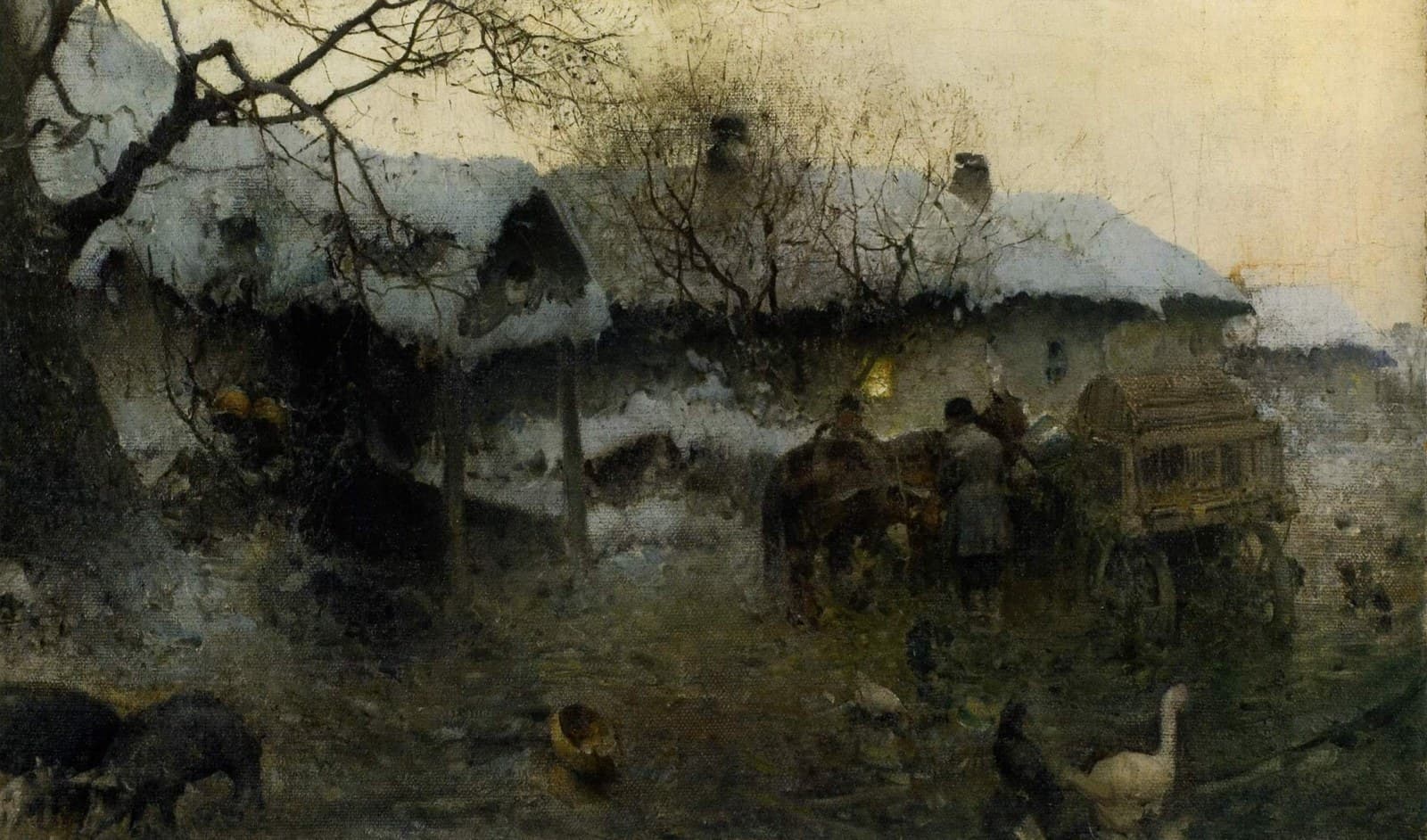
At Dawn
Requested priority title («На зорі» / 'At Dawn').
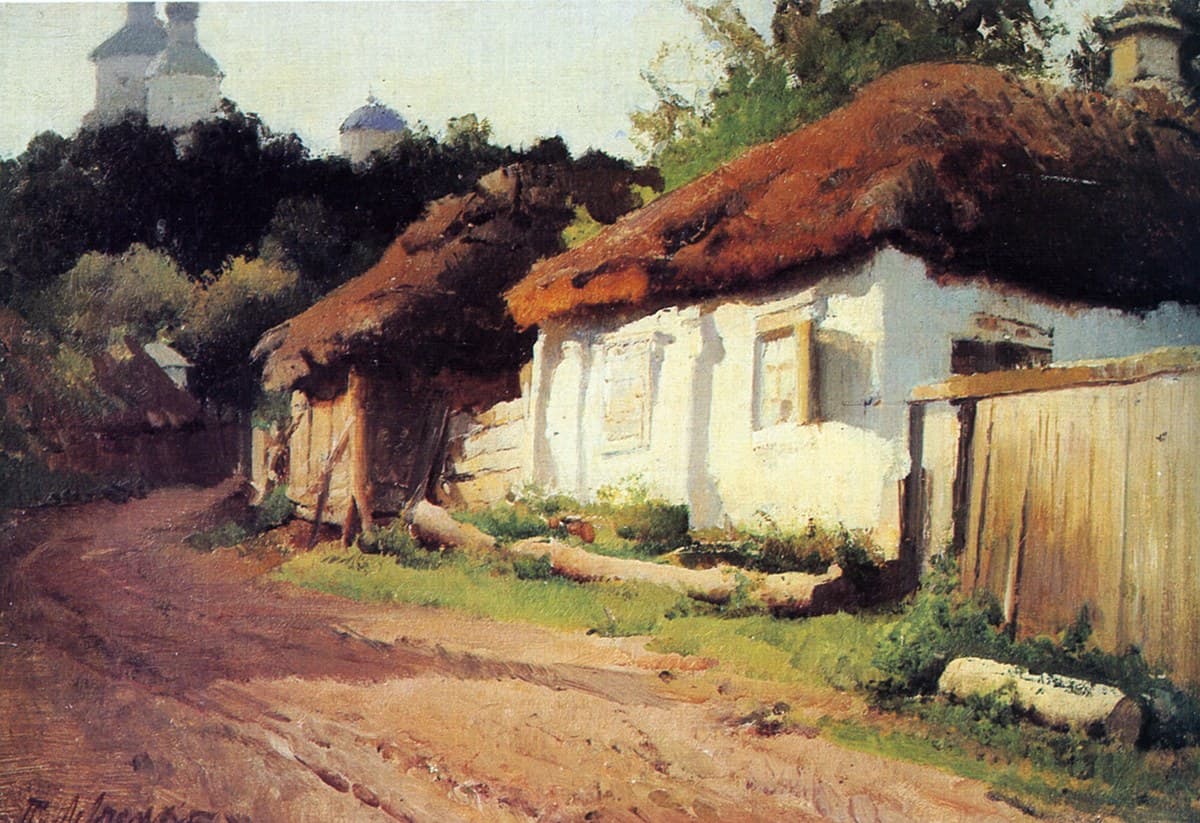
White Cottage. Putyvl
Extra.
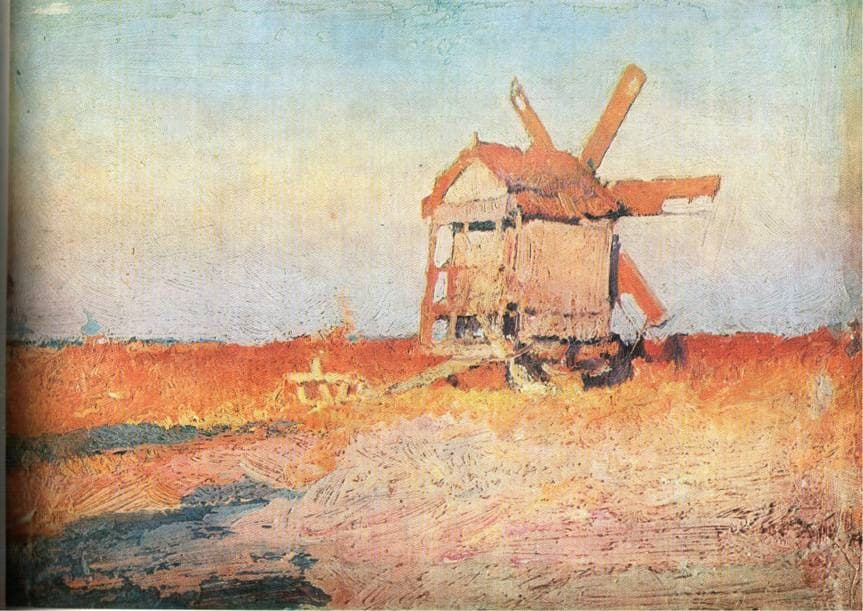
Windmill. The Nightfall
A rural Ukrainian windmill silhouetted against the fading light of evening.
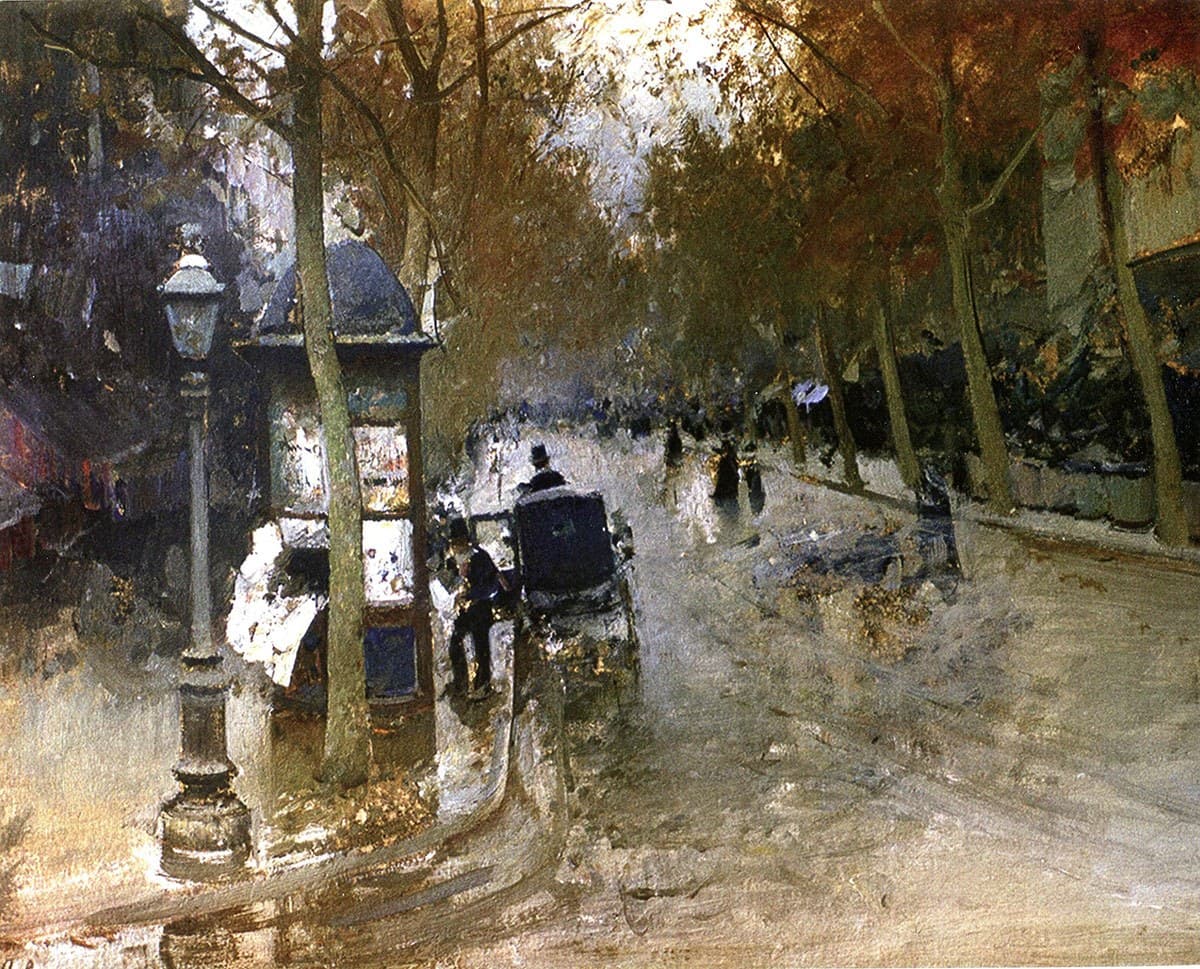
Street in Paris
A rare urban subject painted after Levchenko's 1895 journey to Paris, where he encountered the French Impressionists. The dissolved architecture and flickering light show how directly that encounter fed back into his Ukrainian landscapes.
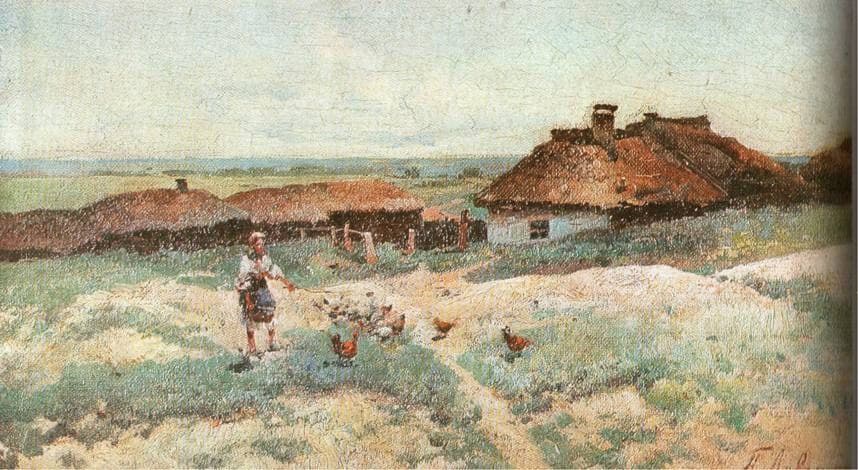
Khutir (Homestead)
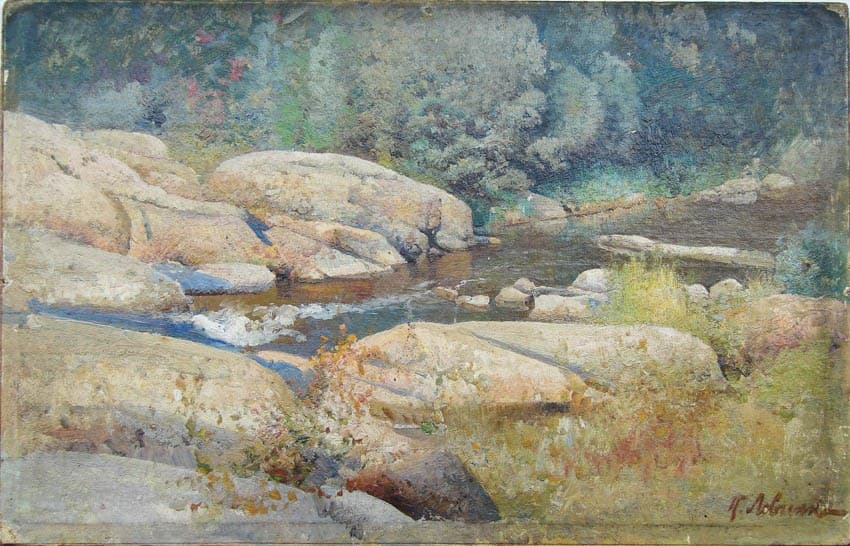
Stone Stream
A small intimate landscape of a rocky stream winding through the countryside.
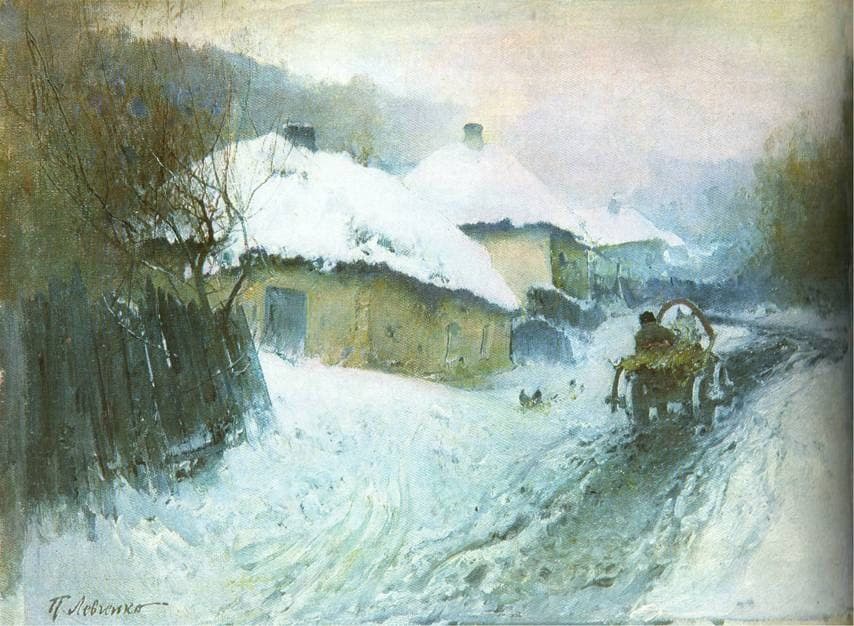
Backwoods
A secluded, overgrown corner of nature in Levchenko's quiet lyrical style.
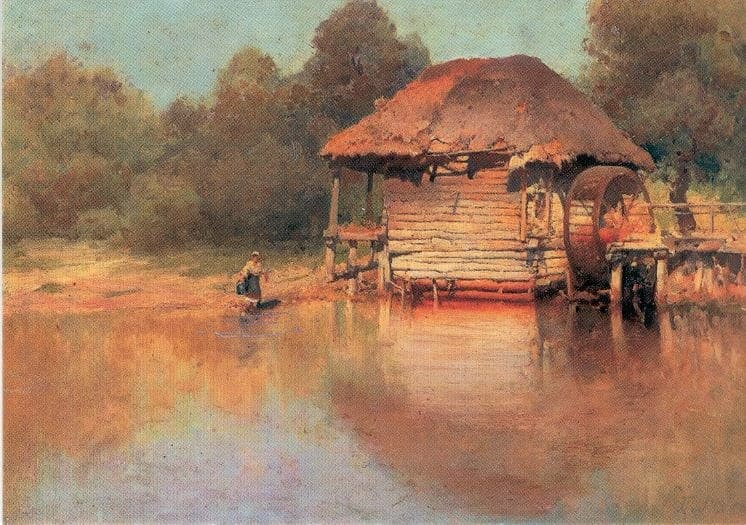
Watermill
A late work showing a wooden watermill sunk into the damp greenery of a Kharkiv-region riverbank. The mill was one of Levchenko's recurring motifs, painted here in the loosened, light-filled manner of his final decade.
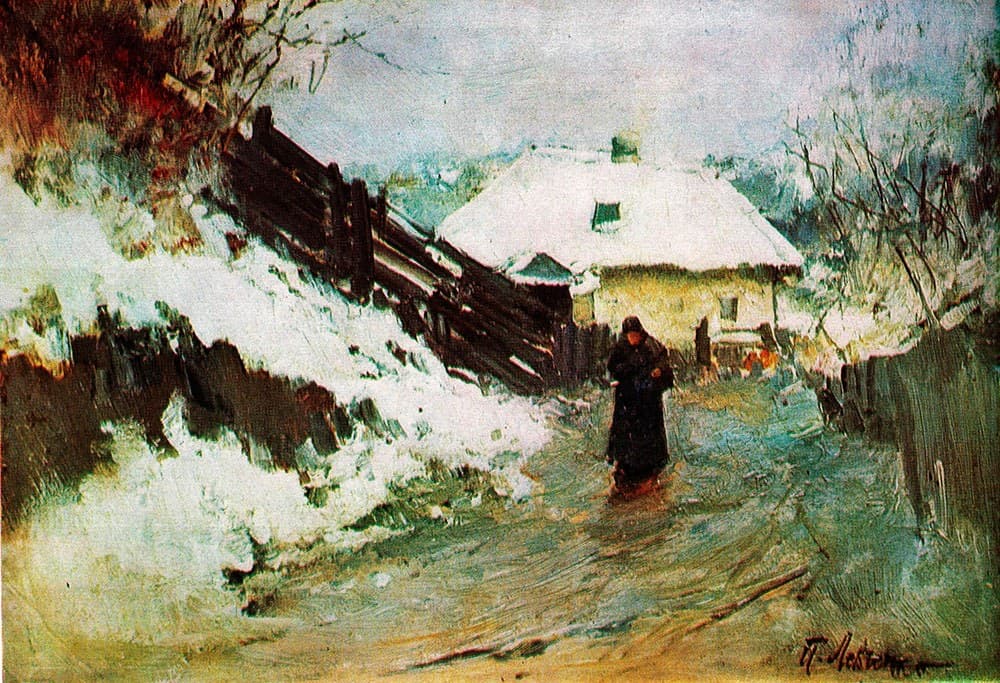
Winter Morning
Requested priority title («Зимовий ранок» / 'Winter Morning').