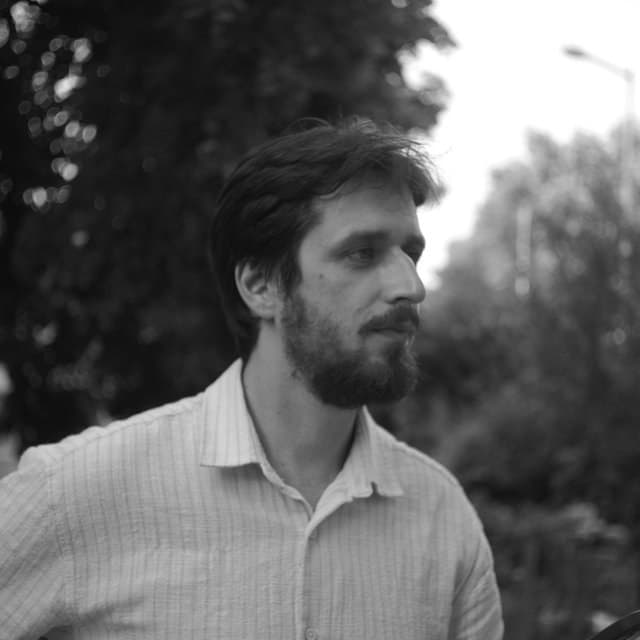
Oleksandr Shcherbyna is a contemporary Ukrainian painter and pastellist based in Odesa who sells internationally through Saatchi Art, where he has listed work since 2017. He paints small-format landscapes, seasonal studies and still lifes in oil on canvas and pressed cardboard, and works extensively in pastel on paper.
Oleksandr Shcherbyna is a contemporary Ukrainian painter whose practice is documented almost entirely through the international online art market rather than through galleries, unions or the Ukrainian art press. His Saatchi Art profile, active since 2017, gives his location as Odesa and carries some 148 works. The bulk of them are modestly scaled landscape études — spring thaws, winter sunrises, village mornings, views from windows — painted in oil on canvas or on pressed cardboard, alongside a substantial body of pastel drawings on paper. His idiom sits between plein-air realism and a loosened, impressionist handling of light: recurring subjects include the first warmth of spring, snow at sunrise and the flat coastal light of the Black Sea region. Several recent works were made abroad, including 'Spring in Bulgaria' (2024), and some pieces ship from Bulgaria, suggesting periods of work outside Ukraine after 2022. Because he does not publish a personal website, a CV or an artist's statement, his biography — including his year of birth — remains undocumented, and this platform records only what the listings themselves attest. He titles his work in English only.
Portrait: photograph sourced from saatchiart.com. © the photographer / rights holder; shown for editorial purposes. Contact us for attribution or removal.
Art Movements
Realism
Realism is an artistic movement that sought to depict reality as accurately and objectively as possible, holding that the purpose of art is to reflect all aspects of existence, rather than merely its idealized representation. The term was introduced by the French literary critic Jules Champfleury in the 1850s to denote art that opposed Romanticism and Academicism. In the visual arts, the significance of Realism as a style is quite controversial, and its boundaries are undefined. In a narrower sense, realism is understood as positivism, a movement in the visual arts of the second half of the 19th century. One of the first realists was the French artist Gustave Courbet (1819–1877), who opened his solo exhibition “The Pavilion of Realism” in Paris in 1855. Before him, artists of the Barbizon School—Théodore Rousseau, Jean-François Millet, and Jules Breton—worked in a realistic style. In the 1870s, realism split into two main movements: naturalism and impressionism. In contemporary painting, realism borders on the grotesque and anti-glamour.
Explore movement →Impressionism
Impressionism was a 19th-century French art movement (1870s-1880s) that revolutionized Western art by capturing fleeting moments and the shifting effects of light using visible brushstrokes, open composition, and vibrant colors. Focusing on modern life and landscapes, key artists included Claude Monet, Pierre-Auguste Renoir, Camille Pissarro, and Berthe Morisot. Usage Examples & Characteristics: Plein Air Painting: Painting outdoors to capture natural light, such as Monet’s studies of Rouen Cathedral or haystacks in varying weather conditions. Visible Brushwork: Thick, rapid, or broken brushstrokes intended to convey a sense of motion and the ephemeral nature of a scene. Everyday Subjects: Depicting leisure activities, urban life in Paris, or landscapes rather than historical or mythological scenes. Unusual Visual Angles: Inspired by photography, artists like Degas used candid-style, unconventional framing of subjects, such as dancers or laundresses. "Impressionist Music": A similar approach in music and dance, focusing on mood and atmosphere over rigid structure, with artists like Claude Debussy and Maurice Ravel.
Explore movement →1991–presentContemporary Ukrainian Painting
Painting made in independent Ukraine, from the 1991 declaration of independence onward. It is pluralist rather than programmatic: plein-air landscape and psychological portraiture continue alongside conceptual, minimalist and symbolist strands, with a marked turn after 2014 and especially after 2022 toward wartime subjects, national memory and the vernacular Ukrainian village.
Explore movement →Works by Oleksandr Shcherbyna
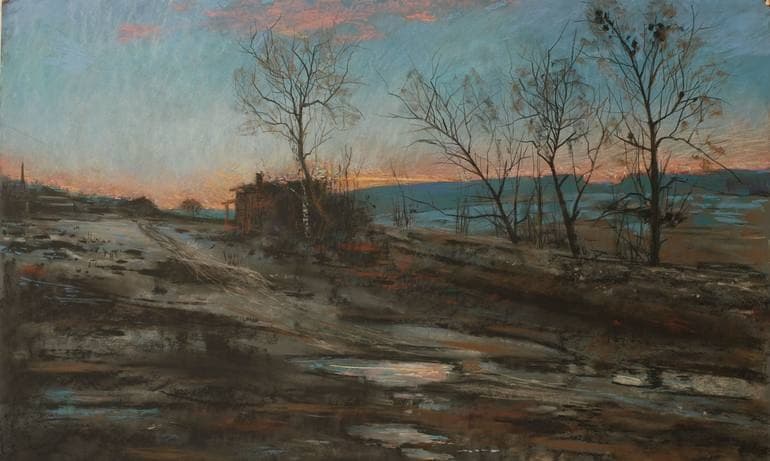
Sunrise
A large pastel of a winter village at daybreak. The artist recorded that the work came from a holiday spent in the countryside: "Arriving in winter for the holidays and rising in the morning, I saw a wonderful sunrise."
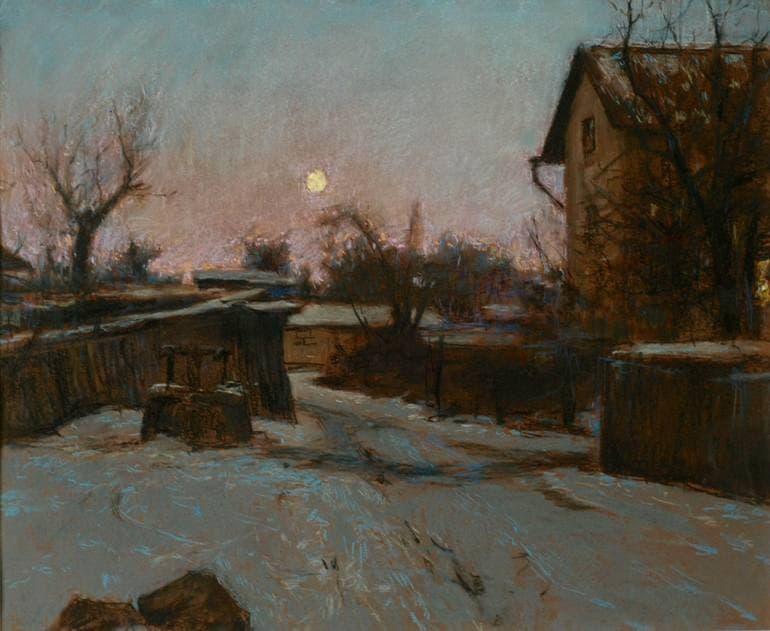
The morning moon
A framed pastel landscape holding the moon in a pale early sky, worked in the realist manner that runs through the artist's drawings.
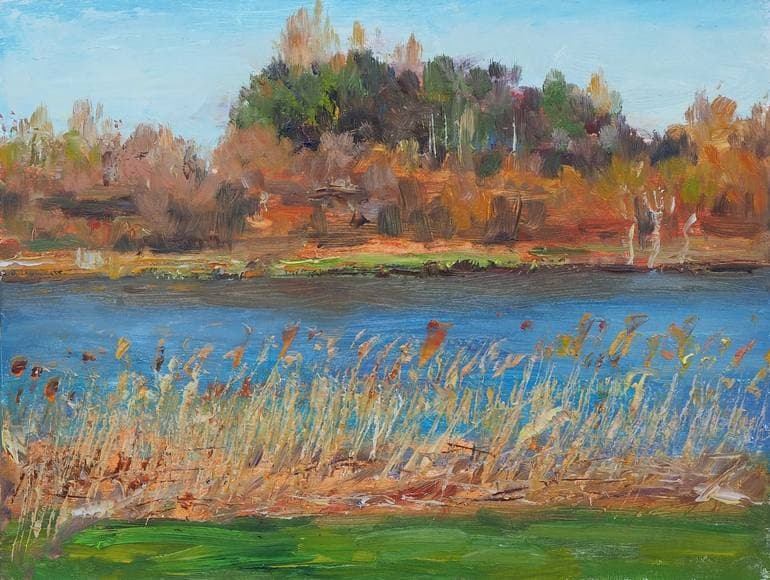
Spring
A small spring landscape étude in oil on pressed cardboard, built from loose, light-driven strokes. One of a run of seasonal studies the artist made in 2024.
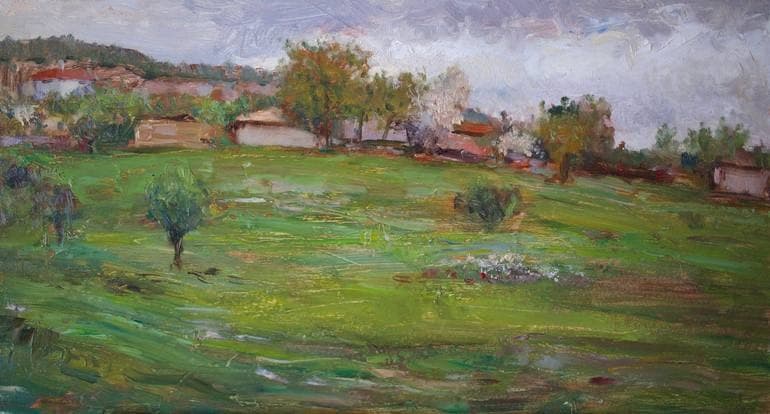
Spring in Bulgaria
A wide, panoramic spring scene painted in Bulgaria, one of the works the artist made outside Ukraine. Oil on pressed cardboard in a realist register.