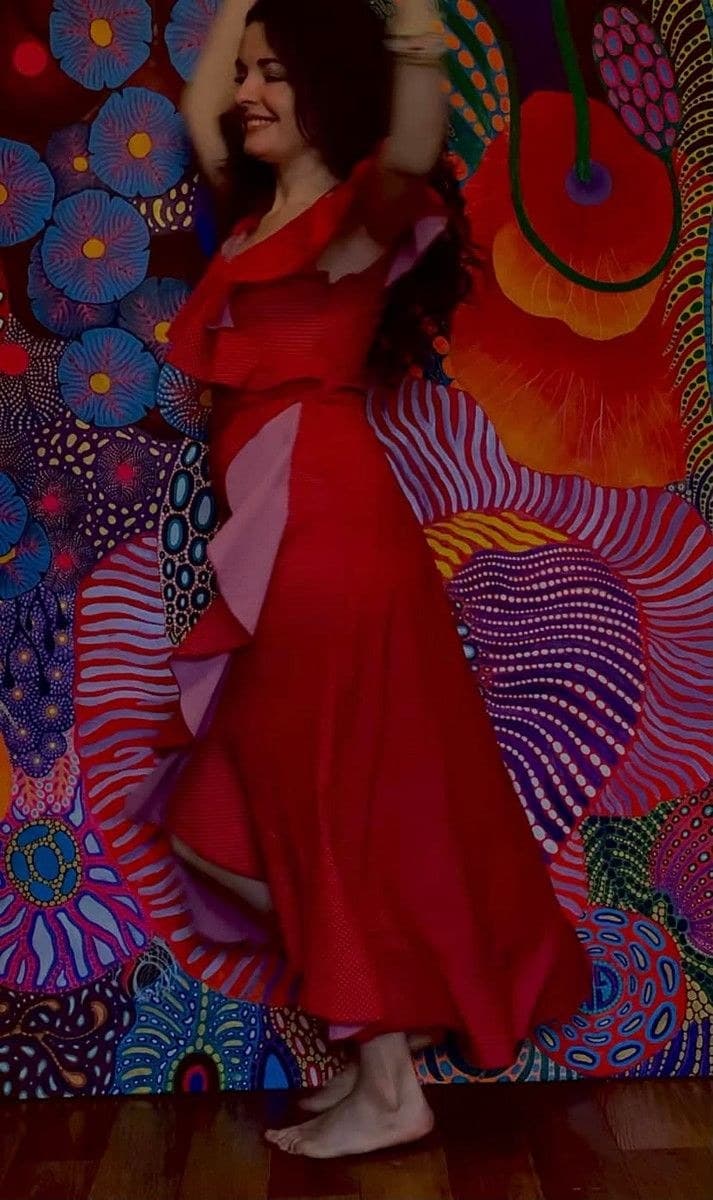
Mariia Holub
Марія Голуб
b. 1990 · Cherkasy, Ukraine
Mariia Holub is a Ukrainian painter based in Cherkasy, born in 1990, who studied painting, graphics and design at the National Academy of Fine Arts and Architecture in Kyiv. She paints in acrylic on canvas, combining magical realism with op-art and pixel-like patterning in vivid, near-fluorescent colour. The Cherkasy Regional Art Museum gave her a solo exhibition, «Мереживо нескінченності» (Lace of Infinity), in 2022.
Mariia Holub was born in 1990 and lives and works in Cherkasy. She studied painting, graphics and design at the National Academy of Fine Arts and Architecture in Kyiv, where her teachers included Andrii Chebykin and Viktor Shostia, and she also received a musical education, which she connects to the rhythmic, ornamental structure of her canvases. She works in acrylic on canvas, frequently finished with varnish and sometimes glitter, and describes her approach as symbolic and intuitive rather than planned. Her paintings fuse magical realism with devices borrowed from optical and digital art — op-art moiré, pixel-art grids, what she calls nano-art detail — producing dense lacework patterns, apparent three-dimensional relief and neon-bright colour. Alongside these she has painted straightforwardly observed Ukrainian architectural subjects, including a 2019 view of the St Florus (Florivskyi) Convent in Kyiv, the oldest women's monastery in the city. In 2022 the Cherkasy Regional Art Museum presented her solo exhibition «Мереживо нескінченності» (Lace of Infinity), whose catalogue text named works including «Digital-хатина» (2021), «Подалірій» (2022), «Родовід» (2022) and «Цілющі поцілунки» (2022). Her work has been circulated widely by Ukrainian online art platforms and is held in private collections in Ukraine and abroad.
Portrait: photograph sourced from muzey.ck.ua, by Mariia Holub's own Facebook page (photographer not named). © the photographer / rights holder; shown for editorial purposes. Contact us for attribution or removal.
Art Movements
Magical realism
Magical realism is a genre of literature, art, and film that incorporates fantastic, mythical, or surreal elements into otherwise realistic, mundane narratives, treating the magical as normal. It blurs the boundary between reality and fantasy, often used to explore complex social, political, or postcolonial themes through a dreamlike lens. Key Aspects and Characteristics Realistic Setting: Stories are rooted in the real world (e.g., bustling cities, quiet villages), not fantasy realms. Normalised Magic: Strange occurrences are accepted by characters without surprise or terror. Hybridity: Often blends folklore, myths, or spiritual beliefs with modern reality. Sociopolitical Critique: Often used to address issues like colonization, dictatorship, and trauma.
Explore movement →1991–presentContemporary Ukrainian Painting
Painting made in independent Ukraine, from the 1991 declaration of independence onward. It is pluralist rather than programmatic: plein-air landscape and psychological portraiture continue alongside conceptual, minimalist and symbolist strands, with a marked turn after 2014 and especially after 2022 toward wartime subjects, national memory and the vernacular Ukrainian village.
Explore movement →20th century–presentOptical Illusion Art
Art built on ambiguous or double images, where a single painted surface reads as two different subjects depending on how the eye organises it. Rooted in the 16th-century composite heads of Arcimboldo and continued by Dalí's paranoiac-critical images and Escher's impossible figures; in Ukraine its best-known exponent is Oleh Shupliak, who calls his double-image canvases 'dvovzory'.
Explore movement →Works by Mariia Holub
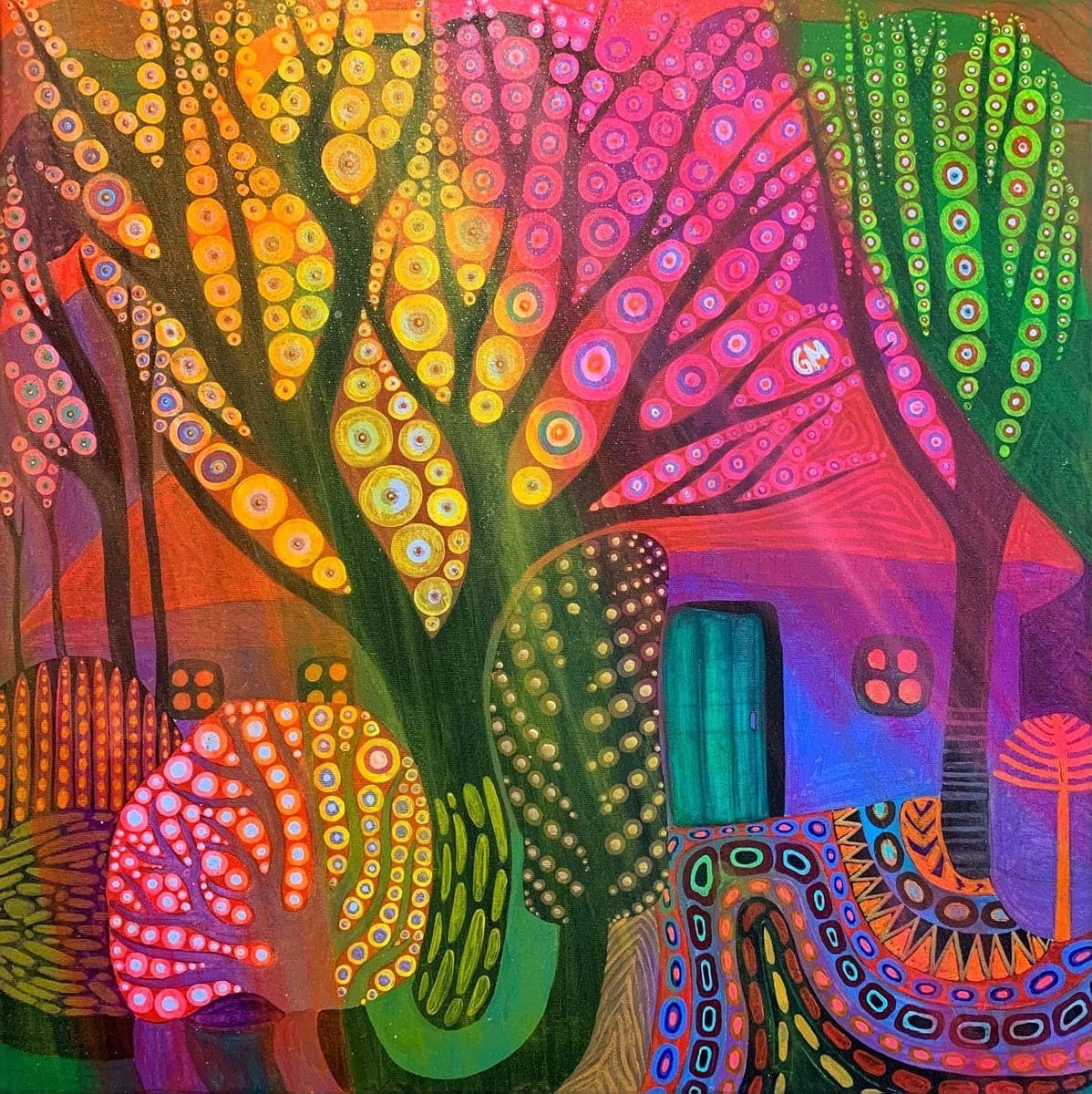
Digital Cottage
A traditional Ukrainian whitewashed cottage rebuilt out of pixel-like cells and glittering ornament, collapsing folk architecture into a digital surface. It is the clearest statement of Holub's move between village iconography and screen aesthetics.
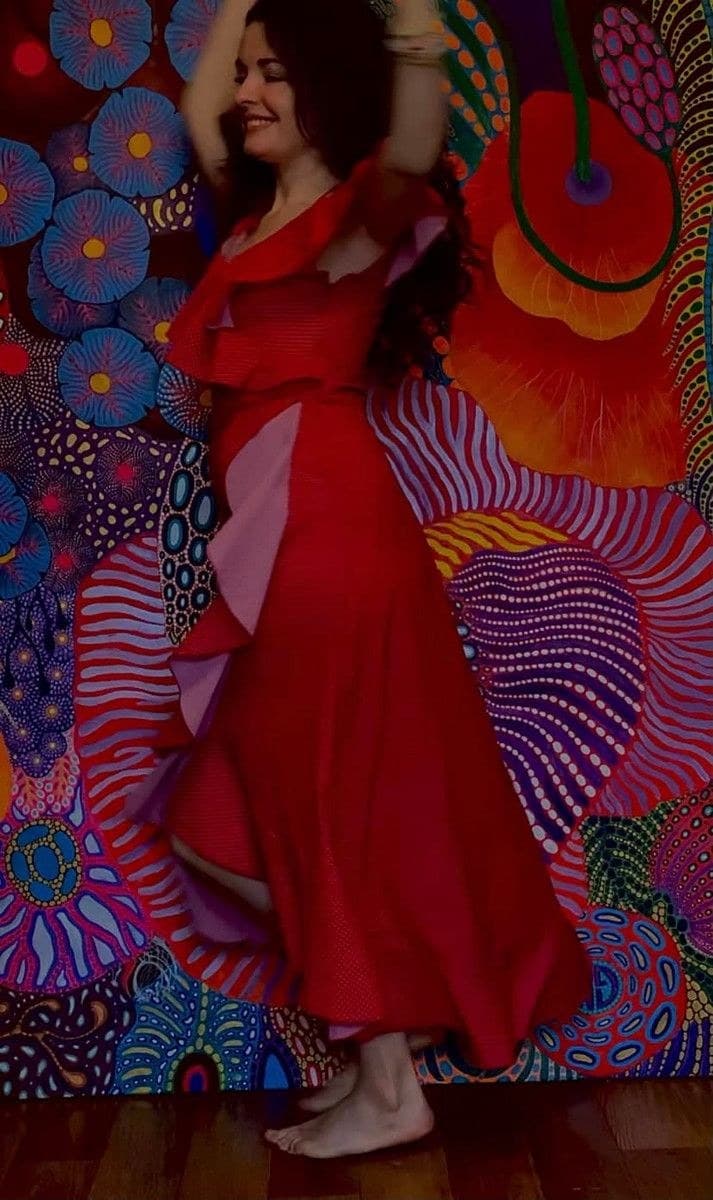
Scarce Swallowtail
A scarce swallowtail butterfly rendered as a field of interlocking patterned cells in high-keyed colour. The insect's wings become a pretext for the lacework structure that gave the exhibition its title.
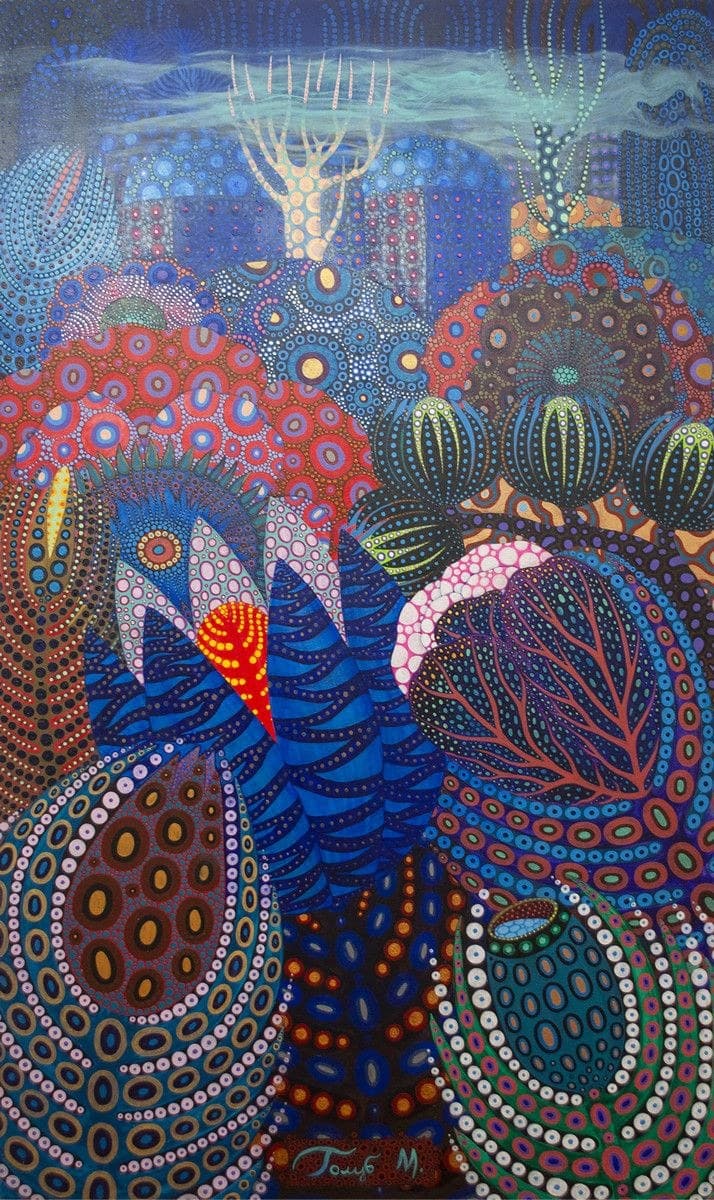
Lineage
A painting about descent and family memory, organised as a branching ornamental structure in the manner of a genealogical tree. It belongs to the group of works in which Holub treats pattern itself as a carrier of inherited meaning.