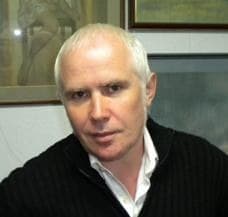
Serhii Komornyi
Сергій Коморний
b. 1963 · Chuhuiv, Kharkiv Oblast, Ukraine
Serhii Komornyi (b. 1963, Chuhuiv) is a Kharkiv-based Ukrainian artist who works almost entirely in pastel on large-format paper, in a manner that sits between drawing and painting. He paints psychological portraits, plein-air landscapes and still lifes with a bright impressionist palette.
Serhii Viacheslavovych Komornyi was born on 23 May 1963 in Chuhuiv, Kharkiv Oblast — Ilya Repin's home town, a fact that runs through much of his subject matter. He graduated from the Kharkiv State Art School in 1982, where he trained in the design department under Yurii Kyianskyi, Ye. Nadiezhdin and Yevhen Spitsevych, and from 1984 to 1991 worked as chief artist of the Chuhuiv workshops of the Kharkiv Regional Art and Design Combine. He has exhibited continuously since 1988 and joined the National Union of Artists of Ukraine in 2003. He is a laureate of the Ilya Repin Prize in painting and graphic art, and a co-founder and honorary member of the European Academy of Painting 'LeonArt' in Germany. His chosen medium is pastel on large sheets of paper, giving works that can be classed equally as graphics or as painting and that critics describe as overflowing with internal energy and love of life. Recurring cycles include 'Legends of Plein-airs' (2008–2010) and 'Chuhuiv Evening' (2008), alongside portraits of fellow artists and views of the churches of the Chuhuiv region. Solo exhibitions have been held in Kharkiv (2001–02, 2004, 2008), Klagenfurt (2003), Bad Pyrmont (2004, 2007), Chuhuiv (2005, 2007) and Sumy (2010). His work is in the Sumy Art Museum, the Repin Memorial Museum in Chuhuiv and private collections in Ukraine, the USA, Austria, Germany and Israel. He lives and works in Kharkiv.
Portrait: photograph sourced from s3-eu-central-1.amazonaws.com. © the photographer / rights holder; shown for editorial purposes. Contact us for attribution or removal.
Art Movements
Impressionism
Impressionism was a 19th-century French art movement (1870s-1880s) that revolutionized Western art by capturing fleeting moments and the shifting effects of light using visible brushstrokes, open composition, and vibrant colors. Focusing on modern life and landscapes, key artists included Claude Monet, Pierre-Auguste Renoir, Camille Pissarro, and Berthe Morisot. Usage Examples & Characteristics: Plein Air Painting: Painting outdoors to capture natural light, such as Monet’s studies of Rouen Cathedral or haystacks in varying weather conditions. Visible Brushwork: Thick, rapid, or broken brushstrokes intended to convey a sense of motion and the ephemeral nature of a scene. Everyday Subjects: Depicting leisure activities, urban life in Paris, or landscapes rather than historical or mythological scenes. Unusual Visual Angles: Inspired by photography, artists like Degas used candid-style, unconventional framing of subjects, such as dancers or laundresses. "Impressionist Music": A similar approach in music and dance, focusing on mood and atmosphere over rigid structure, with artists like Claude Debussy and Maurice Ravel.
Explore movement →1910s–1930sUkrainian Graphic Art & Book Design
An early-20th-century renaissance of Ukrainian graphic art, typography, book illustration and state symbolism. Its founding figure Heorhiy Narbut created the visual identity of the modern Ukrainian state.
Explore movement →1991–presentContemporary Ukrainian Painting
Painting made in independent Ukraine, from the 1991 declaration of independence onward. It is pluralist rather than programmatic: plein-air landscape and psychological portraiture continue alongside conceptual, minimalist and symbolist strands, with a marked turn after 2014 and especially after 2022 toward wartime subjects, national memory and the vernacular Ukrainian village.
Explore movement →Works by Serhii Komornyi
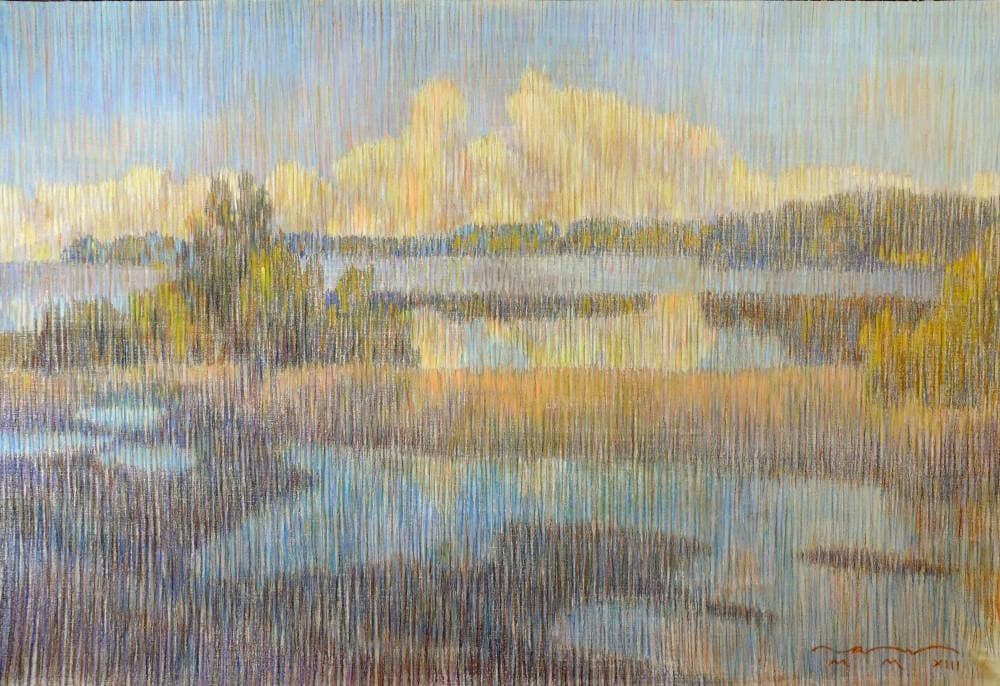
Evening on the Donets
Dusk over the Siverskyi Donets river near Chuhuiv, one of the artist's home landscapes.
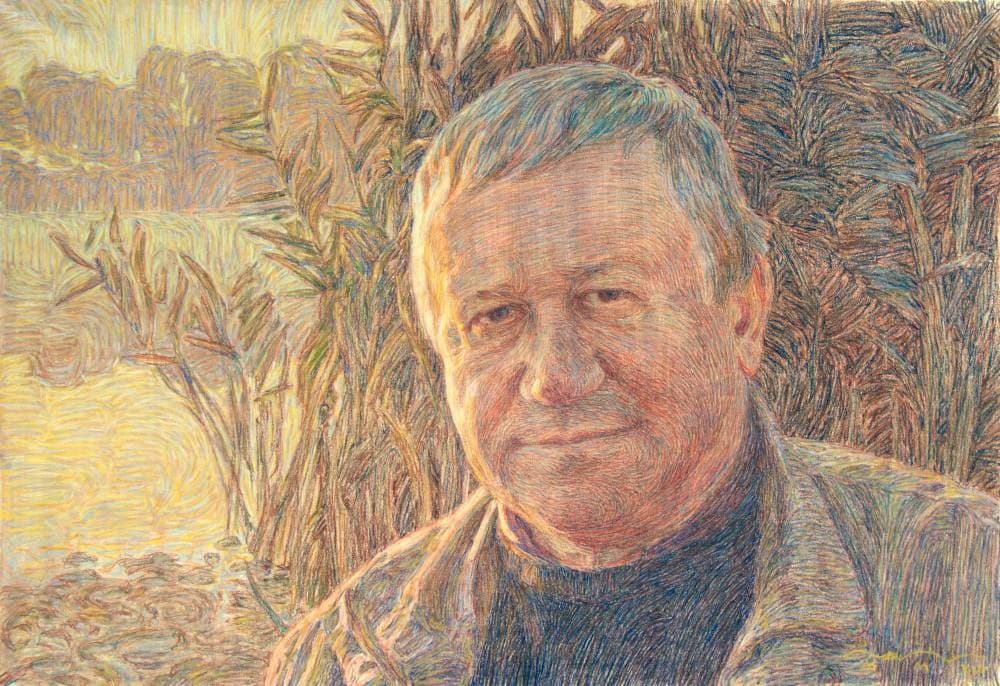
Portrait of the Honoured Artist of Ukraine V. V. Chursin
One of a group of pastel portraits of fellow painters, made in the psychological-portrait vein that Komornyi is best known for.
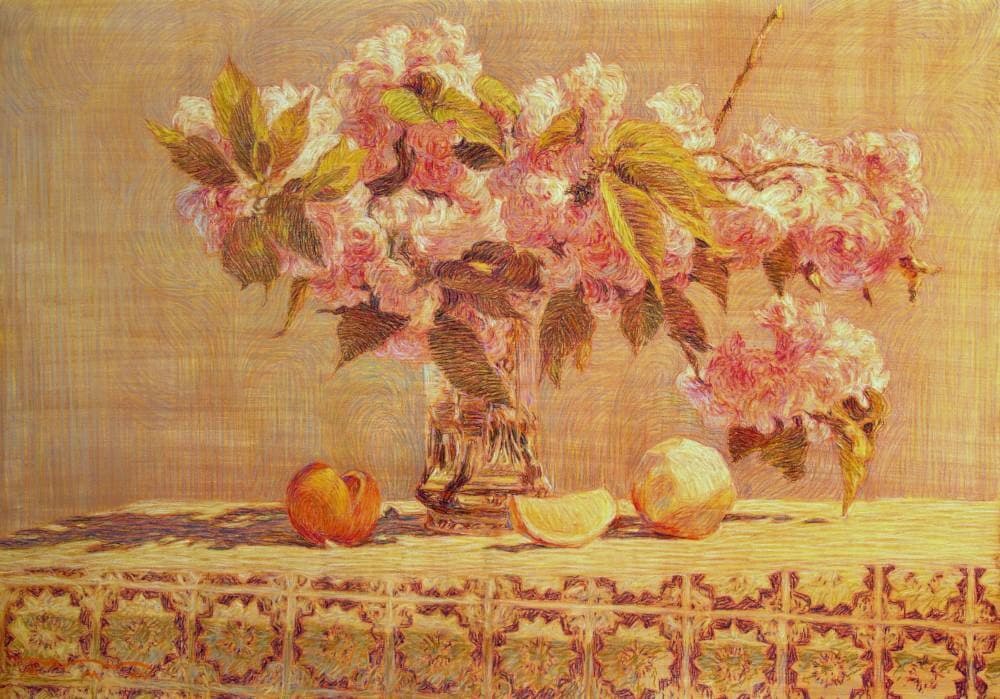
Apple Blossom
A close, high-key pastel of an apple tree in full bloom, typical of the artist's spring plein-air work.
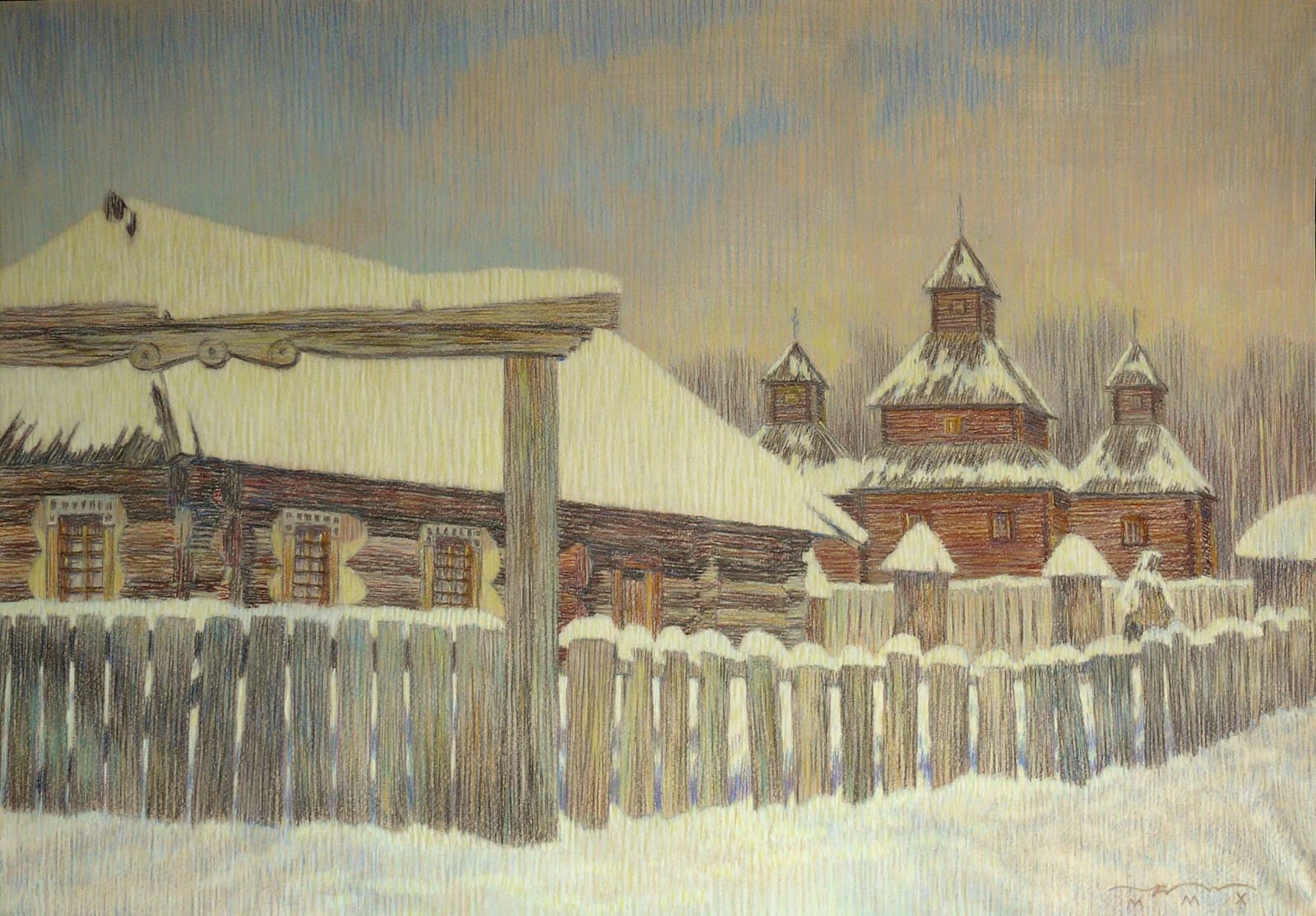
Winter Fairy Tale. Pyrohovo
Snow-covered vernacular architecture at the Pyrohovo open-air museum of folk architecture outside Kyiv.