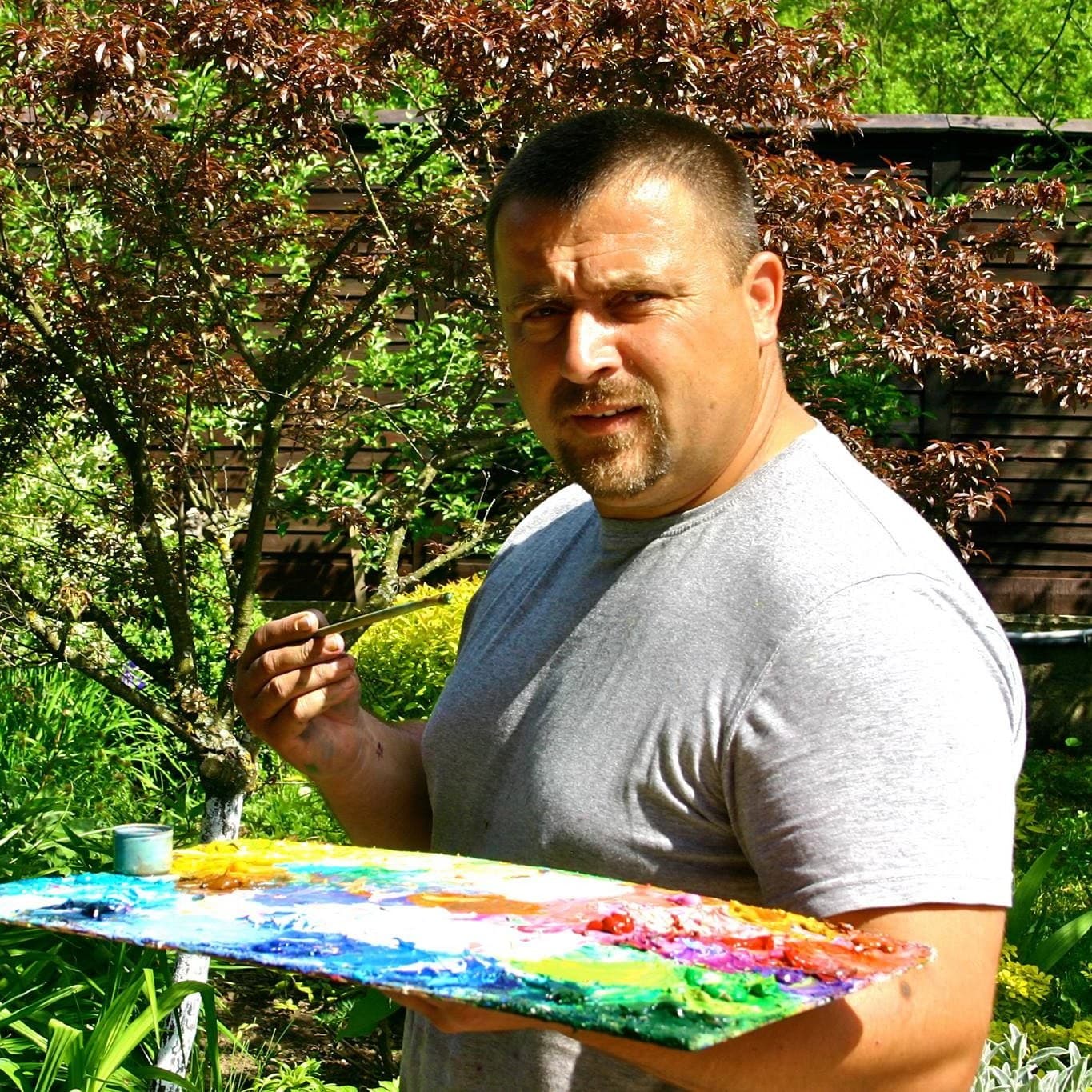
Oleksandr Shandor
Олександр Шандор
b. 1981 · Vynohradiv, Zakarpattia Oblast, Ukraine
Oleksandr Shandor (born 1981 in Vynohradiv, Transcarpathia) is a Ukrainian landscape and still-life painter of the Transcarpathian school, working in oil in a warm impressionist manner. He joined the folk creative association "Verkhovynskyi Khudozhnyk" in 2007 and the youth union "Artists of Transcarpathia" in 2012.
Oleksandr Shandor was born in 1981 in Vynohradiv, a town in Zakarpattia Oblast in western Ukraine. He studied at the Erdeli College of Arts in Uzhhorod in the metalworking department, under the teachers Petretskyi, Lukach and Mykhailiuk, and afterwards turned to painting, working chiefly in landscape and still life. In 2007 he was admitted to the folk creative association "Verkhovynskyi Khudozhnyk" and in 2012 to the youth union "Artists of Transcarpathia". His subjects are drawn almost entirely from his own region: the Tysa river in summer, autumn roads, village yards, chicken coops and outbuildings, the Zatysianskyi museum, the Carpathian foothills. He paints in oil on canvas and cardboard in a high-keyed impressionist idiom built on broken colour and strong sunlight, and states that he uses only the highest-quality oils and varnishes each finished canvas. He has held solo exhibitions almost annually since 2011 — in Khust (2011), Kyiv (2015, 2017), Lviv (2016), Zhytomyr (2018), Vynohradiv (2019) and at the Budapest Galéria in Hungary (2020) — has taken part in many Ukrainian and international exhibitions and plein airs, and has donated work to charitable causes in 2011, 2014, 2015 and 2016. His paintings are in private collections and galleries in Ukraine and abroad, and he sells internationally under the name "Alexander Shandor".
Portrait: photograph sourced from images.joseartgallery.com. © the photographer / rights holder; shown for editorial purposes. Contact us for attribution or removal.
Art Movements
Impressionism
Impressionism was a 19th-century French art movement (1870s-1880s) that revolutionized Western art by capturing fleeting moments and the shifting effects of light using visible brushstrokes, open composition, and vibrant colors. Focusing on modern life and landscapes, key artists included Claude Monet, Pierre-Auguste Renoir, Camille Pissarro, and Berthe Morisot. Usage Examples & Characteristics: Plein Air Painting: Painting outdoors to capture natural light, such as Monet’s studies of Rouen Cathedral or haystacks in varying weather conditions. Visible Brushwork: Thick, rapid, or broken brushstrokes intended to convey a sense of motion and the ephemeral nature of a scene. Everyday Subjects: Depicting leisure activities, urban life in Paris, or landscapes rather than historical or mythological scenes. Unusual Visual Angles: Inspired by photography, artists like Degas used candid-style, unconventional framing of subjects, such as dancers or laundresses. "Impressionist Music": A similar approach in music and dance, focusing on mood and atmosphere over rigid structure, with artists like Claude Debussy and Maurice Ravel.
Explore movement →1991–presentContemporary Ukrainian Painting
Painting made in independent Ukraine, from the 1991 declaration of independence onward. It is pluralist rather than programmatic: plein-air landscape and psychological portraiture continue alongside conceptual, minimalist and symbolist strands, with a marked turn after 2014 and especially after 2022 toward wartime subjects, national memory and the vernacular Ukrainian village.
Explore movement →Works by Oleksandr Shandor
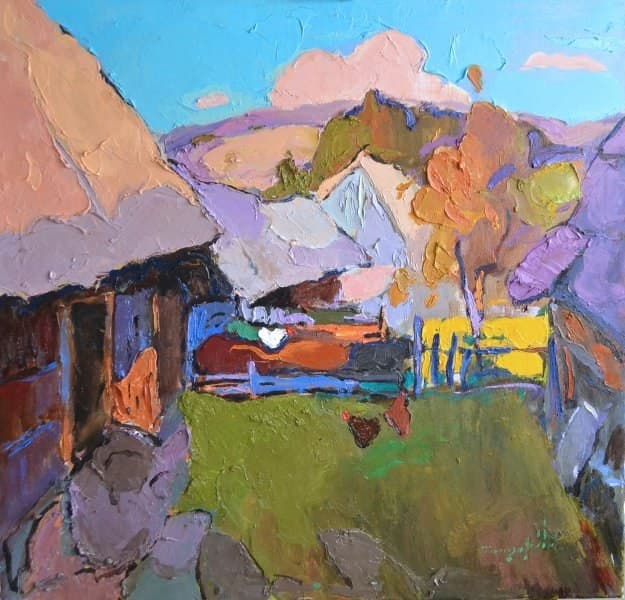
Chicken coop
An unglamorous village outbuilding turned into a study of dappled light and broken colour, typical of the artist's attention to ordinary Transcarpathian yards.
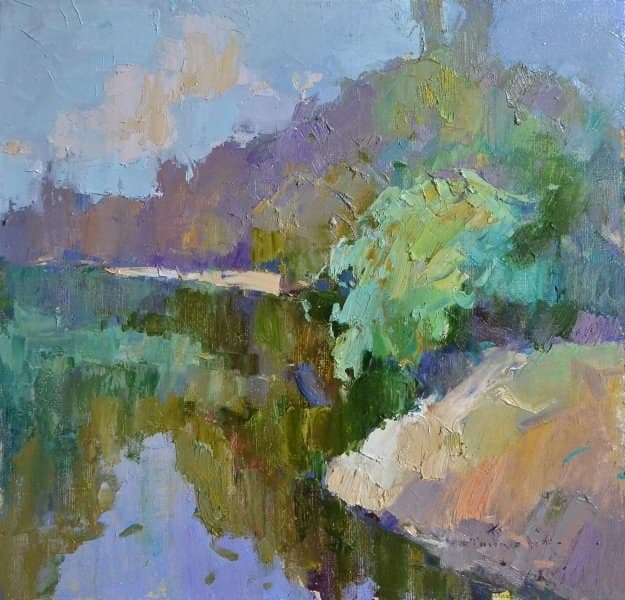
On the river Tisza in summer
Summer on the Tysa, the river that runs past the artist's native Vynohradiv, painted in full sunlight with heavy impasto and reflected colour.
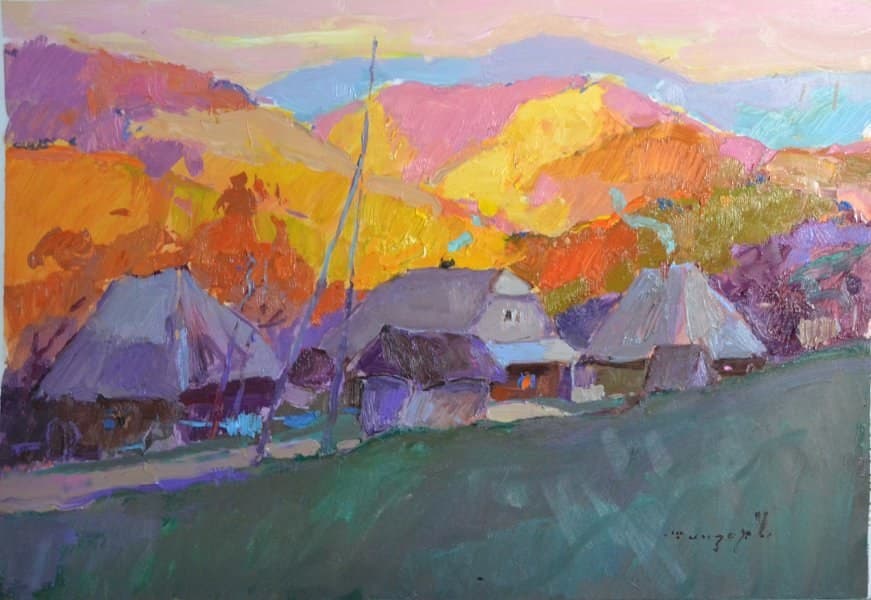
Evening chores
A Transcarpathian farmyard at dusk, the last low light picking out the work still being finished. Oil on cardboard in the artist's warm impressionist manner.
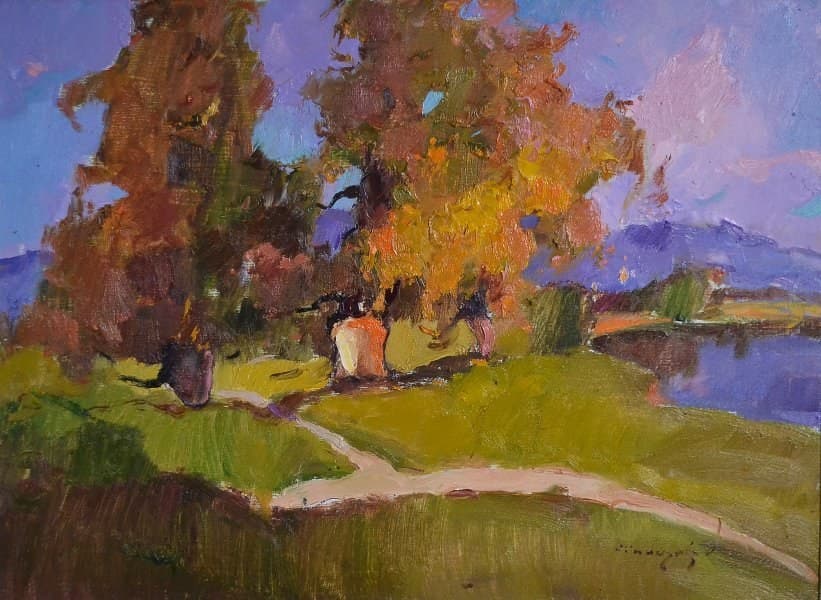
Road to autumn
A country road running between trees turning gold, built up in warm yellows against cooler shadow. One of the artist's recurring seasonal landscapes.